 Kendall Pastelito Window Crawl to Pick a Birthday Party Box
Coffee & Dessert

Coral Gables Croqueta Bakery Picker for a Home Cook
A Coral Gables croqueta plan for home cooks: what to study in each bakery bite, how to talk with counter staff and where to walk while the notes settle.
Rosa's father made croquetas every Christmas Eve, and he never wrote the recipe down. When he died, the family realised nobody knew how thick he made the bechamel or why his crust never cracked. Rosa decided to learn before Nochebuena, starting not in her kitchen but at the bakery counters of Coral Gables, where she grew up. This croqueta bakery picker is how she turned a few weekend mornings into a cooking class.
Tasting Like a Recipe Tester
Rosa ordered two of the same croqueta at each bakery: one to eat, one to break open. She looked at the crust first, noting whether the breadcrumbs were fine or coarse and whether the outside was even. Then she split the second one and studied the filling. A good bakery croqueta holds its shape when broken but feels almost liquid on the tongue, which tells you the bechamel was cooked long enough.
She kept a spiral pad in her bag and wrote three lines per bakery: crust, filling, salt. By the third stop she noticed a pattern. The croquetas she loved most had a filling that tasted of ham rather than flour, and a crust that shattered instead of chewing. Those two details became her targets at home. She also measured them against her thumb, since her father's were always a little shorter than a finger.
Questions the Counter Staff Will Answer
Rosa expected bakeries to guard their secrets. Some did, politely. Others were happy to talk about technique once they understood she was cooking for family. One woman told her to chill the filling overnight before rolling, so it would not slump. Another said the crumbs should be dry and very fine, and that a second dip in egg and crumbs helps the croqueta survive the fryer.
The trick was timing. Rosa never asked questions during the morning rush, when workers were grabbing coffee before the office. Mid-afternoon on a weekday, with the case half empty and the staff wiping counters, they had time to chat. She always bought something before asking, and she never asked for a full recipe, only for one small tip.
What She Decided to Ignore
Not everything she tasted was worth copying. Some bakeries sold oversized croquetas that looked impressive but turned greasy in the middle. Others added cheese or unusual fillings that were fun but far from what her father made. Rosa's honest note to herself was to skip novelty for now and master the classic ham version first.
She also ignored advice about shortcuts. A frozen croqueta from a supermarket can be reheated in an air fryer, and it is fine for a quick snack, but it taught her nothing about the texture she wanted. The bakeries were useful because the croquetas were fresh, and that freshness was what she needed to understand.
Pairing Coffee and Sweets With the Research
Tasting croquetas all morning is salty work, so Rosa built small breaks into each visit. A café con leche softened the salt and gave her a reason to sit at the counter longer. At one bakery she split a guava and cheese pastelito with the woman next to her, a retired teacher who turned out to have known her father from church.
That conversation gave Rosa more than any tasting note. The teacher remembered her father bringing trays of croquetas to parish parties and insisting that they be eaten within minutes of frying. It explained why he always fried them last, after everyone had sat down. Rosa added a line to her pad that had nothing to do with technique: serve them immediately, the way he did.
Walking the Gables Between Tastings
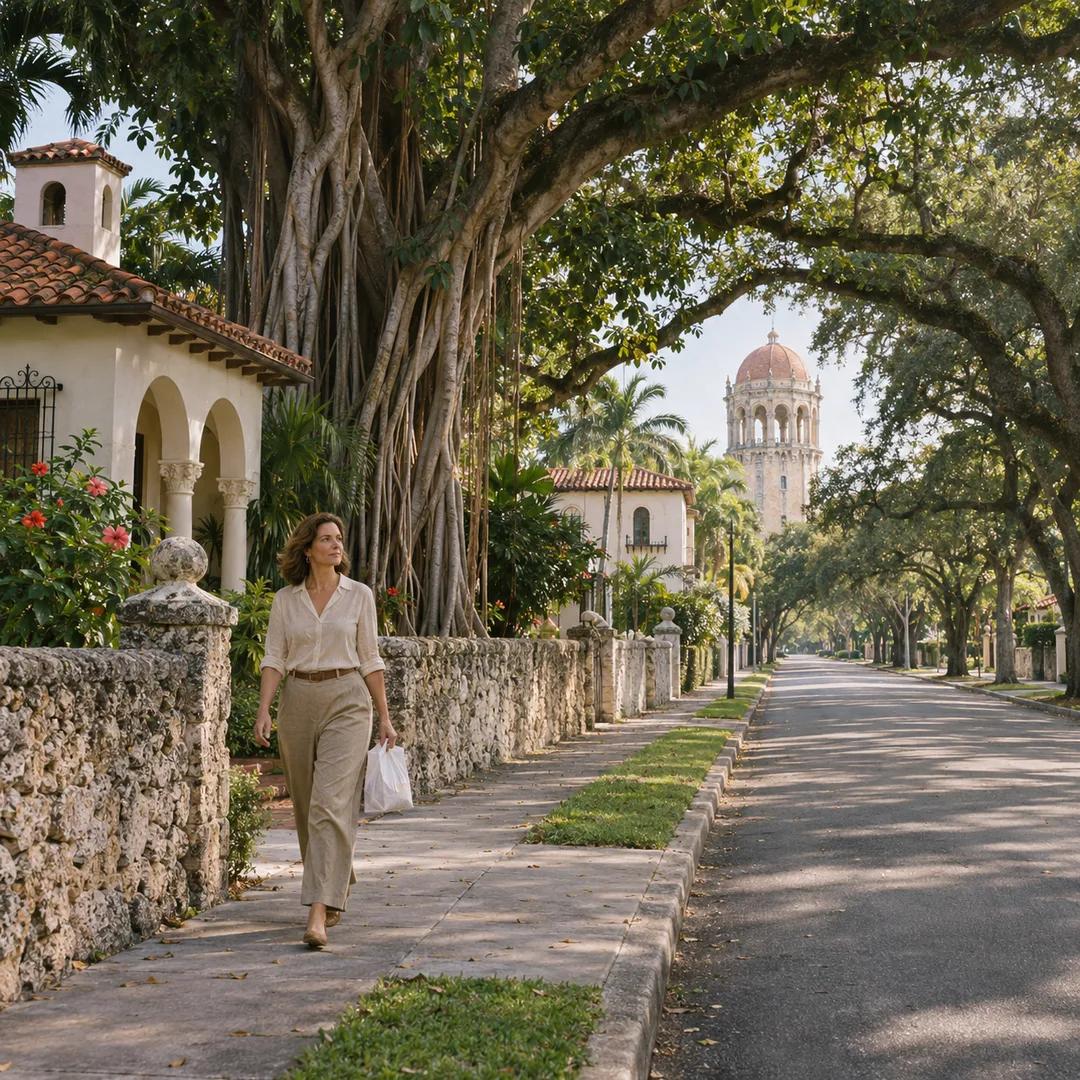
Coral Gables was planned as a Mediterranean-style city, with coral rock walls, barrel tile roofs and wide streets shaded by banyans and oaks. Between bakeries Rosa walked rather than drove, partly to settle her stomach and partly because the streets slowed her thoughts down. The old Alhambra Water Tower, with its dome and decorative stonework, became her favourite turning point.
She also liked the De Soto Fountain, a plaza with a stone fountain surrounded by quiet homes, and the long views across the Granada golf course in the late afternoon. These walks gave her time to compare notes in her head. By the time she reached the next bakery, she knew exactly what she wanted to test.
The First Batch at Home
Rosa's first attempt was a mess. The filling was too soft, and half the croquetas burst in the oil. She went back to her pad, compared it with the bakery notes, and realised she had not cooked the bechamel long enough. The second batch was better: firmer filling, a double crumb coat, smaller logs. Her husband said they tasted like the ones from the bakery near her old school. She laughed about it later, but at the time she nearly gave up.
The third batch, made a week before Christmas, finally reminded her of her father's. She froze them on a tray and bagged them, which the bakery staff had mentioned is how many families prepare for the holidays. Frying them straight from the freezer on Nochebuena kept them crisp outside and creamy inside.
If You Are Learning Too
If you are trying to recreate a family recipe, a bakery tasting is a useful starting point, but bring a friend or relative who remembers the original. Rosa's aunt joined her for one morning and immediately said the crust was too thick at one bakery and the filling too sweet at another. Memory is a better guide than any single recipe card.
Rosa used the Karpo APP to find Cuban bakeries and cafés within a short drive of her home and to save the ones whose croquetas came closest to her father's. When she wanted to taste a particular style again, she did not have to remember which corner it was on.
Nochebuena and After
On Christmas Eve, Rosa served her croquetas beside the roast pork and black beans. Her mother cried a little and then asked for the recipe, which Rosa had finally written down on the last page of her spiral pad. Her cousins have already asked her to teach a croqueta-rolling afternoon next December.
If you want to follow the same path, start with tasting, ask small questions in quiet hours, walk between stops to think, and practise until the texture matches your memory. Save your favourite Coral Gables bakeries in the Karpo APP, so the next round of research is just a short walk away.
Ask Karpo for more information.
Keep reading
- Kendall Pastelito Window Crawl to Pick a Birthday Party Box
 Doral Pastelito Window Crawl for a Cuban and Venezuelan Duel
 Westchester Croqueta Bakery Picker for a Finals Study Group