New York is the easiest large city in the world to eat alone in, and most people still do it badly — booking a two-top, sitting with their back to the room, and treating the meal as something to get through. The fix is structural rather than psychological: sit at a counter facing a kitchen and dinner for one stops being a compromise and becomes the format the room was designed around. Here is the hierarchy of counters, from the ten-seat rooms that deliberately favour single diners down to the noodle shop with a shelf and a stool.
The rooms that are genuinely good for one are not the ones marked solo-friendly; they are the ones with a counter and a kitchen you can watch. Tell Karpo where you are and it can find the seat for one that is open tonight rather than a two-top with a candle on it.
The tier built for one
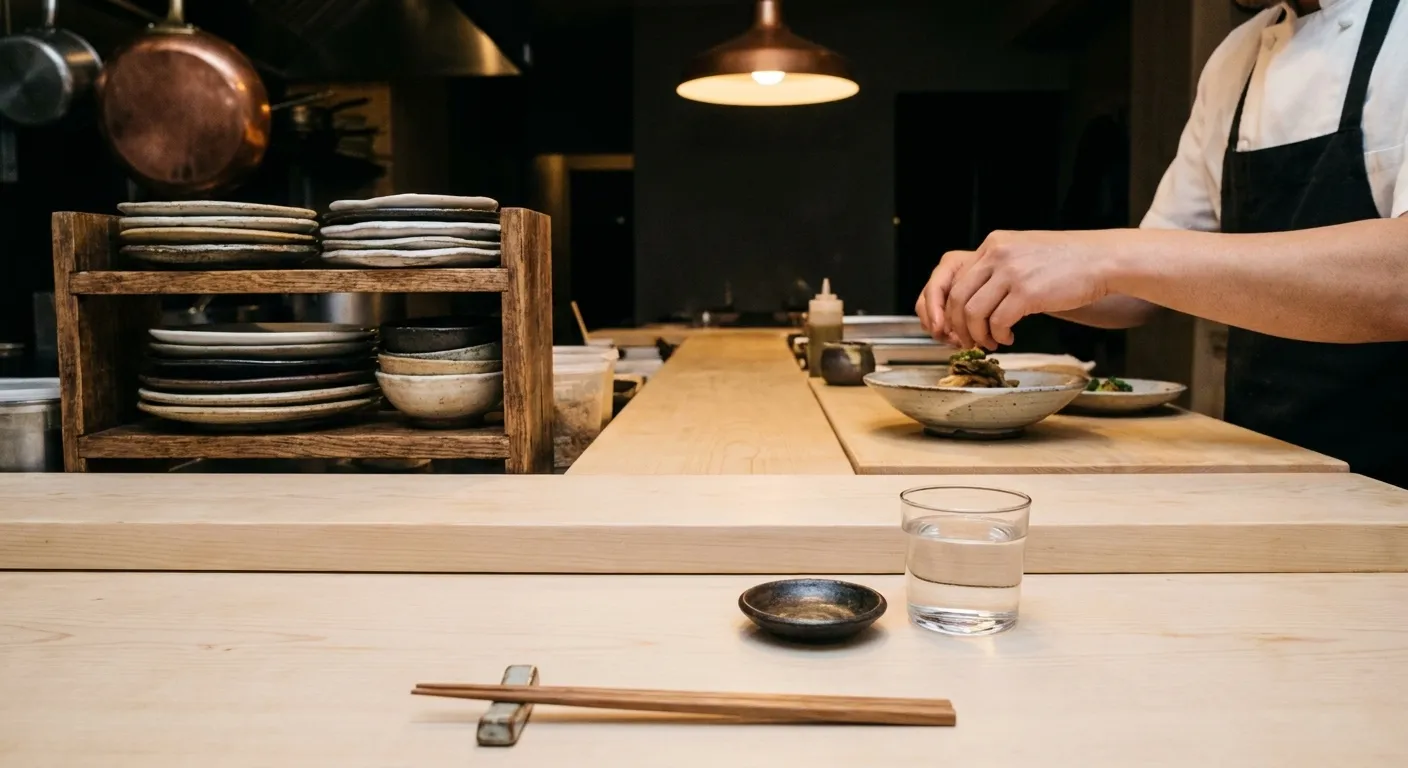
At the top are the small counters where a solo diner gets the best seat by design. Muku, a ten-seat kaiseki room, seats single diners at the centre of the counter directly in front of the chef — the position a couple would never be given. Tsukimi runs twelve seats across two parallel counters and is one of the city's Michelin-starred rooms where eating alone costs you nothing in experience. Odo in the East Village keeps a fourteen-seat counter serving kaiseki-style dishes à la carte, which is the useful part: you get the precision without committing to a three-hour tasting menu and the bill that comes with it.
What these rooms share is a sightline. When the cooking happens in front of you, there is no dead time to fill, no phone required, and the natural rhythm of the meal is set by the kitchen rather than by you deciding when to look up. If you are new to eating alone and want one experience that converts you, book a seat at a counter like this on a weeknight and order whatever the chef suggests.
The bar tier, which needs no booking at all
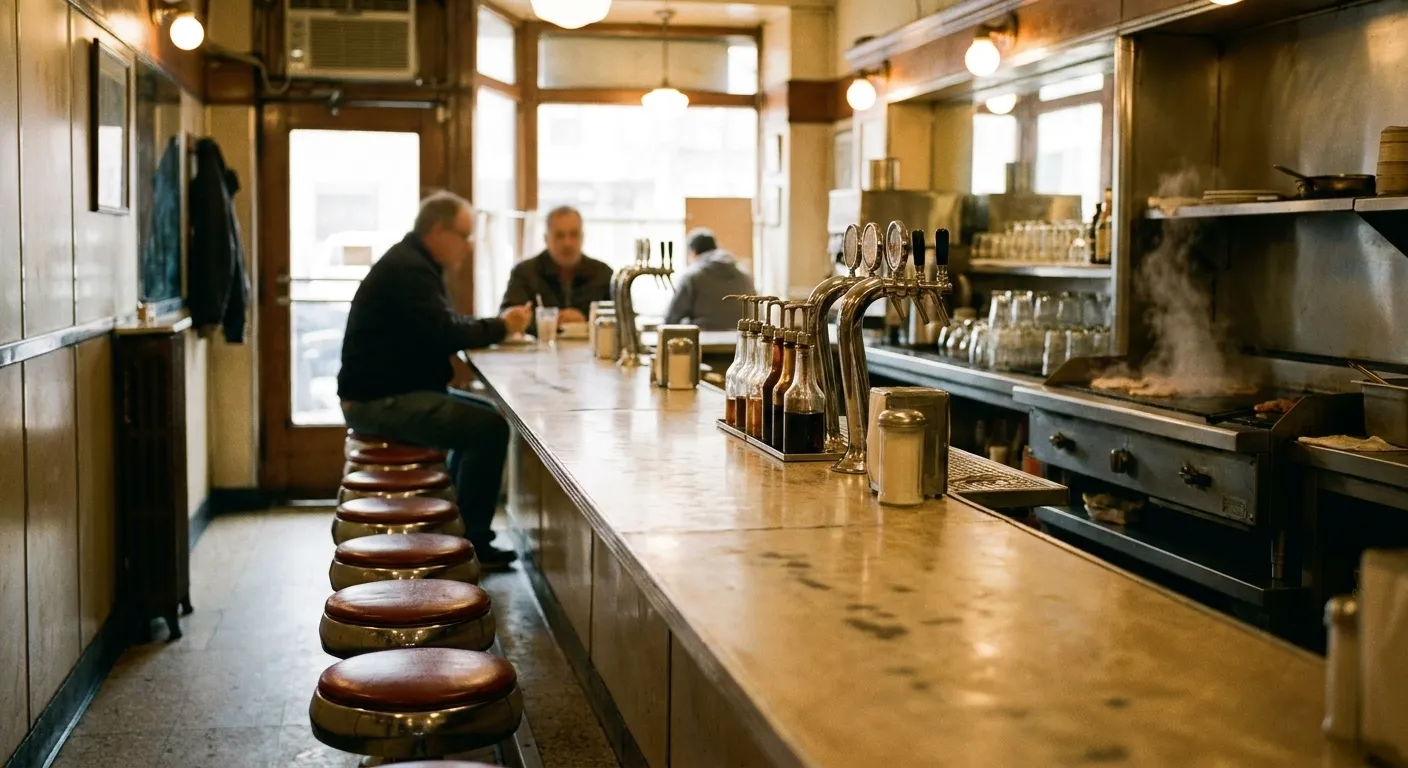
Below the reservation-only counters sits the broadest and most useful category: restaurants that hold their bar for walk-ins and serve the full menu there. Ruffian was built around a communal chef's counter and works as well for one as for two. Forsythia on the Lower East Side will happily feed you Roman pasta at the bar. Hundreds of rooms across the city operate this way without advertising it, which means a restaurant showing no online availability for a month frequently has a seat for you at 6:15pm tonight. For a solo diner this is the single most valuable fact about New York dining.
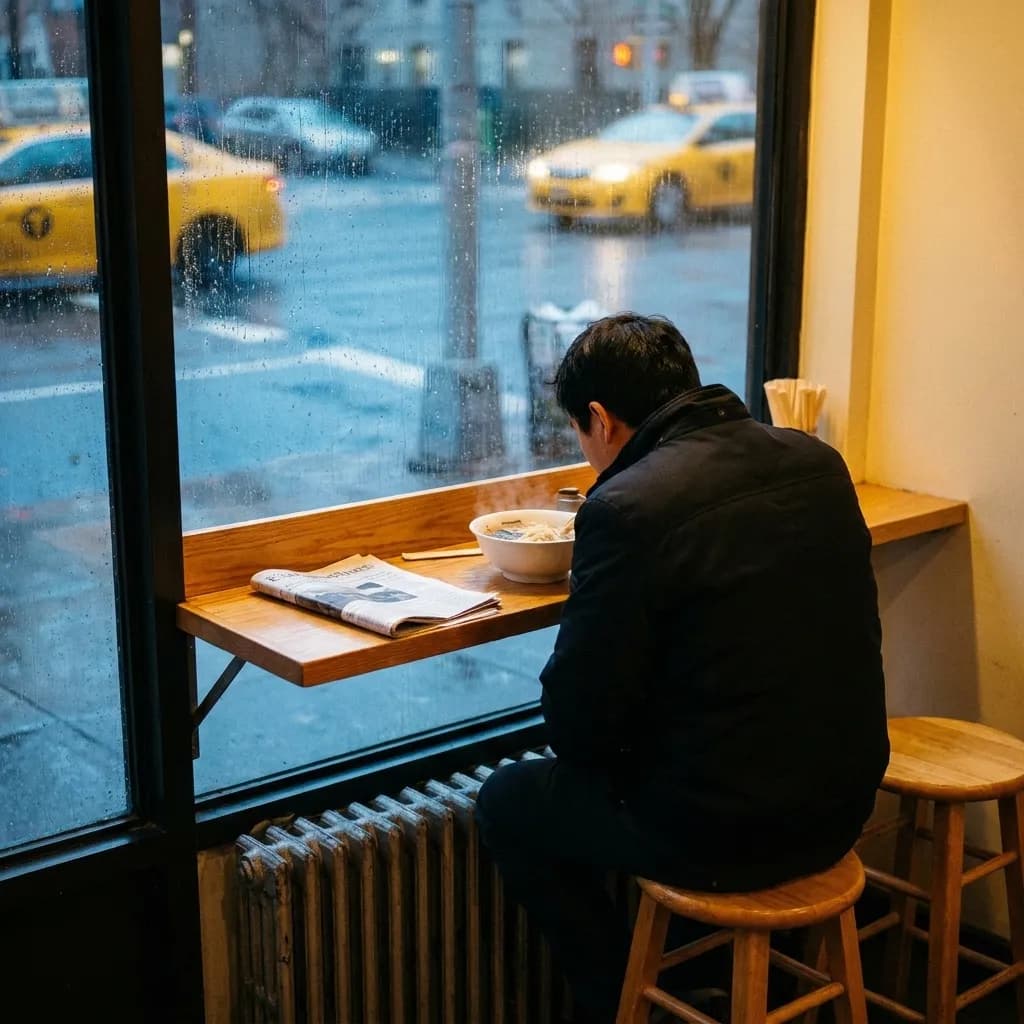
The everyday tier
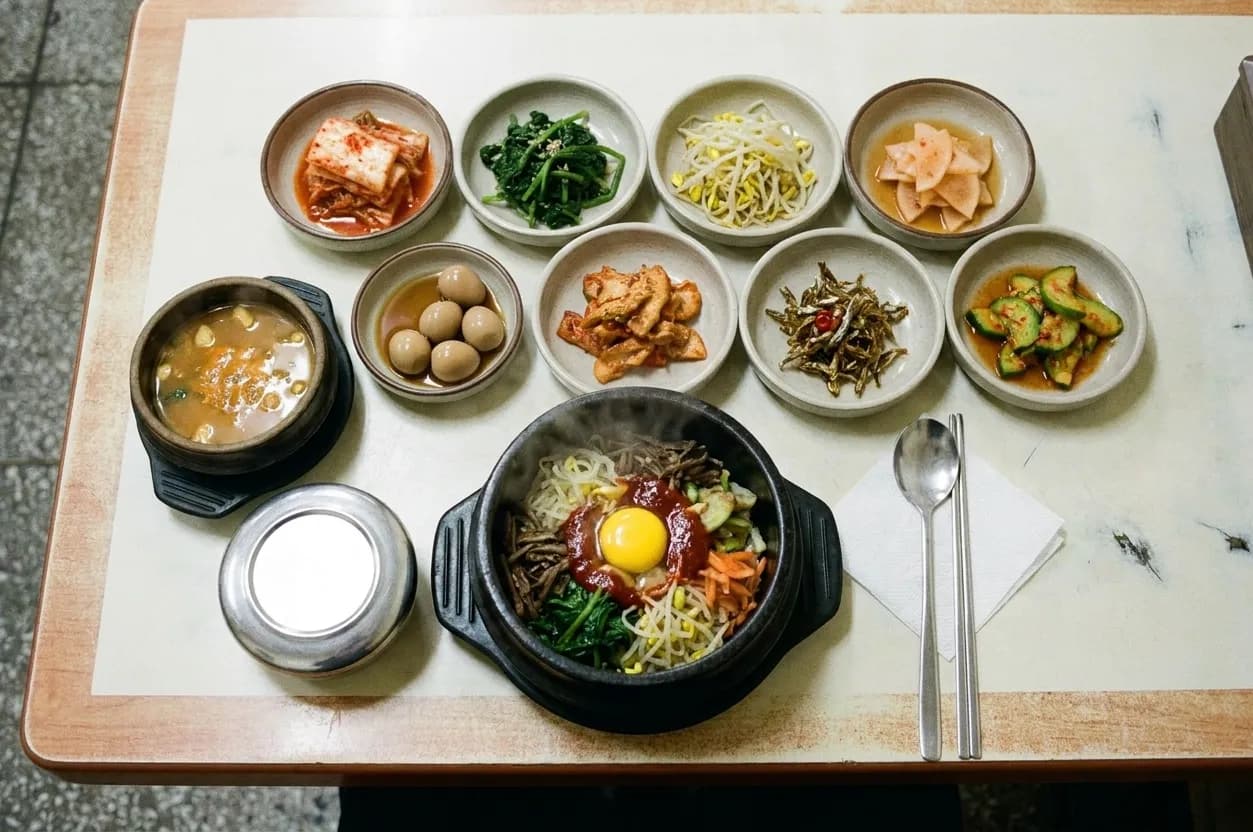
Most solo meals are not events, and the everyday tier is where the format genuinely shines: noodle shops, dumpling counters, the Japanese curry and katsu rooms in the East Village, taquerias, and the enormous number of Chinese, Korean and Thai kitchens across Queens and Brooklyn where a single diner at a small table is completely unremarkable. Nobody in any of these rooms has ever thought twice about someone eating alone. That is the whole point — the least awkward solo meals are in places where solo eating is not a category anybody has considered.
How to book, and what to say
Booking platforms often hide single covers even when the restaurant will take you, so if a room shows nothing for one, check whether it shows something for two at the same time — that usually means a table exists and the system is being unhelpful. Call and ask directly for a counter seat rather than a table; the phrasing matters, because a host hearing table for one will look at a different set of inventory than a host hearing is the bar open. And if you turn up without a booking, ask at the door for the bar rather than asking whether they have anything. It is a different question and it gets a different answer.
The timing that makes it easy
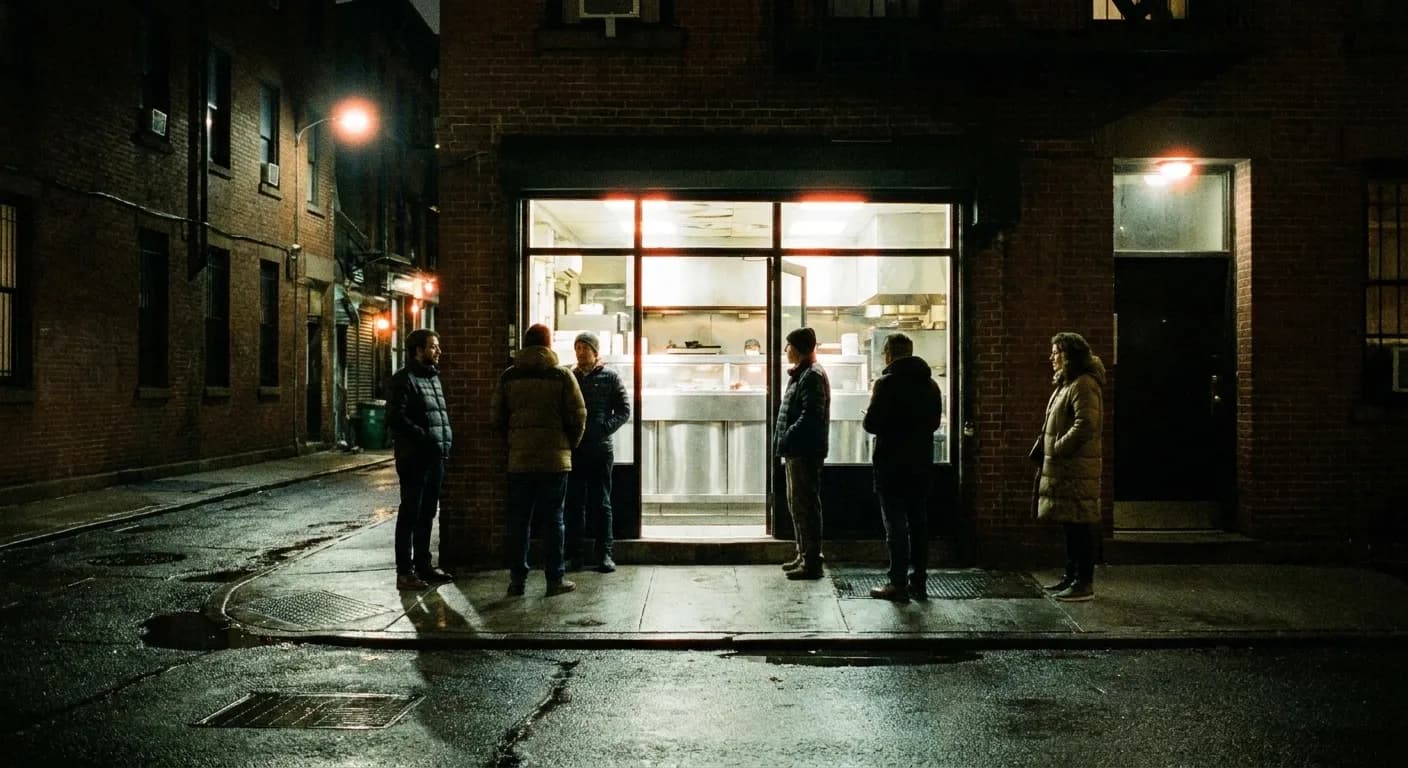
Early is the solo diner's advantage. At 5:45pm most counters are empty, the kitchen is fresh, and staff have time to talk if you want that and leave you alone if you do not. The second window is late — 9:30pm onward, after the first turn has cleared, when a single seat appears at almost every bar in the city. The hour to avoid is 7:30 to 8:30pm on a Friday, when every room is at capacity and a solo diner is competing for space with parties that spent three weeks planning. This is not about being tolerated; it is about the hours when the experience is actually better.
What to order when you are on your own
Two adjustments improve a solo meal more than any restaurant choice. First, order in the wrong shape: two appetisers instead of an entrée, or a starter and a dessert, which is a better meal for one person than a plate designed to be the centre of a shared table. Second, order the thing that needs to be eaten immediately — the fried item, the fresh pasta, the fish that comes off the grill and has ninety seconds of life. When you are alone there is nobody to wait for and nothing going cold on the table, which is a real culinary advantage and nobody ever mentions it.
The etiquette question, answered plainly
Nobody is looking. Restaurant staff in this city see solo diners every service and think about it exactly as much as they think about a party of two. The only genuine etiquette is practical: at a busy counter, do not spread out over three seats' worth of space, and if you are lingering over a second drink at 8pm on a Saturday while people wait, that is the one moment to notice the room. Bringing a book is fine. Bringing a laptop to a dinner counter is the one thing that will actually irritate people, and only at dinner.
Counter policies and walk-in windows change with demand, so if you are traveling across town for a specific seat it is worth a phone call first. The strategy holds even when a particular room does not.
Tags: #solodiningnyc #eatingalone #nyccounters #restaurantsopennyc #eastvillage #lowereastside #omakase #nycfood #barseats #tableforone #nycdining #nyceats #dinealone
All trademarks are the property of their respective owners.
Ask Karpo first
Counter seats are the part of a restaurant's inventory that never shows up online, and they are exactly what a solo diner wants. Ask Karpo on the night and it can work out which counters near you take walk-ins.