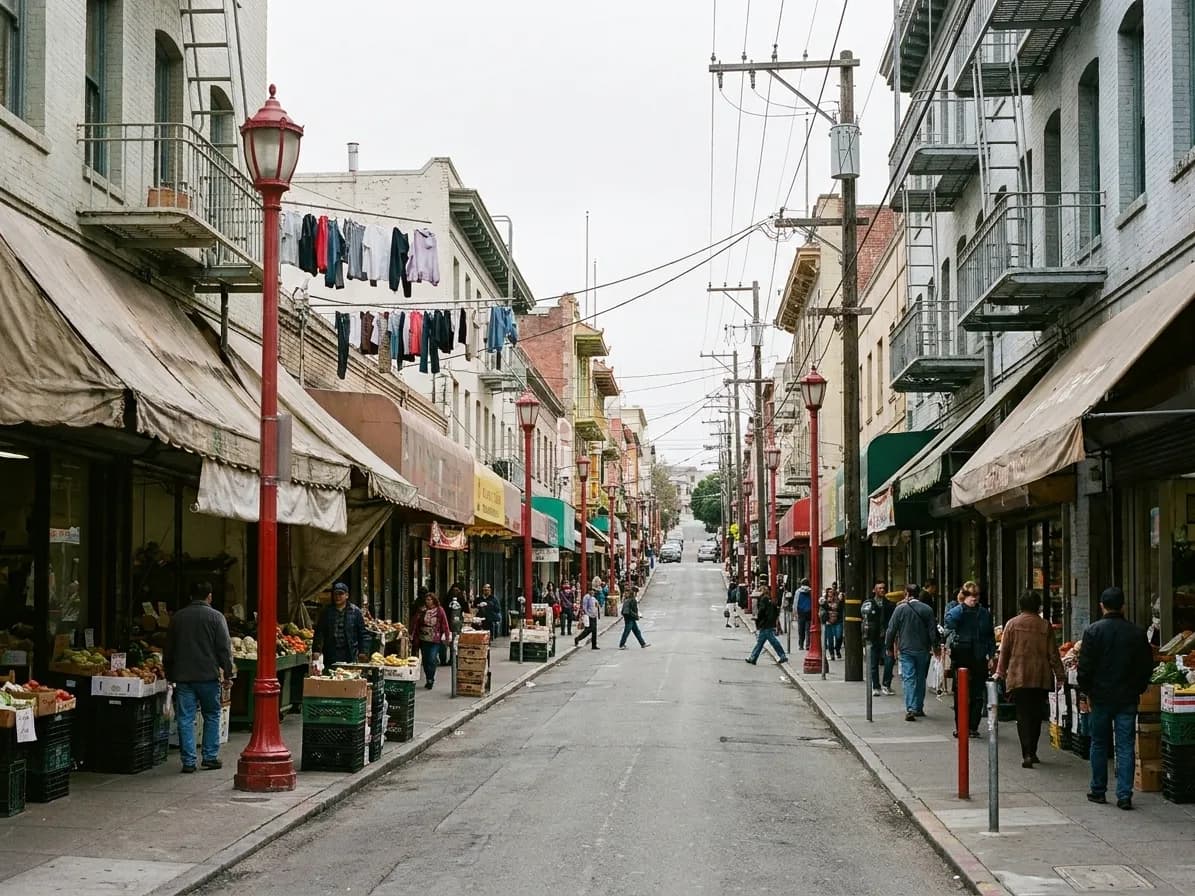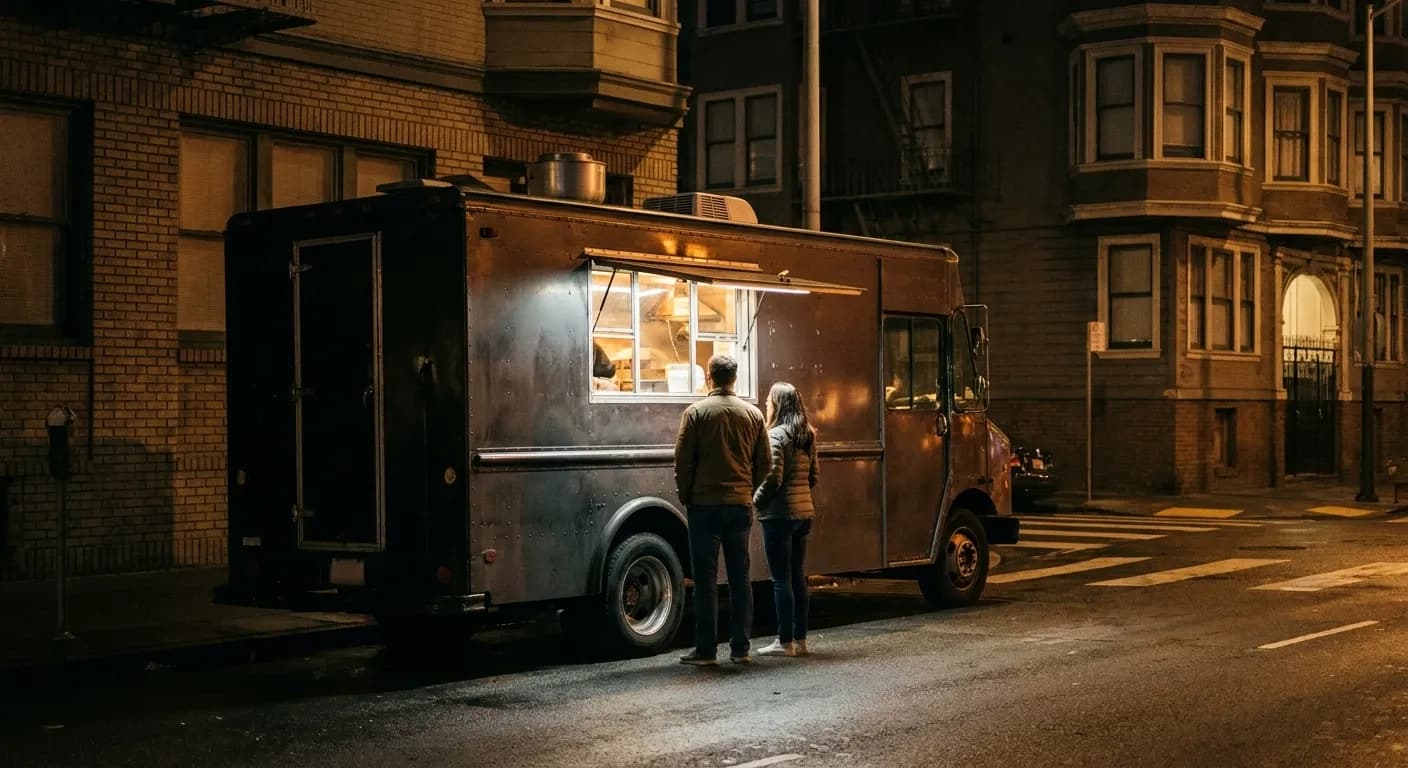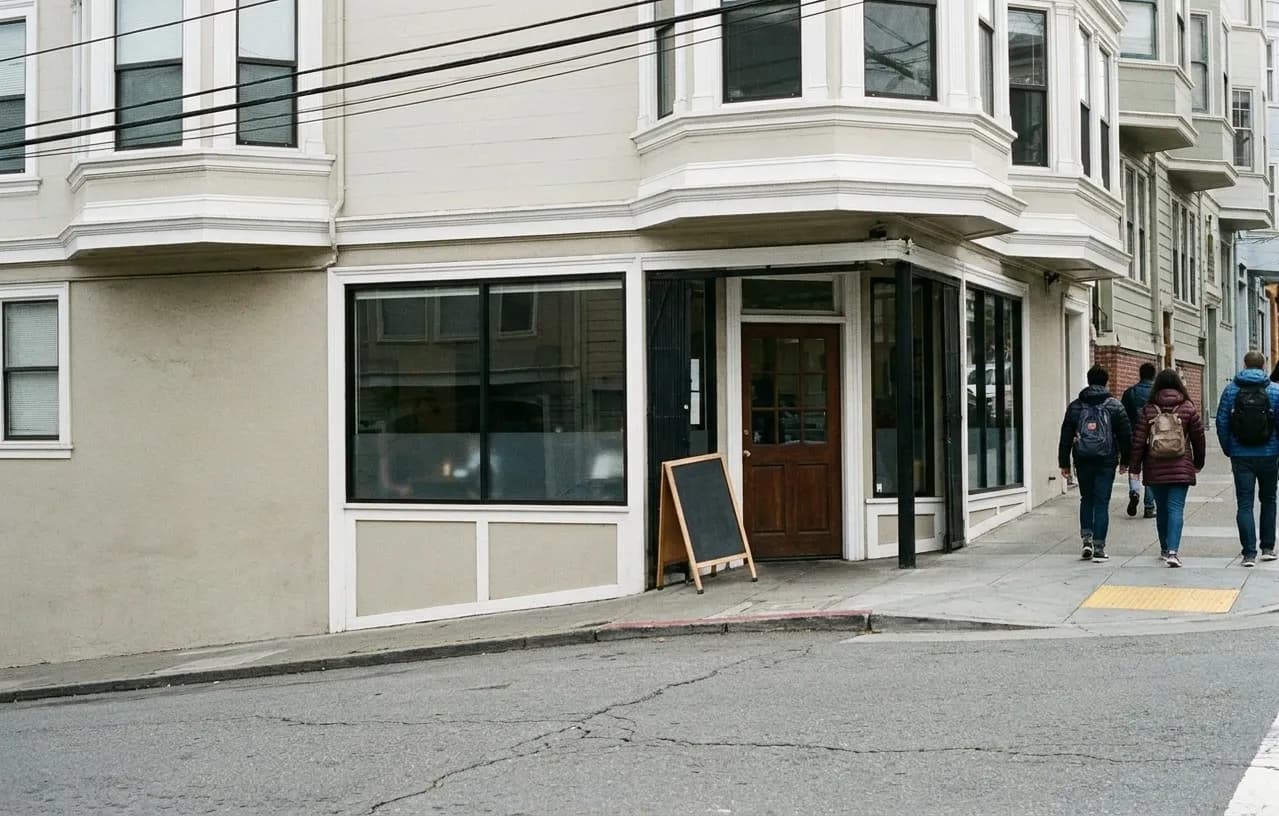
The most useful piece of restaurant advice in San Francisco is geographic rather than culinary. Every major landmark in this city sits at the edge of a real neighbourhood, and the price and quality gradient between the two is brutally steep — three blocks of walking will typically take a third off the bill and add considerably to the food. This is not a secret so much as a thing that is hard to act on when you are hungry and standing in front of a restaurant with a view.
Opening hours near the waterfront swing hard by season and day. Ask Karpo what is actually open near you before you commit to the walk.
Fisherman's Wharf: walk south into North Beach
The Wharf is the clearest case. The restaurants directly on Jefferson Street are priced for people who will eat there exactly once, and the crab is frequently not local — Dungeness season runs roughly from November into spring and the rest of the year the product is coming from somewhere else, which is legal and normal but not what the signage implies. Ten minutes of walking south puts you in North Beach, where the Italian restaurants are serving a mix of visitors and residents and are correspondingly accountable.
Within North Beach, the further you get from Columbus Avenue the better the ratio. The side streets — Green, Union, Grant above Columbus — have the family-run rooms that have been there for decades. The focaccia bakeries and the slice windows are the cheap end and they are genuinely good.
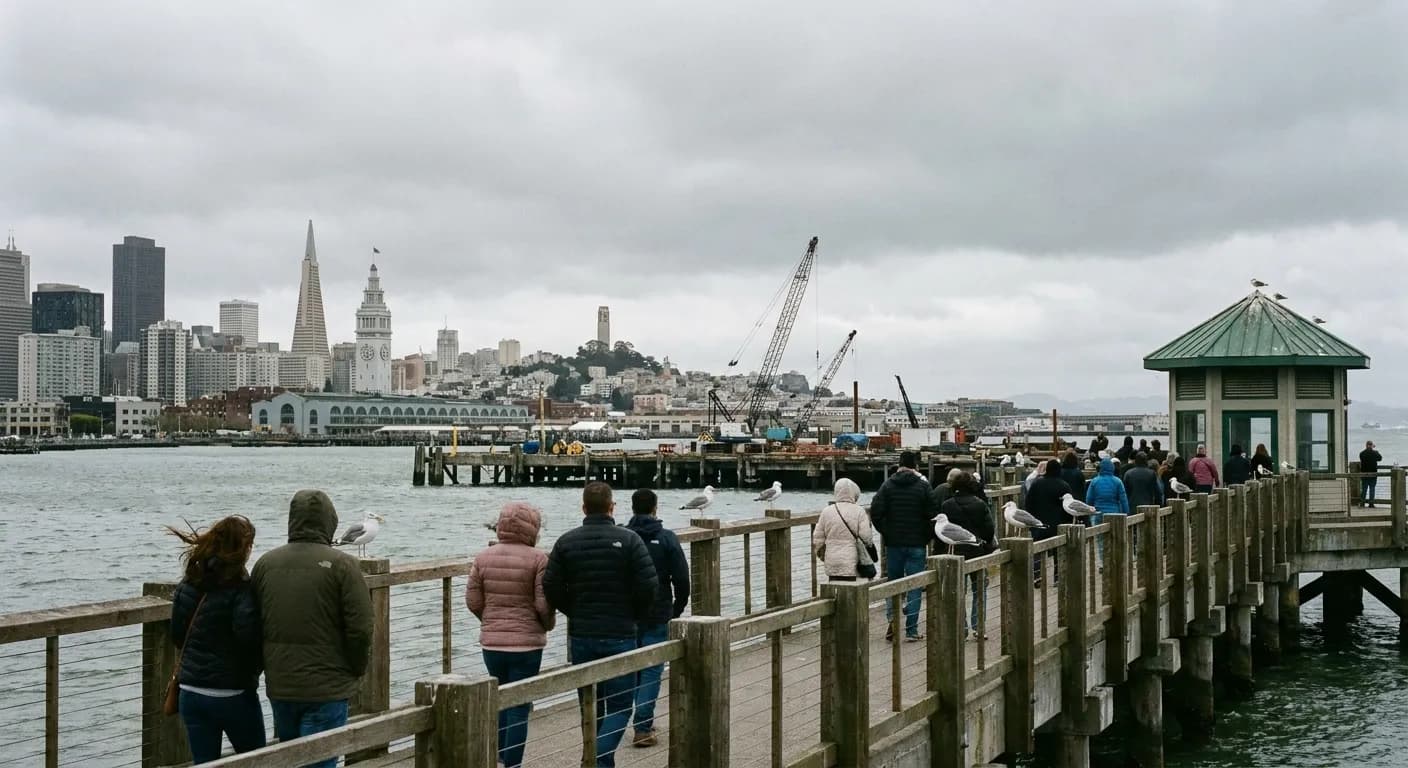
Union Square: go west to the Tenderloin edge
Union Square is ringed by hotel restaurants and chains, and the food improves dramatically within a five-minute walk in almost any direction except back toward Market Street. Walking west along Geary or O'Farrell brings you to Little Saigon and the dense Vietnamese, Thai and Burmese counters of the Tenderloin, which is one of the best-value eating districts in the western United States and is roughly four blocks from the shopping district.
The Tenderloin has a reputation and it is not entirely unearned — the blocks are rough in a visible way and it is reasonable to be alert. But the restaurants are busy, well lit, and full of families at dinner time. Treat it like any dense urban neighbourhood and it is fine.
Golden Gate Park: the Inner Sunset side
The park is enormous and the food inside it is limited to a handful of concessions. The two exits worth knowing are Ninth and Irving on the south side, which puts you in the Inner Sunset with a run of Asian restaurants, bakeries and a good bar or two, and the Richmond side at Sixth and Clement, which is the stronger of the two if you have the energy. Both are five minutes from the eastern end of the park and neither charges anything like park-adjacent prices.
The Ferry Building and the Embarcadero
The Ferry Building is a genuine exception to the rule — the food inside is expensive but it is expensive because the producers are good, and the Saturday farmers market out front is the real event rather than a tourist facsimile of one. If you want the cheaper version, the stalls on the plaza outside are consistently better value than the permanent tenants inside, and the market runs on Tuesdays and Thursdays as well, considerably less crowded.
Walking inland from here is less rewarding than elsewhere because the Financial District empties out in the evening and on weekends. This is the one landmark where staying put is defensible.
Alcatraz, and the mistake people make on the way back
The Alcatraz ferry lands you back at Pier 33, which is a genuinely awkward spot for food — north of the Ferry Building, south of the Wharf, and surrounded by parking. Nearly everyone walks north into the most expensive stretch of the waterfront because it is closer. Walking south along the Embarcadero for fifteen minutes instead puts you at the Ferry Building, and cutting inland puts you into the edge of the Financial District, which on a weekday lunchtime has real options.
Typing restaurants open near me in San Francisco while standing at Pier 33 will return a radius that is dominated by the Wharf, because that is where the density is. The radius is misleading. Widening the search by half a mile in the right direction changes the results completely, and the walk along the water is pleasant in a way that the walk through the Wharf is not.
Twin Peaks, Coit Tower and the viewpoints
None of the elevated viewpoints have meaningful food and all of them are surrounded by residential streets. Coit Tower drops you back into North Beach, which is covered above. Twin Peaks is a drive or a long walk from anything, and the closest useful cluster is down in Noe Valley on Twenty-Fourth Street — a genuinely pleasant strip of neighbourhood restaurants that almost no visitor ever reaches, precisely because there is no attraction attached to it.
The general principle, stated plainly: in San Francisco the food follows the residents, not the sights, and the residents live uphill and inland from almost every landmark. Pick the direction that has more apartment buildings and fewer souvenir shops and walk that way for eight minutes. It works nearly every time.
Tags: #SanFrancisco #SFEats #NorthBeach #FishermansWharf #Tenderloin #InnerSunset #ClementStreet #NoeValley #FerryBuilding #TouristTraps #SFGuide #BayArea #WhereToEat
All trademarks are the property of their respective owners.
Ask Karpo first
Ask Karpo which restaurants are open near you in San Francisco right now, how far they are from the landmark you are standing at, and whether the walk inland is worth it tonight.