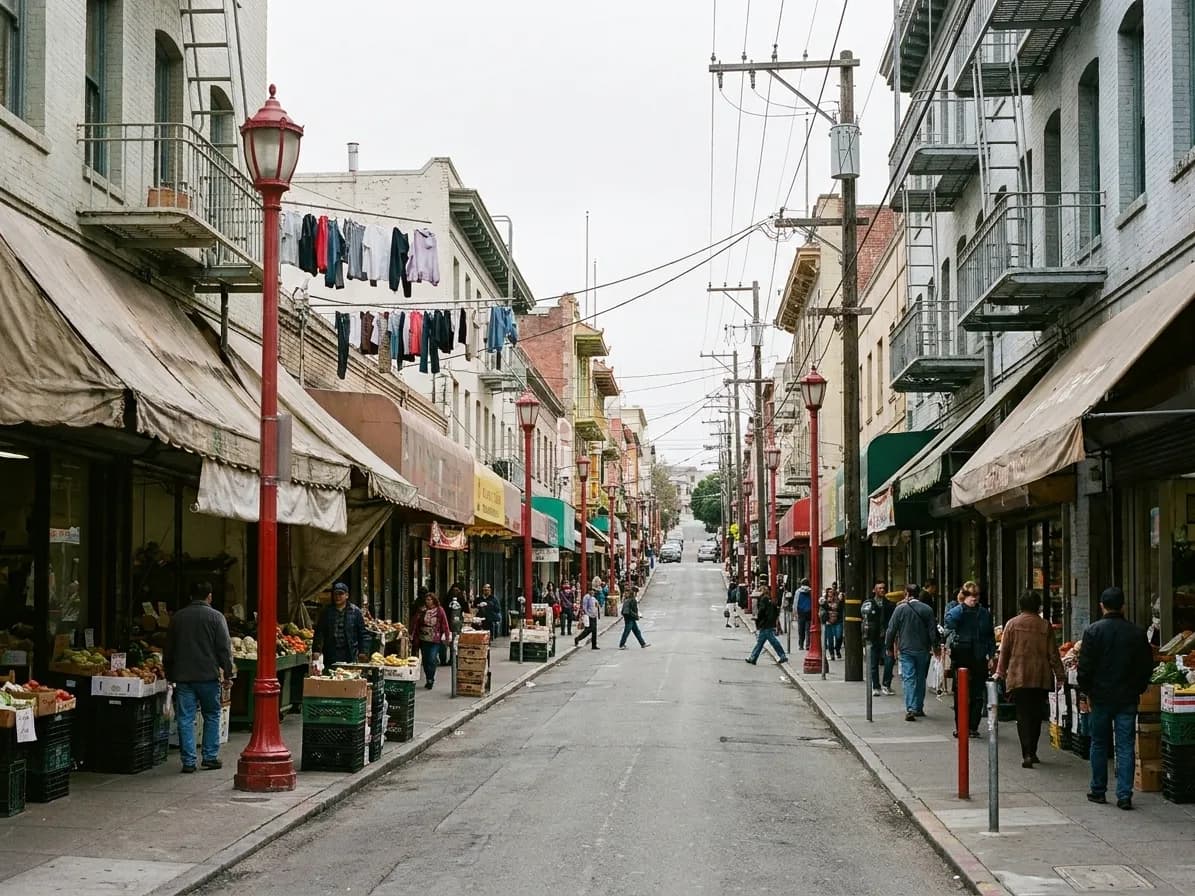
Chinatown in San Francisco supports two distinct restaurant economies within the same few blocks, and the gap between them is wider than in almost any other neighbourhood in the city. One set of rooms serves people who will eat here once. The other serves people who eat here weekly. The second set is cheaper, better and largely invisible if you are relying on search rankings, because visitors write the reviews. The signals that separate them are consistent and easy to read.
Telling a resident restaurant from a visitor one in this neighbourhood takes about ten seconds once you know what to look at. Tell Karpo what you want to eat and it will point you at the room the neighbourhood uses.
Signal one: who is at the tables
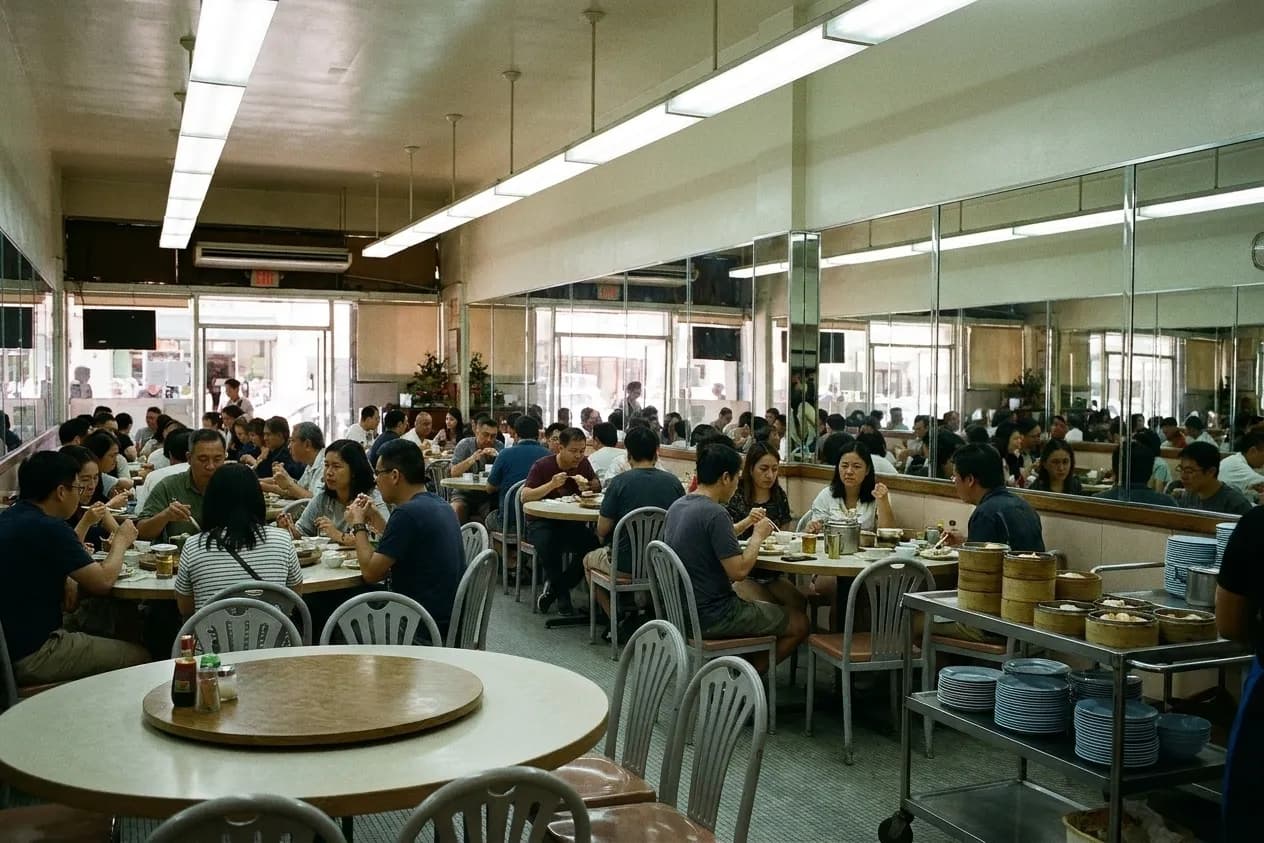
The most reliable indicator costs nothing and takes a second. Look through the window at one in the afternoon on a weekday. A room full of families, older residents and groups eating from shared dishes is a resident restaurant. A room of couples and small groups with cameras and shopping bags is not. This is not about authenticity as an abstraction — it is about who the kitchen is cooking to please.
The corollary is that the time you look matters. Almost every room here looks like a visitor room at seven in the evening in high season. Weekday lunch is when the difference is visible, and it is also when the resident rooms are at their best.
Signal two: the shape of the menu
Resident restaurants have menus that assume knowledge. Dishes are listed without explanation, there are seasonal or daily items written separately on the wall, and there is no photograph of anything. Visitor restaurants explain, illustrate and offer combination sets designed to remove decisions.
Menu length works the same way as it does everywhere: a room doing one thing seriously — roast meats, noodles, dumplings, a single regional cuisine — is more reliable than one offering everything. In this neighbourhood the specialists are unusually good, because the customer base is knowledgeable enough to keep them honest.
Signal three: the counter and the window
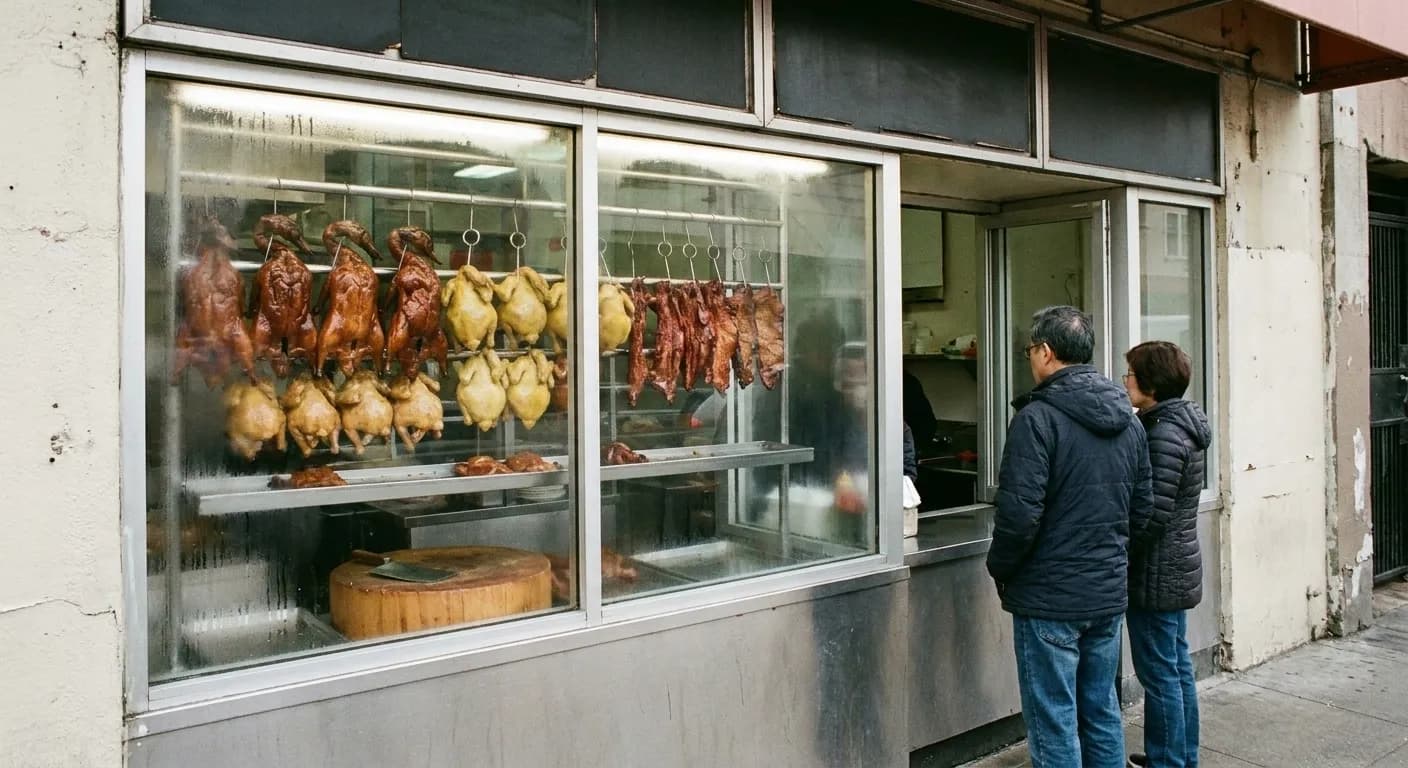
Roast meat shops with a chopping block in the window, noodle counters, and bakeries with a case of buns are the neighbourhood's everyday food and its best value. They are not restaurants in the sit-down sense and they will not appear on a list of best restaurants, but a plate of roast meat over rice from a counter is better food than most of what is served on the main street, at a third of the price.
Look for a queue of people buying to take home rather than to eat in. That is the clearest possible signal that a place is part of the neighbourhood's routine rather than its tourist economy.
Signal four: hours that follow residents
Resident restaurants keep resident hours: open early, busy at lunch, closing earlier in the evening than a visitor-facing room would. Many close one weekday a week. Several run a dim sum or a lunch service that is the main event and an evening service that is an afterthought. Hours that seem inconvenient are usually a good sign.
The practical implication is that you should plan around the neighbourhood's clock rather than your own. Lunch here is far stronger than dinner, and a weekday lunch is the single best window for eating in Chinatown that exists.
How to order once you are in
Order what the room is ordering. Look at the tables around you, point if you need to, and ask what is good today — the answer at a resident restaurant is specific rather than promotional. Shared dishes and rice are the format, ordering per person is not, and a table of three dishes for four people is normal rather than mean.
Cash is still useful, hours change without notice, and the best rooms are frequently the least interested in advertising. Confirm before travelling across town, and rely on the density of the neighbourhood rather than on one door.
The mistake that is worth avoiding
The failure mode is not eating badly — it is eating fine and paying twice what the neighbourhood charges for something better two streets away. The main-spine rooms are not bad; they are simply calibrated for a customer who will not return, and the pricing and the menu follow from that.
The correction is small. Walk one block off the busiest street before deciding, look through a window at who is eating, and be willing to go into a room that has made no effort to attract you. In this neighbourhood that indifference is usually a good sign rather than a bad one.
Going as a visitor without the visitor experience
None of this requires speaking the language or knowing anyone. It requires going at lunch on a weekday, walking one street off the busiest one, choosing a room with a short menu and a full dining room, and ordering shared dishes rather than one plate each. Those four decisions get you most of the way to how the neighbourhood actually eats.
Being unsure is fine and asking is normal. Pointing at what a nearby table is having, or asking what the kitchen is known for, is met well nearly everywhere here. The rooms that would make you feel awkward for asking are, almost by definition, the ones operating on the other economy.
Tags: #SanFrancisco #SF #BayArea #NeighborhoodGuide #LocalGuide #ByTheBlock #Chinatown #SFEats #SFGuide #ExploreSF #SFLocal #SFWeekend #SFNights #SFFood
Sources consulted: sfchronicle.com · eater.com · sfstandard.com
All trademarks are the property of their respective owners.
Ask Karpo first
Karpo is a proactive AI assistant that lives in iMessage. Ask which room the neighbourhood actually uses.