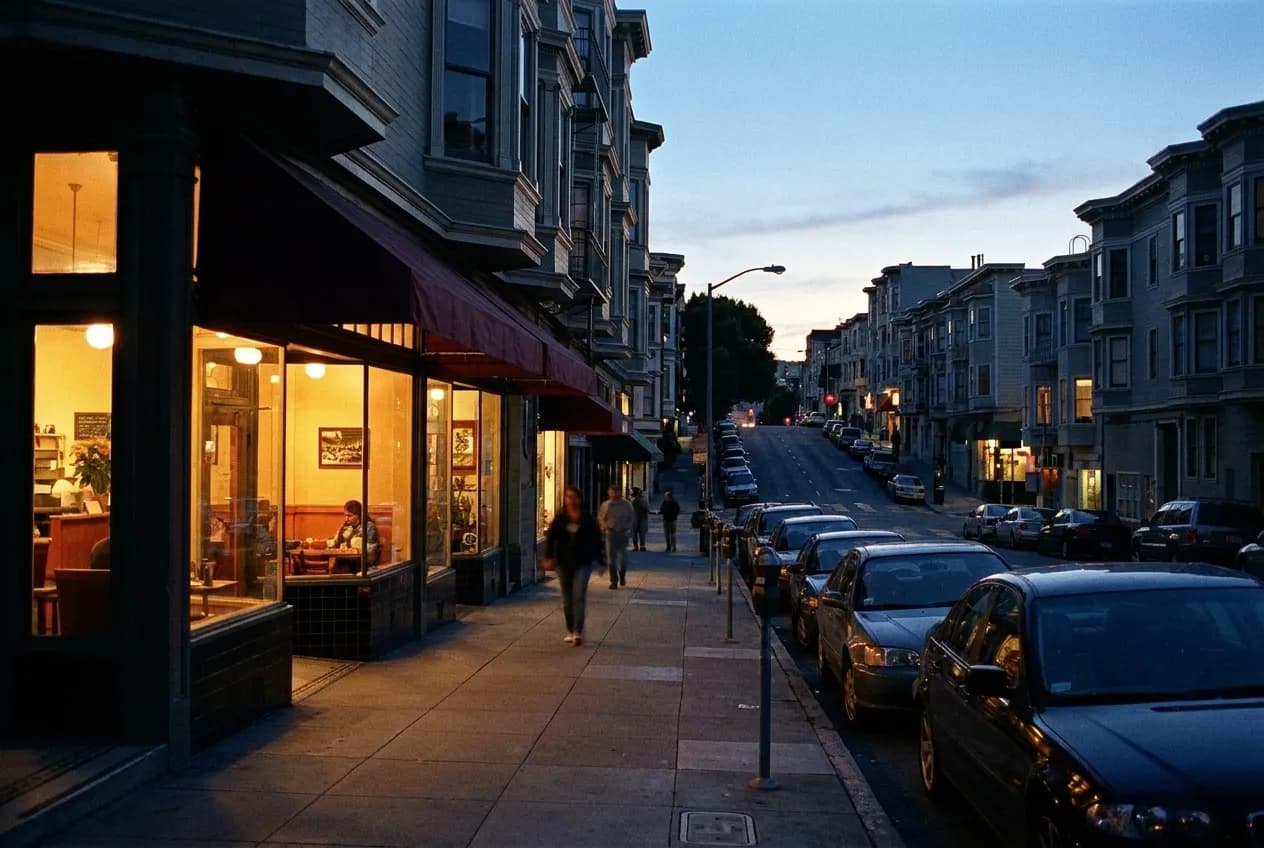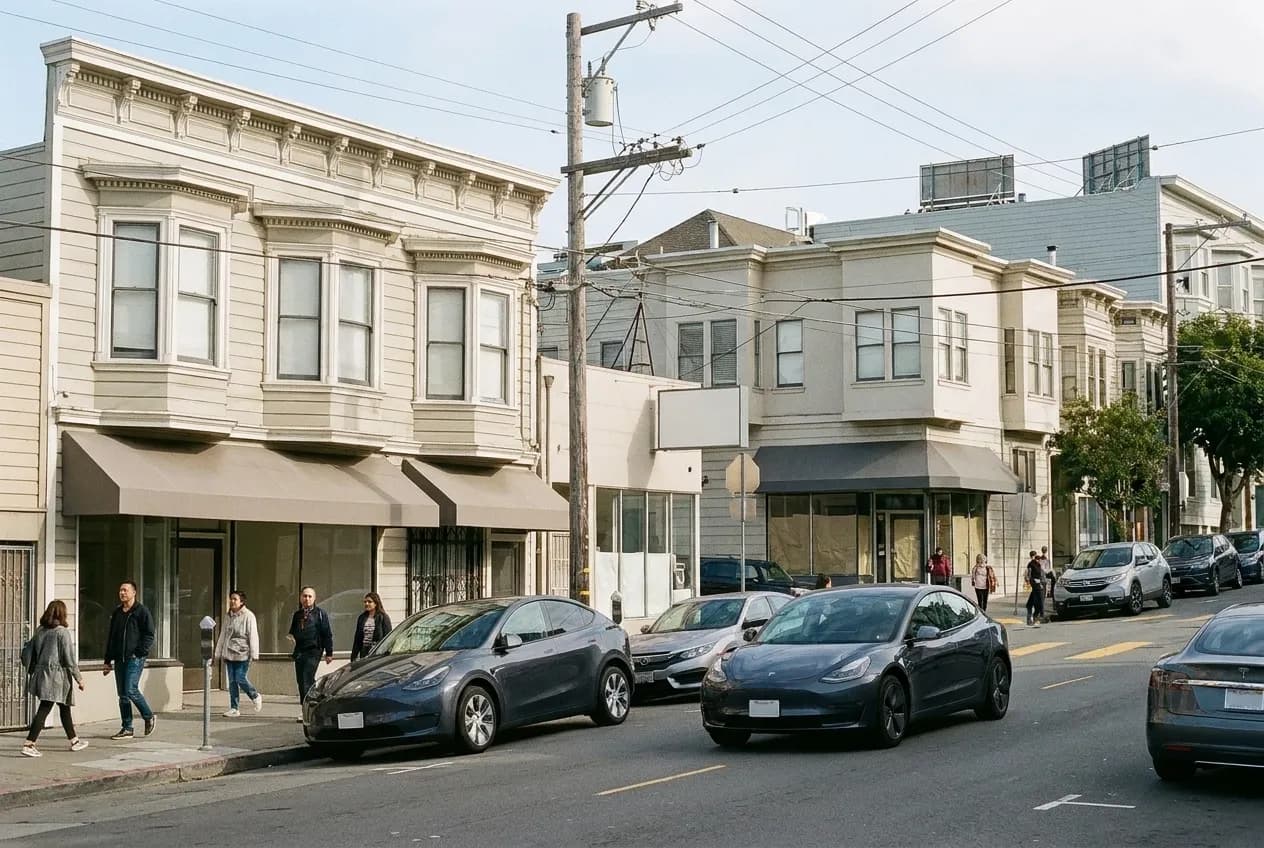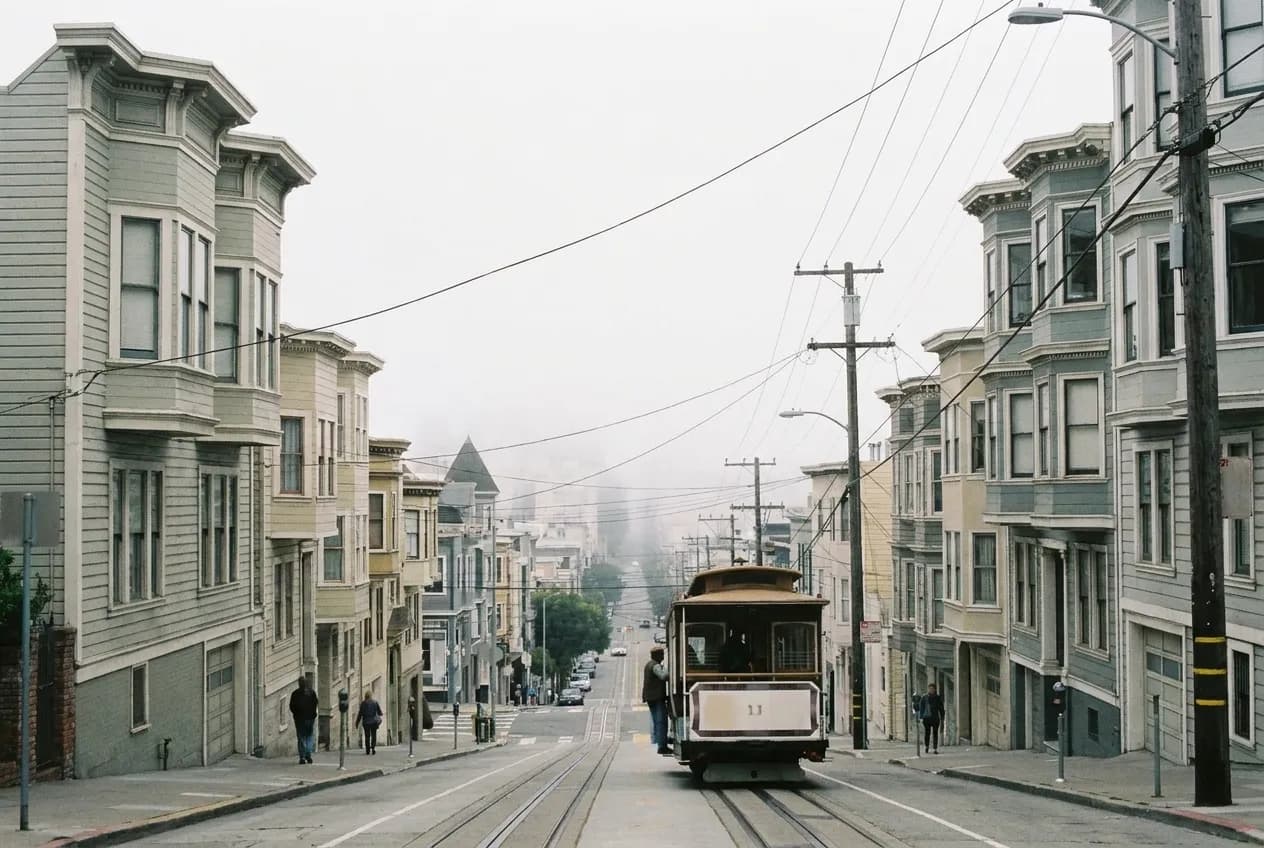
San Francisco is seven miles by seven and people persistently underestimate how much that matters. The city has genuinely distinct microclimates - the Outer Sunset can sit in cold fog at sixteen degrees while the Mission, three miles east, is in full sun at twenty-eight, on the same evening, at the same hour. It has hills steep enough to change which streets are walkable. And it has a transit system that is excellent along some corridors and useless across others. Any list of the city's best restaurants that ignores all three is describing a city nobody actually eats in.
In this city the right question is which good neighbourhood is warm tonight and reachable from where you are without a transfer. Tell Karpo where you are staying and roughly when you want to eat, and get a shortlist that accounts for the fog and the hill.
The Mission: the sunny one, and the deepest bench
The Mission sits in the rain shadow of Twin Peaks and is reliably the warmest and clearest part of the city, which is why it has the outdoor tables and why it fills first on any decent evening. It is also the densest concentration of good food in San Francisco across every price point - taquerias on Mission Street, the pizza and pasta rooms on Valencia, the ice cream queues, and a taco economy that is genuinely one of the best in the United States.
La Taqueria on Mission Street is the famous burrito argument, notable for leaving the rice out; El Farolito is the late one, running well past midnight and feeding people coming out of the bars. Tartine on Guerrero is the bakery that changed how a generation of American bakers thought about bread, and its queue is permanent. The Mission's flaw is that it is busy in a way that makes a spontaneous Saturday dinner difficult - come on a weeknight or book.
North Beach and Chinatown: two neighbourhoods that share a border
North Beach is the old Italian quarter and it still works: espresso bars that have been there for generations, red-sauce rooms, and the best concentration of casual sit-down Italian food in the city. Tony's Pizza Napoletana on Stockton runs multiple ovens for multiple styles under one roof, which makes it the single most efficient place in the city to compare pizza traditions. Golden Boy sells square Sicilian slices through a window and has done for decades.
Walk two blocks south and you are in Chinatown, which is a completely different food economy - dim sum takeaway counters, roast meat windows, bakeries selling egg tarts, and dumpling houses that operate on volume. Good Mong Kok on Stockton is the archetype: a queue, a counter, cash, and dim sum in a paper bag eaten in Portsmouth Square. The two neighbourhoods are a five-minute walk apart and eating across both in one evening is one of the better things you can do in this city.
Hayes Valley and the civic corridor: the timed dinner
Hayes Valley exists in its current form because of the Opera House, Davies Symphony Hall and the Orpheum, which is to say its restaurants are built around curtain times. That has two consequences. Before seven-thirty, the neighbourhood is full and the kitchens are moving fast; between eight and ten it empties out and you can walk into places that were impossible an hour earlier. If you are not going to a performance, the late slot here is the best-kept easy booking in the city.
It is also flat, walkable and well served by transit - Van Ness and Civic Center stations put you within a few minutes of everything. The food skews toward small modern rooms, wine bars and a strong coffee-and-pastry layer along Hayes Street. It is the most reliable neighbourhood in San Francisco for a dinner where the group needs to hear each other.
The Richmond and the Sunset: where the value is
West of the park and north of it, the city gets colder, foggier, cheaper and in some categories better. Clement Street in the Inner Richmond is the strongest Chinese restaurant corridor in the city outside Chinatown, with Burmese, Russian and Vietnamese rooms alongside it. Irving and Noriega in the Sunset run the same pattern. Prices here are meaningfully lower than east of Twin Peaks for equivalent cooking.
The trade is weather and transit. The fog is real and it is cold - a summer evening in the Outer Sunset can be ten degrees cooler than the Mission and windy with it, so bring an actual coat rather than a jacket. The N Judah and the 38 Geary will get you there; getting back late is slower. Ocean Beach at the end of Judah is worth timing dinner around, because sunset over the Pacific is the reason to be that far west.
Downtown, SoMa and the parts that empty out
The Financial District and much of SoMa are weekday lunch economies. They feed a large working population between eleven and two and then thin dramatically; a lot of very good lunch counters are simply closed at weekends, and a Sunday dinner search downtown will return a misleadingly optimistic list. Treat this area as a lunch destination and plan dinner elsewhere unless you are going to something specific.
The exception is the stretch around the ballpark and the Embarcadero, which follows the events calendar rather than the working week. On a game night it is packed and the queues are long; on a quiet Tuesday it is one of the calmer places in the city to eat near the water. The Ferry Building's food hall is the reliable middle option and is best in the morning on a market day.
Practical notes
Weather: check the Outer Sunset and the Mission separately, because they are different cities in August. Bring layers regardless - the temperature drops sharply after sunset everywhere. Transit: BART runs along Mission Street and is the fast north-south spine; Muni Metro serves the west; crosstown journeys are slow and a rideshare across Twin Peaks is often quicker than two buses. Hills: Nob Hill, Russian Hill and Telegraph Hill are steep enough to change your plans - check the elevation before committing to a walk. Timing: most SF kitchens stop between nine and ten, which is early for a big city; the Mission's taquerias are the main late exception. Booking: essential in the Mission and Hayes Valley at weekends, rarely needed in the Richmond and the Sunset.
Tags: #RestaurantsNearMe #SanFrancisco #MissionDistrict #NorthBeach #Chinatown #HayesValley #InnerRichmond #OuterSunset #ClementStreet #SFEats #Microclimate #NeighborhoodGuide #WhereToEatSF #MuniMetro
All trademarks are the property of their respective owners.
Ask Karpo first
The San Francisco dinner problem is rarely a shortage of good restaurants; it is picking one on the wrong side of a hill on a night the fog came in. Ask Karpo which neighbourhoods are clear tonight, what is bookable at the hour you want, and whether the place you had in mind is a twelve-minute ride or a forty-minute transfer.