The ferry from Wall Street takes twenty-two minutes to reach Red Hook, which is about twenty minutes faster than the psychological distance suggests. This wedge of South Brooklyn — cut off from the subway grid by the elevated Gowanus Expressway and the BQE's concrete trenches — operates on a different clock than the rest of the borough. Saturday afternoons here unfold at the pace of a neighborhood that learned long ago not to wait for the city to come to it.
Where the Cargo Ships Used to Queue
Red Hook's waterfront once processed more tonnage than any port on the Atlantic seaboard. The Erie Basin handled grain and coffee; the piers along the bay received ships from South America and the Caribbean. That era ended decades ago, but the architecture remains — brick warehouses with iron shutters, loading docks converted to artists' studios, cobblestone streets that still bear the grooves of nineteenth-century cart wheels. The neighborhood's isolation, the very thing that killed its shipping industry, preserved its bones. Walking the streets closest to the water, the scale feels wrong for contemporary Brooklyn — too wide, too quiet, built for commerce that moved in tons rather than transactions. The surviving industrial buildings have the proportions of cathedrals, their upper windows catching afternoon light in ways that residential architecture never manages.
The Ball Fields Before the Crowds Descend
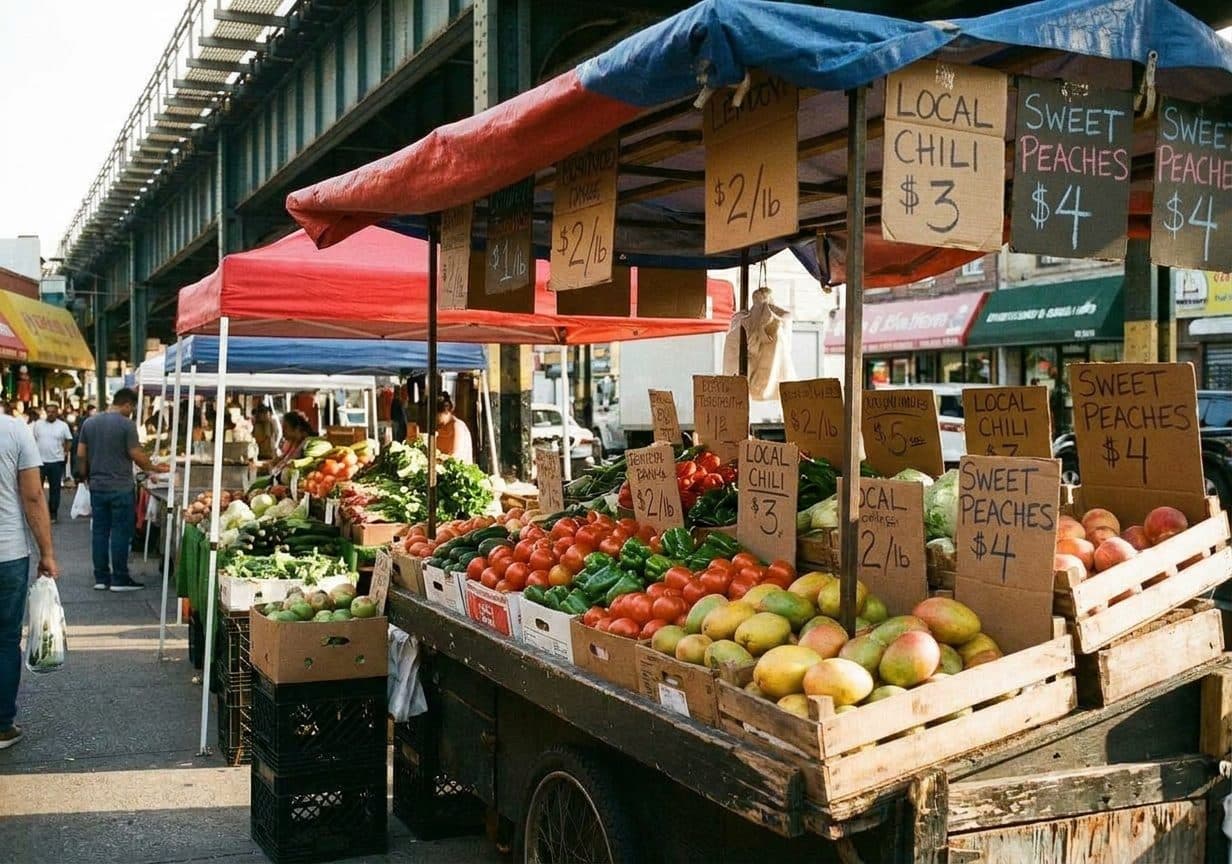
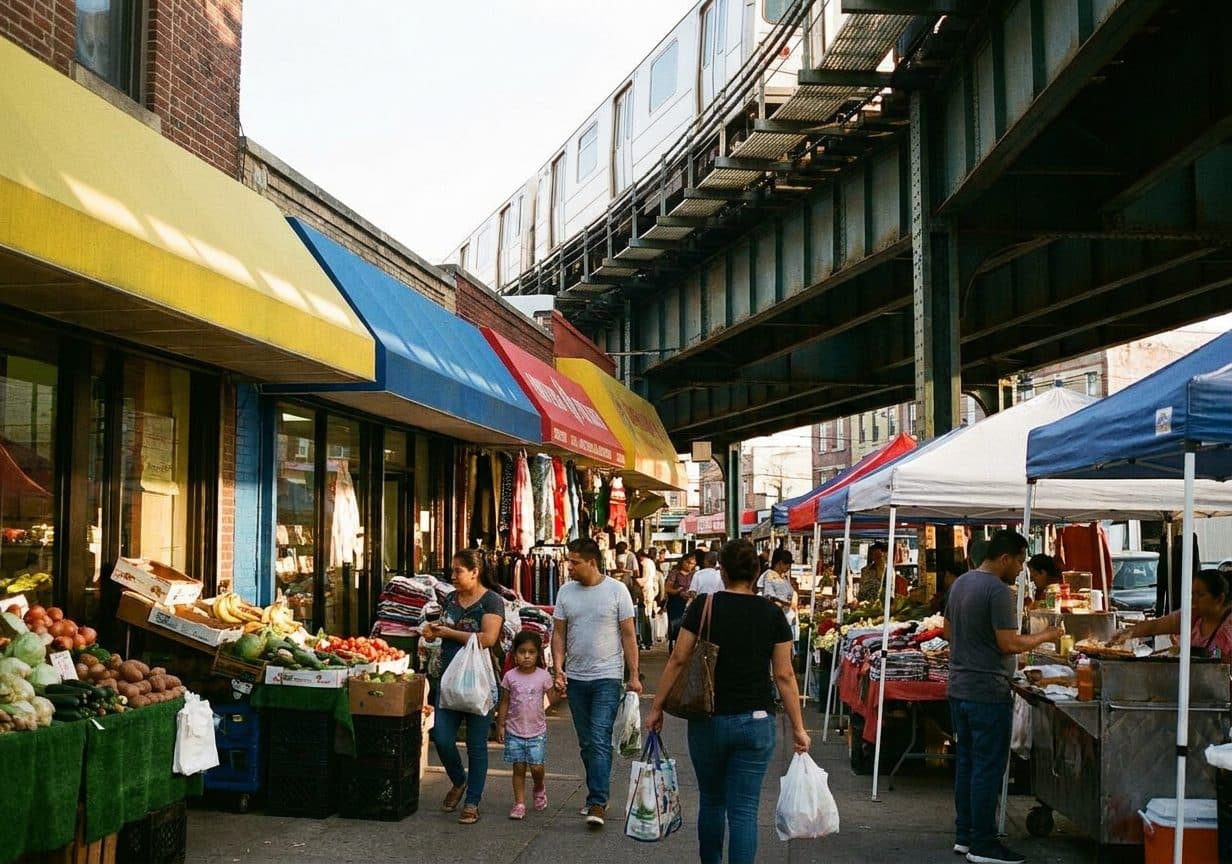
The Red Hook Ball Fields food vendors occupy a corner of a public park, operating from trailers and converted trucks on weekends from spring through fall. The setup is informal — picnic tables, no shade, cash preferred at most stands. The vendors represent a cross-section of Latin American cuisines: Salvadoran pupusas, Guatemalan tostadas, Mexican huaraches built on masa foundations thick as shoe leather. The 10:45 AM ferry from Pier 11 lands passengers in Red Hook by 11:07, which puts early arrivals at the fields a full hour before the lunch rush peaks. By 1 PM, the lines at the most popular stands stretch twenty deep. By 11:30, those same stands are still warming up, the griddles just hitting temperature, the first batches of the day coming off with the kind of attention that disappears once volume takes over. The crowd at that hour skews toward neighborhood regulars and the occasional photographer who has done this math before.
Van Dyke Street's Unrenovated Block
Most of Red Hook's warehouse conversions happened in the 2000s, when developers discovered that nineteenth-century industrial buildings made excellent loft apartments. But the block of Van Dyke Street between Conover and Ferris streets escaped that wave. The brick warehouses there remain in original condition — no residential conversion, no ground-floor galleries, no signage beyond faded paint advertisements for maritime suppliers that closed before the moon landing. The loading bays still have their iron doors. The upper floors show the kind of neglect that preservation rarely protects: broken windows, pigeon colonies, water damage visible from the street. It is the only stretch in Red Hook where the neighborhood's working past reads as present tense rather than historical footnote. Photographers and film scouts know it; everyone else walks past on the way to somewhere more obviously photogenic.
The Barge That Doubles as a Museum
The Waterfront Museum occupies a wooden railroad barge moored at the end of Conover Street — one of the last surviving examples of the flat-bottomed cargo vessels that once moved freight around New York Harbor. The barge itself dates to 1914. Saturday afternoons bring docent-led tours that start not from the main gangway but from a smaller access point at the stern, where a narrow ramp leads directly into the cargo hold. The hold has been converted into a performance space, but the original structure remains visible: the ribbed wooden ceiling, the massive timbers that supported rail cars, the proportions of a space designed for weight rather than aesthetics. The tours cover harbor history, barge construction, and the improbable story of how a performing arts organization ended up preserving a piece of infrastructure that the Port Authority had written off decades earlier.
The Afternoon Settles In
By 3 PM, the Ball Fields crowd thins and Red Hook enters its quietest phase. The waterfront path along Louis Valentino Jr. Park empties out except for dog walkers and the occasional cyclist. The Statue of Liberty is visible across the harbor, framed by the cranes of the container port at Bayonne. The light at this hour has a particular quality — filtered through the industrial haze that still hangs over the Upper Bay, softer than the hard midday sun that makes the neighborhood's brick facades look punishing. The few bars and cafes along Van Brunt Street start their transition from afternoon coffee to early evening drinks. Regulars drift in, claiming the same stools they occupied last Saturday. The neighborhood's rhythm, interrupted by the weekend crowds, reasserts itself.
Practical Notes
The NYC Ferry's South Brooklyn route connects Wall Street (Pier 11) to Red Hook, with service roughly every thirty minutes on weekends. The IKEA shuttle, free and open to all riders, runs from the Borough Hall subway station and drops passengers near the store on Beard Street — a fifteen-minute walk from the Ball Fields. The B61 bus remains the only MTA option, running along Van Brunt Street with connections to Downtown Brooklyn. The Ball Fields vendors operate weekends only, roughly April through October, with most stands open by 11 AM and closing by dusk. The Waterfront Museum keeps Saturday afternoon hours during warmer months; the barge is closed in winter. No reservations exist for anything in Red Hook — the neighborhood runs on walk-in logic, first-come terms, and the understanding that anyone who made it this far probably knows what they came for.
What the Isolation Preserved
The subway never reached Red Hook because Robert Moses prioritized highways, and the highways he built severed the neighborhood from the rest of Brooklyn more effectively than any river could. The result, decades later, is a place that feels genuinely apart — not curated apartness, not the manufactured authenticity of a historic district, but the real thing: a neighborhood that developed its own institutions because no one else was going to provide them. The ferry changed the access equation without changing the character. Saturday afternoons still belong to the people who live here, the vendors who return each weekend, and the visitors willing to cross water to reach a part of the city that the transit map forgot.
Tags: #RedHookBrooklyn #NYCFerry #BrooklynWaterfront #RedHookBallFields #IndustrialBrooklyn #WaterfrontMuseum #VanDykeStreet #SaturdayInBrooklyn #HiddenNewYork #BrooklynNeighborhoods #NYCWeekends #UrbanExploration #HarborViews #BrooklynFoodScene #OffTheSubwayGrid
Sources consulted: timeout.com · nytimes.com · ny.curbed.com
All trademarks are the property of their respective owners.
Ask Karpo first
Want to know whether the Red Hook Ball Fields food vendors are open this Saturday, which ferry timing avoids the afternoon rush, and what's worth doing once you get off the boat? Ask Karpo for a current Red Hook Saturday plan that works from any borough.