 Costume Rental Near Me in Williamsburg: Hit and Run Productions Archive
Hidden Gems & Odd Finds
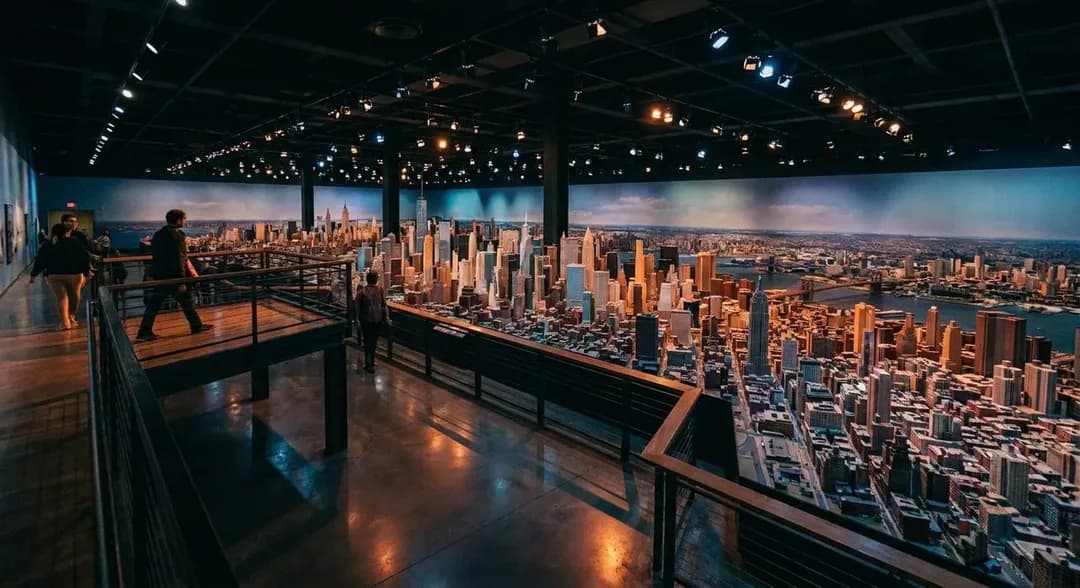
Panorama of the City of New York Twilight Lighting Sequence at Queens Museum
The Queens Museum's Friday evening twilight program transforms the 9,335-square-foot Panorama of the City of New York through a 20-minute dusk-to-night lighting sequence, offering overhead views of 895,000 miniature buildings across all five boroughs.
The Panorama of the City of New York occupies a dim hall at the Queens Museum, its 9,335-square-foot terrain spread beneath elevated walkways like a cartographer's fever dream made solid. Built for the 1964 World's Fair, the 1:1200 scale model remains the largest architectural scale model of any city in the world—every building, every bridge, every block from the Bronx to the Rockaways rendered in miniature. But the real draw arrives Friday evenings, when the model cycles through its twilight lighting program and 895,000 structures flicker into night. The effect is uncanny: watching an entire metropolis fall asleep from a godlike vantage point, the city's circadian rhythm compressed into twenty minutes.
The Friday evening viewing window
Friday twilight viewings run from 6 to 9 pm, with lighting sequences at regular intervals The rhythm is predictable, which means timing matters. Arrive at five forty-five for optimal elevated walkway positioning—early enough to claim a spot along the rail before the sequence begins, late enough to skip the museum's daytime foot traffic. The walkways ring the model at chest height, offering an overhead perspective that shifts as you move: Manhattan's grid straightens into legibility near the center, while Brooklyn's eastern reaches sprawl toward the hall's far wall.
The crowd on winter Friday evenings trends quiet, a mix of architecture students sketching sight lines and couples leaning into the rail. The hall itself stays dark except for the model's glow, which makes the whole experience feel less like a museum visit and more like surveillance—urban voyeurism at its most literal. There's a hush when the sequence begins, the kind of collective held breath that happens when strangers share something unexpectedly beautiful.
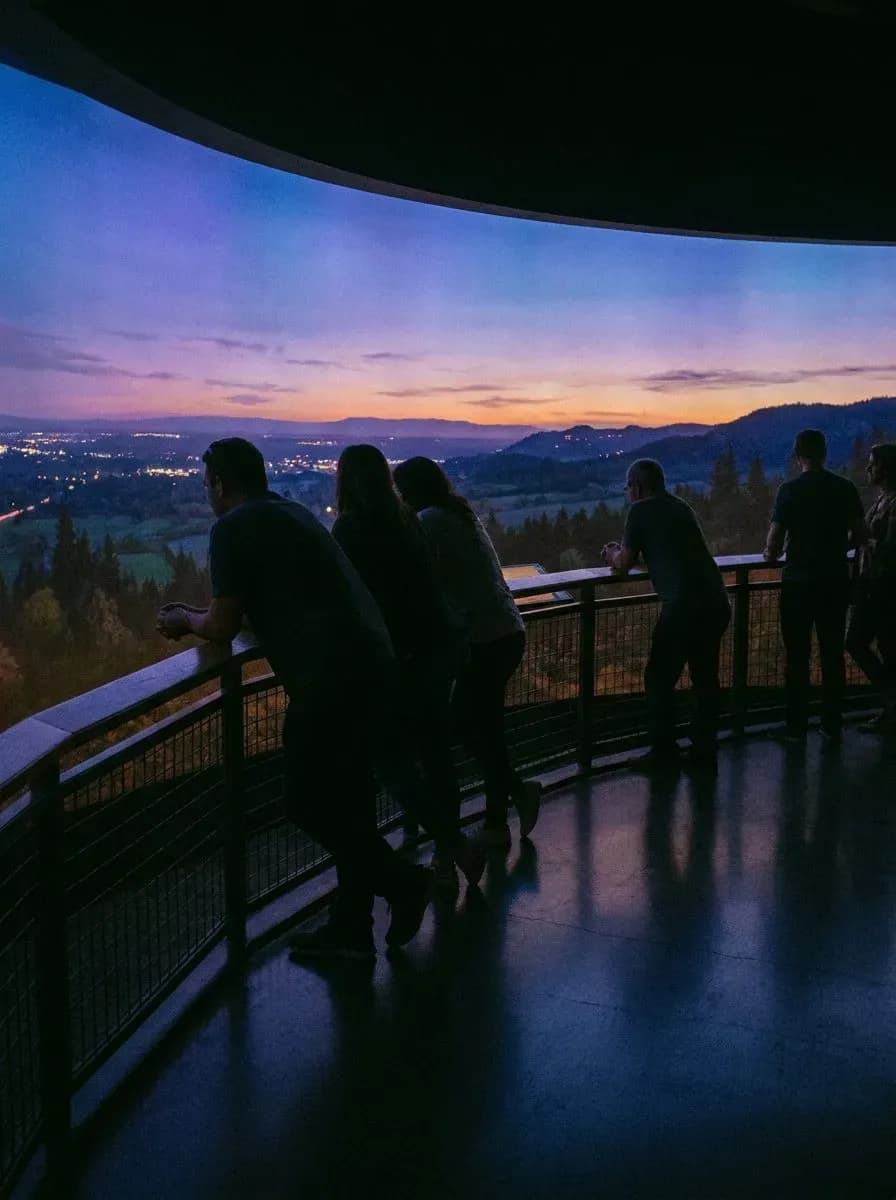
The twenty-minute lighting sequence
The sequence itself unfolds in twelve programmed lighting states, each simulating a specific phase of the city's transition from day to night. Sunset arrives first: a warm amber wash that pools in the river valleys and catches the tops of the tallest towers. Dusk follows, cooler and bluer, the kind of light that turns ordinarily gray buildings tender. Then night—a full blackout punctuated by 895,000 fiber-optic pinpricks, each representing a lit window, a streetlamp, a sign. The bridges glow. The highways trace ribbons of headlight-white. For a moment the model looks less like a replica and more like the genuine article viewed from a departing plane.
The final lighting state cycles back through dawn, a reversal of the sequence that feels both satisfying and slightly melancholic. You've watched an entire city sleep and wake in the span of a sitcom episode. The technical precision is evident—no single building outshines its neighbor, no neighborhood stays dark when it should glow—but what lingers is the emotional pull, the strange intimacy of seeing New York rendered both monumental and toy-like.
Elevated walkway perspectives
The elevated walkways allow you to move freely during the sequence, which means the experience changes depending on where you stand. Position yourself over lower Manhattan and you'll catch the Financial District's canyon shadows; drift toward the Queens edge and you'll see how the model incorporates LaGuardia's runways and Flushing's density. The 1:1200 scale makes familiar landmarks—the Empire State Building, the Verrazzano—oddly modest, while entire neighborhoods you've walked a hundred times become legible in a way street-level living never permits.
There's an analog quality to the viewing experience that feels refreshing in late 2026, when most urban data visualization happens on screens. Here, the city is physical: plaster and wood and wire and light. You can see the seams where boroughs meet, the slight discoloration where older sections abut newer additions. It's not seamless, and that's part of the appeal. The Panorama doesn't pretend to be anything other than what it is—a handmade representation of an unmappable place.
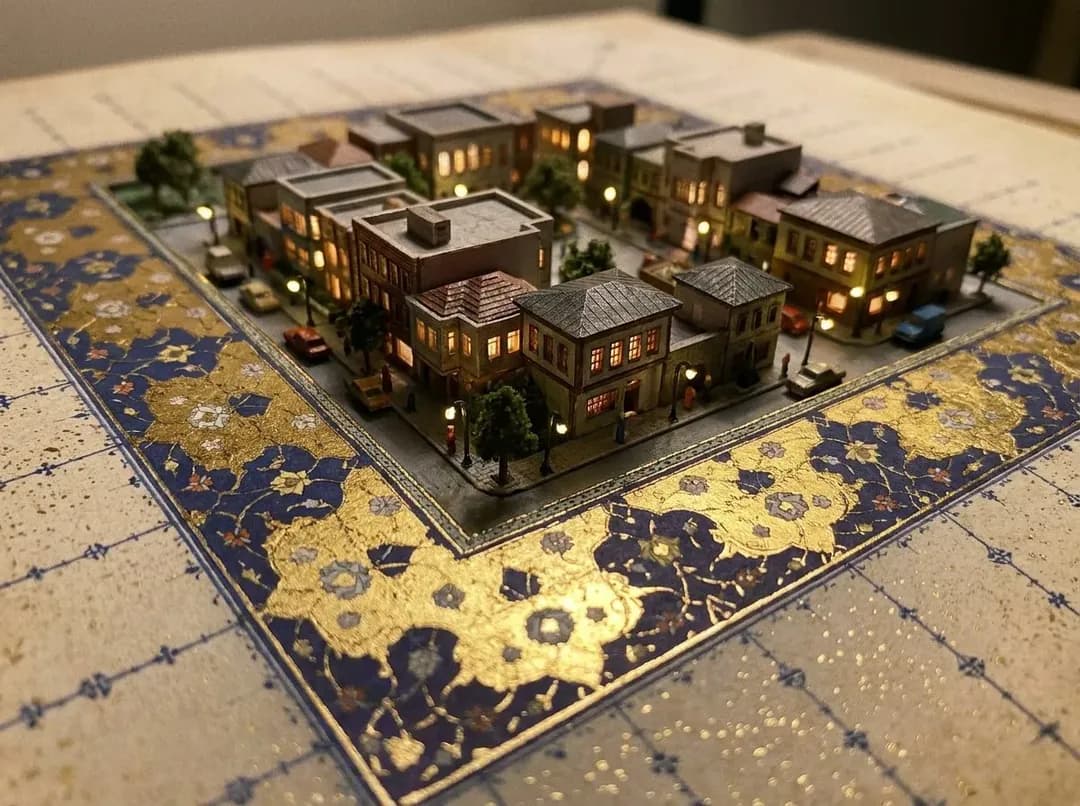
World's Fair origins and post-2000 updates
The model was commissioned by Robert Moses for the 1964 World's Fair, an era when scale models represented the pinnacle of urban planning visualization. After the Fair closed, the Panorama stayed in Flushing Meadows Corona Park, eventually finding a permanent home at the Queens Museum. In 1992, the model received a major update: fiber-optic building lights replaced the original incandescent bulbs, adding the capacity for the twilight sequence and dramatically reducing the fire risk that had kept earlier lighting programs sporadic and brief.
Post-2000 development additions are visible if you know where to look—the Hudson Yards towers on Manhattan's West Side, the rezoned Brooklyn waterfront, the Queensboro Plaza high-rises. These newer structures were fabricated to match the original's materials and level of detail, though the lighting reveals subtle differences in craftsmanship. It's a living document of the city's growth, or as living as a static model can be. The dissonance between the Panorama's mid-century optimism and the actual city's messy, contested evolution adds a layer of poignancy to the viewing experience.
What surrounds the visit
Panorama admission falls under the museum's Friday evening free admission window from 6 to 9 pm, making the twilight program one of the city's more compelling free things to do on a winter night. The Queens Museum itself occupies the New York City Building, another World's Fair remnant, and houses a small permanent collection worth a quick walk-through before or after the Panorama: Tiffany glass, WPA-era paintings, and an ongoing series of contemporary exhibitions that skew toward immigrant and Queens-focused narratives.
Flushing Meadows Corona Park stretches in all directions beyond the museum, dark and wind-scraped in winter but navigable. The Unisphere—the Fair's iconic steel globe—looms a short walk north, floodlit and dramatic against the winter sky. If hunger strikes, the museum's immediate surroundings trend institutional, but a ten-minute drive or subway ride delivers you to Flushing's dining sprawl or Corona's Roosevelt Avenue corridor, both dense with options that reward exploration over algorithmic recommendation.
Practical notes
Queens Museum, New York City Building, Flushing Meadows Corona Park, Queens. Nearest subway: 7 train to Mets–Willets Point, then a ten-minute walk south through the park. Limited free parking available in adjacent lots; paid garage parking near Citi Field. Friday twilight viewings run 6–8pm with lighting sequences every 30 minutes; general museum hours and Friday evening admission should be verified directly before planning a visit The museum is fully accessible; the elevated walkways accommodate wheelchairs and strollers. Bring layers—the Panorama hall stays cool year-round. No flash photography during the lighting sequence; tripods discouraged during crowded evening slots.
Tags: #PanoramaOfNewYork #QueensMuseum #TheOddEdit #NYCWinter #FlushingMeadows #ScaleModel #TwilightLighting #FreeThingsToDo #QueensNYC #ArchitectureLovers #UrbanDesign #WorldsFairLegacy #NYCMuseums #HiddenGems #WinterInNYC
All trademarks are the property of their respective owners.
Ask Karpo for more information.
Keep reading
- Costume Rental Near Me in Williamsburg: Hit and Run Productions Archive
 Costume Rental Near Me in Flatiron: Abracadabra NYC Showroom Floor
 Costume Rental Near Me in NoHo: Albright Fashion Library Archive