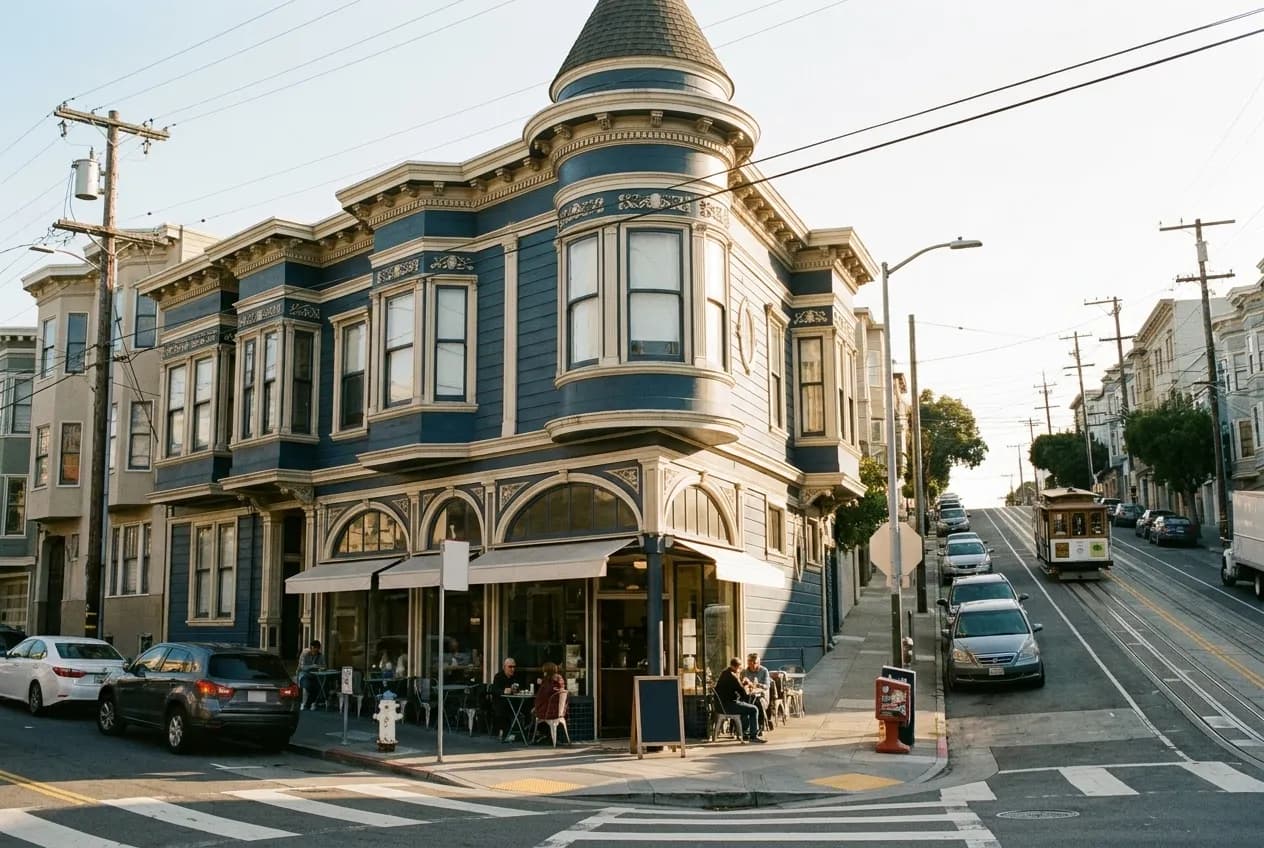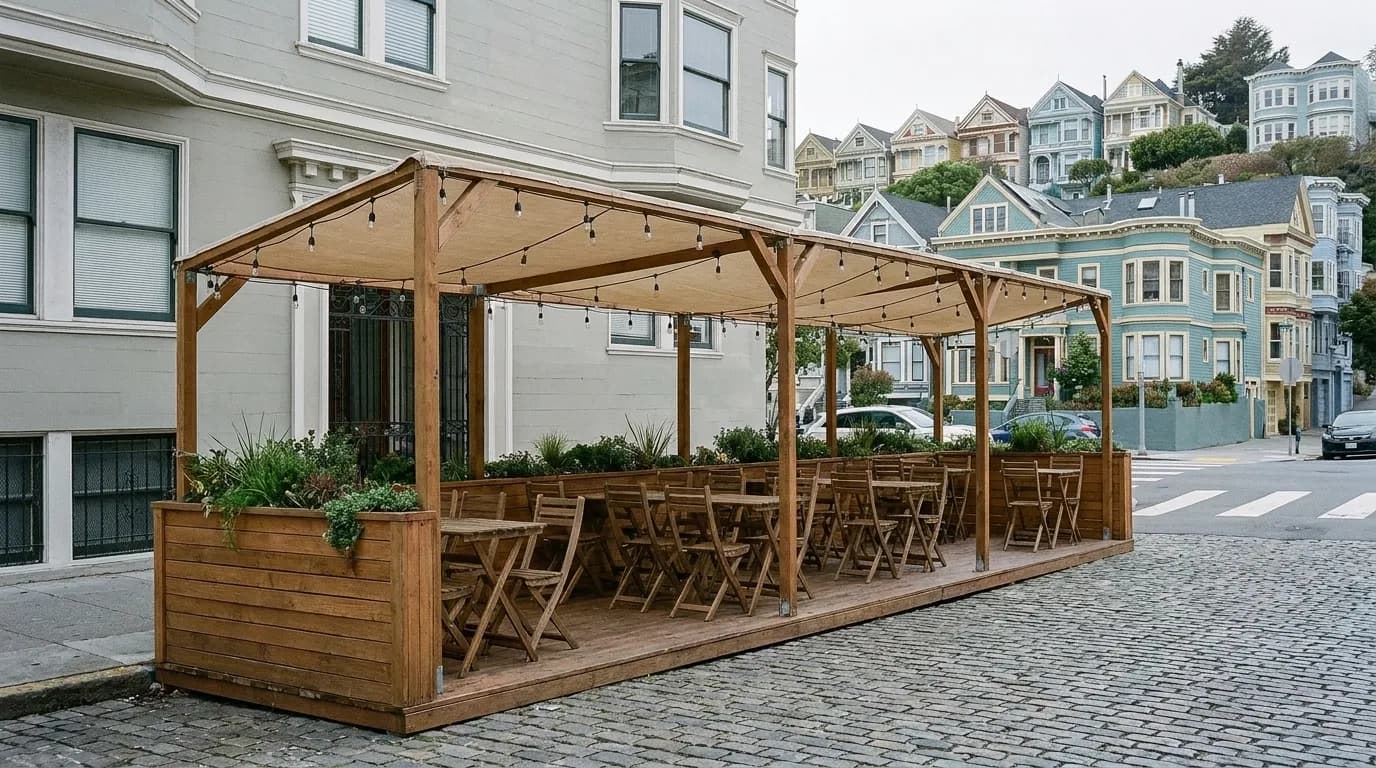
San Francisco has more outdoor dining than it has ever had. The parklet — a timber deck built out over one or two parking spaces in front of a restaurant — went from an occasional novelty to a permanent part of the streetscape after the city made the programme permanent, and there are now well over a thousand of them. The problem is that San Francisco's microclimate makes outdoor dining a genuinely local decision: the same evening can be pleasant in one neighbourhood and unbearable two miles west.
Whether outside is pleasant tonight depends entirely on which block you are on. Ask Karpo where the fog is not.
The fog, explained
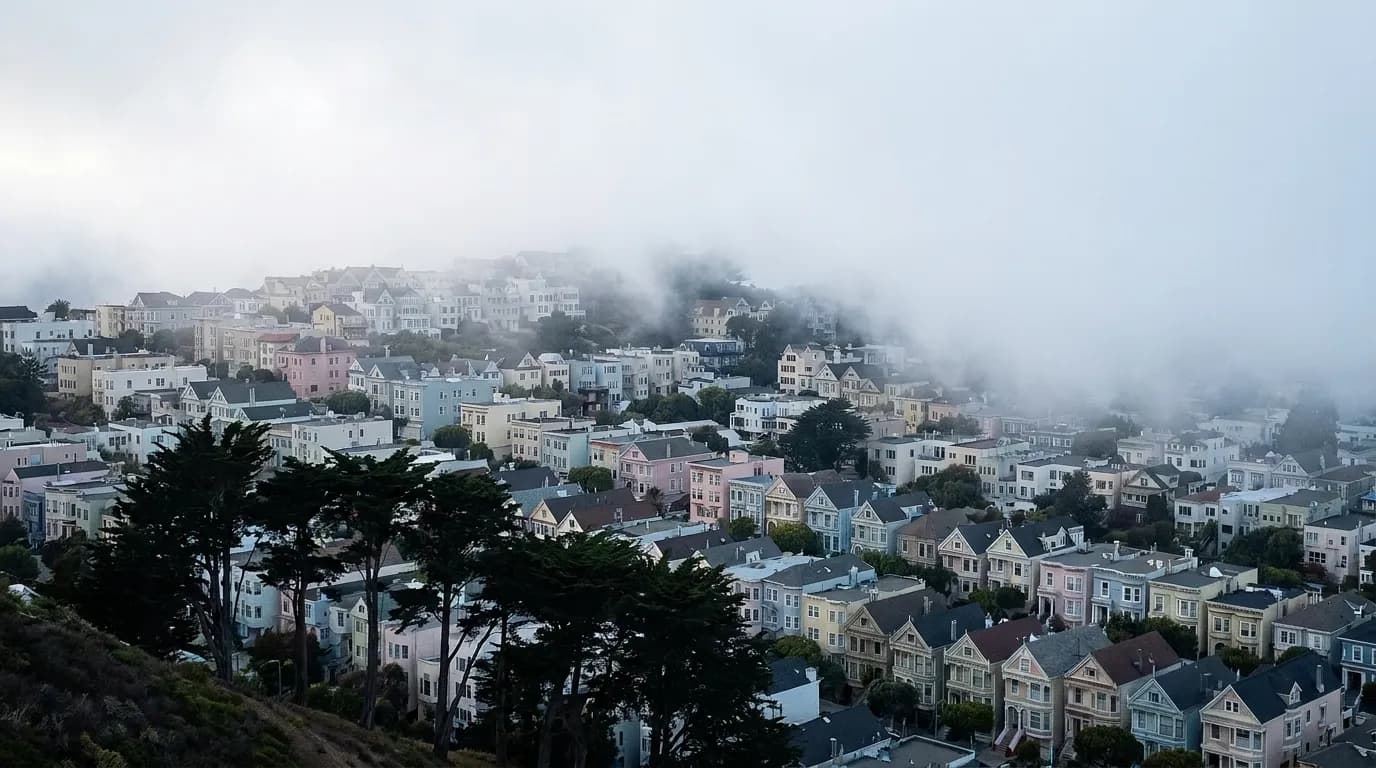
The fog is a summer phenomenon and it moves in a predictable pattern. Cold ocean water offshore meets warm inland air, and the fog is drawn in through the Golden Gate and over the western half of the city, most reliably in the late afternoon and evening from roughly June through August. It burns off from the east first and the west last, and it stops abruptly at certain hills.
The practical consequence is that the Mission, Bernal Heights, Potrero Hill, the Dogpatch and the Bayview are the sunniest and warmest parts of the city in summer, and the Sunset, the Richmond and the Presidio are the coldest and greyest, sometimes by ten degrees on the same afternoon. If you want to eat outside on a July evening, you want to be on the eastern side of Twin Peaks.
The best months
San Francisco's warmest and clearest weather is in September and October, not July. That is genuinely the opposite of the pattern most visitors expect and it is the single most useful piece of local knowledge about the climate. Late September through mid-October is when outdoor dining works best anywhere in the city, including the neighbourhoods that spend the summer in fog.
Spring is the second-best window — April and May are frequently clear and mild before the fog season establishes. Winter is cool and wet but genuinely pleasant on a sunny day, and many parklets now have heaters and roofs that make a January lunch entirely workable.
Where to eat outside
Valencia Street in the Mission is the densest concentration of parklets in the city and one of the sunniest streets in it, which is why it works. 24th Street in Noe Valley and Bernal Heights, and the Divisadero corridor, all have good clusters in reliably warmer microclimates. Hayes Valley has parklets and a pedestrianised block. The Dogpatch and Potrero Hill are the warmest neighbourhoods in the city and the most underused for this.
Beyond parklets: the Ferry Building and the Embarcadero have waterfront seating that is sunny in the morning and windy in the afternoon. Dolores Park and the eastern parks are where a takeaway picnic beats any restaurant on a warm day. And several neighbourhoods have permanently or occasionally car-free blocks — parts of Valencia, the Great Highway on the western edge, and JFK Drive through Golden Gate Park — which are pleasant to eat on in a way a normal street is not.
How parklets actually work
It is worth knowing the mechanics, because they explain what you can and cannot expect. Parklets are permitted structures built in the public right of way, which means the space belongs to the city rather than the restaurant. Several are required to include seating open to anyone, restaurant customer or not. They are also subject to design rules about visibility and drainage, which is why the newer ones look more uniform than the improvised versions that appeared during the pandemic. Practically: most are first-come, most restaurants will not guarantee one, and none of them are heated as reliably as you would like.
Reading the day
Three signals tell you whether outside will work. Wind, which is the actual problem more often than temperature — San Francisco's afternoon wind picks up sharply from about two o'clock in summer and a sheltered courtyard is dramatically better than an exposed pavement. Sun angle, because a west-facing table is warm until the fog arrives and an east-facing one is cold from mid-afternoon. And the fog line itself, which is frequently visible from any hill.
The rule that works: if the fog is visible over Twin Peaks in the afternoon, the western neighbourhoods will be grey and cold by six and the eastern ones will be fine. If it is already at the Mission, eat inside.
What to bring
A layer, always, regardless of the forecast and regardless of how warm it was at noon. The temperature drop in San Francisco between three in the afternoon and seven in the evening is routinely eight to ten degrees, and it catches out visitors constantly. Many parklets have blankets and heaters, and it is entirely normal to ask for one.
Sun protection in the middle of the day, because the city's cool air conceals genuinely strong sun. And an understanding that parklets are on the street: they are next to traffic, they are noisier than a dining room, and on a busy corridor that is part of the experience rather than a fault.
Practical notes
Check which side of Twin Peaks you are eating on before committing to outdoor seating in summer. September and October are the best months, not July. Wind matters more than temperature; look for a courtyard or a sheltered side of the street. Many parklets are first-come rather than bookable, and most restaurants will not guarantee one. Several San Francisco restaurants add a service or health surcharge printed at the bottom of the menu. And bring a layer, every time.
Tags: #SanFrancisco #SFFood #OutdoorDining #Parklets #MissionDistrict #ValenciaStreet #BernalHeights #Dogpatch #HayesValley #Embarcadero #FoodNearMe #SFEats #NeighborhoodGuide #AlFresco
All trademarks are the property of their respective owners.
Ask Karpo first
Want to know which side of the city is out of the fog right now, which parklets near you have space, and how cold it will be by eight? Ask Karpo before you sit outside.