 Haaland Has Seven Goals and Norway Runs Entirely Through Him
⚽️2026 FIFA WORLD CUP
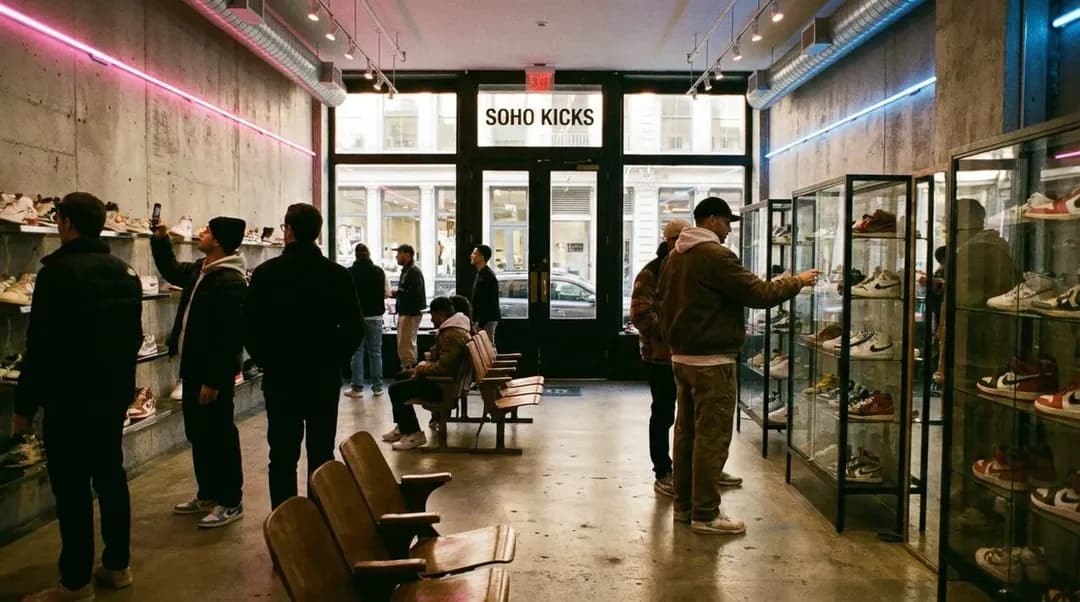
Off-Day Kicks: World Cup Stars Hit SoHo's Sneaker Shops
Between matches, World Cup players make the SoHo-to-Lower East Side sneaker pilgrimage — Kith, Stadium Goods, Extra Butter, and the consignment stores where rare pairs move.
The Pilgrimage
Professional footballers have two wardrobes. One is controlled by their sponsor — the boots, the match kits, the branded tracksuits they wear to press conferences. The other is theirs: the sneakers, the off-duty fits, the personal style that emerges the moment the cameras stop rolling and the day belongs to them. During a World Cup, when players have 72 to 96 hours between group-stage matches, that second wardrobe gets attention. And in New York, there is only one place the sneaker pilgrimage begins: SoHo.
The neighborhood — roughly bounded by Houston Street to the north, Canal Street to the south, Sixth Avenue to the west, and Lafayette Street to the east — contains the highest concentration of sneaker retail per square block in the world. Within a 15-minute walk, you can visit the flagship stores of three major sneaker brands, four independent boutiques, two consignment operations, and a resale market where a pair of unreleased Air Jordans can change hands for more than the average World Cup match ticket.
Kith: The First Stop
Kith's SoHo flagship at 337 Lafayette Street operates across two floors and roughly 6,000 square feet. Founded by Ronnie Fieg in 2011, Kith has become the default destination for athletes and celebrities who want sneakers and apparel that exist at the intersection of streetwear and luxury. The ground floor stocks current-season releases from Nike, New Balance, Asics, and Kith's own label. The second floor, accessible by a staircase lined with archival collaboration displays, houses limited-edition items and the brand's seasonal collections.
What draws footballers specifically is the store's relationship with New Balance, which sponsors several World Cup players. Kith's New Balance collaborations — particularly the 990v6 and 1906R models — retail between $180 and $250 but resell for two to three times that on secondary markets. The store releases these collaborations through a raffle system, but in-store purchases for VIP visitors are handled through a concierge program that Kith does not publicly advertise. During past NBA All-Star Weekends in New York, the store has opened early for private shopping sessions with players. World Cup delegations can expect similar treatment.
Stadium Goods: The Museum
Stadium Goods at 47 Howard Street functions as both a retail store and a sneaker museum. The space displays over 1,500 pairs at any given time, arranged by brand and silhouette in floor-to-ceiling shelving that wraps the entire perimeter. Every pair is authenticated by an in-house team — Stadium Goods employs eight full-time authenticators who inspect stitching, materials, box labels, and UPC codes before any shoe reaches the floor.
Pricing reflects the resale market in real time. A pair of Nike Dunk Low Travis Scott collaborations that retailed for $150 might be priced at $650. An original 1985 Air Jordan 1 Chicago in wearable condition could list at $12,000. The store also maintains a back room — not visible from the sales floor — where higher-value inventory is stored, including game-worn sneakers from NBA players and sample pairs that never reached production. Access to this room is by appointment only, and the staff will arrange private viewings for high-profile visitors.
Footballers who visit Stadium Goods tend to gravitate toward Jordans and Dunks, the two silhouettes that have the broadest crossover between sneaker culture and football locker-room style. Kylian Mbappe has been photographed wearing Jordan 4s in the PSG tunnel. Jude Bellingham has posted Nike Dunk outfits on Instagram. The sneaker choices of World Cup stars generate social media engagement that rivals their on-pitch highlights.
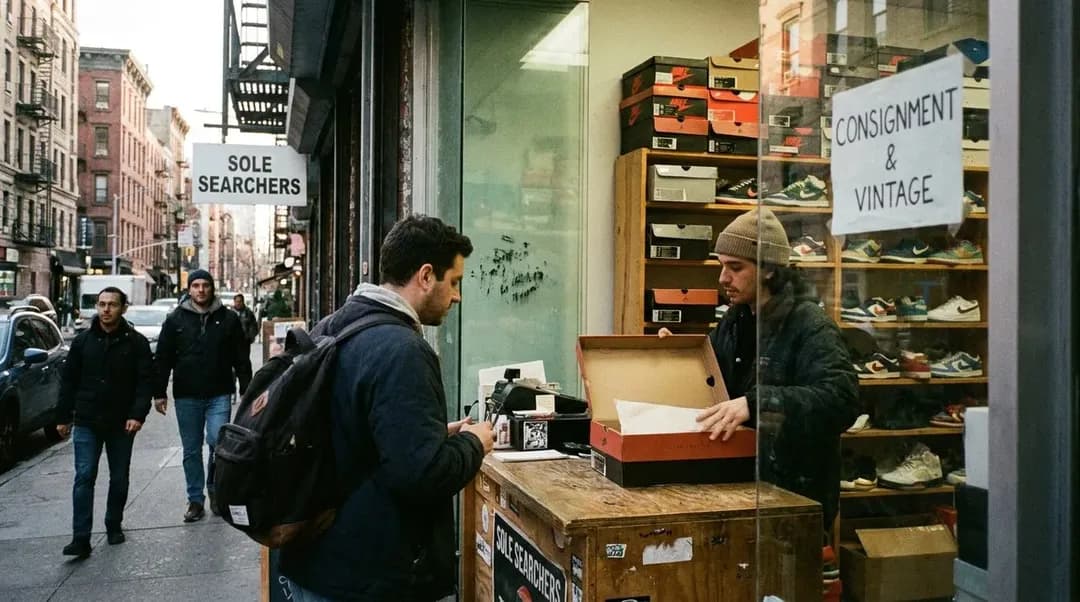
Extra Butter and the LES Extension
The sneaker circuit extends east into the Lower East Side, where Extra Butter at 125 Orchard Street has been operating since 2007. The shop is smaller than the SoHo flagships — roughly 1,200 square feet — but its curation is sharper. Owner Bernie Gross stocks a mix of general releases and boutique collaborations, with an emphasis on storytelling: each Extra Butter collaboration comes with a short film or visual campaign that contextualizes the design.
The store's location on Orchard Street, between Delancey and Rivington, puts it in the middle of a corridor that has evolved from its immigrant tenement origins into a dense strip of independent fashion, food, and art spaces. A footballer walking from SoHo to Extra Butter would pass through Little Italy, cross the Bowery, and arrive on a block that includes a Japanese denim shop, a natural wine bar, and a gallery that shows emerging Lower East Side artists. The walk takes about 12 minutes and covers a cultural distance far greater than the physical one.
The Economics of the Drop
World Cup summers historically coincide with a spike in sneaker releases tied to the tournament. Nike, Adidas, and Puma all schedule limited-edition drops during the event, often featuring colorways inspired by participating national teams. During the 2022 World Cup in Qatar, Nike released a Mercurial-inspired Air Max collection that sold out in under eight minutes online. The resale value tripled within 48 hours.
For the 2026 tournament, industry insiders expect a heavier concentration of releases in New York, given that the city hosts the final and multiple knockout-round matches. SoHo stores are already negotiating with brands for exclusive in-store launch events during the group stage. The intersection of World Cup energy and sneaker culture — both built on scarcity, identity, and the thrill of acquisition — will be impossible to separate for the six weeks of the tournament.
The SoHo Walk
The beauty of the SoHo sneaker circuit is that it functions as a walk. Kith to Stadium Goods is four blocks. Stadium Goods to the Nike SoHo flagship at 529 Broadway is two blocks. Nike to Extra Butter is a 12-minute stroll through the Bowery. The entire circuit — including browsing time — takes about two hours at a relaxed pace, which fits neatly into the unstructured afternoon window that World Cup rest-day schedules provide.
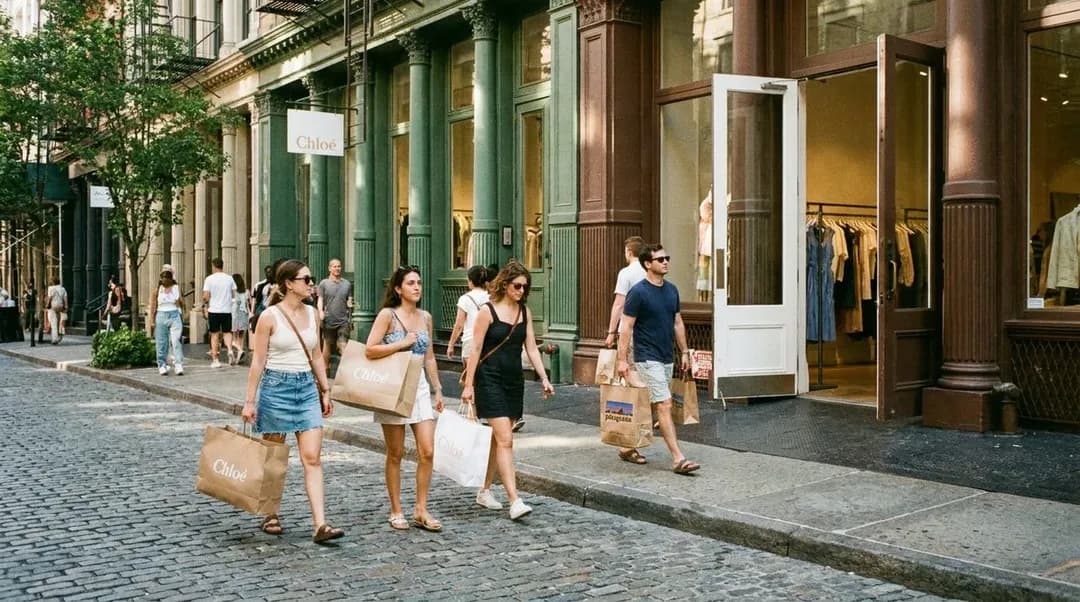
For a footballer, the circuit is more than shopping. It is a decompression ritual. The mental demands of a World Cup — the tactical preparation, the media obligations, the weight of national expectation — require counterbalances that are personal, tactile, and entirely within the player's control. Choosing a pair of sneakers, holding them, trying them on, deciding — it is a small act of autonomy in a tournament that dictates nearly everything else. And in SoHo, where the cobblestones are warm under the June sun and the cast-iron facades throw long afternoon shadows, that act of autonomy comes with a setting that makes it feel like exactly the right thing to be doing on a day off from the World Cup.
Tags: #WorldCup2026 #SoHo #SneakerShopping #Kith #StadiumGoods #ExtraButter #LowerEastSide #OffDay #SneakerCulture #AirJordan #NikeDunk #PlayerStyle #StreetFashion
Sources consulted: SoHo, Manhattan · Kith) · Stadium Goods · FIFA World Cup 2026 · Sneaker collecting culture
All trademarks are the property of their respective owners.
Ask Karpo for more information.
Keep reading
- Haaland Has Seven Goals and Norway Runs Entirely Through Him
 World Cup Trophy Ceremony Timing Medals and Postmatch Celebrations
 Olise and France's Attack: The Semifinal Tactical Question