 Haaland Has Seven Goals and Norway Runs Entirely Through Him
⚽️2026 FIFA WORLD CUP
The Lobby Watch: Which Midtown Hotels Host World Cup Delegations
FIFA officials, national team support staff, agents, and broadcast crews turn Midtown into a World Cup village — mapping the hotels and their lobby culture.
Midtown Becomes a Village
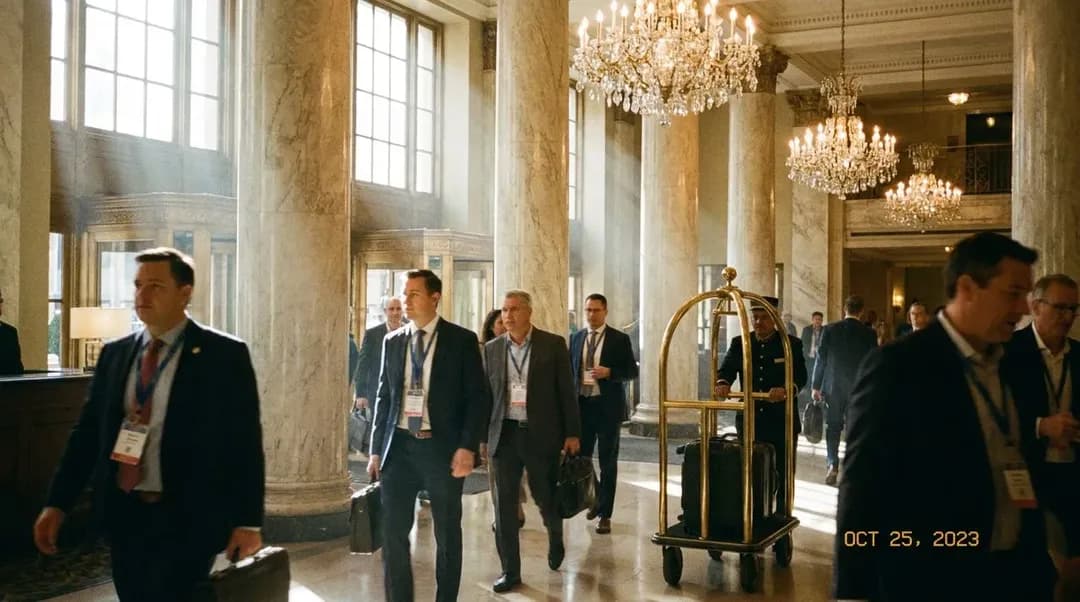
A World Cup does not just fill stadiums. It fills hotel lobbies. When the 2026 tournament arrives in the New York metropolitan area, Midtown Manhattan — the 30-block stretch between Penn Station and Central Park — will absorb thousands of FIFA officials, national team support staff, broadcast technicians, sports agents, corporate sponsors, and the peculiar species of person who shows up at every major tournament without a clear affiliation but with an all-access credential. The hotels that house them become micro-villages: each lobby a diplomatic zone, each bar a deal room, each elevator bank a place where you might stand next to the person deciding the next World Cup host city.
The FIFA Tier
FIFA's own delegation — the executive committee members, senior administrators, and protocol officers who travel with the tournament — traditionally occupies the most secure and prestigious hotel available. In New York, the leading candidate is The Peninsula on Fifth Avenue at 55th Street. The hotel's 235 rooms include a rooftop bar, Salon de Ning, that offers unobstructed views of Fifth Avenue and has historically been the after-hours gathering point for international sports executives. The Peninsula's lobby is compact by Midtown standards — marble floors, a low ceiling, and a reception desk staffed by no fewer than four people at any time — which makes it easy to control access but difficult to linger anonymously.
The St. Regis on East 55th Street at Fifth Avenue, which has hosted heads of state since its opening in 1904, offers an alternative with more public grandeur. The lobby — the King Cole Bar, specifically, with its famous Maxfield Parrish mural of Old King Cole behind the bar — is one of the most recognizable hotel interiors in the world. A Bloody Mary here costs $28. The bartenders have been making them the same way since 1934, when the drink was allegedly invented on this exact spot. FIFA officials who want to be seen choose the St. Regis. Those who want privacy choose the Peninsula.
The Broadcast Layer
Television is the financial engine of the World Cup, and the broadcast delegations are among the largest hotel consumers during the tournament. Fox Sports, which holds the U.S. English-language rights, and Telemundo, which holds the Spanish-language rights, each travel with crews of 200 to 400 people — producers, directors, camera operators, graphics technicians, commentators, and the logistics coordinators who make live television from 12 time zones actually work.
The New York Marriott Marquis in Times Square — 1,966 rooms across 49 floors, with a lobby on the eighth floor accessed by glass elevators — has traditionally served as the default broadcast hotel for major New York sporting events. Its size allows entire floors to be blocked for a single network, and its Times Square location puts crews within walking distance of studio spaces that networks rent for tournament coverage. The hotel's revolving restaurant on the 48th floor, The View, completed a renovation in 2023 and offers a 360-degree panorama that makes one full rotation every 47 minutes. A production meeting with that backdrop becomes a different kind of meeting.
The Agent Circuit
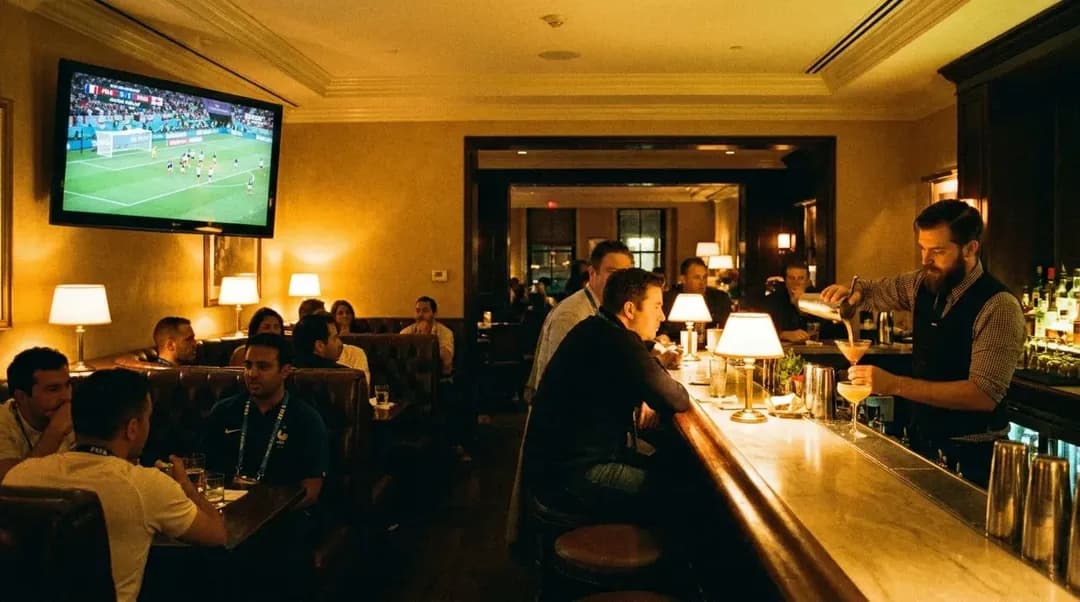
World Cups are transfer markets in disguise. The agents who represent the players on the pitch spend the tournament in hotel lobbies and private dining rooms, meeting club representatives, negotiating contracts, and making the introductions that shape the following season's transfer window. Their hotel choices are deliberate: close enough to the action to seem connected, private enough to have conversations that cannot be overheard.
The Lotte New York Palace on Madison Avenue occupies the Villard Houses, a cluster of 1882 brownstone mansions that were incorporated into the hotel's structure. The lobby — accessible through a courtyard entrance on Madison — features a vaulted ceiling, a gold-leaf staircase, and a series of alcoves that are architecturally designed for discreet conversation. The hotel bar, Trouble's Trust, serves cocktails in the $22 to $28 range and operates with a no-photography policy that agents appreciate. The private tower entrance on 51st Street allows VIP guests to arrive and depart without crossing the main lobby, a feature that during previous sporting events has been used by club presidents and federation officials who prefer not to be photographed together.
The National Team Hotels
Each participating national team selects its own hotel through a process that begins 18 months before the tournament. FIFA provides a list of approved properties; teams then conduct site inspections, negotiate rates, and assess security, kitchen access, and proximity to training facilities. The key requirements are consistent across delegations: a private floor or wing, kitchen access for the team chef, a meeting room that can seat 40, laundry service with a four-hour turnaround, and ground-floor access for a team bus without passing through a public area.
The New York Hilton Midtown on Sixth Avenue between 53rd and 54th Streets meets all of these criteria at a scale that few Manhattan hotels can match. Its 1,878 rooms — the third-largest hotel in New York — mean that blocking 80 rooms for a delegation barely dents overall occupancy. The hotel's loading dock on 54th Street allows team buses to pull directly into a covered area, and the third-floor banquet kitchen can produce 800 plates in a single service. During the 1994 World Cup, when matches were played at Giants Stadium, the Hilton Midtown housed two separate national team delegations simultaneously on non-adjacent floors.
The Lobby Economy
What happens in these lobbies during a World Cup is a specific kind of commerce. It is not retail. It is relational. A FIFA delegate recognizes an agent across the lobby of the Palace and waves him over for coffee. A broadcast producer spots a retired player — now a commentator — checking in at the Marriott Marquis and secures a last-minute studio appearance. A sponsor representative from Adidas runs into a counterpart from Nike at the Peninsula bar and they share a drink that is professionally friendly and competitively lethal.
These interactions are not scheduled. They are ambient. And the hotels that facilitate them — through lobby design, bar culture, and the unspoken rules of who sits where — become as much a part of the World Cup as the stadiums themselves. The matches happen in New Jersey. The deals happen in Midtown.
Reading the Lobby
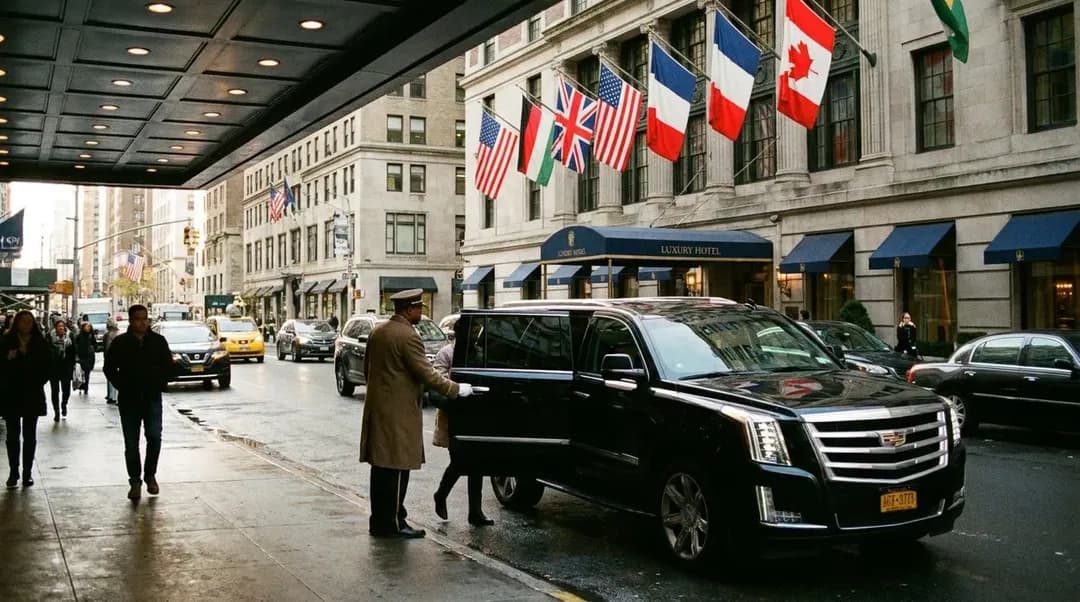
For the observant visitor — the fan who wanders into one of these hotels during the tournament — the credential lanyard is the tell. FIFA issues color-coded accreditation: blue for media, green for team officials, red for FIFA staff, yellow for commercial partners. A lobby full of green lanyards at 7 a.m. means a team is about to depart for training. A cluster of blue lanyards at the bar at 11 p.m. means the broadcast day has ended and producers are decompressing. A single red lanyard at a corner table with two people in suits and no lanyards means something is being decided that will not appear in the news for three days.
The World Cup will fill MetLife Stadium 16 times over the course of the group stage and knockout rounds. But the tournament that matters — the one where careers are made, alliances are formed, and the business of global football is conducted — will play out in the lobbies of a dozen Midtown hotels, one coffee at a time.
Tags: #WorldCup2026 #MidtownNYC #FIFADelegation #HotelLobby #ThePeninsula #StRegis #LotteNewYorkPalace #MarriottMarquis #TransferMarket #SportsAgents #BroadcastMedia #KingColeBar
Sources consulted: FIFA World Cup 2026 · The Peninsula New York · St. Regis New York · Lotte New York Palace Hotel · New York Marriott Marquis
All trademarks are the property of their respective owners.
Ask Karpo for more information.
Keep reading
- Haaland Has Seven Goals and Norway Runs Entirely Through Him
 World Cup Trophy Ceremony Timing Medals and Postmatch Celebrations
 Olise and France's Attack: The Semifinal Tactical Question