 Haaland Has Seven Goals and Norway Runs Entirely Through Him
⚽️2026 FIFA WORLD CUP

The Agent Dinner: Midtown's Private Rooms Where World Cup Deals Happen
The World Cup's parallel universe — sports agents, club executives, and sponsors book private dining rooms in Midtown for the transfer talks that shape next season.
The Parallel Tournament
There are two World Cups happening simultaneously. The first is played on grass in front of 80,000 people, broadcast to four billion viewers, scored in goals and measured in trophies. The second is played in private dining rooms in front of six people, conducted in whispers, scored in transfer fees and measured in contract clauses. The first World Cup fills stadiums. The second fills the private rooms of Midtown Manhattan restaurants, where sports agents, club sporting directors, and corporate sponsors negotiate the deals that will reshape European football's next season — all while pretending they are simply in town to watch the tournament.
The World Cup has always been the football industry's shadow transfer market. Every major agent attends. Every ambitious sporting director is in the city. The concentration of decision-makers in a single location for four weeks creates a density of opportunity that does not exist at any other point in the calendar. And in New York, where the private dining room is an art form, the infrastructure for this parallel tournament is already built.
The Steakhouse Rooms
The Midtown steakhouse private dining room is the default venue for football's deal-making class. The format is consistent: a windowless or curtained room, seating for six to twelve, a pre-selected menu that eliminates the need for anyone to look at a price list, and a level of acoustic separation from the main dining room that allows conversations to be conducted at normal volume without being overheard.
Wolfgang's Steakhouse on Park Avenue at 33rd Street — not to be confused with the Times Square location, which agents avoid for its tourist density — offers a private room on the lower level that seats ten around an oval table. The room is booked through a direct line to the general manager, not through the standard reservation system, and a minimum spend of $2,500 is required for dinner service. The standard order for an agent dinner is the porterhouse for three ($189), a Caesar salad, creamed spinach, and two bottles of wine selected by the sommelier in the $150 to $300 range. The entire dinner, including tax and a 22 percent gratuity, runs approximately $1,200 for four people.
Quality Meats on West 58th Street, a block south of Central Park, takes a more modern approach. Its private space — a glass-walled room adjacent to the main dining floor that can be curtained for privacy — seats 14 and includes a dedicated server. The room's visual connection to the main floor means occupants can be seen by other diners, which some agents prefer: being visible having dinner at Quality Meats signals that you are in town and doing business, without revealing with whom. The room fee is $500 for dinner, waived with a minimum food-and-beverage spend of $3,000.
The Club Rooms
For meetings that require deeper privacy — contract negotiations, multi-party deals involving club presidents, or conversations that could move markets if leaked — the members-only clubs of the Upper East Side and Midtown offer an additional layer of discretion.
The Core Club on East 55th Street between Park and Madison Avenues operates a 30,000-square-foot facility that includes private dining rooms, a restaurant, a lounge, and meeting spaces equipped with AV systems for presentations. Membership costs $50,000 in initiation fees and $18,000 annually, and the waiting list is managed by a committee. The club's dining room seats 60, but the private rooms — there are four, ranging from a four-person space to a twelve-person boardroom — are where the football business gravitates. The club enforces a strict no-photography policy throughout the premises, and staff are trained not to acknowledge members by name in the presence of non-members.
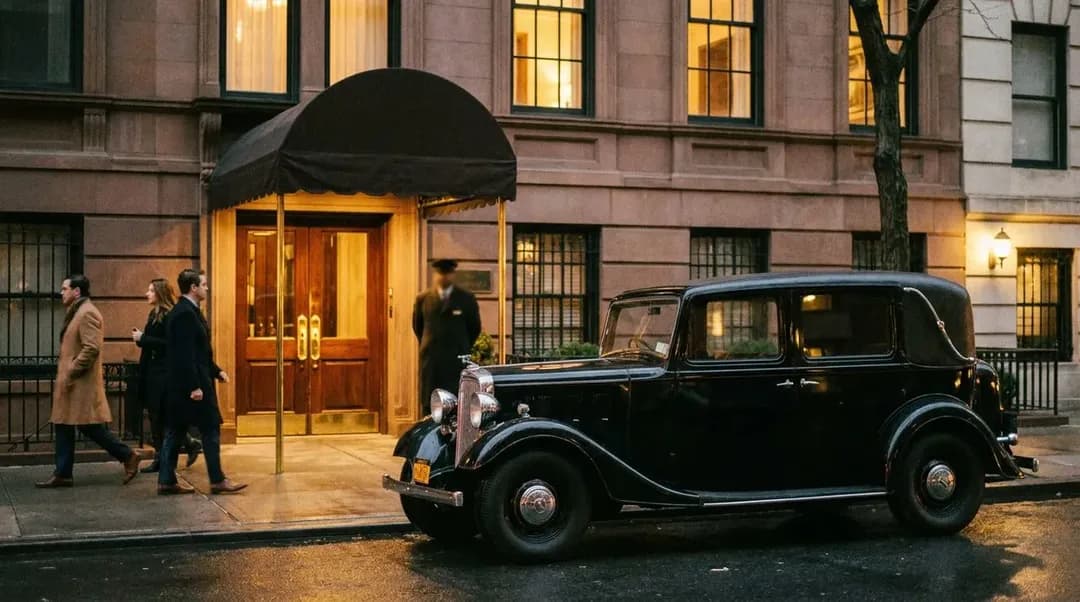
Casa Cipriani at 10 South Street, occupying the former Marine Terminal building at the foot of the Manhattan Bridge, offers a different aesthetic for the same purpose. The building — a 1907 Beaux-Arts structure with 40-foot ceilings and terrazzo floors — houses a membership club, hotel, and restaurant. The private dining rooms overlook the East River and the Brooklyn Bridge, and the Italian menu (overseen by the Cipriani family, which also operates Harry's Bar in Venice) includes the bellini cocktail ($25) and beef carpaccio ($38) that have been Cipriani signatures for decades. During previous New York sporting events, Casa Cipriani's upper-floor dining rooms have hosted representatives from multiple Premier League clubs simultaneously — on different floors, scheduled at different hours, with the club's staff managing arrivals to ensure parties do not cross paths in the elevator.
The Rooftop Option
Not every agent dinner is a closed-door negotiation. Some are relationship-building exercises — dinners designed to strengthen an existing connection, introduce a new client, or simply maintain the social fabric that the football industry runs on. For these, the Midtown rooftop restaurant offers a setting that combines exclusivity with atmosphere.
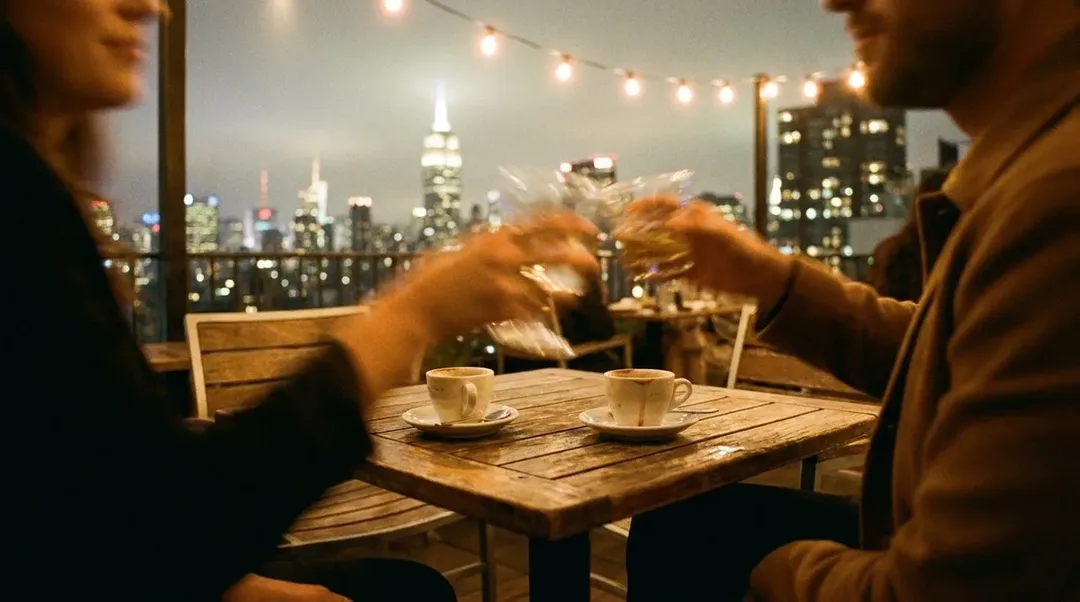
The Roof at Park South on East 28th Street operates a 60-seat terrace with views of the Empire State Building and the Midtown skyline. The menu is Mediterranean-influenced, with grilled branzino ($42) and lamb chops ($48) as the anchor dishes. Reservations for terrace tables are released two weeks in advance, and the six-top corner table — which offers both skyline views and a degree of separation from neighboring tables — is consistently the most requested seat during major events. The restaurant does not have a formal private room, but the corner configuration functions as a semi-private space, and the ambient noise level of a rooftop terrace provides natural sound masking.
The Protocol
Agent dinners follow an unwritten protocol. The agent books the room and pays the bill. The club representative arrives second, after the agent has already been seated. Business is not discussed until the main course arrives. The specific player under discussion is not named until both parties have established the parameters of the conversation — club budget, wage structure, squad needs, competition timeline. If a third party is involved — another agent, a national federation representative, a sponsor — they arrive for dessert, after the core negotiation is settled.
Phones are placed face-down on the table. Nobody takes notes in front of the other party. The deal points are committed to memory and written down afterward, in the back of a car or in a hotel room. If the dinner goes well, it ends with espresso and a handshake. If it does not, it ends with the check and a polite agreement to reconvene after the tournament.
The Real Transfer Window
The official transfer window opens on July 1 in most European leagues. The 2026 World Cup runs from June 11 to July 19. That overlap is not coincidental — it is the engine that drives the agent dinner circuit. A player who performs well in a World Cup group-stage match on a Tuesday night will be discussed in a private dining room on Wednesday evening. By Thursday morning, his agent will have fielded three inquiries. By Friday, a fee structure will be taking shape over Dover sole at a club two miles from MetLife Stadium.
The stadiums host the spectacle. The private rooms host the market. And Midtown Manhattan — with its density of five-star restaurants, its culture of transactional dining, and its understanding that a good private room is worth more than a good view — is the perfect city for the World Cup's other tournament.
Tags: #WorldCup2026 #TransferWindow #SportsAgents #MidtownNYC #PrivateDining #WolfgangsSteakhouse #QualityMeats #CasaCipriani #CoreClub #FootballBusiness #DealMaking #TransferMarket
Sources consulted: FIFA World Cup 2026 · Transfer window · Casa Cipriani · Sports agent · Midtown Manhattan
Please drink responsibly. You must be 21 or older to purchase or consume alcohol in New York.
All trademarks are the property of their respective owners.
Ask Karpo for more information.
Keep reading
- Haaland Has Seven Goals and Norway Runs Entirely Through Him
 World Cup Trophy Ceremony Timing Medals and Postmatch Celebrations
 Olise and France's Attack: The Semifinal Tactical Question