 WORD Bookstore in Greenpoint Remains a Community-Focused Indie Bookstore Near Me
Hidden Gems & Odd Finds
A Vinyl-Only Listening Room in a Gowanus Warehouse
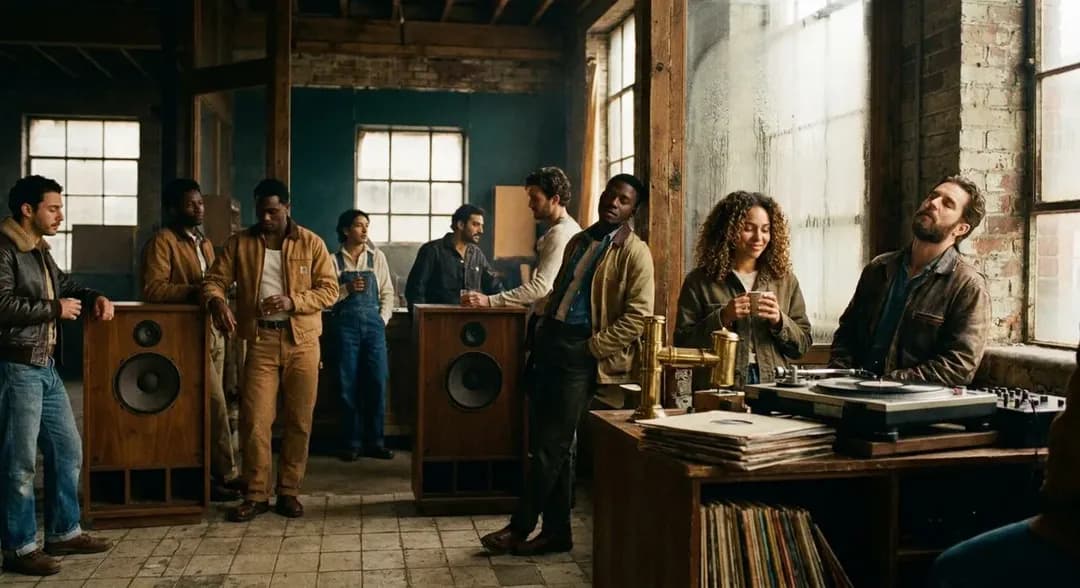
In a corner of Gowanus where the canal still smells like industry, thirty people gather nightly to do something radical: shut up and listen. No phones. No chatter. Just vinyl.
The protocol
You'll find Public Records at 233 Butler Street in Gowanus, a hi-fi record bar that opened in 2019 in a building that once housed the ASPCA's Brooklyn headquarters for over sixty years. The space was founded by DJ and producer Francis Harris along with partners Shane Davis and Erik VanderWal, and it's become one of the city's rare temples to serious listening. When you arrive, you'll be asked to silence your phone—not as a suggestion, but as the price of entry. The main room arranges seating to face a carefully curated sound system, the kind of setup that makes you understand why people spend mortgage payments on turntables. Regulars know which seats offer the truest stereo image, though they'll rarely tell you which ones.
The room itself
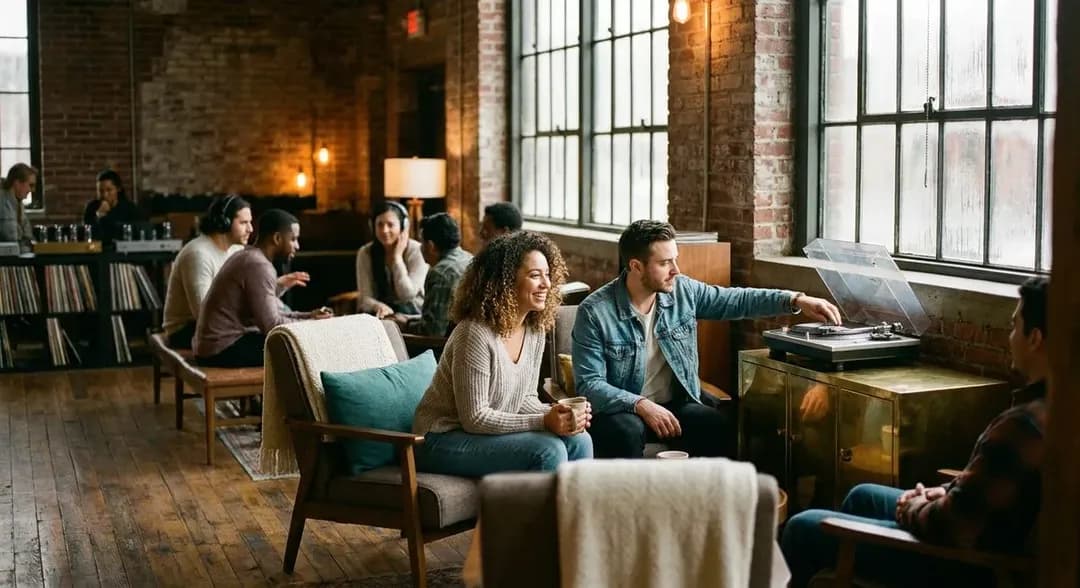
The space maintains the industrial bones of its warehouse past—high ceilings, exposed brick, wooden floors softened by vintage rugs that absorb just enough resonance. The acoustics shouldn't work as well as they do, something about the age of the building and the irregular surfaces. Lighting is controlled to create a visual rhythm that matches the evening's progression, dimming and rising between records. Along the walls, floor-to-ceiling shelves hold thousands of records, organized by a system that makes sense to the people who work here. The staff can walk directly to a specific album without looking. Even the bathroom door is weighted to close silently—every detail serves the listening experience.
What you'll drink
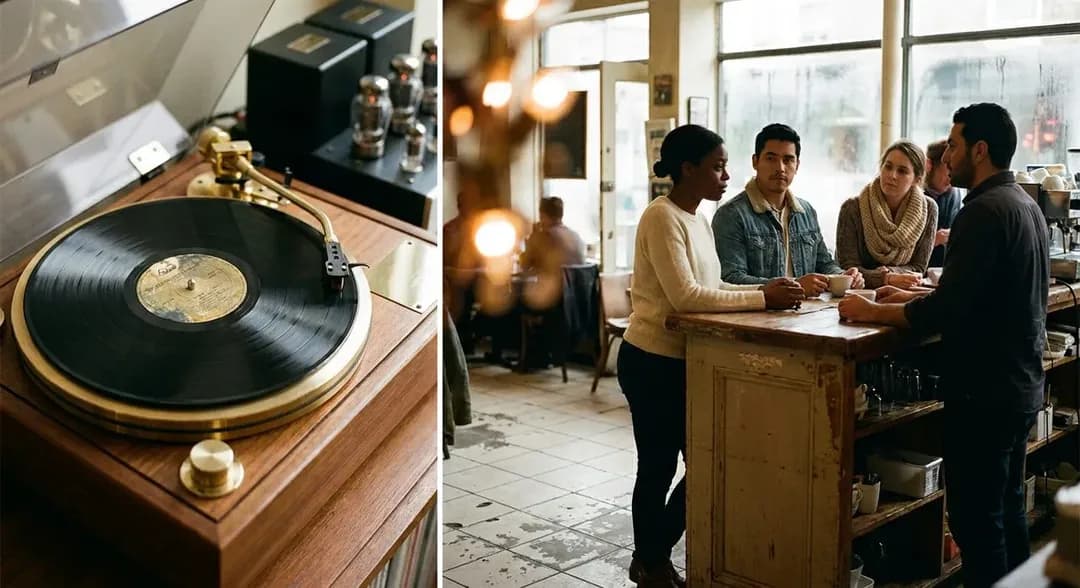
The sake list runs deep, heavy on junmai and junmai daiginjo grades you won't find at more conventional spots. The selection includes unpasteurized bottles that arrive regularly, served at proper temperature in ceramic ochoko cups. The natural wine list is smaller but carefully chosen, leaning toward Loire Valley and Jura producers—the kind of bottles that taste like drinking a forest floor in the best possible way. Everything is served in appropriate glassware. No beer. No cocktails. No ice cubes clinking. There's a small kitchen that produces a rotating menu of simple, excellent dishes: rice bowls with soft eggs, pickle plates, whatever vegetables looked best at the market that morning. The food alone justifies the cover charge.
The selection process
Each session features a carefully curated sequence of records. The evening typically starts with something accessible—classic jazz from the '60s, perhaps—then moves progressively stranger. By late evening you might be hearing Moroccan gnawa music or obscure European free jazz. The sequencing is deliberate, building a narrative that's never explained. Between records, the staff announces the artist and year, nothing more. The crowd knows not to applaud. You'll notice people taking notes in small journals. Some regulars have been coming multiple nights a week for years, tracking every album played. There are people compiling databases of the sessions, and the staff finds this quietly amusing.
The unwritten rules
Conversation is permitted but only at the volume of a library whisper, and only between tracks. During playback, silence is absolute. Phones that go off result in immediate removal, no refund. The door locks at session start—if you're late, you've missed it. No photography. No recording. Devices will be confiscated if necessary, though it's rarely necessary more than once per person. You can leave early if you need to, but the timing is structured around the music. Most people stay for the full session. The spell is difficult to break. On your way out, there's a guest book where regulars leave notes about the evening's selections. Reading back through it is like eavesdropping on a years-long conversation about beauty and attention.
Why it works
In a city that monetizes every second of silence, that turns every square foot into content, Public Records feels like an act of resistance. The economics are unusual—limited capacity, single sessions, a cover charge that barely covers Gowanus rent. But there's a waitlist. Reservations fill quickly. What the space offers is less a bar than a practice, a discipline. You come to remember that listening is a skill, that attention is finite and therefore valuable. The audiophile equipment matters, but it's not the point. The point is the agreement: for several hours, we'll all care about the same thing at the same time. No multitasking. No second screens. Just the music and the people who came to hear it. You'll leave and the street noise will sound vulgar for a moment, an intrusion. Then you'll rejoin the city, but something will have shifted. You'll have remembered what it feels like to be quiet.
Practical notes
Public Records is located at 233 Butler Street, Gowanus, Brooklyn. Take the F/G to Carroll Street or the R to Union Street. The venue operates as both a hi-fi record bar and performance space (The Sound Room), with a café. Hours and programming vary—check their website or social media for current session times and booking information. Cover charges apply for listening sessions and performances. Reservations strongly recommended. The room maintains a cool temperature year-round; bring a light sweater if you run cold. No fragrances—in a small listening space, scent genuinely affects the experience for others. Sessions are 21+ only.
Tags: #GowanusNYC #VinylListening #HiFiCulture #ListeningBar #TheOddEdit #BrooklynNightlife #VinylCulture #SakeBar #NaturalWine #AudiophileNYC #JapaneseStyle #UndergroundNYC #SlowCulture #IntentionalListening #BrooklynHidden
Sources consulted: brooklyneagle.com · gothamist.com
Please drink responsibly. Must be of legal drinking age.
All trademarks are the property of their respective owners.
Ask Karpo for more information.
Keep reading
- WORD Bookstore in Greenpoint Remains a Community-Focused Indie Bookstore Near Me
 The Corner Bookstore on Madison Avenue Is Carnegie Hill's Indie Bookstore Near Me
 192 Books in Chelsea Brings Art and Fiction to Indie Bookstore Near Me