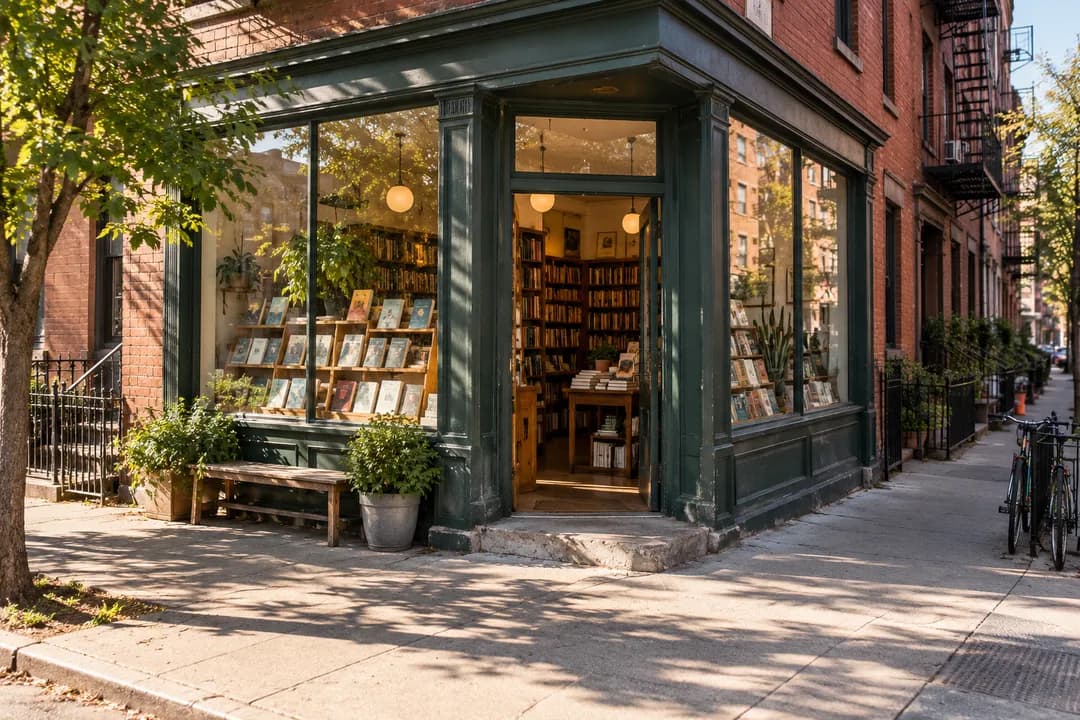
 WORD Bookstore in Greenpoint Remains a Community-Focused Indie Bookstore Near Me
Hidden Gems & Odd Finds
The Odd Edit: New York's Unlikeliest Queer Rooms
The queer spaces that refuse to look like queer spaces—tiny, cluttered, sober-friendly and gloriously strange.
Why the odd ones matter
New York's queer nightlife has a branding problem—or rather, it refuses to have one. While Instagram-ready lounges multiply across Chelsea and Hell's Kitchen, some of the city's most vital queer spaces look nothing like the algorithm expects. They're cramped, cash-only, daylit, or decorated like your aunt's attic exploded. They don't photograph well. They're gloriously, defiantly weird.
These are the rooms that survived not by chasing trends but by ignoring them entirely. A West Village bar where the ceiling disappeared under decades of tchotchkes. A Lower East Side bookstore that opens when most bars are closing. What they share isn't aesthetics—it's refusal. Refusal to sanitize, to scale, to look like anything but exactly what they are.
The bar with no ceiling left
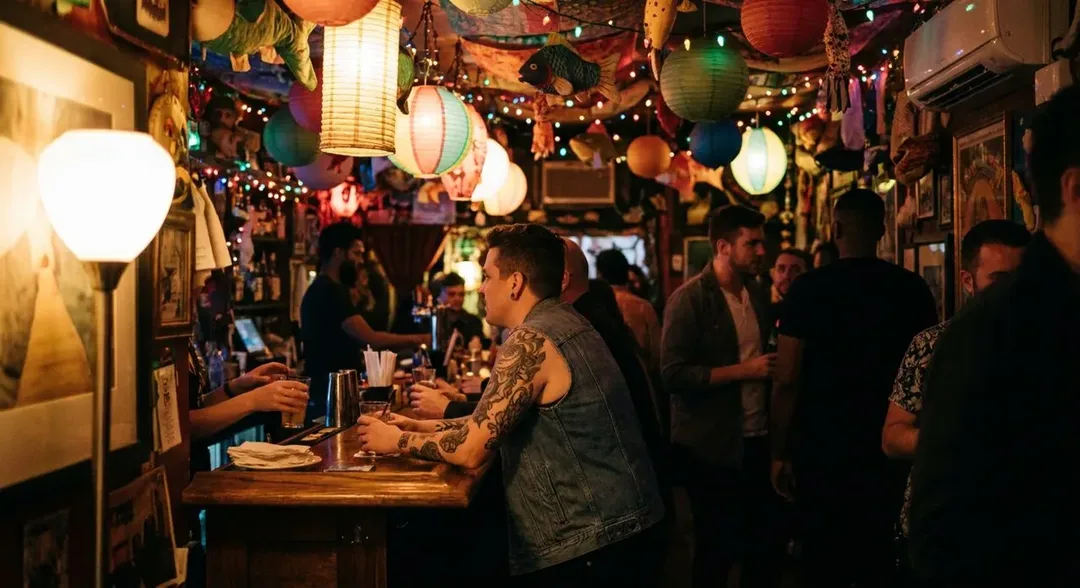
Cubbyhole occupies a sliver of real estate on West 12th Street that most landlords would call unbuildable. The space is so small that "cozy" feels generous—"packed" is more accurate on any night worth attending. But look up. The ceiling has vanished beneath layers of paper lanterns, inflatable fish, miniature flags, disco balls, and objects whose origins no one can quite remember. It's folk art by accumulation, a queer archive in three dimensions.
The bar opened in 1994 and has operated on the same principle ever since: everyone fits if everyone tries. The crowd skews older than the Grindr-fueled spots further west, with a healthy mix of neighborhood regulars, birthday groups, and first-daters who heard this was the place to go when you're tired of places that feel like places. Cash works best here—the ATM inside charges fees, but cards slow everything down when the bar's three-deep.
What makes Cubbyhole unlikely isn't its queerness—it's that it looks exactly like what it is, without apology or explanation. No minimalist rebrand. No bottle-service tables. Just a room that decided decades ago that more is more, and kept going.
The bookstore that opens at noon
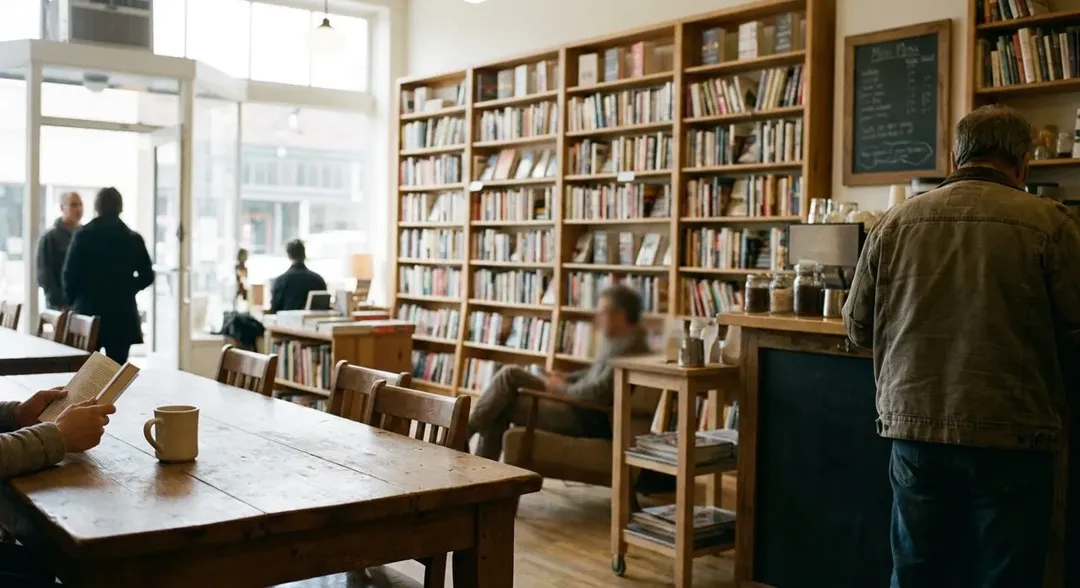
Bluestockings sits on Allen Street near Delancey on the Lower East Side, a worker-owned cooperative that functions as bookstore, cafe, event space, and something harder to name—a harm-reduction space, a daytime refuge, a sober counterpoint to the bar-heavy queer social circuit. It opens at noon most days and stays open into the evening, occupying the hours when much of queer nightlife is still asleep.
The space is small and dense with books: queer theory, trans memoirs, abolitionist literature, zines, poetry. The cafe serves coffee and snacks. There are readings, workshops, discussion groups, skill-shares. What there isn't: alcohol, cover charges, velvet ropes, or any expectation that you'll perform a particular kind of queerness to belong.
Bluestockings matters because it insists that queer space doesn't require nighttime or intoxication. It's a room for the sober, the sober-curious, the morning people, the overstimulated, the readers, the organizers, the people who need community but can't or won't find it in a bar. It's been operating since 1999, which in New York queer-space years makes it ancient. That it's worker-owned means it answers to its staff and community rather than investors looking for exit strategies.
The oddness here is structural: a queer space that privileges access and harm reduction over profit, that treats books and conversation as nightlife, that opens when the sun is up. In a city where queer venues close monthly due to rising rents, Bluestockings survives by being exactly what corporate hospitality groups would never build.
A Celebrity Bar That Forgot to Be Famous
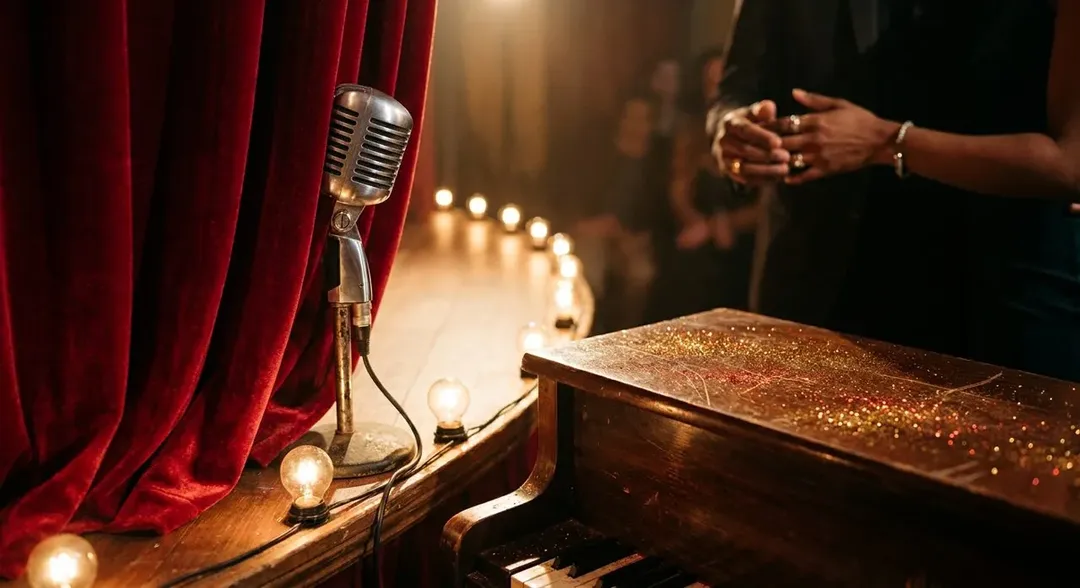
Club Cumming occupies the old Eastern Bloc space on East 6th Street as a deliberately tiny cabaret room where the piano takes precedence over everything else. Alan Cumming's name is on the door, but the interior feels like someone's maximalist living room crammed with vintage lamps, mismatched furniture, and barely enough space to turn around. The stage is intimate by necessity, not design—performers are close enough to make eye contact whether you want it or not.
Open-mic nights, drag shows, and cabaret acts rotate through weekly, drawing a mixed crowd that skews more theater-adjacent than club-kid. The real insider move: arrive at least thirty minutes before any scheduled performance if you want an actual seat. Once the piano starts, the back half becomes standing-room only, and sight lines disappear fast. Cash tips for performers are expected and conspicuous. It's the rare actor-owned bar that operates like a neighborhood spot that happens to book talent.
The pattern in the chaos
These spaces share almost nothing visually. One looks like a hoarder's paradise, one looks like a nonprofit bookstore. But they share a structural logic: they're all too small, too specific, too committed to their own weirdness to scale or franchise or sell.
They survive because they're not trying to be all things to all queers. Cubbyhole is for people who want a neighborhood bar that happens to be queer, not a queer bar trying to be a brand. Bluestockings is for people who need queer community outside the bar economy.
The odd edit, in other words, is about specificity. These rooms know exactly what they are and for whom. That clarity, more than any aesthetic choice, is what makes them unlikely—and essential.
Finding your odd room
New York has dozens of queer spaces that don't look like queer spaces, that refuse the visual shorthand of rainbow flags and pink neon. They're in basements, second floors, storefronts that look closed. They're daytime spaces, sober spaces, spaces for weirdos and wallflowers and people who never felt at home in the obvious places.
The best way to find them is still word of mouth, or stumbling in by accident, or following a crush to a reading series in a bookstore you'd never heard of. The second-best way is to show up to the obvious places and ask the most interesting person you meet where they go when they're not here.
What you're looking for isn't a scene—it's a room that feels like it was built for a version of queer that includes you. Odd, specific, gloriously strange you.
Practical notes
- Cubbyhole (281 W 12th St) is cash-friendly; bring bills or use the ATM inside before the evening rush.
- Bluestockings (172 Allen St) opens at noon most days; check their calendar online for events, workshops, and reading groups.
- Many small queer venues operate on thin margins—buy a drink, tip well, buy a book, pay for tickets even when suggested donations are optional.
- These spaces change hours seasonally; verify timing before making a special trip.
- Sober and sober-curious events are increasingly common across NYC queer spaces; Bluestockings maintains a calendar of harm-reduction-centered gatherings.
- The best odd rooms are often the ones without websites—ask bartenders, booksellers, and performers where they go on their nights off.
Tags: #queernightlife #nycqueer #queerspaces #westvillage #eastvillage #lowereastside #lgbtqnyc #queerbars #queerbookstores #soberspaces #nycnightlife #queerculture #nycbars #queercommunity #nyclifestyle
Sources consulted: Cubbyhole official · Bluestockings Bookstore · NYC LGBT Historic Sites Project · Time Out New York LGBTQ Guide
Please drink responsibly. Must be of legal drinking age.
All trademarks are the property of their respective owners.
Ask Karpo for more information.
Keep reading
- WORD Bookstore in Greenpoint Remains a Community-Focused Indie Bookstore Near Me
 The Corner Bookstore on Madison Avenue Is Carnegie Hill's Indie Bookstore Near Me
 192 Books in Chelsea Brings Art and Fiction to Indie Bookstore Near Me