 Costume Rental Near Me in Williamsburg: Hit and Run Productions Archive
Hidden Gems & Odd Finds
A Supper Club in a Former Synagogue on the Lower East Side
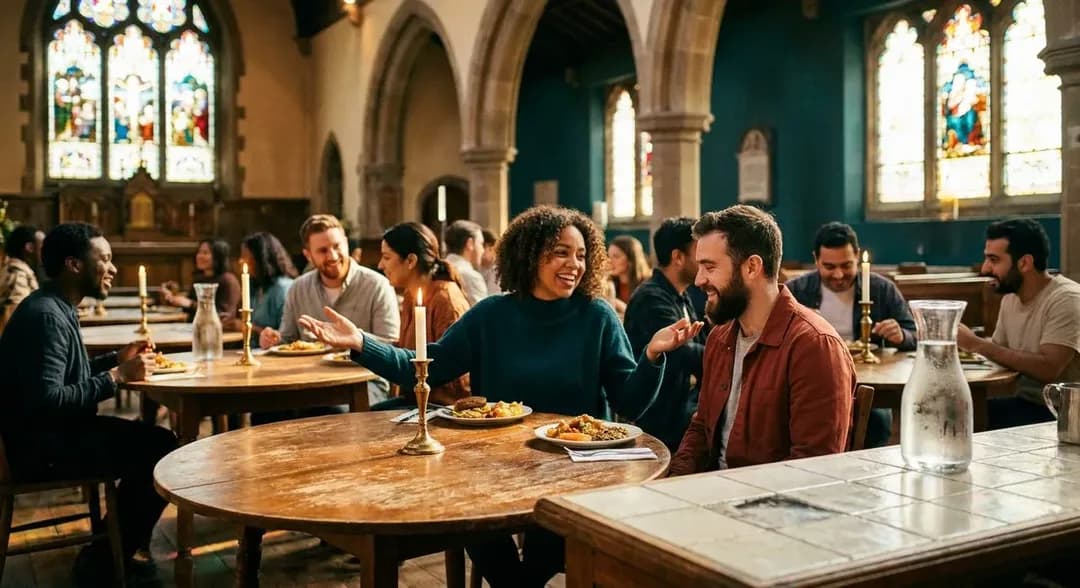
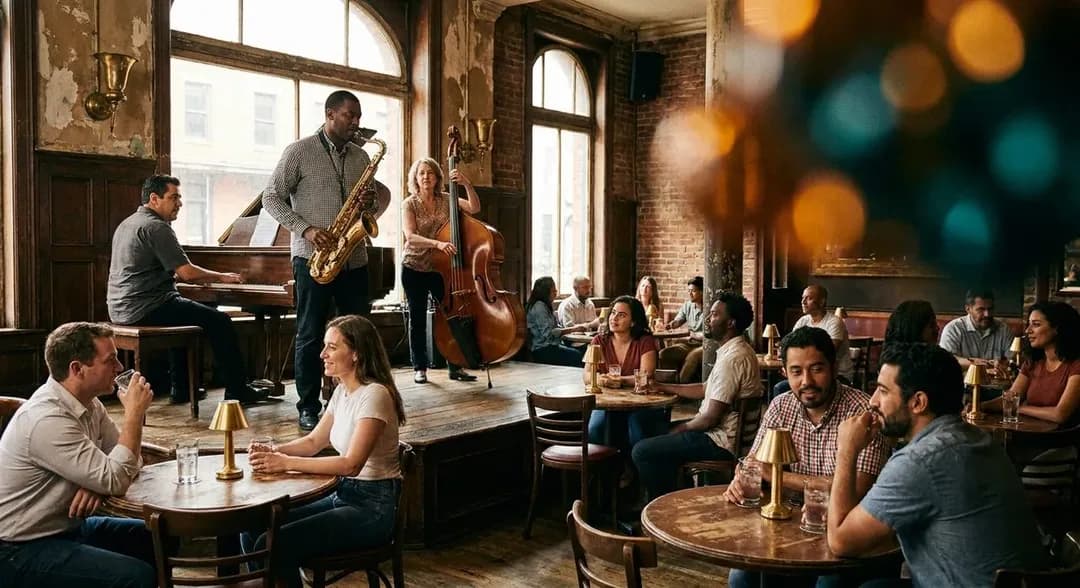
Thursday through Saturday nights, sixty diners gather beneath century-old stained glass where congregants once prayed. The bimah now holds a saxophone quartet, and five courses arrive between sets.
The architecture speaks first
You enter through an unmarked door on Eldridge Street, between a dumpling shop and a locksmith who's been there since 1973. The vestibule still has an original brass mezuzah mount, empty now, and then you're standing in a space that carries the architectural memory of the Lower East Side's deep synagogue heritage. Long communal tables fill the room—the kind where you'll end up sharing your neighbor's bread basket and possibly their opinion on the second movement. Above you, stained glass catches streetlight: geometric patterns in cobalt and amber that suggest late nineteenth-century craftsmanship, carefully preserved. The ceiling vaults high overhead. Your server will seat you facing the stage, which occupies a raised platform that once held something sacred.
How the evening unfolds
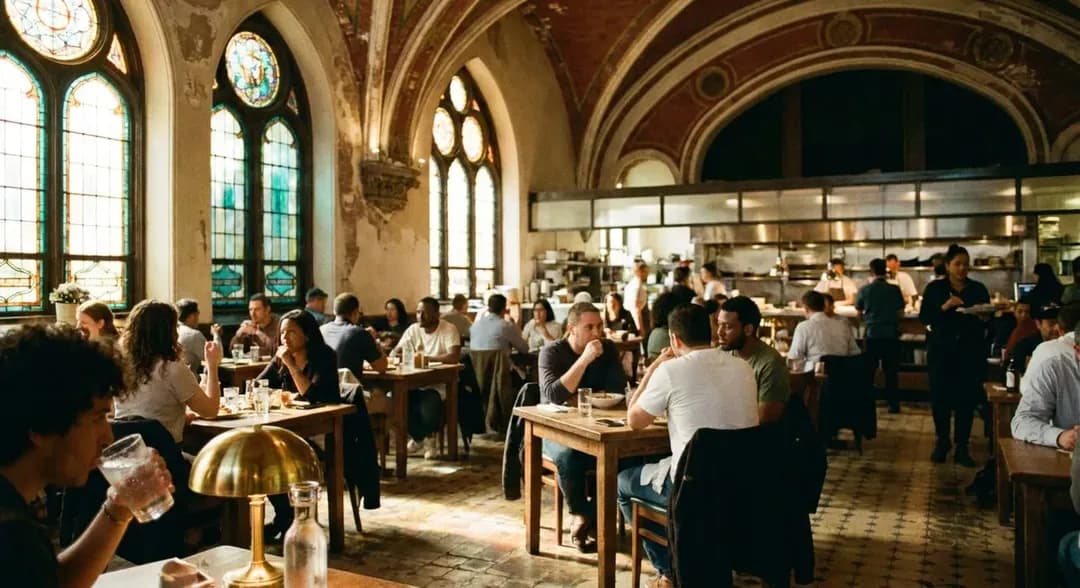
Doors open in the early evening. You'll want to arrive promptly because the first course comes out synchronized across all tables. There's no menu handed to you—just a small card listing the courses by primary ingredient only: beet, octopus, duck, something listed as "custard," chocolate. The kitchen operates where old classrooms or meeting rooms once stood. The band—usually a quartet, sometimes expanded—sets up during the first course. By the time your octopus arrives, charred and draped over white beans, the upright bass is tuning. They play between courses: sets of Mingus, Monk, some original compositions that lean modal and strange.
The seats that matter
Certain tables put you directly in front of the pianist and give you a sightline to the kitchen pass. Others run along the southern wall beneath a large stained glass panel—a geometric star pattern that glows deep blue when the stage lights come up. Avoid the table nearest the kitchen door unless you enjoy having servers navigate around you all night. The chef occasionally emerges during the fourth course to explain the custard, which changes weekly and is always served in vintage glass compotes sourced from estate sales. Recent versions have included parsnip with brown butter and celery root with black truffle—the room goes quiet when it arrives.
What you're actually eating
The duck course is the anchor—always third, always served with something acidic to cut the richness. It might come with pickled rhubarb and a smear of chicken liver mousse. The portions are calibrated so you finish satisfied but not heavy. The bread service happens continuously: sourdough baked that afternoon, served with cultured butter that has a faint sweetness. You'll see people pocketing extra rolls. The staff pretends not to notice. Wine pairings are available but not pushed—most tables order a bottle and share. The list focuses on natural wines from the Finger Lakes and the Loire Valley, annotated with handwritten tasting notes.
The musicians between sets
During breaks, the band sits at a reserved table. The saxophonist sometimes wanders between tables during the chocolate course, not performing, just talking. He'll tell you about the acoustics—how the original builders designed the space to carry a cantor's voice, and how that same resonance makes his horn sound like it's coming from inside your chest. The bassist is usually on her phone, texting with other musicians about late-night jam sessions in Bed-Stuy. On certain nights, the pianist might play a Shabbat melody as an encore, a nod to the room's history that lands somewhere between reverent and melancholy. No one applauds after. The room just sits with it.
Why Thursday night is different
Thursday reservations are easier to secure, and the crowd skews younger—more first dates, fewer anniversary celebrations. The band takes more risks on Thursdays, stretching improvisations into longer journeys that occasionally lose the thread. Fridays and Saturdays draw the serious jazz listeners, the ones who know the difference between hard bop and post-bop and will debate it over the duck course. Saturday nights often sell out weeks ahead. A cancellation list exists; call the number on the website and ask for the floor manager, who keeps a handwritten ledger and will remember if you've called before. Solo diners are sometimes accommodated at smaller seats when available.
Practical notes
The supper club operates on Eldridge Street in the Lower East Side, between Rivington and Stanton. Doors Thursday through Saturday in the early evening. The five-course menu with live music runs approximately $145 per person, excluding beverages and service. Wine pairings available. Reservations required, booked through the website—phone reservations available only for the cancellation list. The nearest subway is F to Delancey-Essex. Street parking is limited; nearby lots available. Dress code is unstated but observed: most people arrive in what you'd wear to a concert at the Village Vanguard. The evening runs approximately three hours. The space is up one flight of stairs; accessibility inquiries can be directed to the contact information on the website.
Tags: #NYCSupperClub #LowerEastSide #LiveJazz #HistoricVenues #SynagogueRestoration #TastingMenu #EldridgeStreet #HiddenDining #JazzDinner #NYCEats #IntimateVenues #TheOddEdit #ChefMiraShen #CulinaryExperience #NYCNightlife
Sources consulted: eldridgestreet.org
Please drink responsibly. Must be of legal drinking age.
All trademarks are the property of their respective owners.
Ask Karpo for more information.
Keep reading
- Costume Rental Near Me in Williamsburg: Hit and Run Productions Archive
 Costume Rental Near Me in Flatiron: Abracadabra NYC Showroom Floor
 Costume Rental Near Me in NoHo: Albright Fashion Library Archive