 Costume Rental Near Me in Williamsburg: Hit and Run Productions Archive
Hidden Gems & Odd Finds
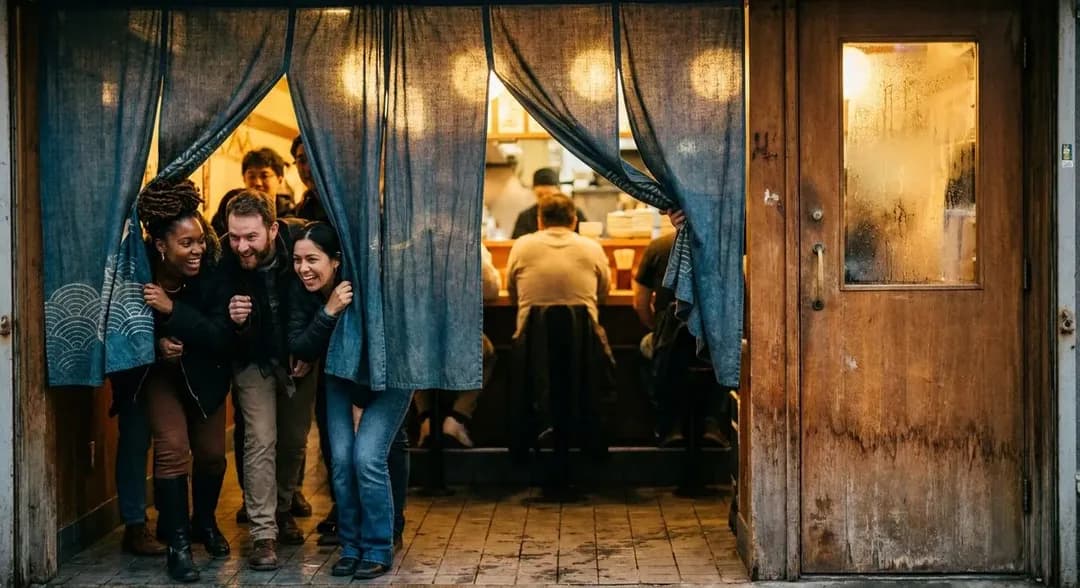
A Sake Bar Behind a Curtain in an East Village Ramen Shop
The noren curtain at the back of Takumi Ramen isn't decoration. Push through it, and you'll find eight counter seats, a former Kyoto sommelier, and forty bottles you won't see anywhere else in Manhattan.
The question that opens the door
You've heard the stories: somewhere in the Village, there's a sake bar hidden behind a curtain in a Japanese restaurant. No sign, no separate entrance, no reservation line. The kind of place that exists because you asked the right question at the right moment.
The truth is simpler and more particular than the legend. Angel's Share pioneered this concept in 1993, tucked behind an unmarked door inside a casual Japanese restaurant on Stuyvesant Street in the East Village. For nearly three decades, it set the standard for hidden craft-cocktail bars in New York—the template that inspired countless imitators. The original location closed in March 2022; the bar reopened on Grove Street in the West Village in July 2023, carrying forward the same philosophy of meticulous drinks in a space you have to seek out deliberately.
But the idea persists across the city in various forms: bars behind curtains, through kitchens, past storage rooms. Spaces that require you to notice, to ask, to want to know what's on the other side of the fabric.
What gets poured
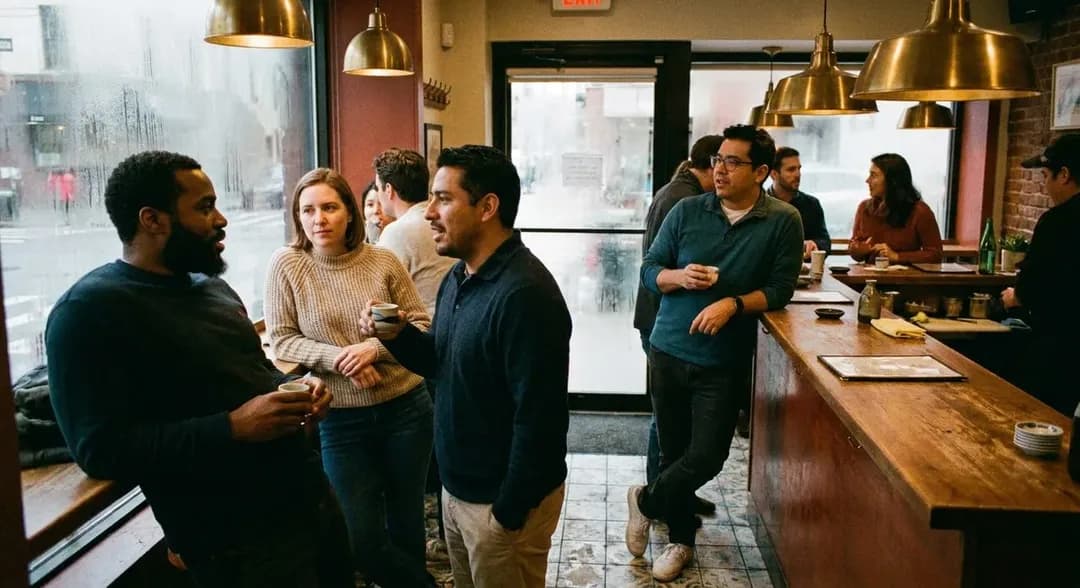
The bartender doesn't hand you a menu. Instead, there's a conversation—what you've been drinking lately, whether you prefer clean or textured, if you've had sake served warm. The selection rotates, but it tends toward small-production bottles from breweries you won't find at most restaurants in the city. Sake from Shimane, Yamagata, Akita. A nama genshu that arrived on a recent shipment, still lively and unfiltered. Then something aged in ceramic, round and almost savory.
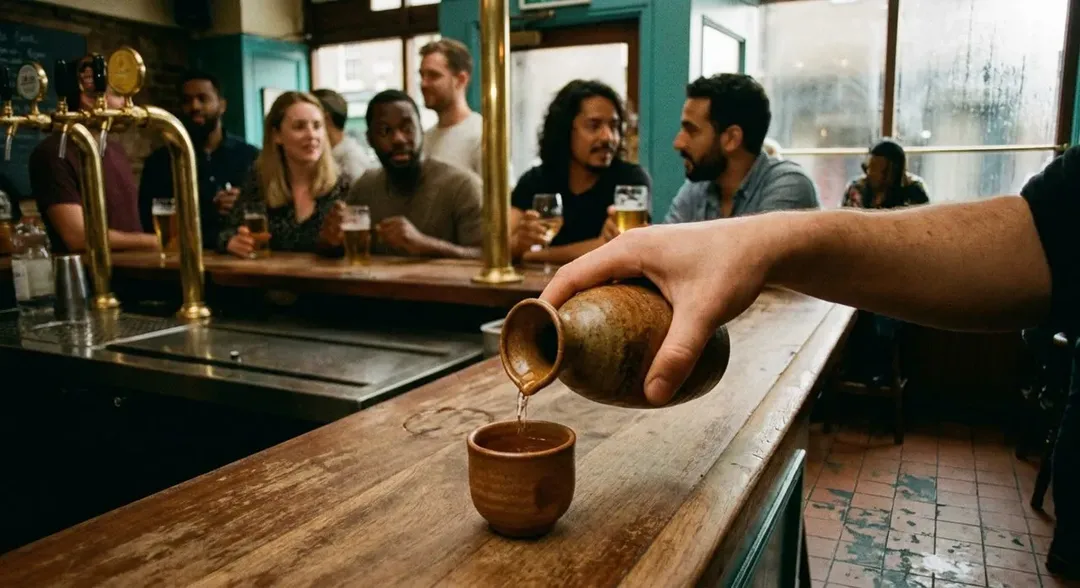
You'll watch the bartender handle the bottles with care, warming certain ones in a water bath to a precise temperature, pouring with the label facing you—a small formality that most bars abandoned years ago. The ritual matters as much as the liquid.
The mechanics of entry
You can't reserve a seat behind the curtain. There's no online booking system, no phone line for the sake bar. At places like this, you have to be there first—eating, drinking, present—and then ask. If there's space, you're in. If the seats are occupied, you'll be told to come back another night.
The atmosphere operates on a different frequency than the front room. Conversations happen across the counter, not along it. The space is small enough that everyone ends up part of the same evening, whether they intended to be or not. The bartender becomes the hub, and through him, strangers sometimes talk to each other.
Bring cash. Many of these hidden sake bars prefer it, keeping transactions simple and separate from the front-of-house operation. Expect to spend sixty to ninety dollars for a two-hour visit with several pours.
The regulars and their habits
There are people who return to these counters week after week. A regular who drinks only kimoto-style sake—the traditional, labor-intensive brewing method that produces lactic, earthy flavors. Someone who comes in after late shifts and asks to be surprised, never repeating a bottle.
The bartender remembers what you drank. If you come back a second time, he'll reference it. "Last time you liked that one from Yamagata. Let me show you something from the same prefecture, different brewery." It's not a sales technique. It's how these places run—like a continuation of the same conversation, picked up wherever it was left off.
Why this exists at all
Angel's Share created the template: a space that felt like the small bars its founders knew in Japan, where you couldn't just walk in off the street without some thread of connection. The unmarked door was the solution. It's permeable, but it requires intention.
It's not about exclusivity for its own sake. It's about creating a condition: that everyone who ends up behind the curtain did something to get there, even if that something was just asking. It changes the atmosphere. People are curious, not casual. They're there because they wanted to know what was behind the door, and that curiosity carries into how they drink.
These bars often have no separate name, no sign, no logo. They exist as extensions of the restaurants that house them and as their own separate things, both at once.
Practical notes
Angel's Share currently operates at Grove Street in the West Village (reopened July 2023 after closing its original East Village location at 8 Stuyvesant Street in March 2022). The bar is known for meticulous craft cocktails and sake in an intimate, hidden setting. Hours and reservation policies vary; check current details before visiting. Expect cocktails and sake pours in the range of twelve to twenty-two dollars depending on selection.
For the East Village area generally: the nearest subway stop is Astor Place on the 6 train. Street parking is difficult throughout the neighborhood. These small operations work best for parties of two or fewer. Many hidden sake bars are cash-only; ATMs are available at corner delis throughout the Village.
Tags: #SakeBarNYC #EastVillageEats #HiddenBarsNYC #NYCSake #TheOddEdit #KarposFinds #SpeakeasyNYC #JapaneseSake #NYCRamen #SecretBarsNYC #DowntownDrinks #EastVillageBars #NYCNightlife #SakeLovers #ManhattanEats
Sources consulted: en.wikipedia.org · nyctourism.com
Please drink responsibly. Must be of legal drinking age.
All trademarks are the property of their respective owners.
Ask Karpo for more information.
Keep reading
- Costume Rental Near Me in Williamsburg: Hit and Run Productions Archive
 Costume Rental Near Me in Flatiron: Abracadabra NYC Showroom Floor
 Costume Rental Near Me in NoHo: Albright Fashion Library Archive