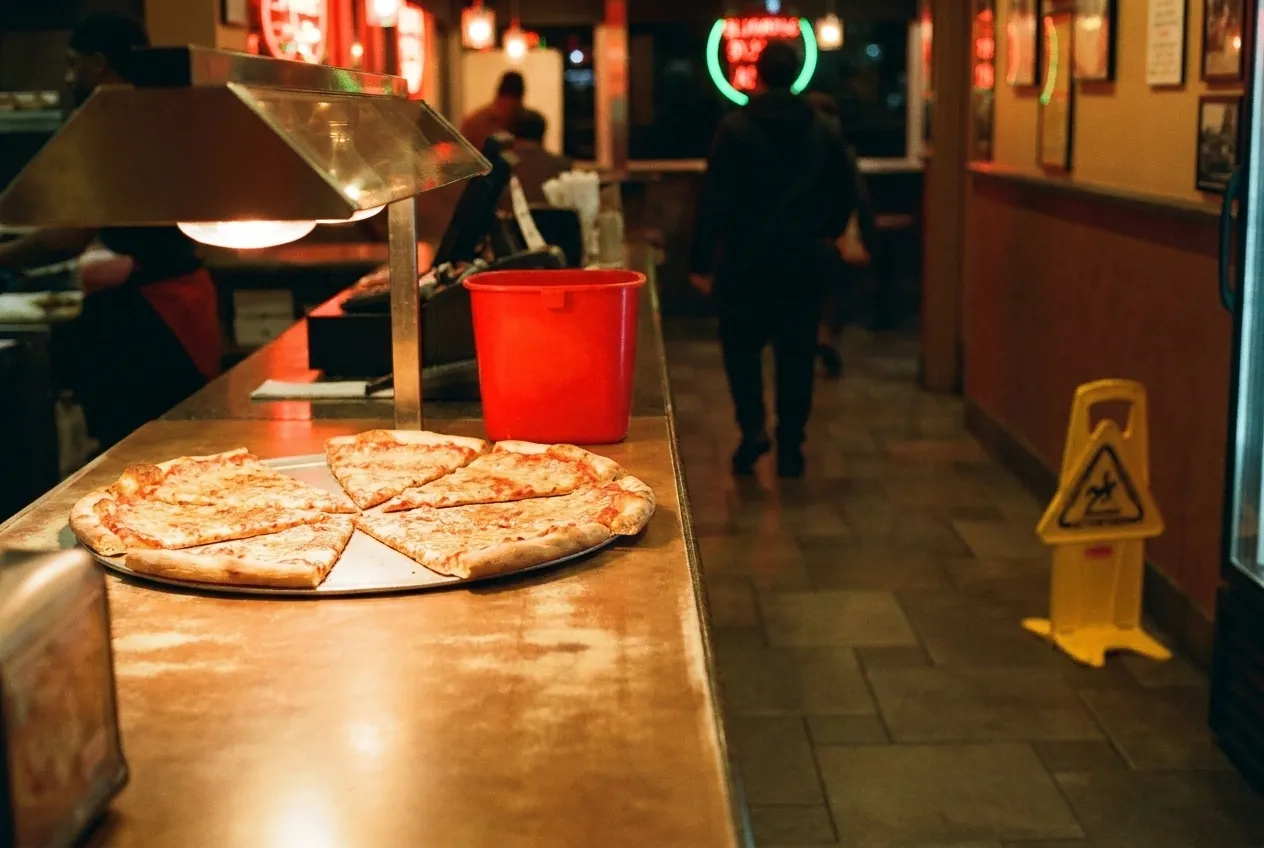
Type restaurants near me in New York and the map hands you a radius, a star rating and no useful information at all. Ratings measure how a room performed on someone's one visit. What actually separates a good New York restaurant from a famous one is the repeat rate — whether the people who live four blocks away go back on an ordinary Tuesday, having no occasion and nothing to prove. That is a much harder thing to fake, and it produces a very different list.
Repeat rate is the metric; distance is the constraint. Ask Karpo which of these is genuinely closest to you tonight and whether the door is likely to be open when you get there.
Why the hype list and the repeat list barely overlap
New York opens somewhere in the region of a thousand restaurants a year and closes a comparable number. The ones that get written about are, almost by definition, the new ones — that is what makes them news. The ones people eat at repeatedly are usually five to fifty years old, have no publicist, and would not survive a tasting-menu framing. Both lists are legitimate. They answer different questions. If you are choosing a place for a Wednesday, the second list is the one you want.
The practical tell is what a room does on a Tuesday at 7pm. A hype restaurant is full on Friday and half-empty midweek. A repeat restaurant is roughly as busy on both, because its trade is neighbourhood habit rather than destination travel. You can check this yourself before you commit: look at the live-busy graph for the place on a Tuesday, not a Saturday.
The delis and appetizing counters that never rotated out
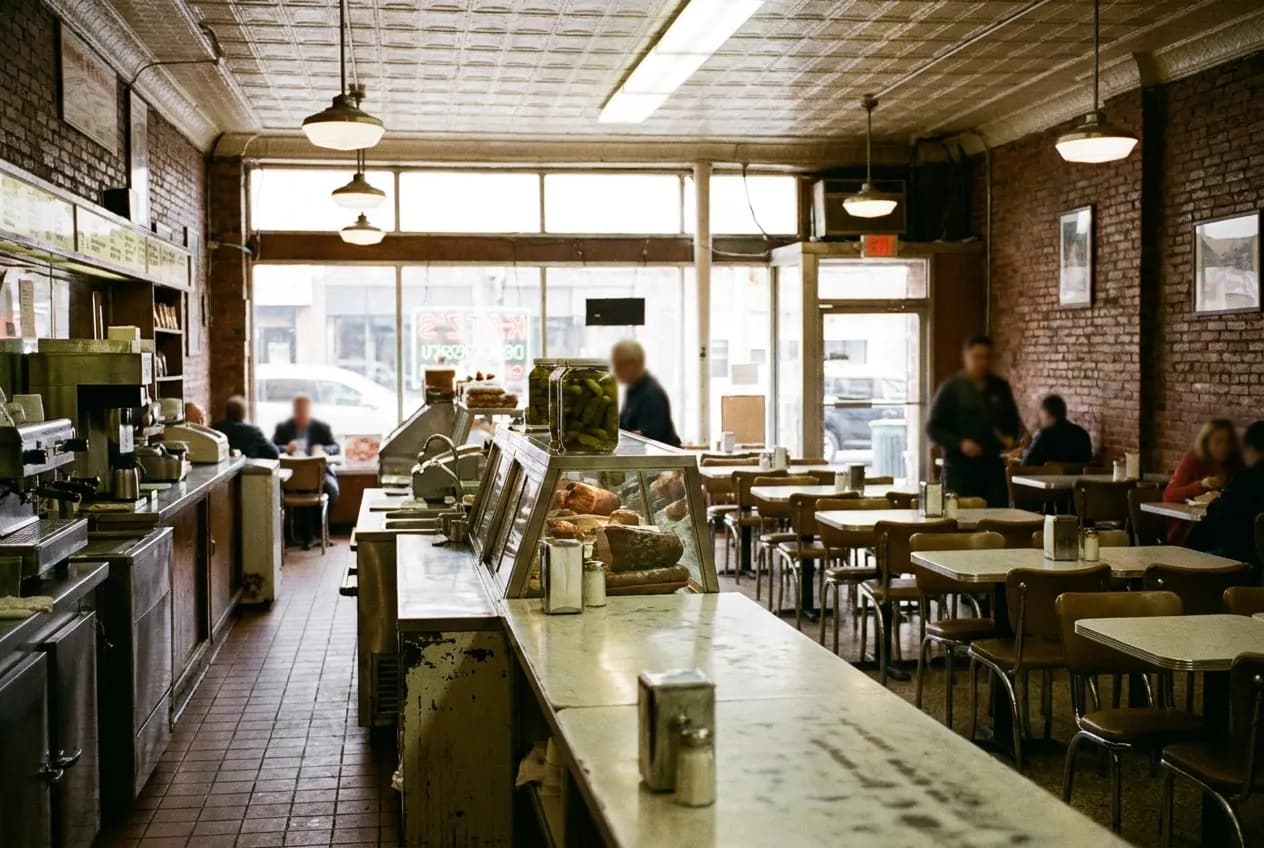
Katz's Delicatessen on Houston Street has been serving since 1888, and its ticket system is the thing that trips up first-timers. You are handed a paper ticket at the door, every counter man marks it, and you surrender it on the way out — lose it and you are dealing with a fee and a supervisor. If you want the version locals do, go to the counter rather than taking table service, pick a cutter and stay with him, and tip him a couple of dollars per sandwich. That single decision changes the meal, and nobody at the door will explain it to you.
Russ & Daughters, a few minutes east on Houston, runs the same principle in a different key: it is an appetizing store, meaning smoked fish and dairy rather than meat, and it has been in the same family since 1914. You take a number when you walk in and you wait for it. The counter staff will let you taste before you commit to a pound of anything, which is the correct way to work out whether you want gaspé or western nova, and it costs nothing but the nerve to ask.
Barney Greengrass on Amsterdam Avenue is the Upper West Side's version of the same institution, and the one rule that matters is that it closes on Mondays. People discover this the hard way with impressive regularity. Sturgeon and eggs at a formica table on a Sunday morning is one of the least changed experiences in Manhattan.
Chinatown after ten, and the basement rule
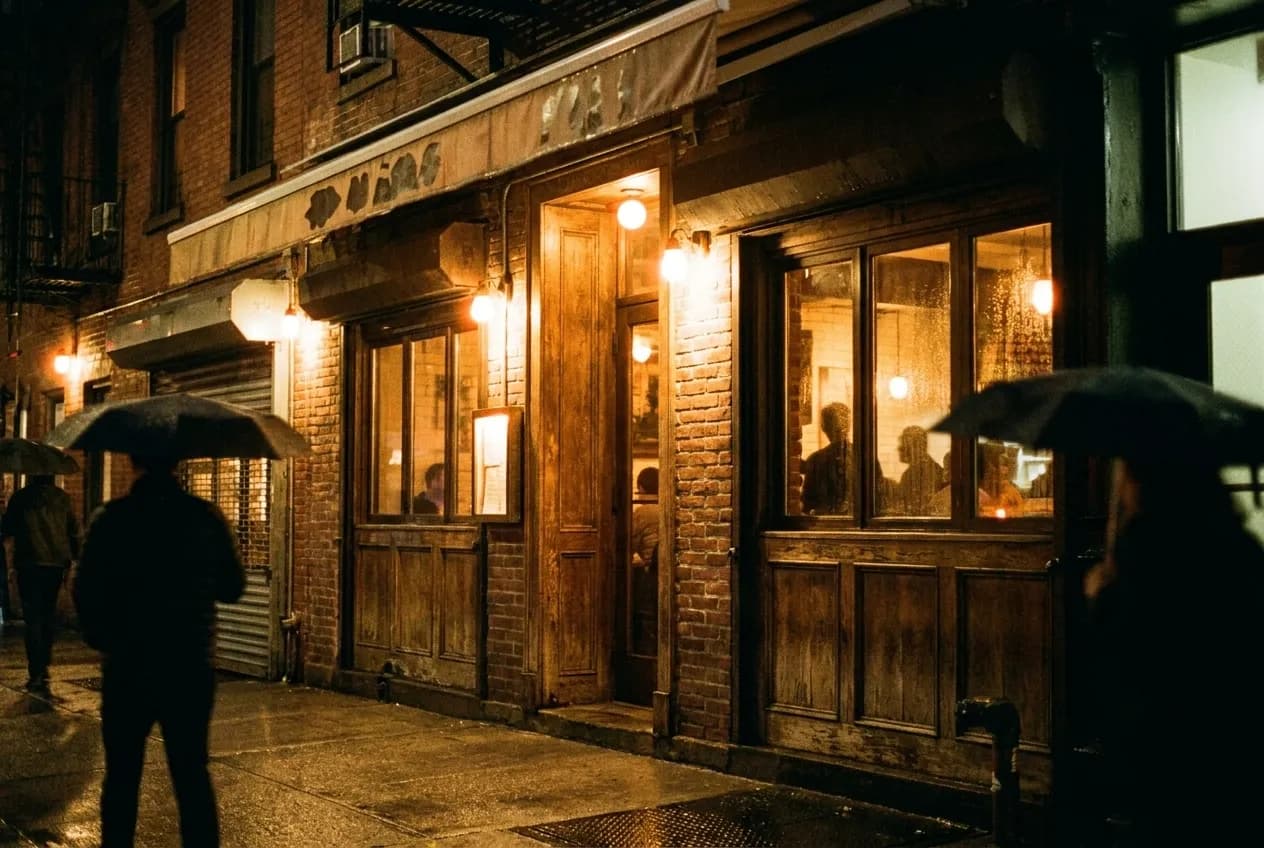
Wo Hop on Mott Street is a basement — you go down a short flight of stairs off the sidewalk and the room opens up below street level. That geography is the reason it survived: it is invisible from the street, it never became a scene, and it has been feeding restaurant workers, cab drivers and people coming out of bars for decades. The menu is unreconstructed Cantonese-American, the lighting is fluorescent, and the room is at its best somewhere after 11pm when the people eating there have just finished a shift.
The wider Chinatown lesson is that the late hours are not an afterthought. In a neighbourhood built around restaurant labour, the second dinner service — the one that starts when everyone else's kitchen closes — is a real institution with its own regulars. If you want to eat where locals repeat, that is the sitting to aim for, not 7pm.
The Queens corridor is the actual answer for most people
If your honest question is where can I eat extremely well without a reservation and without a Manhattan bill, the answer for the last twenty years has been the 7 train. Jackson Heights, Elmhurst, Woodside and Flushing sit on one line, each stop is a different culinary region, and almost nothing on that corridor takes bookings because almost nothing needs to. Jackson Heights alone runs Colombian, Nepali, Tibetan, Bangladeshi and Indian within a few blocks of Roosevelt Avenue.
The repeat-rate logic is at its clearest here. These rooms are not being sustained by visitors; they are being sustained by the people who live upstairs. That is why they are open late, why portions are calibrated to actual appetite, and why the same dish costs a third of what the Manhattan version does. It is also why the quality does not sag in February, when destination restaurants quietly coast.
Uptown, and the Sunday problem
Harlem's long-standing dining rooms have a scheduling quirk worth knowing: Sunday after church is the busiest sitting of the week, by a distance, and it is the one time you will wait. Locals who go weekly tend to go on a weeknight instead, when the same kitchen is doing the same food to a quarter of the room. If someone tells you a Harlem institution is overrated and they went at 1pm on a Sunday in a group of six, they have described the queue, not the food.
The four questions that actually filter a New York restaurant
Before you commit to a room you have not been to, four things decide whether the evening works. Does it take reservations at all, or is it a walk-in house — and if it is a walk-in house, is there bar seating that turns over faster than tables? What day is it closed, because a startling number of the best rooms in the city close Monday or Tuesday rather than Sunday? Is it cash-only or card-only, both of which still exist here and both of which are annoying to discover at the end? And what is the actual last seating, which is frequently forty-five minutes before the posted closing time?
None of those four appear on a star rating. All four are the difference between a good night and a walk home hungry. They are also the reason a neighbourhood regular looks like they have some kind of sixth sense about where to eat: they do not, they simply know the door policy.
How to build your own repeat list
Pick a six-block radius around where you actually are on a weeknight, not around where you wish you were. Eat at three places in it that have been open more than five years. Go back to the one where the staff clocked you the second time. That is the entire method, and after a month you will have a shortlist that no algorithm could have given you, because it is built out of your own repeats rather than an aggregate of strangers' first visits.
Tags: #RestaurantsNearMe #NYCRestaurants #WhereToEatNYC #KatzsDelicatessen #RussAndDaughters #BarneyGreengrass #Chinatown #JacksonHeights #7Train #NoReservation #NYCDining #NewYorkCity #EatLikeALocal #WalkIns
All trademarks are the property of their respective owners.
Ask Karpo first
Want the version of this filtered to your actual block and tonight's actual hours? Ask Karpo which of these rooms is open right now, which take walk-ins at the bar, and what the nearest equivalent is if the one you wanted is closed on a Monday.