 Haaland Has Seven Goals and Norway Runs Entirely Through Him
⚽️2026 FIFA WORLD CUP
Polish and Eastern European Football Bars in Greenpoint
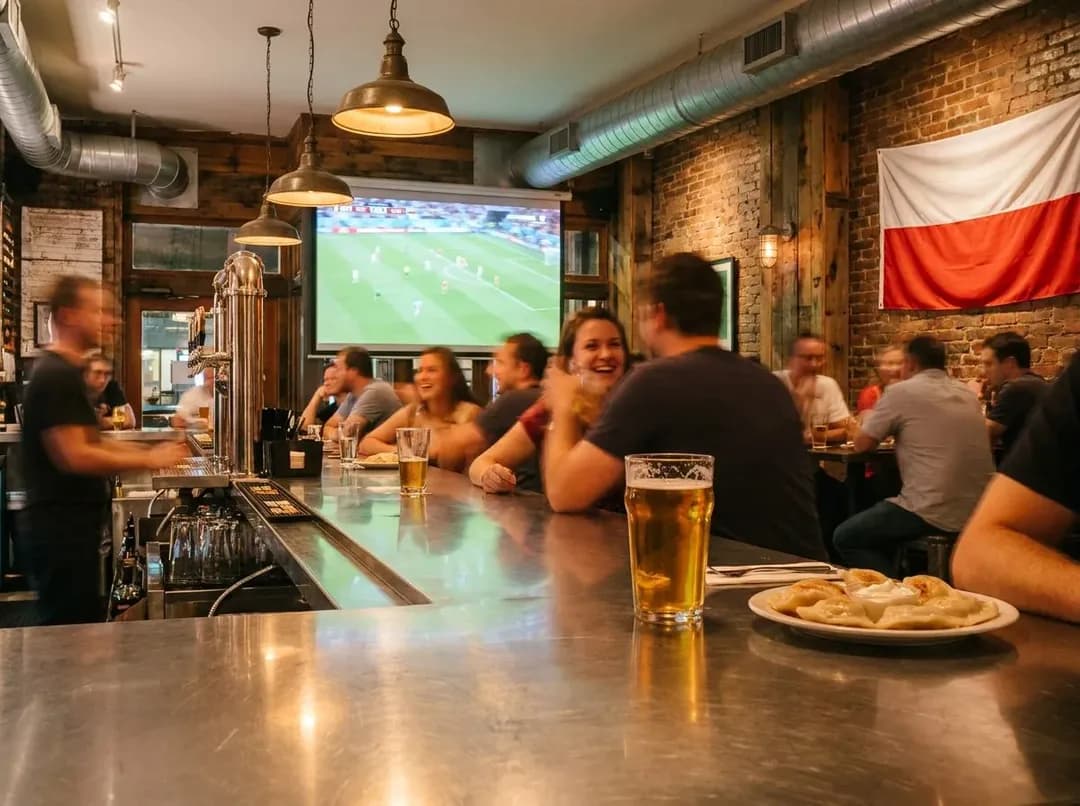
Greenpoint's Polish and Eastern European social clubs, cafés, and bars offer rare stateside viewing for World Cup 2026 matches, many opening early to accommodate Central European kick-off times and streaming commentary in native languages.
When the FIFA World Cup returns to North America in summer 2026, most Manhattan sports bars will roll up projector screens for midday matches and serve eggs-and-lager to finance-district fans. Meanwhile, in Greenpoint, a handful of Polish, Ukrainian, and broader Eastern European venues will do what they've done for decades: open early, brew strong coffee, set television dials to feeds that carry commentary in mother tongues, and fill rooms with the ambient cadence of fans who learned the game on concrete pitches in Kraków, Lviv, and Gdańsk. The neighborhood has long been a landing zone for Central and Eastern European diaspora, and football—never soccer—remains the lingua franca. This spring, five venues anchor a makeshift pilgrimage map for anyone curious about the sport as it sounds, smells, and feels a hemisphere away from ESPN's studio gloss.
The morning-shift rhythm
Poland and Ukraine sit six hours ahead of Eastern Time, which means many group-stage matches air between 9 a.m. and noon in Brooklyn. The early slots tend to pull shift workers, retirees, and a scattering of younger fans who call in sick or negotiate late arrivals. You'll find them at tables with laminated wood veneer, sipping Turkish-strength espresso or nursing Tyskie tallboys while the summer sun slants through plate glass still cool from overnight. Conversations toggle between English and Polish, the latter often louder and more animated when a contentious offside call appears on screen.
The atmosphere is less sports-bar pageantry and more living-room pragmatism. No body paint. No foam fingers. Just the occasional groan or sharp intake of breath, a scatter of applause, and the low hum of commentary that threads through the room like a second language track. If you arrive early, claim a seat near a window; by kickoff, standing room tightens near the bar.
Polish-American social clubs and their feeds
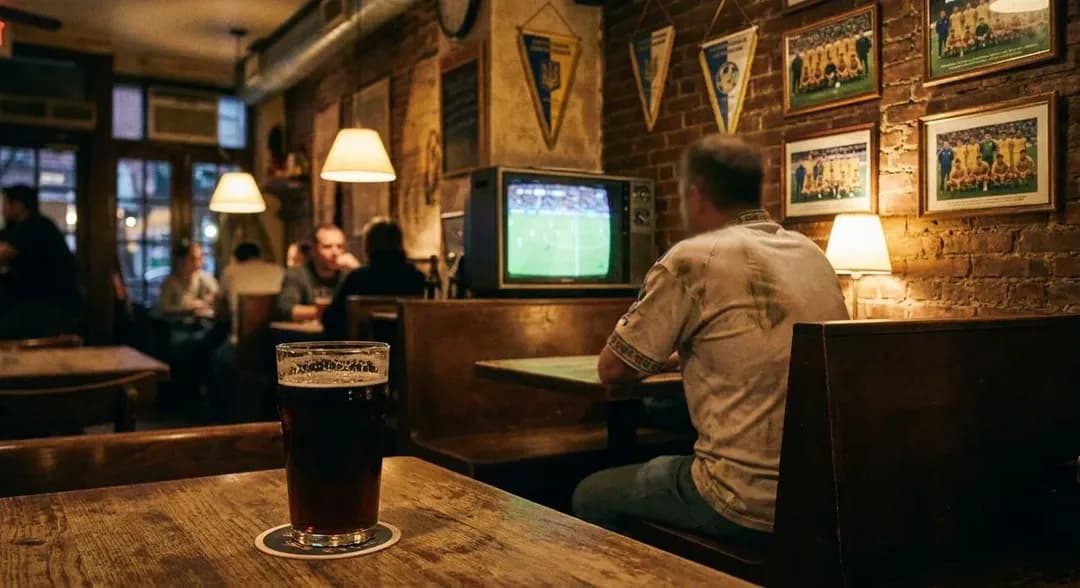
Greenpoint retains a few old-guard social clubs that technically operate as private membership halls but relax the velvet rope during major tournaments. One longstanding club in Greenpoint has been known to pull Polish-language commentary feeds directly from Warsaw broadcasters, a setup that requires a subscription satellite dish and a treasurer willing to navigate international streaming rights with creative accounting. The result is a telecast that feels less like a neutral FIFA broadcast and more like sitting in a Warsaw living room, complete with commentators who know the starting eleven's youth-academy lineage and refer to referees by first name with editorial disdain.
Inside, the décor leans heavily on varnished wood paneling, framed photographs of 1980s national squads, and a bar stocked with Żubrówka, Soplica, and enough bottled lager to outfit a wedding. Expect pierogi on paper plates around halftime, served by volunteers who've been manning the same kitchen for twenty years. The club's accessibility can be uneven—stairs, narrow doorways—but the welcome is warm if you're respectful and genuinely interested in the match.
Ukrainian restaurants with proper screens
A pair of Ukrainian-run restaurants near the McGuinness Boulevard corridor have upgraded their television setups in recent years, mounting flatscreens that don't flicker or ghost during corner kicks. These spots serve double duty: weekday lunch trade in varenyky and borscht, and weekend football theatre when Ukraine, Poland, or any team carrying Eastern European players takes the pitch. The crowd skews family-oriented, with children corralled near booths while parents and grandparents stake out bar stools and tables closest to the screens.
The sensory palette is distinct—dill and caraway in the air, the faint sweetness of kompot on the bar, and a background soundscape of cutlery on ceramic that quiets only when the ball nears the penalty box. If Ukraine qualifies for the World Cup knockout rounds, expect these rooms to swell beyond capacity, with overflow crowds gathering on the sidewalk where sound bleeds through propped-open doors. The restaurants don't advertise their World Cup programming on Instagram; word spreads through community networks and the occasional flyer taped inside a grocery-store window.
The café that never closes
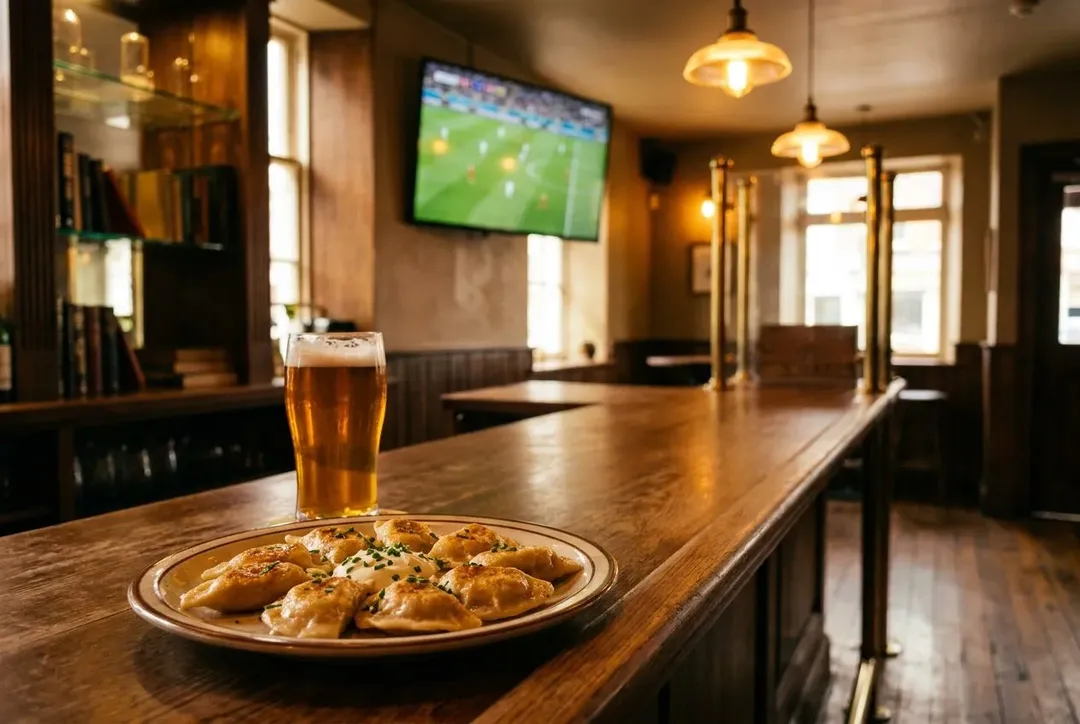
One Polish café near Nassau Avenue has cultivated a reputation for elastic hours and a remote control that somehow always lands on the right channel. It's nominally a coffee shop—espresso machine, pastry case, a few tables—but during tournaments it transforms into a low-key nerve center for fans who prefer their football without the sports-bar theatrics. The owner, whose tenure stretches back to the neighborhood's pre-gentrification chapter, keeps a handwritten schedule of kickoff times taped beside the register and adjusts opening hours accordingly. A 9 a.m. Poland match means doors unlocked by 8:30; a noon qualifier might warrant extending service until mid-afternoon.
The café's charm lies in its modesty. No giant projector. No surround sound. Just a single flatscreen bracketed to the wall and a volume knob set just loud enough to hear the whistle. The seating is mismatched—bentwood chairs, a repurposed church pew, a couple of stools with duct-taped vinyl. You order at the counter, pay in cash, and settle in. By mid-June 2026, when the tournament begins, expect this place to fill by kickoff and stay full, with patrons nursing single coffees for ninety minutes and occasionally longer if the match goes to penalties.
The broader Eastern European coalition
Greenpoint's football culture isn't monolithic. Polish venues welcome Ukrainian fans; Ukrainian spots host Polish regulars; and a few Romanian, Lithuanian, and Czech expats float between them depending on who's playing. During the World Cup, allegiances soften slightly—at least in the group stage. You'll find Poles cheering for Ukraine, Ukrainians rooting for Poland's neighbor Slovakia, and a general goodwill that transcends club rivalries until the knockout rounds arrive and old fault lines reappear. It's a dynamic that gives these rooms a warmth often missing from generic sports bars, where fandom is performed rather than lived.
The coalition also manifests in food. Expect to see Czech beer alongside Polish lager, Romanian mici on a side menu, and a drinks list that reads like a Central European liquor cabinet. The mix reflects decades of overlapping immigration waves, and the World Cup simply amplifies what already hums in the background: a shared attachment to the game, the old country, and a corner of Brooklyn that still feels, in certain light, like a small square in Wrocław or Chernivtsi.
What the fixtures will ask of you
If you're planning to drop into any of these venues, a few considerations. First, the early kickoffs mean you're joining a crowd that has rearranged their morning around the match; show up on time or slightly early. Second, don't expect table service or a host stand. You find a seat, you order at the bar, and you stay until you're ready to leave. Third, cash remains king in several of these spots, and ATMs are sparse along certain stretches of Manhattan Avenue. Finally, if you don't speak Polish or Ukrainian, that's fine—but a baseline interest in the game and a willingness to sit quietly during tense moments will earn more goodwill than any phrasebook greeting.
Practical notes
Greenpoint's football venues cluster along Manhattan Avenue and Nassau Avenue, both easily reached via the G train (Nassau Avenue or Greenpoint Avenue stops). Street parking is competitive but feasible on early-morning match days; look for spots along side streets east of Manhattan Avenue. Most venues operate on fluid schedules during the tournament—verify hours directly by phone or by stopping in a day ahead. Accessibility varies; older social clubs often have stairs and narrow doorways, while café-style spots tend to offer easier ground-level access. Bring cash, a phone charger if you plan to stay through multiple matches, and a light jacket; air conditioning in these rooms is inconsistent. Most venues don't require reservations, but arriving thirty minutes before kickoff ensures a seat.
Tags: #Greenpoint #PolishBrooklyn #EasternEuropeanNYC #WorldCup2026 #FIFAWorldCup #NYCFootball #SoccerBars #BrooklynDiaspora #PolishCuisine #UkrainianFood #ManhattanAvenue #GTrainNYC #SpringInBrooklyn #NYCLocal #AuthenticNYC
Please drink responsibly. Must be of legal drinking age.
Sources consulted: Greenpoint, Brooklyn · 2026 FIFA World Cup · Time Out New York Bars · New York Times NY Region · MTA Transit Information
All trademarks are the property of their respective owners.
Ask Karpo for more information.
Keep reading
- Haaland Has Seven Goals and Norway Runs Entirely Through Him
 World Cup Trophy Ceremony Timing Medals and Postmatch Celebrations
 Olise and France's Attack: The Semifinal Tactical Question