 Washington Heights Arepa Lunch Spot Picker for a Newcomer
Restaurants
Poke Bowl in Forest Hills: Kissfish on Austin Street
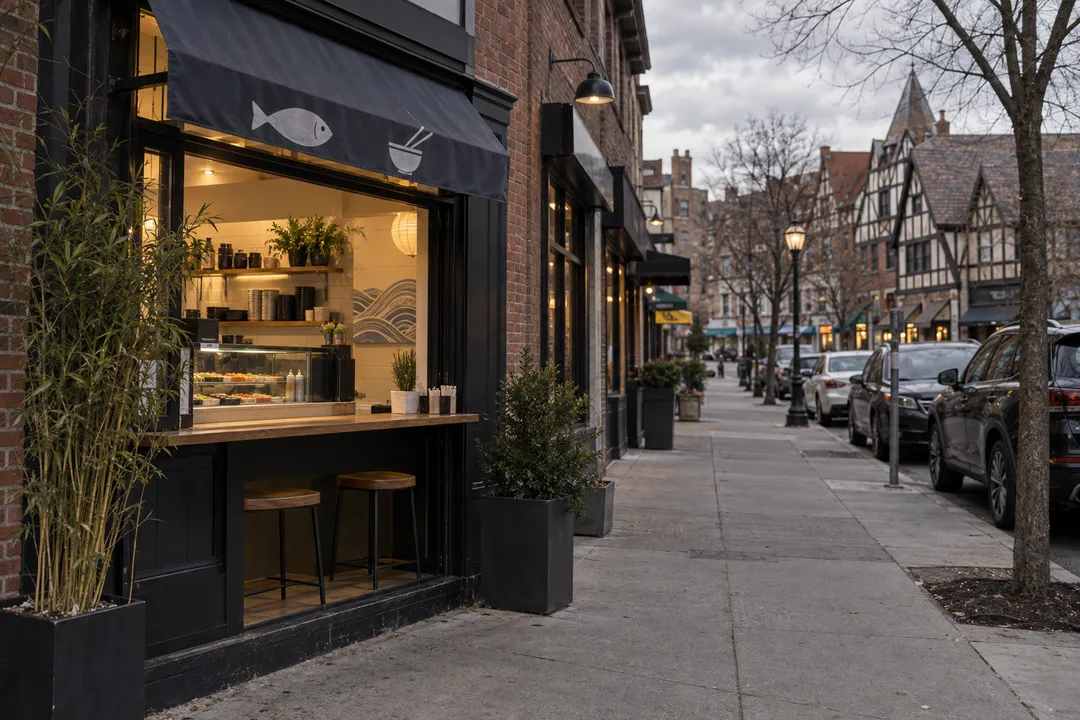
Kissfish serves big poke bowls on Austin Street in Forest Hills, Queens. Learn how counter ordering works and why the hand rolls and sushi burrito stand out.
Kissfish has been filling 32-ounce poke bowls on Austin Street since February 22, 2018, when it opened as the first poke-focused shop in Forest Hills. The counter at 70-21 Austin Street sits a short walk from the Forest Hills-71 Avenue station, it is closed on Mondays, and it serves Tuesday to Sunday from 11am to 8:30pm. A build-your-own bowl with two proteins costs $15.95 on the shop's own ordering page, which is the number to know if you searched poke bowl near me anywhere along Queens Boulevard.
Two First-Time Owners and a Former Juice Bar
Baruch College's student food blog Behind the Plate profiled the shop a month after it opened. It reported that owner Nick Blajeski was 21 and opening his first restaurant, and that his partner Ken Liu, then 31, had previously managed Yuba, a sushi restaurant in Manhattan. The pair took over the storefront that had housed Power Juice Bar and turned it into a fish counter.
That sushi background explains why the menu goes beyond poke. Next to the bowls you find hand rolls, maki dinners and a sushi burrito, which makes Kissfish feel more like a neighborhood sushi takeout shop with a poke specialty than a Hawaii-themed chain. Eight years on, it remains one of the few independent poke counters on Austin Street.
Opening day came during the peak of New York's poke wave, when fast-casual bowl shops were spreading across Manhattan but had barely reached the outer boroughs. Kissfish arrived as a homegrown answer for Forest Hills residents who had been taking the E train into the city for a bowl. That early start gives it a loyal local following among shoppers working their way down Austin Street.
How Ordering Works at the Counter
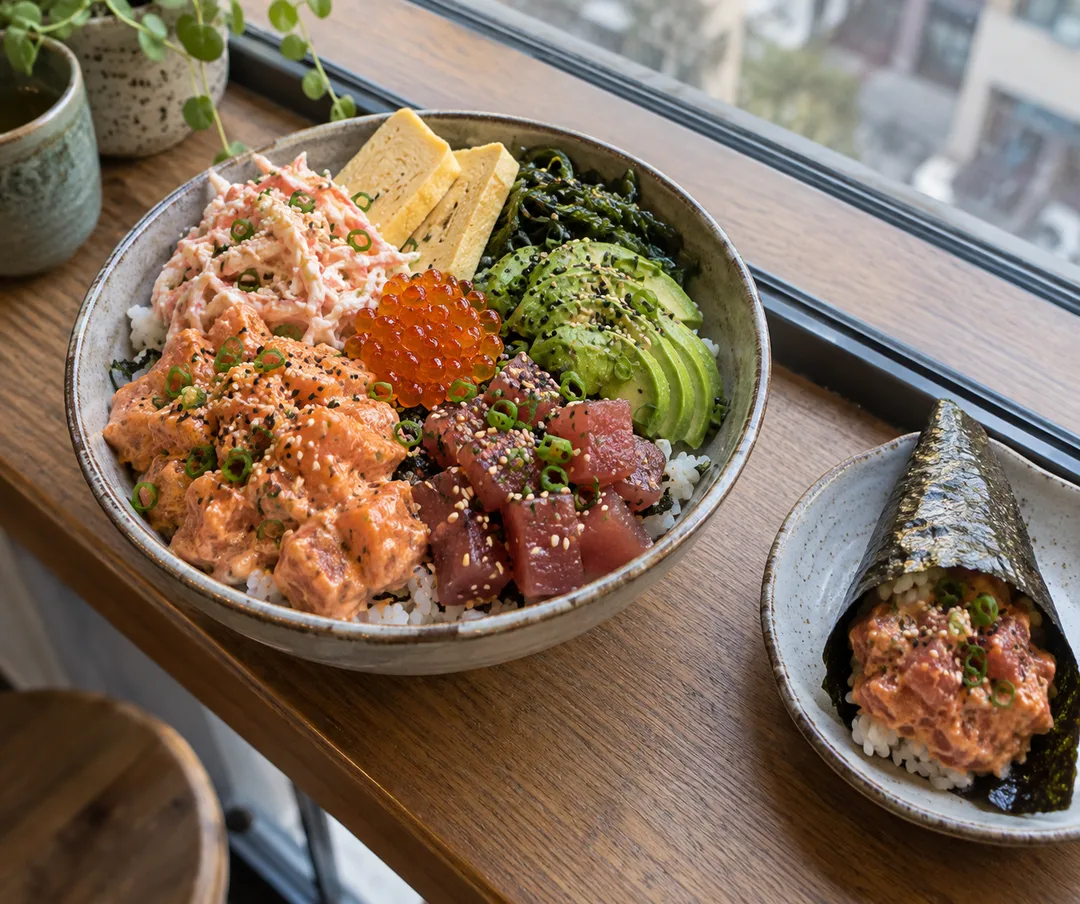
In the shop, you fill out a paper form that lists every option, according to Yelp reviewers, and hand it over. There are no named signature bowls. Each bowl is 32 ounces and includes two proteins, chosen from spicy kani, grilled chicken, eel, spicy tuna, spicy salmon, shrimp, inari tofu, salmon, tuna and tamago. Eel adds $2 to the price.
For the base, sushi rice and brown rice are standard; a salad base or zucchini noodles add $1 each. Sauces include the house Poke Yuzu, wasabi mayo and honey spicy. A good first order is salmon plus tuna over sushi rice with Poke Yuzu, which keeps the citrus forward and the fish clean. Spicy salmon with spicy kani suits people who like a creamier, richer bowl.
The one upgrade that earns its cost is ikura. Salmon roe adds $4.95, which feels steep, but a spoonful of those bright orange pearls changes the bowl entirely, giving bursts of brine against the rice. Skip the zucchini noodle base if you are taking the bowl home on the subway; it releases water and dilutes the sauce within twenty minutes.
Parents bringing children have easy options on this list. Tamago, the sweet Japanese omelet, and grilled chicken are both proteins, so a kid's bowl of tamago and chicken over sushi rice with no spicy sauce involves nothing raw. Inari tofu, the sweet fried tofu pockets, gives vegetarians a protein that holds its texture better than plain cubed tofu.
Hand Rolls and the Sushi Burrito
The build-your-own wrap, a sushi burrito, costs the same $15.95 as a bowl and is the easier thing to eat while walking. For anyone who prefers rice and nori to a bowl, hand roll combos run three rolls for $16.95, four for $20.95 and five for $25.95. A single spicy tuna hand roll costs $6.50 and an eel hand roll costs $7.25.
Beyond the poke station, the Spicy Kani Mango Salad at $10.95 is a light side for two, and the California Maki Dinner at $20.95 covers the family member who wants a familiar roll. Yelp reviewers who live nearby mention ordering online for family pickups, which suits a shop built mostly around takeout.
Small Room, Mostly Takeout
Reviewers describe Kissfish as a small, casual poke place with a few tables and some window seats facing Austin Street. Most customers take their food out. If you want to sit, come right at 11am or in the mid-afternoon lull, and take the window ledge, which looks out on one of the busiest shopping blocks in the neighborhood.
Driving is the hard part. Yelp reviewers warn that parking on Austin Street is difficult, and metered spots turn over slowly on weekends. The subway is the better plan: the E, F, M and R all stop at Forest Hills-71 Avenue, and one regular recommends the local M or R for the shortest walk. A January 2025 review complained of a dip in quality, so stick with the core raw fish combinations rather than cooked add-ons if you want the shop at its best.
A Walk Through Forest Hills After Lunch
Carry your bowl a few minutes to Station Square, the brick-paved plaza beside the Forest Hills Long Island Rail Road station on 71st Avenue between Austin and Burns Streets. It is the entrance to Forest Hills Gardens, the planned Tudor-style community laid out in the early twentieth century, and its arched passages and private, tree-lined streets make for an easy, quiet loop.
For dessert, continue to Eddie's Sweet Shop at 105-29 Metropolitan Avenue, an old-fashioned ice cream parlor that has operated for more than a century. A sundae there after a bowl of raw fish is a very Forest Hills afternoon, and the walk down from Austin Street takes about fifteen minutes.
Practical Notes
Address: 70-21 Austin Street, Forest Hills, NY 11375. Hours: Tuesday to Sunday 11am to 8:30pm, closed Monday. Subway: E, F, M or R to Forest Hills-71 Avenue. Build-your-own bowls and sushi burritos are $15.95 with two proteins; eel adds $2, ikura $4.95, and a salad or zucchini noodle base $1. Hand roll combos start at $16.95 for three. Online ordering for pickup and delivery runs through the shop's order.online page.
Ask Karpo for more information.
Keep reading
- Washington Heights Arepa Lunch Spot Picker for a Newcomer
 Williamsburg Arepa Lunch Spot Picker for Parents of Toddlers
 Lower East Side Arepa Lunch Spot Picker for Coeliac Friends