 Scenic Walking Trail Near Me: Central Park North Woods Ravine and Loch Walk
Free Things to Do
Where Can You Watch Michael Landon's Work for Free in New York City?
Track down classic Landon episodes at library screening rooms and public archives without spending a dollar on streaming.
You want to revisit Michael Landon's television work—*Little House on the Prairie*, *Bonanza*, *Highway to Heaven*—but you're not subscribing to another platform just to watch a few episodes. New York City's public library system and a handful of archives maintain physical collections and viewing stations where you can watch classic American television for free, but the access points are scattered, the equipment is often occupied, and not every branch stocks the same titles. The plan below routes you to the two most reliable spots, accounts for transfer time from Sunset Park, and includes a food break that doesn't add subway friction.
Karpo checks which branch has the viewing station open today, maps the fastest subway route from Sunset Park, and texts you a backup if the room is booked when you arrive.
The streaming fatigue problem
The keyword here is *public access*. These are not streaming lounges or curated retrospectives; they're research rooms and media labs where the library happens to hold DVDs, VHS transfers, or licensed digital files of shows that aired decades ago. Availability depends on cataloging, and you'll need a library card to book a station. If you're coming from Sunset Park, the R train puts you within walking distance of the Mid-Manhattan branch at 42nd Street, and the D can deliver you to the Donnell replacement space or the main research building at Fifth Avenue. Both require transfers if you're starting on the N, and evening hours shrink after 8 p.m., so timing matters.
Mid-Manhattan Library: the practical default
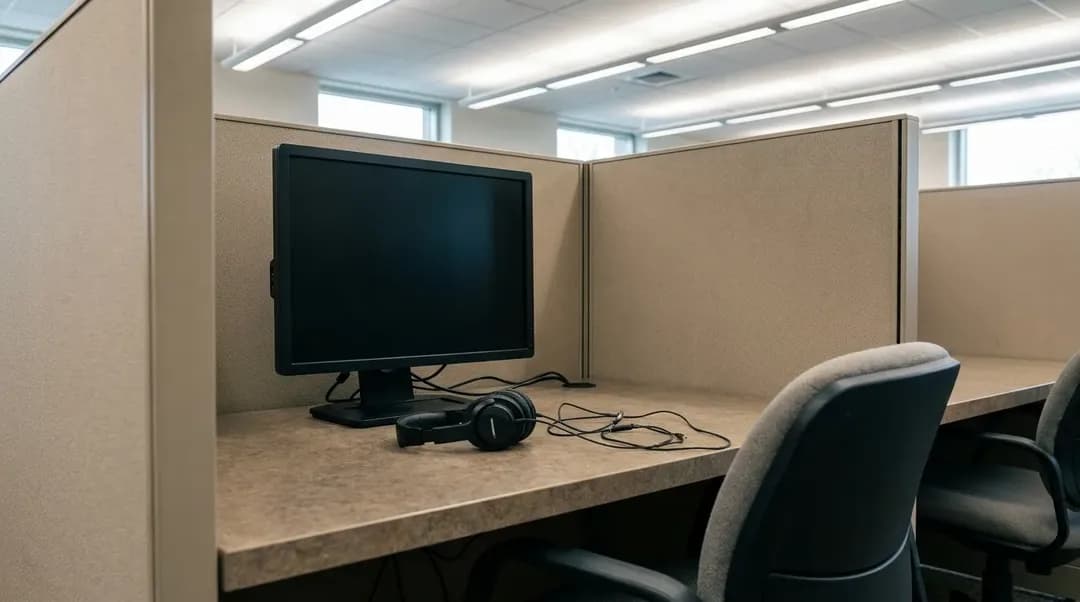
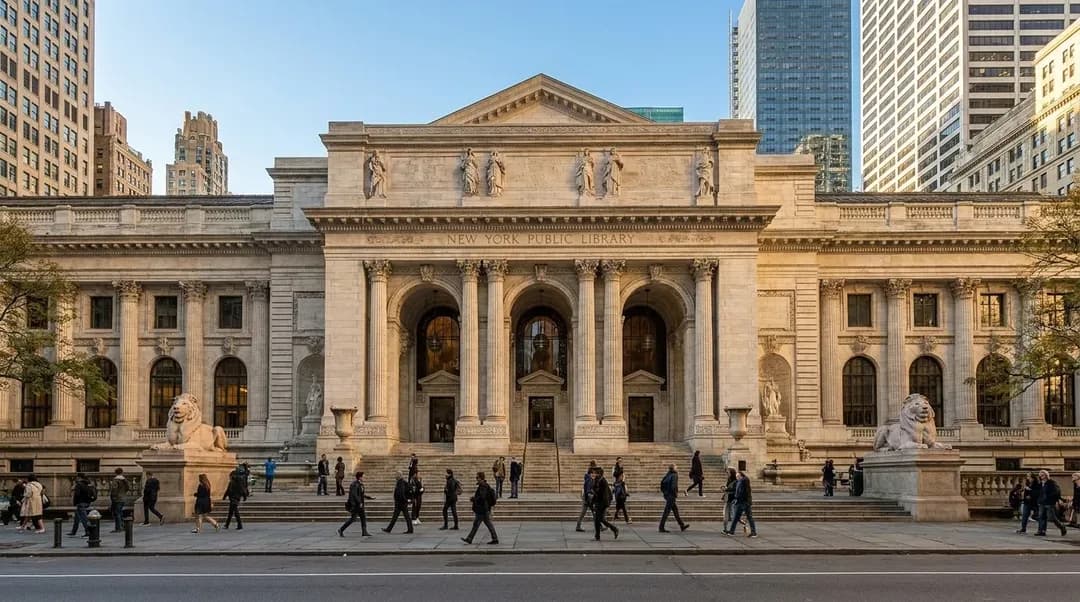
The New York Public Library's Mid-Manhattan location, currently integrated into the main Fifth Avenue building during the system's consolidation, offers the most predictable access to older television on physical media. The library's catalog lists holdings for *Little House on the Prairie* and *Bonanza* on DVD, shelved in the circulating collection and available for in-house viewing at media workstations on the lower level. You reserve a station online or at the desk; slots run ninety minutes, and the room fills up by mid-afternoon on weekends.
From Sunset Park, take the R to 42nd Street–Bryant Park or the D to 42nd Street–Sixth Avenue, then walk east. The R is the simpler ride—no transfer, about forty minutes—but the D requires a transfer at Atlantic Avenue or DeKalb, and the DeKalb platform can be a slow shuffle during track work. Once you're at the library, check the catalog terminal on the ground floor to confirm the disc is on the shelf that day; if it's checked out or in processing, the desk staff can tell you when it's due back, but they won't hold it. The viewing stations are first-come if you didn't book ahead, and the room has no windows, so it feels more like a carrel than a theater.
The Fifth Avenue entrance sees tourist crowds until closing, but the lower-level media room stays quiet. Bring headphones; the library provides basic earbuds, but they're uncomfortable for a full episode. If you want to watch more than one ninetly-minute block, you can rebook for a later slot if the system has openings, but that's rare after 4 p.m. The building closes at 6 p.m. most weekdays and 5 p.m. on Saturdays, so plan to arrive by 3 if you want a meaningful session.
Paley Center: the deeper catalog
The Paley Center for Media, a nonprofit archive on 52nd Street between Fifth and Sixth, holds one of the country's largest collections of American television, including extensive runs of Michael Landon's series. Admission is free if you register for a researcher account, which you can do on arrival with photo ID. The center's database lists individual episodes, and you watch them in private console booths on the second floor. The interface is older—think library microfiche navigation—but the holdings are comprehensive, and you can queue multiple episodes in one session.
The trade-off is the research-oriented atmosphere. The Paley Center is not a casual drop-in; it's a working archive where scholars book time, and the staff expect you to use the catalog purposefully. You won't browse shelves; you search the database by title, actor, or air date, then request the file at the desk. Playback happens at the console, and the booths are small—one chair, one screen, one set of wired headphones. The room is silent, and the center discourages group viewing. If you're coming from Sunset Park, the D to Seventh Avenue or the R to 49th Street both land you within two blocks; the R is again the no-transfer option, and you can walk north on Sixth Avenue without crossing major tourist zones.
The Paley Center keeps weekday hours until 6 p.m. and is closed Sundays and Mondays, so this is a weekday or Saturday plan. Sessions are not time-capped the way library stations are, but the building clears at closing, and if you arrive after 4:30, you'll have limited runway. Confirm hours on their site before you go; they occasionally close for private events. The second-floor viewing area has no food or drink allowed, so finish your coffee before you head upstairs.
The 42nd Street lunch angle
Both the library and the Paley Center sit within a five-block radius of Bryant Park, which gives you green space and a food cluster that won't force another subway ride. If you're making the trip from Sunset Park and want to build a half-day plan, eat before or after your screening session rather than during, because neither venue allows food inside the viewing areas, and stepping out resets your queue position.
Bryant Park itself has a seasonal food kiosk lineup along the south and west edges—tacos, sandwiches, coffee—but seating is tight in good weather, and the park gets loud with lunch crowds between noon and 2 p.m. The better move is the blocks west of Sixth Avenue: 9th Avenue between 42nd and 44th has a stable row of cheap, fast spots—empanadas, dumplings, slice pizza—that turn tables quickly and don't expect you to linger. If you're coming off the R at 42nd, walk west before you walk east to the library; grab food, then double back. That keeps you from carrying a bag into the library's security check, and the walk is flat.
If you're at the Paley Center first, walk south to 42nd or north to 53rd for similar density. The 53rd Street corridor has more sit-down options, but they skew pricier and slower. The 42nd Street stretch between Sixth and Seventh Avenues has the Chopt and Pret tier—fine for a quick reset, nothing special. Avoid the Times Square blocks unless you want to wade through sidewalk traffic; the crowds don't clear until you're west of Eighth Avenue, and that's too far out of the way.
Getting home without the evening crush
If your session runs past 5 p.m., the subway back to Sunset Park picks up commuter load, and the R slows down. The evening R frequently runs local in Manhattan when it's supposed to be express, and the stretch between 42nd and Atlantic Avenue can add fifteen minutes to the trip if you hit a delay at DeKalb or a train holding for connection. The D is faster in theory—express through Manhattan—but the transfer at Atlantic or DeKalb introduces risk, especially if you're catching the tail end of rush hour and the platform is packed.
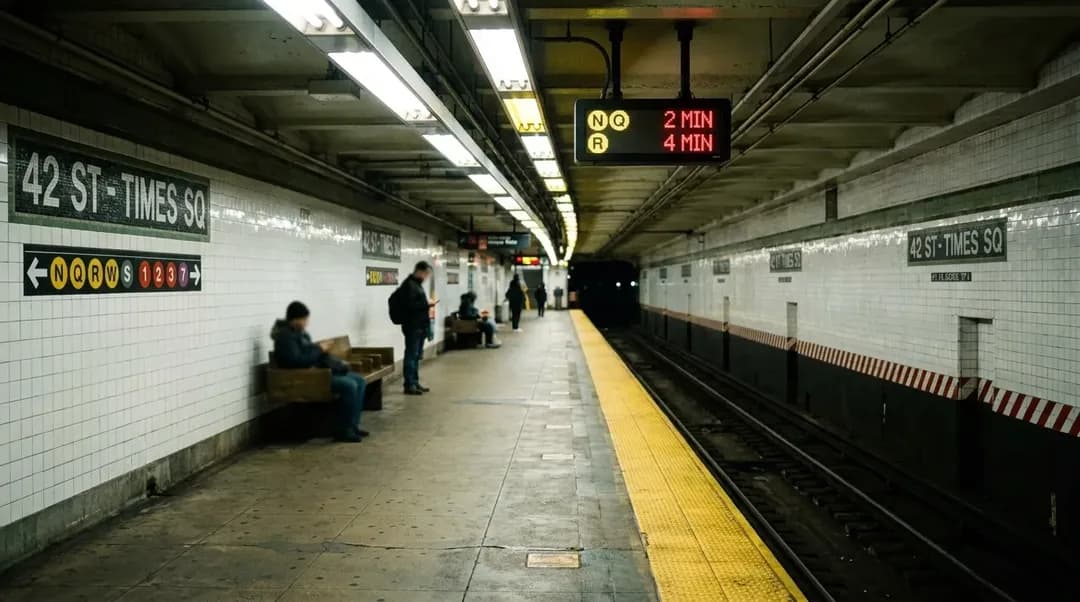
The safest exit is to leave by 4:30 if you're aiming for a predictable ride home. If your screening runs later, check the MTA's service status before you board; weekend and evening work on the D and R is common, and you'll sometimes find the D running local or the R skipping stops. The 42nd Street station has countdown clocks, but they're optimistic during service changes. If the R looks delayed, walk to the D at Sixth Avenue and take your chances with the transfer; a slow transfer is usually faster than waiting on a stalled R.
Late-night service after 10 p.m. on both lines is sparse, and the R runs every twenty minutes. If you're planning an evening session and a sit-down dinner after, you're looking at a 10:30 or 11 p.m. train home, which is manageable but not comfortable. The alternative is to build the trip as an afternoon plan—arrive by 2, screen until 4 or 5, eat, and catch the 6 p.m. train before the worst of the evening load.
What to confirm the morning you go
Call the library or check the Paley Center's site the morning of your trip to confirm the viewing stations are open and the title you want is available. Both institutions occasionally close rooms for maintenance or private events, and the library's catalog doesn't always reflect same-day checkouts. If the disc or file you want is unavailable, ask the desk staff when it's expected back; they can't reserve it for you, but they can tell you if it's due that afternoon or stuck in another branch.
Check the MTA's weekend service advisories and weekday planned work. The R and D both see frequent weekend reroutes, and the D in particular runs local in Manhattan during track work, which eliminates its speed advantage. If the D is running local, the R becomes the simpler choice. If both lines have service changes, consider taking the N to 34th Street and walking east to the library, though that adds ten minutes on foot.
Bring your library card if you're using the NYPL, and bring a photo ID if you're registering at the Paley Center for the first time. Both institutions require ID for access to media collections, and the Paley Center won't let you into the viewing area without completing the registration process at the front desk. Bring your own headphones if you have a preferred pair; the provided ones work, but they're not comfortable for a two-hour session. Finally, check the weather if you're planning to eat in Bryant Park; the park seating is all outdoors, and there's no real cover if it rains.
Practical notes
- Mid-Manhattan Library media stations close at 6 p.m. weekdays, 5 p.m. Saturdays; arrive by 3 for a full session
- Paley Center requires free researcher registration with photo ID; closed Sundays and Mondays
- R train from Sunset Park is no-transfer but slow; D is faster but requires transfer at Atlantic or DeKalb
- Confirm disc or file availability the morning of your trip—catalog doesn't reflect same-day checkouts
- Bring your own headphones for comfort; both venues provide basic earbuds but they're not padded
- Check MTA service advisories before you leave—weekend work on D and R is frequent
Tags: #karpo #nyc #newyorkcity #sunsetpark #freethingstodo #michaellandon #nyclibraries #classictv #paleycentre #midmanhattanlibrary #nypl #freetv #nycculture #publiclibraries #brooklyntobroadway
Sources consulted: New York Public Library catalog · Paley Center for Media · MTA service status
All trademarks are the property of their respective owners.
Ask Karpo first
Text Karpo the morning you're heading out to confirm which library branch has the viewing station open and whether the title you want is on the shelf. It'll map the fastest route from Sunset Park with current service changes and suggest a lunch spot that doesn't add a transfer. If your first choice is closed or full, Karpo will text you a backup in range.
Ask Karpo for more information.
Keep reading
- Scenic Walking Trail Near Me: Central Park North Woods Ravine and Loch Walk
 Scenic Viewpoint Near Me: Brooklyn Heights Promenade at Sunset
 Scenic Viewpoint Near Me: Riverside Park Hudson River Walk