 Haaland Has Seven Goals and Norway Runs Entirely Through Him
⚽️2026 FIFA WORLD CUP
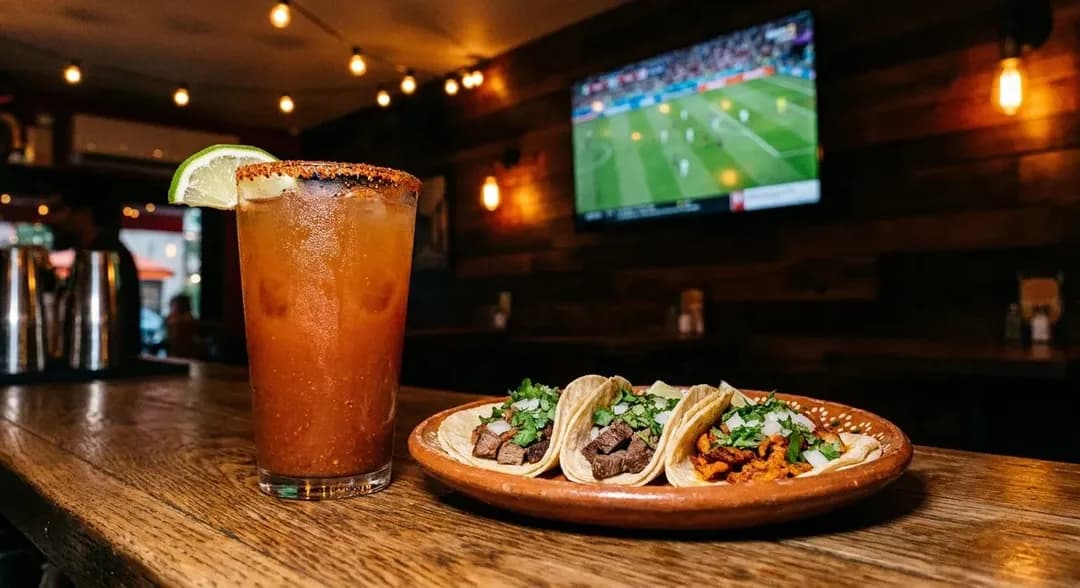
Mexican Cantinas Showing Fútbol — Bushwick and LES
Mexico co-hosts the 2026 tournament, and NYC's Mexican cantinas will erupt. We map Bushwick and Lower East Side spots with proper screens, match-day taco specials, and one taqueria opening at 7am for early kickoffs.
Late May in New York carries a particular shimmer—sidewalk tables multiply, kitchen windows swing open, and the city begins its slow pivot toward summer. This year, that pivot arrives with a roar. Mexico will be a co-host nation in the next FIFA World Cup, and if you think the city's Mexican cantinas will treat it as background entertainment, you haven't spent enough time in Bushwick or on the Lower East Side. These neighborhoods house some of the loudest, most devoted watch parties the tournament will see, and the venues are already marking their calendars. Screens are being mounted. Taco specials are being penciled in. And at least one taqueria is planning to unlock its doors at seven in the morning for those early international kickoffs that separate casual fans from true believers.
Why these two neighborhoods
Bushwick and the Lower East Side don't share much geography, but they do share a certain spirit: tight-knit, unapologetically loud, and home to long-standing Mexican communities that have shaped the food and social fabric of each block. Bushwick's cantinas cluster along Knickerbocker and the cross streets near the Jefferson L, where painted murals and hand-lettered signs still outnumber the new glass storefronts. The Lower East Side's stretch—particularly around Clinton and Rivington—has weathered decades of reinvention without losing its core.
Both neighborhoods have the infrastructure that matters most for a month-long tournament: restaurants with liquor licenses, kitchens that can handle a crush, and owners who understand that a 90-minute match is really a four-hour affair once you account for pre-game cervezas and post-goal celebration. They also have the screens—not sad corner-mounted flat-panels, but proper projectors and multi-screen setups that let you track two matches at once without craning your neck.
What the cantinas are planning
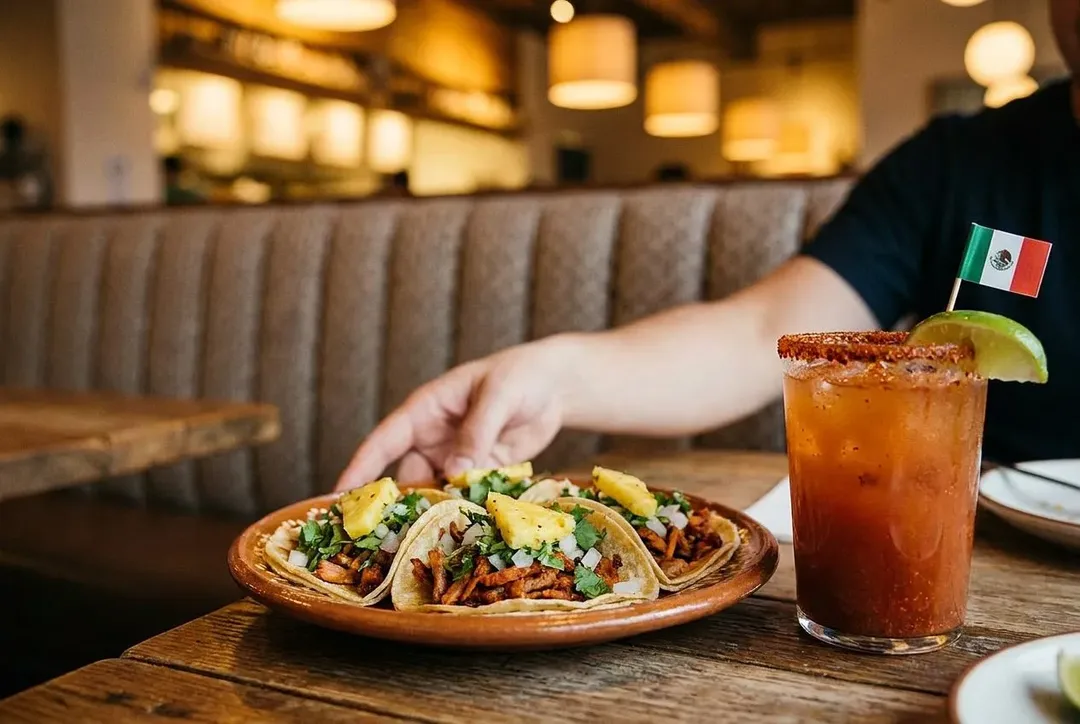
Expect match-day specials to lean heavily on tacos: al pastor, carne asada, and cochinita pibil served in rapid succession as orders pile up at halftime. Several Bushwick spots are planning familia-style platters—think rice, beans, guacamole, and a mountain of tortillas—designed to keep a table fed without anyone missing a counterattack. Micheladas will flow. So will Tecate and Modelo, often with lime wedges shoved deep into the neck of the bottle, salt crusting the rim.
One Lower East Side cantina, known for opening early on weekends, has committed to unlocking at seven a.m. for those brutal early windows when Mexico faces a team three time zones west. That means chilaquiles and café de olla before most of the city has poured its first cup of coffee, and it means the kind of atmosphere—dim light, empty streets outside, a huddled crowd inside—that binds strangers into temporary family. Late May mornings can still carry a chill, and there's something deeply appealing about gathering in a warm, low-ceilinged room while the rest of the neighborhood sleeps.
The sound and the atmosphere
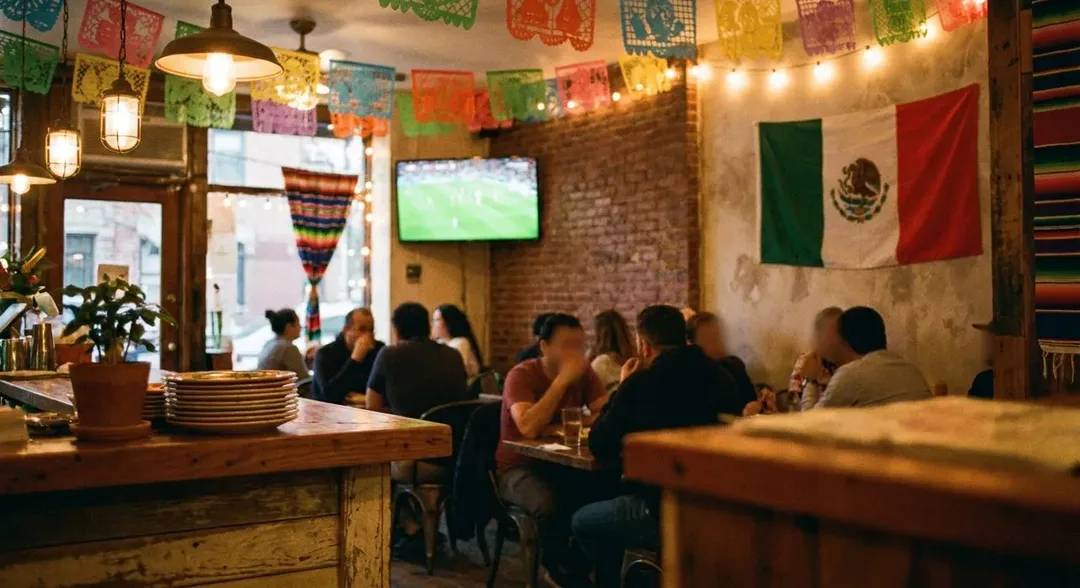
If you've never watched a Mexico match in a Mexican cantina, prepare for decibel levels that would make a rock club jealous. Goals trigger waves of sound—shouting, singing, the scrape of chairs as people leap up—and the energy doesn't dissipate quickly. It builds. Between halves, someone's uncle will offer unsolicited tactical analysis. A teenager will update the group text. A server will navigate the chaos with a tray of shot glasses held high.
The decor in these spots tends toward the functional: Formica tables, tin ceiling tiles, papel picado strung across the bar, maybe a Virgin of Guadalupe portrait near the register. Light spills in unevenly through street-facing windows, and by mid-afternoon in late May, the sun slants low enough to wash the back wall in gold. The scent is layers: onions and cilantro, lime juice, the faint char of a plancha working overtime, and underneath it all, the yeasty warmth of beer.
Navigating the neighborhood clusters
In Bushwick, the densest concentration of Mexican cantinas runs along Knickerbocker Avenue and the surrounding blocks between Flushing and Myrtle. You can walk the strip in twenty minutes and scout half a dozen options, each with its own crowd and its own vibe. Some skew younger, drawing art-school graduates and warehouse residents. Others are neighborhood institutions where regulars have claimed the same stools for a decade. All will be packed on match days.
The Lower East Side's cantina row is more compressed, clustered around Clinton Street and the Delancey corridor. The advantage here is proximity to other diversions: you can duck into a vintage shop or a record store between matches, or wander toward the Williamsburg Bridge for air when the crowd gets too thick. The disadvantage is that everyone else has the same idea, so sidewalk traffic becomes a negotiation.
What to expect from the crowds
Mexico's co-host role in the tournament changes the stakes. This isn't a qualifier or a friendly; it's a month-long statement, and every match carries weight. The crowds will reflect that. Expect multi-generational turnout: grandmothers in folding chairs, toddlers in miniature jerseys, couples on first dates who picked the wrong venue if they wanted conversation. Expect flags—Mexican, of course, but also state and regional banners representing Puebla, Jalisco, Oaxaca.
You'll also see non-Mexican fans drawn by the atmosphere, the food, or simple curiosity. Most cantinas welcome the overflow, though showing up in a rival nation's colors is a choice that requires confidence or obliviousness. Either way, the energy is infectious. Even if you arrive neutral, you'll leave hoarse.
Timing your visit
Kickoff times will dictate your day. Early matches mean staking out a seat by mid-morning; prime-time windows mean arriving an hour ahead or accepting standing room. If you're planning to visit multiple cantinas across the tournament, vary your timing. A 10 a.m. match offers a quieter, more intimate experience—fewer people, stronger coffee, the feeling of being let in on a secret. An evening match is pure theater: packed house, full bar, every goal a detonation.
Late May weather in New York is notoriously fickle, so check the forecast before you commit to a cantina without outdoor seating. A surprise rainstorm won't dampen spirits inside, but it will make the post-match exit a soggy shuffle. And if Mexico advances deep into the tournament, expect the atmosphere to intensify with each round. By the knockout stage, these cantinas won't just be showing matches—they'll be hosting something closer to religious revival.
Practical notes
Bushwick's Mexican spots are often reached via the L train to Jefferson or DeKalb, or the M to Knickerbocker. Street parking exists but fills quickly on match days; consider the subway. The Lower East Side is served by the F to Delancey-Essex or the J/M/Z to Essex; metered street parking is scarce and expensive. Most cantinas operate on flexible hours during the tournament, so verify schedules directly, especially for early kickoffs. Many spots are small and cash-preferred, though card readers have proliferated. Accessibility varies; older buildings may lack ramps or have narrow restrooms. Bring patience, cash, and an appetite. Leave room in your phone for photos, though you'll be too busy watching to take many.
Tags: #MexicanCantinas #NYCFútbol #Bushwick #LowerEastSide #FIFAWorldCup2026 #MexicoFútbol #WatchParty #TacoSpecials #KnickerbockerAvenue #ClintonStreet #NYCEats #WorldCup2026 #CONCACAFKickoff #MatchDayNYC #CervezaAndGoals
Please drink responsibly. Must be of legal drinking age.
Sources consulted: 2026 FIFA World Cup · Mexico national football team · FIFA World Cup 2026 · Time Out New York Restaurants · NYC MTA
All trademarks are the property of their respective owners.
Ask Karpo for more information.
Keep reading
- Haaland Has Seven Goals and Norway Runs Entirely Through Him
 World Cup Trophy Ceremony Timing Medals and Postmatch Celebrations
 Olise and France's Attack: The Semifinal Tactical Question