New York's Mediterranean food scene doesn't fit neatly into one category. You've got white-tablecloth Lebanese restaurants plating lamb with tweezers, Israeli chefs stuffing cauliflower into pitas until they split, and downtown spots serving Turkish-inspired breakfast grain bowls at 8 a.m. It's a sprawling, delicious mess that mirrors the region itself—dozens of culinary traditions lumped under one umbrella term. If you're looking for something lighter than a burger but more interesting than a salad, this is your corridor.
Karpo knows which Mediterranean spot fits your mood right now—whether you need a fast flatbread between meetings or a full mezze spread worth lingering over. Ask and get a recommendation tailored to where you are and what you're craving.

Ilili: the uptown standard
Ilili sits on Fifth Avenue between 27th and 28th, just south of Madison Square Park, in a space that feels more like a design magazine spread than a typical mezze joint. High ceilings, a long marble bar, hanging lamps that cast warm pools of light. This is Lebanese cooking treated like fine dining, which means smaller portions, higher prices, and plating you'll want to photograph. The lamb kibbeh nayeh—raw lamb with bulgur, mint, and onion—comes molded into a dome and tastes clean and bright. The octopus is charred on the edges and tender in the center, served over creamy hummus. Expect to spend around twenty-five to thirty dollars per plate.
Go midweek if you want a quieter experience. Weekend evenings turn the dining room into a scene—louder, busier, harder to get a table without a reservation. Lunch is more forgiving and slightly cheaper. Ask for a table near the back if you're planning to talk business or linger. The front gets noisy when the bar fills up. Skip the standard hummus; everyone orders it, but the baba ghanoush and muhammara are where the kitchen really shows off.
Miznon: organized chaos in Chelsea
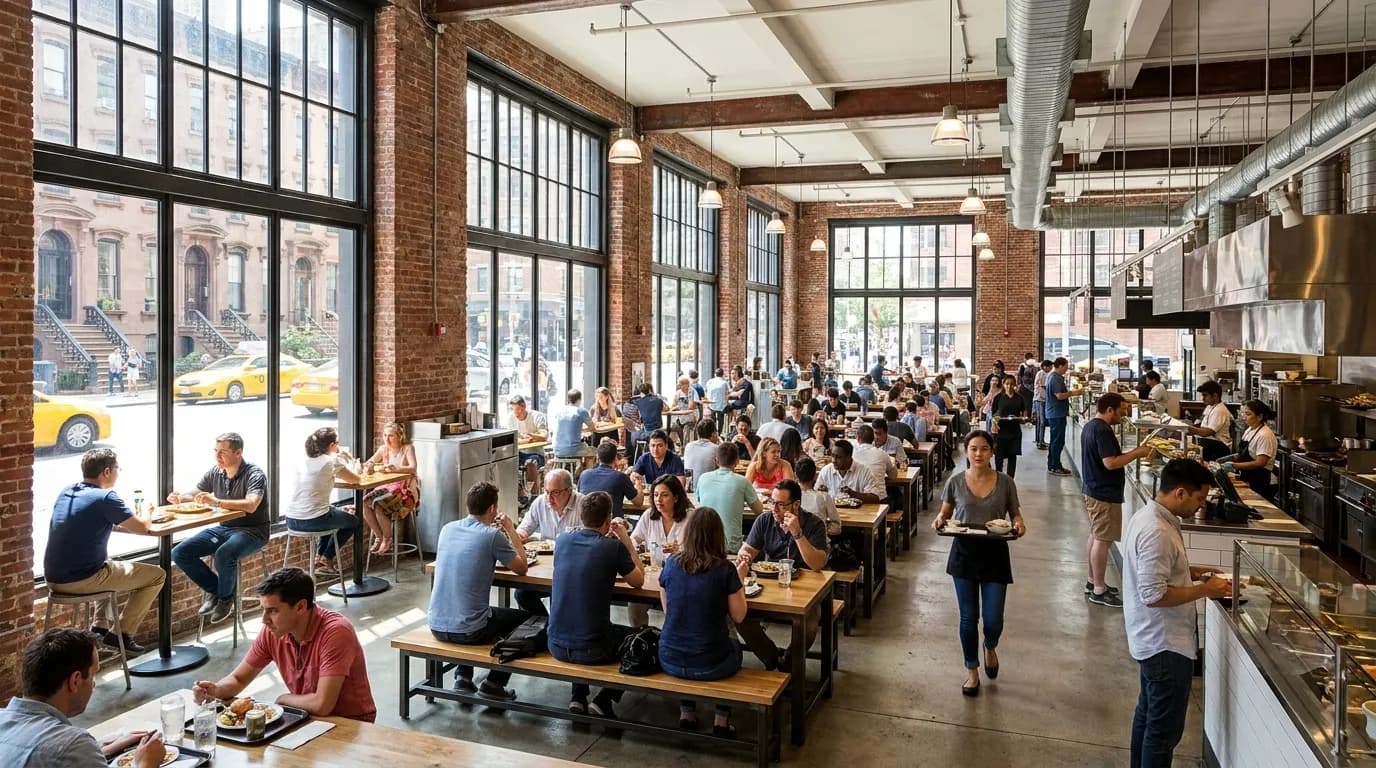
Miznon is the opposite energy. Walk into the Chelsea Market location and you're hit with music, shouting, a line of people, and chefs tossing pitas on a giant griddle behind the counter. It's an Israeli chain with locations around the world, but the NYC outpost nails the chaotic, joyful vibe of a Tel Aviv street stall dropped into a tourist-heavy food hall. The whole roasted cauliflower pita is the signature move—a giant head of cauliflower shoved into a fresh pita with tahini, amba, and pickles. It's messy, drippy, and impossible to eat gracefully. The steak pita is equally oversized, and the falafel is crunchy and herby in a way that makes mall-court versions taste like cardboard.
You'll spend around twelve to eighteen dollars per pita, which is reasonable given the size. Most people order one and share, or eat half and save the rest. Lines peak between noon and 1:30 p.m. on weekdays and basically all afternoon on weekends. If you go after 3 p.m. on a weekday, you'll walk right up. The outdoor seating in Chelsea Market is first-come, first-served, so grab a spot near the entrance if you want to people-watch. Locals know to order the minute steak pita and ask for extra amba—the tangy pickled mango sauce that makes everything better.
Balaboosta: homestyle with an edge
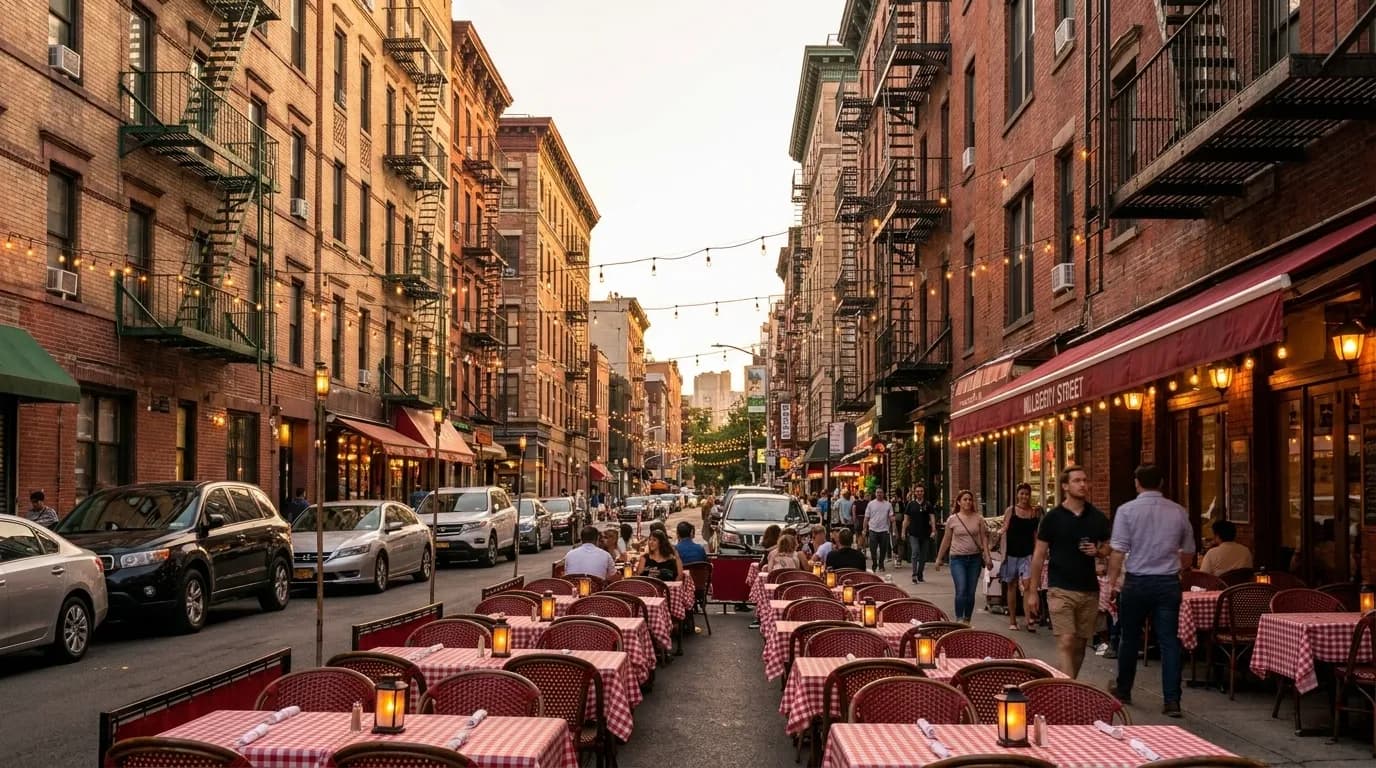
Balaboosta, tucked into a corner on Mulberry Street in NoLita, feels like someone's eccentric aunt's apartment—vintage tiles, mismatched chairs, a narrow dining room that gets loud fast. The chef behind it, Einat Admony, built a reputation for taking Israeli comfort food and nudging it just left of center. The Brussels sprouts with date syrup and tahini show up crispy and caramelized. The short rib tagine is falling-apart tender, served with couscous that soaks up every drop of sauce. The kibbeh is fried until golden and crackly on the outside, soft and spiced inside. It's homestyle food with enough refinement to justify the prices, which hover around eighteen to twenty-eight dollars per entrée.
Brunch here is a different animal. Shakshuka comes in a cast-iron skillet still bubbling, with thick slices of challah for dipping. The halloumi Benedict swaps ham for grilled cheese and adds harissa hollandaise. Reservations help but aren't always necessary for weekday dinners. Weekend brunch? Book ahead or accept a wait. Sit at the bar if you're solo or with one other person; it's where you'll catch the kitchen's rhythm and sometimes a free taste of something new. The wine list leans heavily into natural and orange wines, which pair well with the bold, layered flavors coming out of the kitchen.
The wider spectrum
Beyond the big three, the city's Mediterranean and Middle Eastern food sprawls in every direction. You've got fast-casual spots slinging chicken-over-rice platters for under ten dollars, hole-in-the-wall kebab joints open until 3 a.m., and new-wave places serving fermented labneh with foraged herbs and charging accordingly. Mamoun's in the West Village still draws late-night lines for falafel sandwiches that cost less than a subway fare. Nish Nush in Flatiron does Israeli street food with counter service and a tight menu. Taboon on the Upper West Side bakes bread in a wood-fired oven and serves it with dips that change seasonally.
If you're chasing health-forward eating—whole grains, lots of vegetables, olive oil, herbs, minimal processed ingredients—this is the cuisine that delivers without feeling like punishment. Most menus lean heavily on legumes, yogurt, and vegetables, with meat as an accent rather than the main event. It's also one of the few food categories where you can eat well for cheap or splurge without changing cuisines. You're not compromising flavor for price, just adjusting the setting and polish.
Practical notes
Most Mediterranean spots in NYC don't require reservations unless they're upscale or it's a weekend. Ilili and Balaboosta benefit from booking ahead, especially Thursday through Sunday. Miznon is walk-up only. Lunch tends to be faster and less crowded across the board. Subway access is easy—Chelsea Market sits right on the A/C/E at 14th Street, Ilili is a short walk from the N/R at 28th, and Balaboosta is closest to Spring Street on the 6. Bring cash for smaller spots and carts, though most sit-down restaurants take cards. If you're gluten-free, many places can swap pita for salad or use rice. Vegan and vegetarian options are abundant; this is one of the most plant-forward cuisines in the city without trying.
Tags: #mediterraneanfood #middleeasternnyc #ilili #miznon #balaboosta #nolitaeats #chelseamarket #lebanesefoods #israelifood #healthyeating #nycfoodie #falafel #hummus #mezze #tahinilover
All trademarks are the property of their respective owners.
Ask Karpo first
Next time you're craving Mediterranean food in New York and don't feel like scrolling through twenty menus, open iMessage and ask Karpo. It'll tell you which spot fits your schedule, your budget, and what kind of meal you're actually in the mood for—whether that's a sit-down dinner in NoLita or a quick pita before a meeting in Chelsea. Karpo knows the city and gives you the answer, not another list to sort through.