No cover is one of the most misleading phrases in New York nightlife. It very rarely means free, and pretending otherwise is how people end up surprised by a bill at the end of a set they thought was a bargain. What no cover actually means is that the cost has moved somewhere else — into a drink minimum, a tip bucket, or a bar tab priced to carry the band. All of those are fine. You just want to know which one you have walked into.
No cover, one drink minimum, tip bucket — three different bills. Ask Karpo which rooms near you have live music tonight and what the door and drink situation actually is.
The three models, and how to spot them at the door
Model one is the true free show: a bar with a band, no door, no minimum, drinks at normal bar prices. It exists, it is more common in the outer boroughs than in Manhattan, and it is sustained because the band pulls a crowd who drink. Model two is the drink minimum, which is standard in jazz rooms — no door charge but one or two drinks required per set, and the drinks are priced accordingly. Model three is the tip-supported show, where a bucket goes round or a member of the band asks directly, and what you put in is genuinely voluntary and genuinely how they get paid.
You can tell which is which before committing. A room with a printed music schedule and a host at the door is almost certainly a minimum room. A room where the band is setting up in a corner with no stage is a tip room. A room where nobody mentions the music at all when you walk in is usually the true free version.
Jazz is where the no-cover model is most established
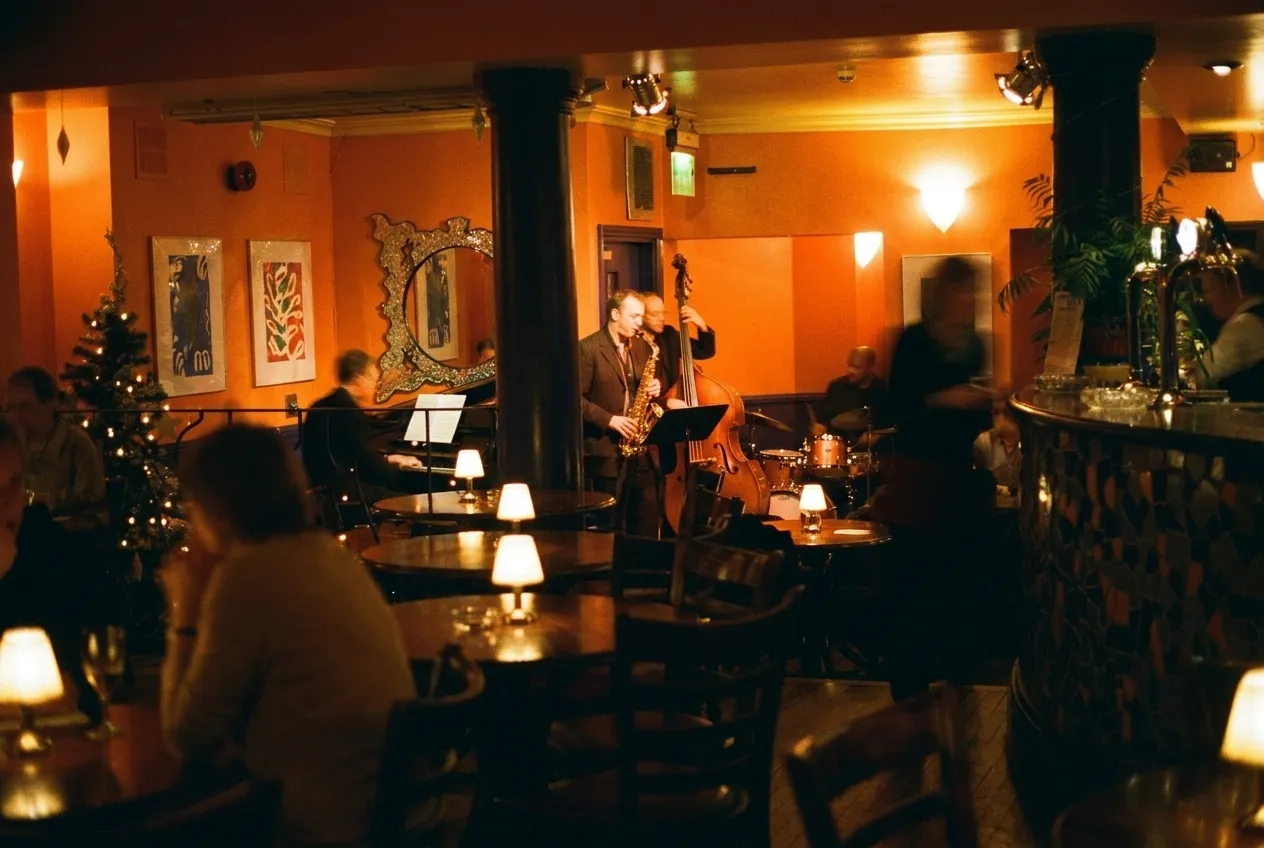
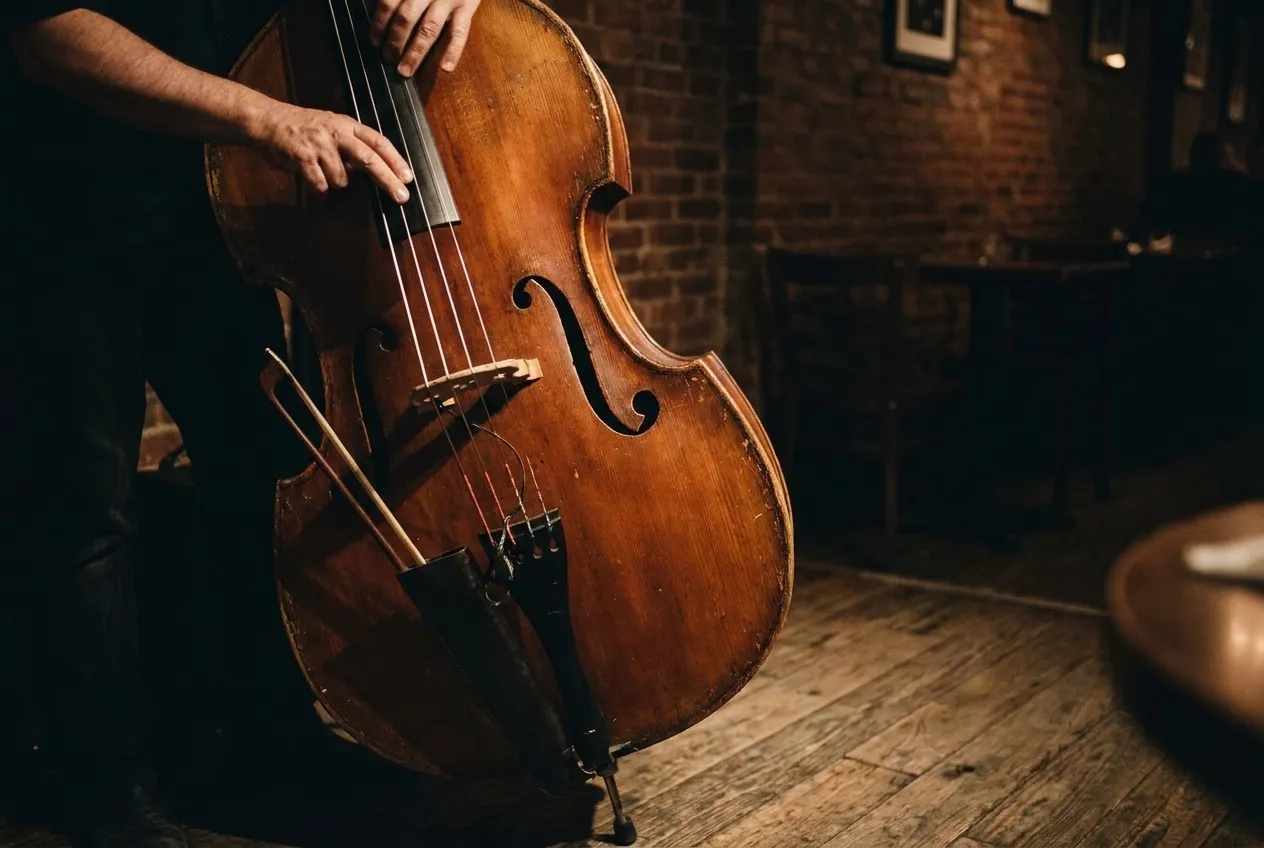
New York's jazz economy has a well-developed lower tier: rooms that do not charge at the door, run two or three sets a night, and make their money on drinks. The music at this level is frequently played by the same people who play the ticketed rooms — the city's jazz labour market is small and everybody works everywhere. What you lose relative to a ticketed club is sightlines and silence; what you gain is that you can walk in at half past eleven for the last set without planning anything.
The late set is the point. First sets are for the room; last sets are for the band, and the material gets looser, longer and considerably better. If you have one evening and no budget, arriving at eleven-thirty is a strictly better plan than arriving at eight.
The Irish traditional session is the most reliably free music in the city
New York has a long-running Irish traditional session circuit — musicians sitting in a circle, usually in a corner rather than on a stage, playing tunes with no set list and no amplification. Sessions are almost never ticketed, they run to a fixed weekly schedule, and they are participatory rather than performative: the musicians are playing for each other and you are welcome to listen.
The etiquette matters more here than anywhere else on this list. You do not applaud between tunes in a set, you do not request, and you do not talk loudly next to the circle. Buy a round for the table if you have been there two hours. That is the whole social contract, and it is why the sessions have survived unchanged for decades.
Open mics and the honest trade
The open mic is free, plentiful, and a genuine lottery. In a city with this much musical labour the standard at a good open mic is startlingly high, and you will also sit through some things that are not. The trade is explicit: no money, no curation. If you go with that expectation it is one of the best-value nights available; if you go expecting a booked line-up you will be annoyed within forty minutes.
The practical tip is to arrive an hour in rather than at the start. Early slots go to whoever signed up first, which correlates with keenness rather than quality, and the room warms up considerably by the middle of the list.
The rooms people forget: hotels, libraries and lobbies
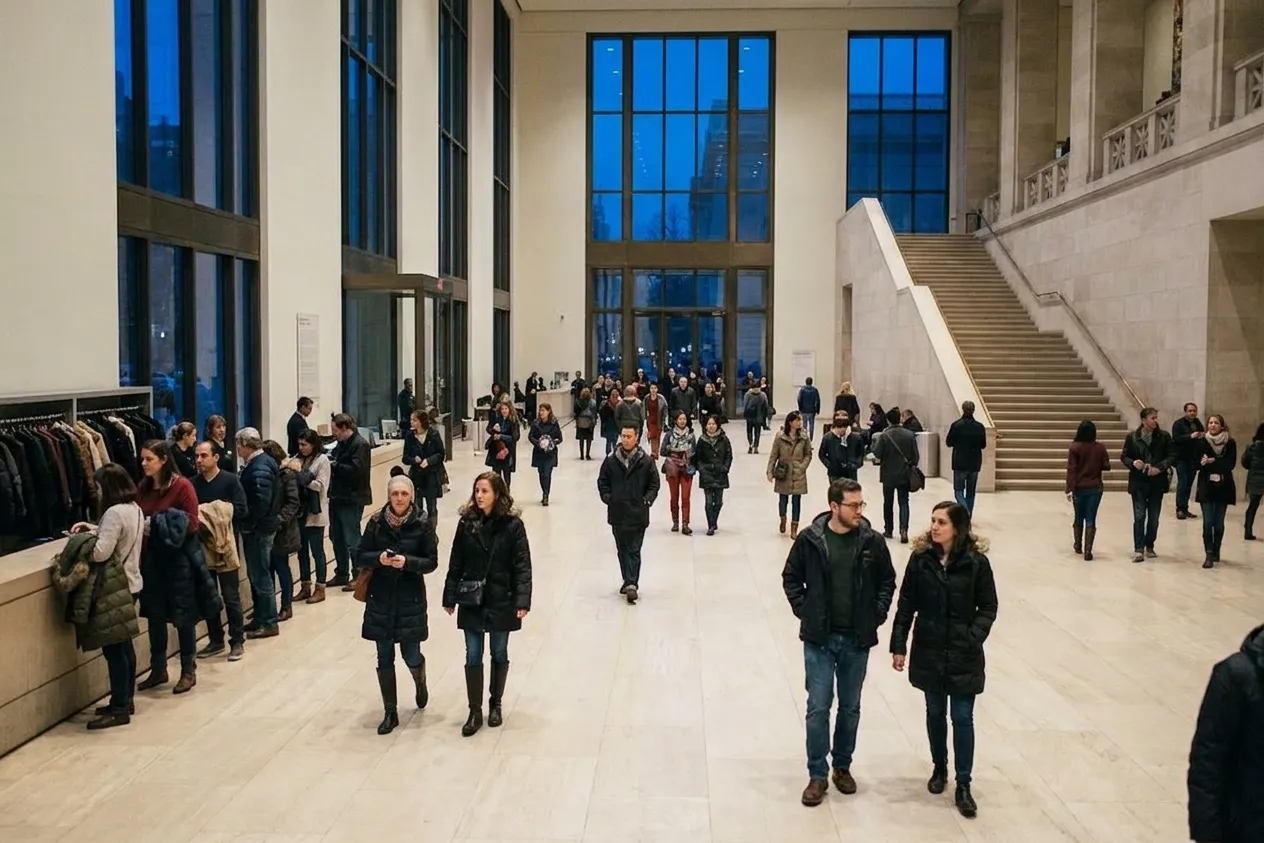
Hotel bars in Manhattan run live music far more often than New Yorkers assume, and almost none of them charge a cover — the music is there to sell the room. Drinks are hotel-priced, so this is a one-drink-and-listen proposition rather than a night, but it is a very civilised ninety minutes. Public institutions programme free performance too: libraries, university spaces and cultural centres run concert series that are free and almost entirely unpublicised outside their own mailing lists.
Autumn is the strongest season for the institutional version, because the programming year restarts in September after the summer break. If you look at nothing else, look at the autumn calendars of the big public institutions in late September.
How to be the audience that keeps these rooms alive
Buy something. That is the entire mechanism — a no-cover room stays no-cover because the bar takes enough. Tip the bucket in cash if there is one, and tip it visibly, because in a small room that is contagious and the band can see it. Do not talk over quiet passages, particularly at an acoustic session where there is no amplification to hide behind. And go back to the same night rather than sampling ten different rooms once; the residency model runs on regulars, and a room with twelve regulars survives while a room with a hundred tourists once does not.
Tags: #LiveMusicNearMe #NYCLiveMusic #NoCover #FreeThingsToDo #JazzNYC #IrishSession #OpenMic #NewYorkCity #NYCNightlife #FreeMusic #LateSet #NYCJazz #Autumn2026 #LiveShows
All trademarks are the property of their respective owners.
Ask Karpo first
Want music tonight without a ticket? Ask Karpo which rooms near you have live sets this evening, whether there is a drink minimum, and what time the late set starts if you would rather turn up for that one.