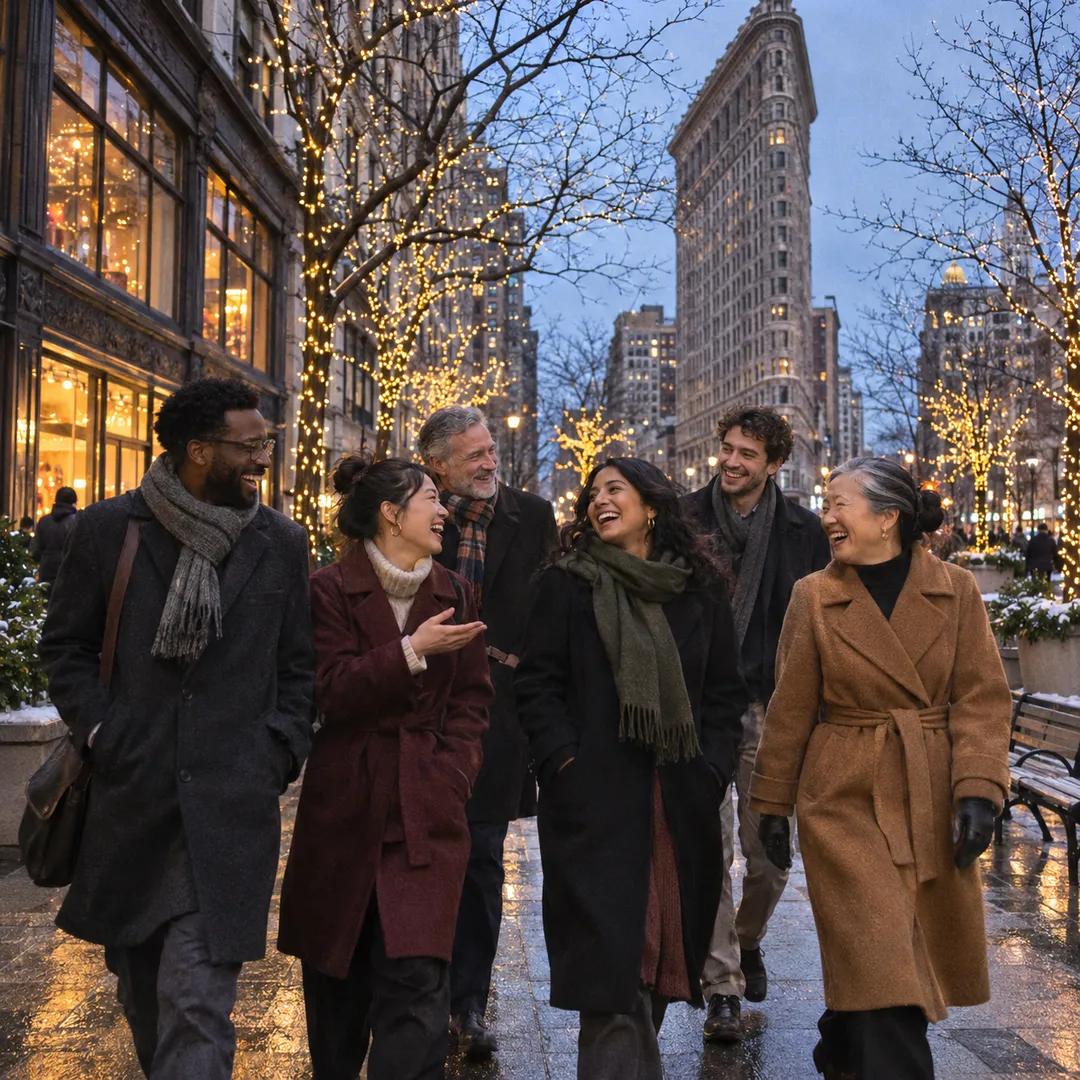
 Flatiron Holiday Window Walk Planner for Remote Teams
Free Things to Do

Sunday Morning Stroll Planner: Lower East Side Tenements
The Lower East Side is free to explore on a Sunday morning: walk tenement blocks under fire escapes, peek into community gardens, and end by the East River.
On the Lower East Side, a Sunday morning stroll planner is mostly about timing the shutters: the metal gates over shops are still down, the murals painted on them are fully visible, and the streets that roar on Saturday night are almost silent. You can walk past tenement fire escapes, synagogues, Chinese grocers and Puerto Rican social clubs in a single loop, all for free, with nothing but the smell of bagels and coffee drifting out of open doors.
A Neighborhood That Sleeps In
The Lower East Side is famous for its nightlife, and that reputation is exactly why Sunday mornings feel so special. The bar crowd is home asleep, the sidewalks have been swept, and the streets are left to older residents heading to services, delivery workers stacking produce boxes, and a few people walking dogs. That quiet lets you see the architecture and the street art without the weekend hum, and you notice details you would miss on a crowded evening.
This was once one of the most densely packed neighborhoods in the world, home to wave after wave of immigrants: Jewish families from Eastern Europe, Irish and German newcomers, then Puerto Rican, Dominican and Chinese communities. Their traces are everywhere if you look. Old Yiddish lettering fades above a doorway, a Spanish-language church notice hangs by a gate, and Chinese signage spills over from nearby Chinatown. The walk is a lesson in how New York layers itself.
Start With Bagels and Fire Escapes
Begin with a breakfast in hand. The neighborhood has long been tied to bagels, smoked fish and bialys, and picking up something warm to eat while walking is part of the ritual. Then head into the side streets around Orchard, Ludlow and Eldridge, where five- and six-story tenements line both sides. Look up at the black iron fire escapes zigzagging across the brick, a pattern that has become one of the most iconic images of old New York.
Walk slowly and notice the regulars. An older man sits on a folding chair outside his building with a transistor radio, a shopkeeper rolls up a gate just enough to sweep, and a pair of friends in running gear stop for coffee on a stoop. These are the rhythms of a neighborhood that still feels lived in. Be considerate: this is a residential area, so keep voices down and give people space on narrow sidewalks.
Street Art on the Rolled-Down Gates
One of the hidden rewards of an early Sunday is the art painted on store shutters. Many businesses commission artists to cover their roll-down gates, and when the gates are closed, each block becomes an open-air gallery. You will see portraits, abstract patterns, cartoon characters and tributes to local figures. By late morning most of the gates are up and the art disappears, so this is genuinely a show for early walkers.

Honest judgment: do not spend the whole walk hunting for famous murals you have seen online. Some get painted over or are hidden behind scaffolding, and chasing them turns the stroll into a scavenger hunt. Instead, let the side streets surprise you. Wander east of Essex, take a detour down a block you did not plan, and you will find work by local artists that feels fresher than anything on a list.
Community Gardens Behind Chain-Link
The Lower East Side and the neighboring East Village are dotted with community gardens, many of them born when residents reclaimed vacant lots decades ago. Behind chain-link fences you will see raised beds, fruit trees, small ponds, handmade benches and murals on the side walls of tenements. Some gardens welcome visitors when volunteers are inside, and on Sunday mornings you may find gardeners watering tomatoes or tending sunflowers.
If a gate is open, step in quietly and say hello; gardeners are often happy to talk about what they are growing. If it is closed, admire it from the fence and keep moving. These green pockets are a reminder of how locals fought to keep shared space in a crowded neighborhood. They make a wonderful contrast with the tenement walls around them and offer a few minutes of birdsong right in the middle of Manhattan.
Gardens here change with the seasons, which makes repeat walks worthwhile. In spring you will see seedlings and volunteers turning soil; in summer the beds burst with squash vines, herbs and flowers taller than the fences; in autumn the harvest gives way to drying stalks and fallen leaves. Even in winter, the bare branches and handmade sculptures give the plots a quiet character. Choose two or three gardens to pass on your route rather than trying to see them all.
Finish by the East River
End the walk by heading east toward the river, where the East River Park and the waterfront paths open up views of the Williamsburg Bridge and Brooklyn across the water. Construction on the waterfront has reshaped some sections in recent years, so expect detours and follow the signs. Once you reach the river, sit for a few minutes, watch the tugboats and ferries, and let the quiet of the morning settle in before the neighborhood fully wakes.
Where Karpo Fits In
The Karpo APP can help you sketch this loop before you set out: tell it where you want to start, how long you have, and whether you prefer street art, gardens or history, and ask for a route. Along the way, ask Karpo for nearby bakeries or delis when you want a second breakfast. Karpo suggests places to consider rather than holding tables, so walk in or contact the shop directly if you are planning for a group.
Plan B for Rain or Cold
If it rains, the narrow streets become reflective and moody, and many delis and bakeries have small counters where you can wait it out. On cold days, keep the loop shorter and focus on the blocks with the densest tenements, which block the wind. When gardens are closed and the river feels too exposed, a long breakfast in a cozy corner cafe makes a perfectly good Sunday.
Practical Notes for the Lower East Side
The F, J, M and Z trains all serve the neighborhood, and the area is compact enough to walk end to end comfortably. Sidewalks are narrow and sometimes uneven, so watch your step around cellar doors and loading hatches. Carry a small bag for trash, since bins fill up after Saturday night. Most importantly, keep your plan loose. The Lower East Side is at its best when you follow a mural, a smell or a sound around the next corner.
Ask Karpo for more information.
Keep reading
- Flatiron Holiday Window Walk Planner for Remote Teams
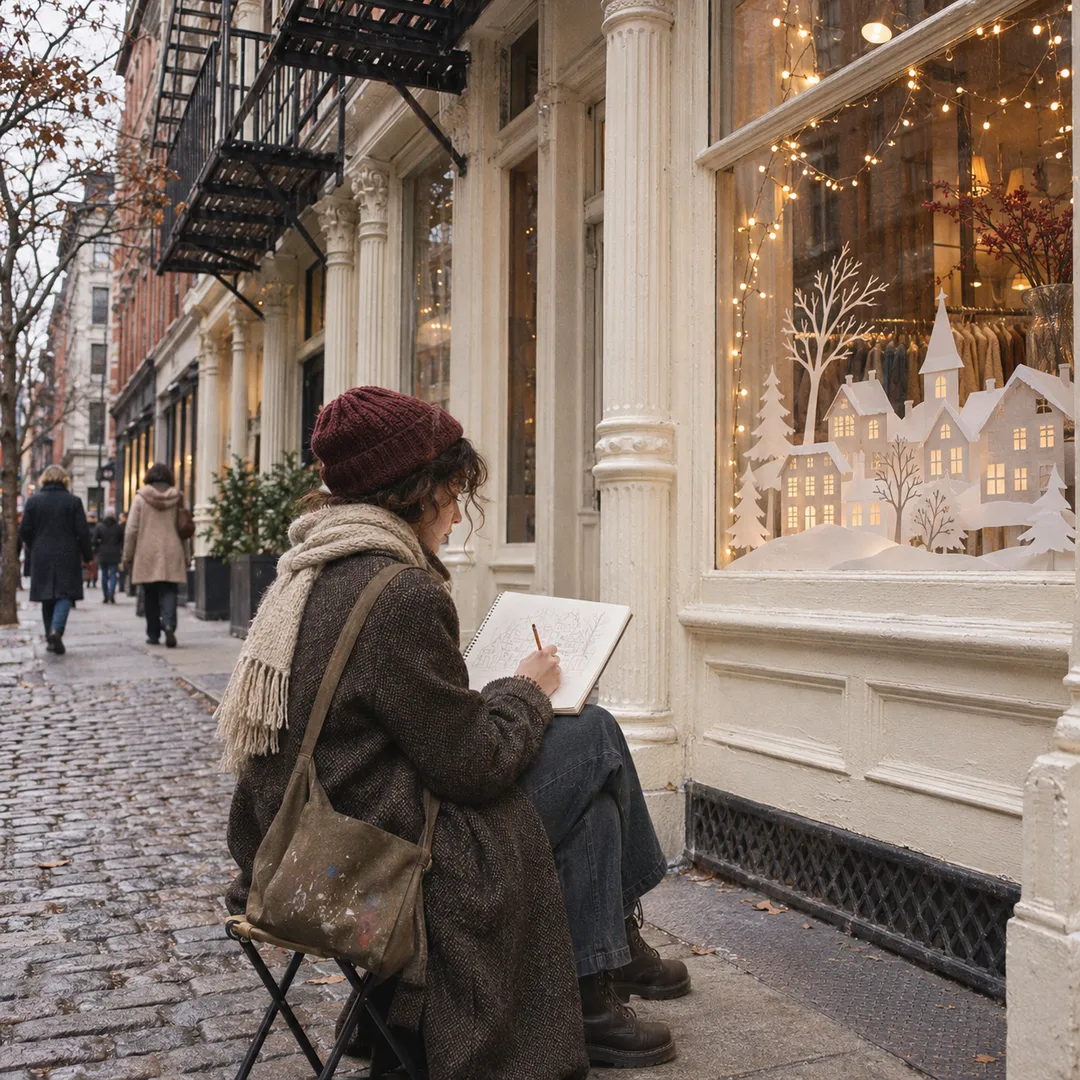 SoHo Holiday Window Walk Planner for a Sketchbook Afternoon
 Upper East Side Holiday Window Walk Planner After a Museum