 Haaland Has Seven Goals and Norway Runs Entirely Through Him
⚽️2026 FIFA WORLD CUP
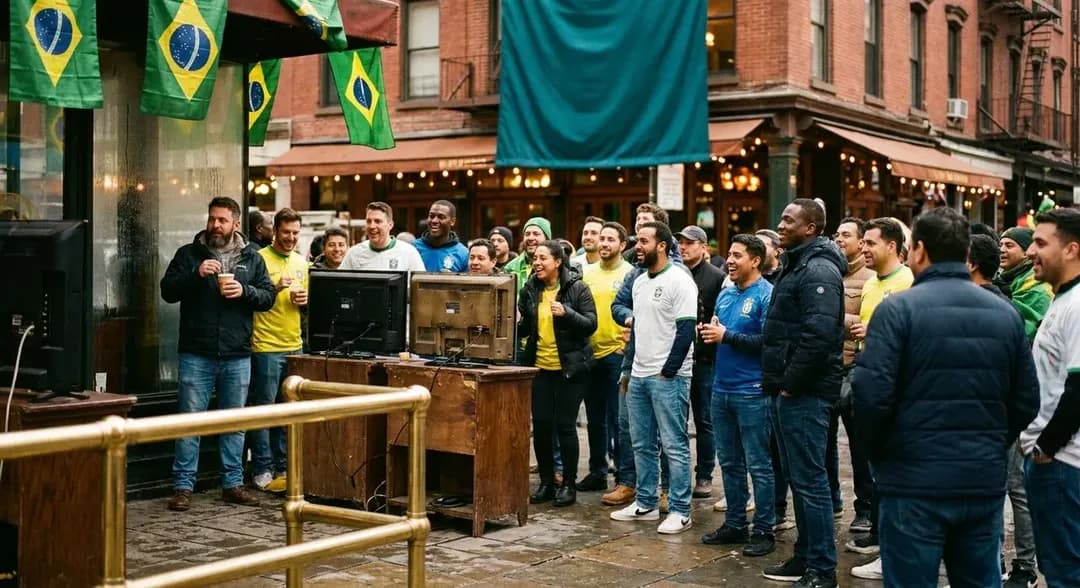
Little Brazil on 46th: Where New York's Seleção Fans Watch the World Cup
When Brazil plays, West 46th Street transforms into a roaring green-and-gold canyon. The churrascarias unlock their doors before dawn, and the entire block becomes a single, pulsing organism of hope and heartbreak.
The pre-dawn ritual on Restaurant Row's Brazilian corner
You arrive at 46th Street between Fifth and Sixth at 6:47 AM, and Churrascaria Plataforma's gates are already rattling open. The manager—everyone calls him Paulinho—is propping the door with a yellow Havaianas flip-flop, the universal Brazilian doorstop. Inside, staff are angling the flat screens, all nine of them, toward the dining room's center tables. World Cup 2026 kickoff times favor the East Coast this year, with MetLife Stadium hosting several matches, but when Brazil plays Panama in the group stage opener, you'll want to be here, where the caipirinhas start pouring at 7 AM and nobody questions your life choices.
The block has carried this tradition since 1998. Lease agreements have changed hands, restaurant names have shifted, but the ritual remains: when the Seleção plays, West 46th wakes up Brazilian. You'll see the same faces—contractors from Queens, finance types who've burned a sick day, students from NYU who took the 6 train up in their vintage Ronaldo jerseys. The street doesn't just watch Brazil. It becomes Brazil for ninety minutes, plus injury time, plus the inevitable street celebration or consolation drinking that follows.
Order a pão de queijo basket when you sit down. Trust this.
The geometry of watching

Brazilian restaurants understand screen angles the way NASA understands trajectories. At Ipanema, the corner booth—table 7, specifically—offers sightlines to four screens simultaneously. The owner, Marcos, reserves it for regulars, but if you arrive ninety minutes before kickoff and order a full rodízio service, he'll consider you regular enough. The booth's leather is cracked in a way that suggests decades of people gripping it during penalty shootouts.
Via Brasil, two doors down, takes a different approach. They remove half the dining tables the night before and install standing-room sections with counters bolted to the walls. You eat your picanha standing up, plate in one hand, Brahma beer in the other, surrounded by strangers who become family when Neymar's successor (whoever earns that impossible mantle by 2026) threads a through ball. The bathrooms get impossibly crowded at halftime, so veterans use the ones at the Paramount Hotel next door—Marcos has an arrangement.
The sound system matters more than the screens. Ipanema pipes in Brazilian commentary, even when Fox or Telemundo holds the English rights. You haven't experienced a goal until you've heard it announced in Portuguese through speakers that cost more than the kitchen equipment.
Halftime feijoada and the art of timing
Here's what the guidebooks miss: every Brazilian restaurant on the block prepares feijoada on match days, regardless of whether it's Saturday (the traditional day). The pots start simmering at 4 AM. By halftime, the black bean stew has reached that perfect consistency—thick enough to coat a spoon, loose enough to soak into white rice. You want the version at Churrascaria Plataforma. Ask for extra farofa and the house hot sauce that Paulinho's cousin makes in a Bushwick apartment. They'll bring it in an unmarked bottle.
The strategy: order your feijoada when the first half hits the thirty-minute mark. It arrives just as the referee blows the halftime whistle. You have fifteen minutes to eat before the second half, which sounds rushed until you remember that Brazilians have been perfecting the speed-eating-between-halves technique for generations. The farofa is crucial—it absorbs the stew and provides structural integrity for rapid consumption.
Some regulars bring Tupperware for leftovers. This is not considered gauche. This is considered wisdom.
When the street becomes a stadium

The moment Brazil scores, 46th Street's noise ordinance becomes a quaint suggestion. You'll hear the roar before you see the goal—the sound travels from Churrascaria Tribeca on the east end to Ipanema on the west, a wave of Portuguese profanity and joy. Car alarms trigger. Someone always sets off fireworks from a third-floor apartment window, and the NYPD always pretends not to notice.
After the USMNT's opening match draws the American crowds to different venues, Little Brazil reclaims its territory with doubled intensity. The flags emerge—not just Brazilian nationals, but the state flags too. You'll see São Paulo's black-red-white next to Minas Gerais's triangle, territorial pride layered onto national identity. Someone brings a surdo drum. Someone else brings a pandeiro. The samba circle forms outside Via Brasil, and suddenly you're in a bloco parade that stretches to Sixth Avenue.
The best wins produce street parties that last until the restaurants' dinner service. The worst losses produce philosophical drinking sessions where middle-aged men debate formations until their voices go hoarse. Both feel equally essential.
The vendor economy and underground market
Twenty minutes before kickoff, the sidewalk vendors materialize like they've been waiting in another dimension. They sell jerseys (authenticity questionable, stitching impressive), flags (five dollars, three for twelve), and those green-and-gold wigs that make everyone look like they're wearing a parrot. The real insider move: the woman who sets up outside the Duane Reade sells caipirinhas in Gatorade bottles for eight dollars. She's there for every match. Her lime-to-sugar ratio is better than half the bars in Manhattan.
Inside the restaurants, an informal betting pool circulates. You put twenty dollars in an envelope, write your score prediction on it, and hand it to whoever's collecting—usually someone's uncle visiting from Boca Raton. Winners split the pot after the final whistle. The pools have been running since 2002, and the same uncle has been managing them for just as long. Nobody knows his real name. Everyone calls him Tio Lottery.
The bathrooms stock extra paper towels on match days. You'll understand why when you see grown men weeping into their hands after a quarterfinal exit.
The quiet moments between matches
When Brazil isn't playing, Little Brazil returns to its regular programming: business lunches, tourist dinners, the steady rhythm of a restaurant district. But evidence of the World Cup lingers. The flags stay up. The screens remain angled. Paulinho keeps the Havaianas doorstop by the entrance, ready for the next 6:47 AM opening.
This is when you should visit for reconnaissance. Try the moqueca at Ipanema on a Wednesday afternoon. Note which tables have the best views. Introduce yourself to the staff. Ask about the 2014 semifinal—everyone has a story about where they were when Germany scored seven. These quiet-day visits earn you credibility for match days, when the block operates on insider knowledge and established relationships.
The lunch specials run cheap: fifteen dollars for protein, rice, beans, and salad. The dinner rodízio costs more but includes the full parade of meats. Calculate your budget accordingly. World Cup runs for a month. You'll want to pace yourself.
Practical notes
Little Brazil occupies West 46th Street between Fifth and Sixth Avenues in Midtown Manhattan. Churrascaria Plataforma (316 W 49th, they have a second location) and Ipanema (13 W 46th) anchor the strip, with Via Brasil and Churrascaria Tribeca filling the gaps. For World Cup matches, arrive 90+ minutes early—seating is first-come, walk-ins only during tournament days. Most restaurants open at 7 AM for early kickoffs, earlier if the match demands it. Expect 30-50 dollar minimums per person on match days (drinks separate). The M5 and M7 buses stop at 46th and Sixth; take the B/D/F/M to 47-50 Streets-Rockefeller Center and walk two blocks. Street parking is mythical. The block accepts cash and cards, but cash moves faster during the rush. Caipirinhas run 12-16 dollars. The feijoada special typically costs 18-22 dollars and feeds two if you're reasonable about portions.
Tags: #LittleBrazil #WorldCup2026 #NYC #MidtownManhattan #BrazilianFood #Churrascaria #Feijoada #West46thStreet #Seleção #FIFAWorldCup #SoccerNYC #RestaurantRow #Caipirinha #BrazilianCuisine #NYCFood
Sources consulted: FIFA World Cup 26 · ESPN Soccer · Time Out New York
Please drink responsibly. Must be of legal drinking age.
All trademarks are the property of their respective owners.
Ask Karpo for more information.
Keep reading
- Haaland Has Seven Goals and Norway Runs Entirely Through Him
 World Cup Trophy Ceremony Timing Medals and Postmatch Celebrations
 Olise and France's Attack: The Semifinal Tactical Question