 Haaland Has Seven Goals and Norway Runs Entirely Through Him
⚽️2026 FIFA WORLD CUP
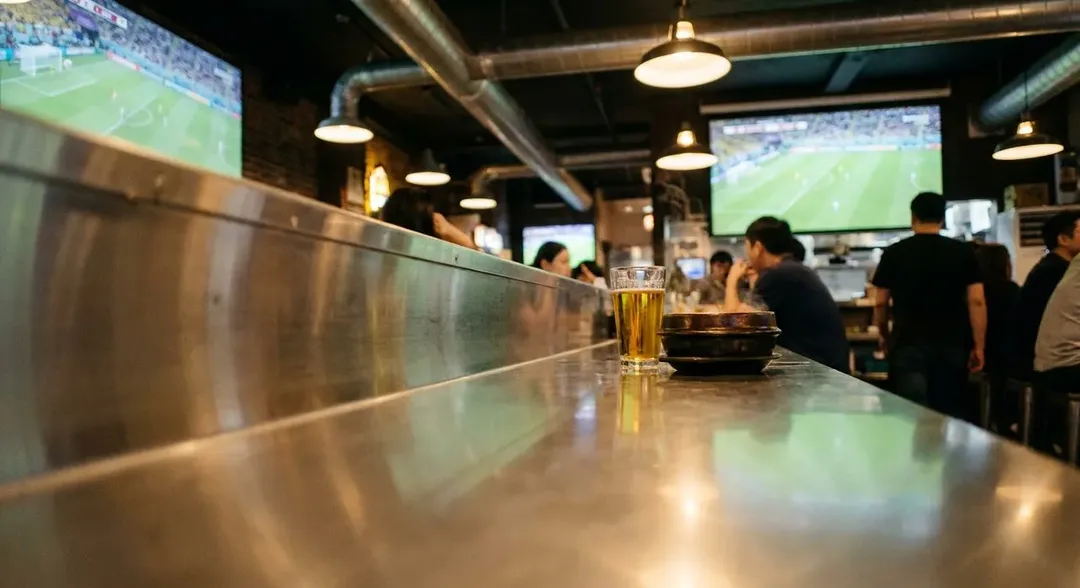
Korean and Asian Football Diaspora Bars in NYC
From Koreatown lounges opening before dawn for Asian kick-offs to Flushing restaurants serving jjajangmyeon alongside penalty shootouts, NYC's Asian football diaspora claims its turf for the 2026 World Cup with eight mapped venues and crowds split by allegiance.
The 2026 World Cup hands North American fans a rare gift: matches at humane hours, no bleary 4 a.m. alarms. But for New York's Korean, Japanese, Chinese, and Southeast Asian communities, the calculus flips. When their national squads play, prime time still means early mornings or late evenings dictated by broadcast partners half a world away. That temporal dislocation has quietly shaped a constellation of viewing rooms across Koreatown and Flushing—bars propping doors open at 6 a.m., restaurants wheeling flatscreens into dining rooms, izakayas marshaling Samurai Blue faithful with the fervor of a home fixture. This is the World Cup as diasporic ritual, mapped by cuisine and kickoff time.
Koreatown's early-morning contingent
The stretch of West 32nd Street between Fifth Avenue and Broadway compresses dozens of Korean-owned establishments into a single block, and come late May 2026, a handful will flip their model from late-night soju palace to dawn viewing lounge. Expect neon still glowing at sunrise, the scent of gamjatang and stale beer mingling with espresso as staff wedge additional screens into corners already tight with karaoke booths. The crowds here skew young, second-generation, fluent in both the chants learned from parents and the ironic distance of American sports fandom.
Some spots will serve a hybrid menu—fried chicken and draft beer alongside breakfast jjigae—while others double down on tradition, laying out banchan at 7 a.m. as if it were dinner service. The atmosphere oscillates between temple-quiet tension during play and thunderous eruptions when South Korea finds the net. Walk the block mid-morning after a Korean match and you'll see red Devils jerseys everywhere, stragglers blinking into daylight, debating formations over iced Americanos on the sidewalk.
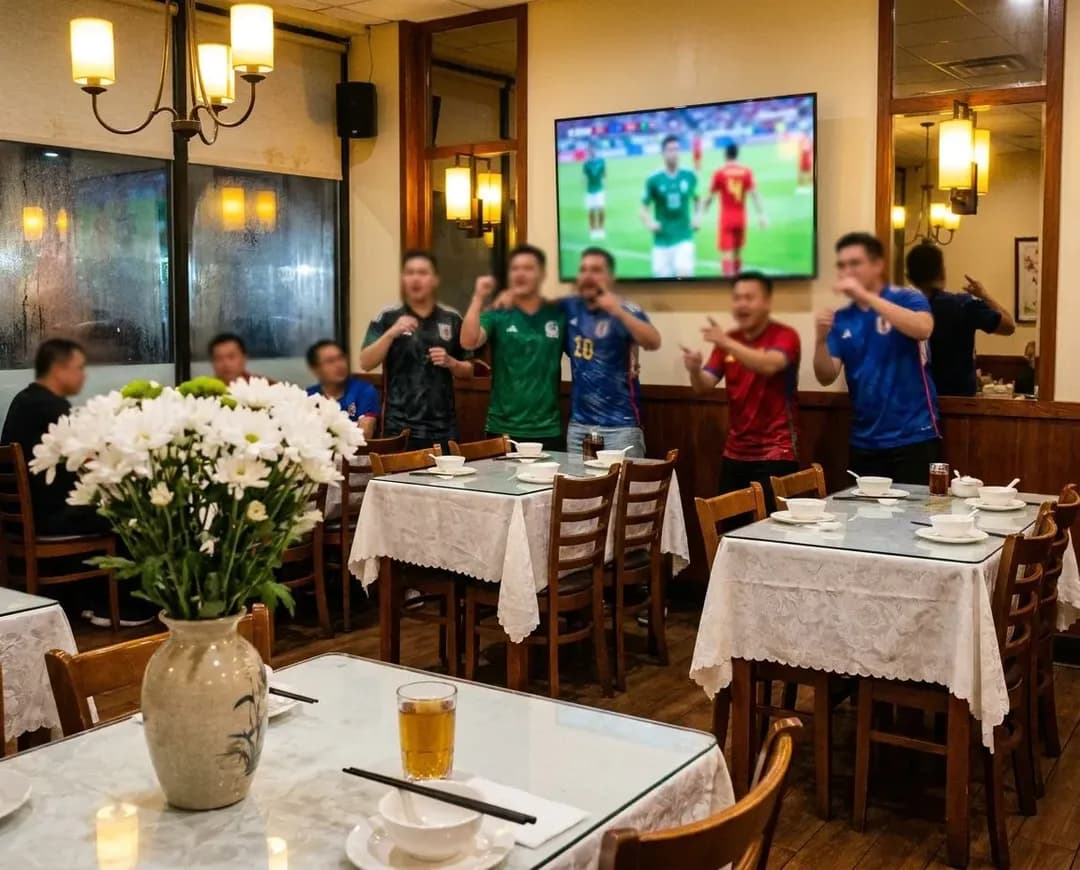
Flushing's Mandarin-language screens
Flushing's Main Street corridor and the surrounding blocks have long served as North America's densest Sinophone enclave, and its restaurants—accustomed to screening Chinese Super League matches or Olympic broadcasts—will pivot seamlessly to FIFA coverage. Expect Mandarin commentary piped through aging PA systems, flatscreens mounted above hot-pot burners, and crowds that lean older, Fujianese and Cantonese regulars who've claimed the same tables for years. The vibe is less bar, more communal canteen: families ordering whole fish and cold noodles, barely pausing as the match unfolds overhead.
China's presence at the World Cup remains uncertain tournament to tournament, but the appetite for soccer here doesn't waver. Supporters of other Asian squads—Vietnam, Thailand, occasionally Iran—find welcome in these rooms, drawn by the Mandarin broadcasts and the comfort of not being the only table riveted to a screen at noon on a weekday. The lighting is fluorescent and unforgiving, the acoustics terrible, and yet the rooms fill, thick with the smell of vinegar and chili oil and collective hope.
One izakaya for the Samurai Blue faithful
Japanese football supporters in New York are fewer and more diffuse than their Korean or Chinese counterparts, but they coalesce with precision. A single izakaya in the East Village—long-running, modest, its name familiar to anyone who's spent time in the city's Japanese community—becomes the de facto headquarters when Japan plays. Expect standing room only, blue jerseys wall to wall, and a sake selection that deepens as the tournament progresses. The energy is disciplined, almost reverent, until a goal breaks the dam.
The space itself is small, dark wood and paper lanterns, the kind of place that feels like a secret even when it's packed. Staff navigate the crush with trays of edamame and yakitori, and the crowd—a mix of expats, students, and New Yorkers with years in Tokyo—knows the chants by heart. After the final whistle, win or lose, the exodus is orderly, a quiet procession east toward the subway, blue scarves still knotted at throats.
Southeast Asian pockets and split allegiances
Southeast Asian football fandom in New York fragments along national and neighborhood lines. Vietnamese supporters gather in pockets of Sunset Park and certain Chinatown noodle shops; Filipino crowds claim bars in Woodside; Thai restaurants in Elmhurst might put a match on if enough regulars ask. These are smaller, quieter gatherings, often bilingual, where a single screen in the corner suffices and the primary draw remains the food. But the investment is real, especially if a regional squad pulls an upset.
The texture here is warmer, less performative—friends texting friends, a cousin's restaurant opening early as a favor. You won't find scarves or face paint, but you will find tables of men in their fifties leaning toward the screen, fingers drumming on Formica, and the unmistakable hush that precedes a penalty kick. These rooms know the World Cup as a long shot, a chance to be seen, and they show up accordingly.
Crowd composition and code-switching
Each venue develops its own demographic fingerprint. Koreatown's bars pull heavily from Midtown office workers and NYU students, the kind of crowd that code-switches fluidly between English banter and Korean exhortations. Flushing's restaurants skew immigrant, Mandarin-dominant, multi-generational—grandmothers in folding chairs, toddlers with congee bowls, everyone facing the same screen. The izakaya is expat-heavy but cosmopolitan, Japanese nationals mixing with Americans who studied abroad or married in. Southeast Asian spots are the most intimate, defined less by commerce than by kinship and routine.
What unites them is a certain self-sufficiency. These aren't venues courting the general public or hanging World Cup bunting for atmosphere. They exist first for their regulars, and the tournament simply amplifies what's already there: language, loyalty, the comfort of watching with people who understand what's at stake. You can walk into any of them as an outsider, but you'll be aware—gently, not unkindly—that you're joining something rather than discovering it.
What to expect in late May 2026
Late May in New York means humid mornings and the first true heat, subway platforms already sweltering by 8 a.m. The city will be thick with World Cup marketing—billboards in Times Square, pop-up fan zones, official sponsor activations—but the Asian diaspora venues will carry on parallel and unbothered, their calendars set by fixture lists rather than FIFA's promotional schedule. Expect early crowds if an Asian team plays in the morning hours; expect overflow into the street if the match goes to extra time. Wear the jersey if you have one, or simply arrive early and claim a sightline.
The atmosphere will vary wildly by result. A win means lingering, rounds of drinks or tea, euphoric replays on phones held up to compare angles. A loss empties the room fast, faces turned inward, the next match already a distant concern. Either way, these rooms offer what the official fan zones cannot: the specific weight of distance, the knowledge that this matters differently when home is not here, when the screen is the closest you can get. That's the shape of diaspora fandom, and for a few weeks in 2026, New York will hold it in high relief.
Practical notes
Koreatown (West 32nd Street between Fifth Avenue and Broadway, Manhattan) is accessible via the B, D, F, M, N, Q, R, W trains at 34th Street–Herald Square; limited metered parking exists but isn't recommended. Flushing's Main Street hub clusters around the intersection of Main Street and Roosevelt Avenue, Queens; take the 7 train to Flushing–Main Street. The East Village izakaya sits within walking distance of the L train at First Avenue or the 6 at Astor Place. Hours will flex around match schedules; verify directly with venues as kickoff times firm up closer to the tournament. Most Koreatown bars accept card; cash helps in Flushing. Accessibility varies—older Flushing establishments often have steps, while Koreatown venues trend more accessible. Bring patience for crowds, a jersey if you have allegiance, and a willingness to stand if seats fill. Arrive thirty minutes before kickoff for Asian matchups.
Tags: #NYCWorldCup #AsianDiaspora #Koreatown #FlushingQueens #SamuraiBlue #KoreanFootball #DiasporaBars #WorldCup2026 #NYCFood #SoccerCulture #QueensNYC #EastVillage #NYCSoccer #ImmigrantStories #SpringInNYC
Please drink responsibly. Must be of legal drinking age.
Sources consulted: 2026 FIFA World Cup · Koreatown, Manhattan · Time Out New York Bars · NYC Tourism: Flushing · NYC Mayor's Office
All trademarks are the property of their respective owners.
Ask Karpo for more information.
Keep reading
- Haaland Has Seven Goals and Norway Runs Entirely Through Him
 World Cup Trophy Ceremony Timing Medals and Postmatch Celebrations
 Olise and France's Attack: The Semifinal Tactical Question