 Costume Rental Near Me in Williamsburg: Hit and Run Productions Archive
Hidden Gems & Odd Finds
The Art Gallery That Becomes a Wine Bar After 8 PM in Tribeca
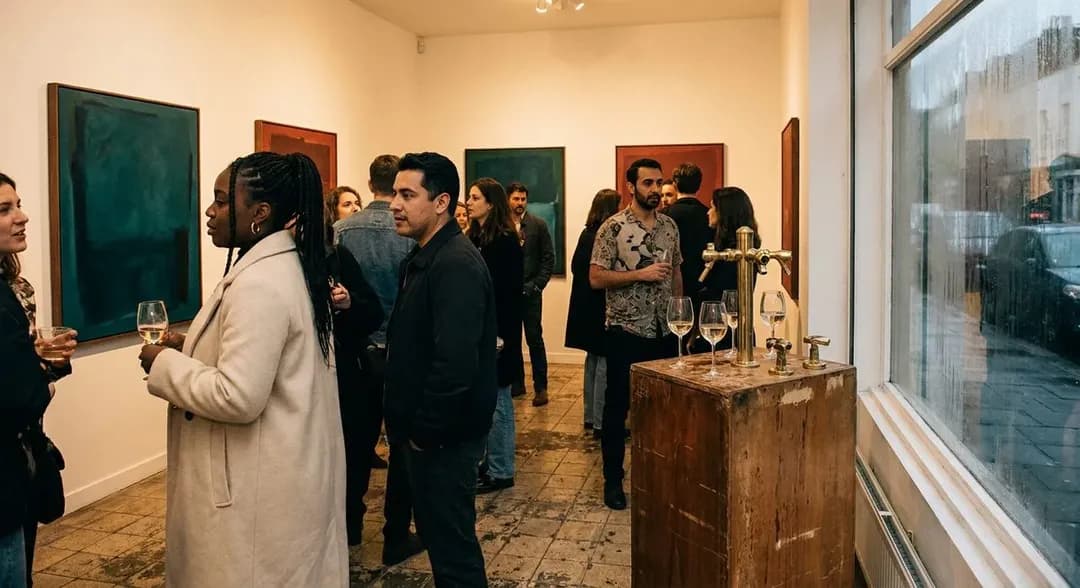
At Galerie Morrow, the paintings don't come down when the Grüner Veltliner comes out. After closing hours, the white walls stay lit and the velvet benches fill with people who understand that looking at art is better with a glass in hand.
The double life starts at closing time
The brass plate beside the door reads gallery hours until 6 PM, but certain Tribeca galleries keep a second key for another purpose. At eight o'clock, the gallerist returns, dims the track lighting, and unlocks a climate-controlled wine fridge built into what looks like a storage closet. The paintings on the walls—whatever show is currently hanging—stay exactly where they were all day. The difference is that now you can sit beneath them with a glass of wine and nobody will ask you to move along.
This isn't a reception. There are no cheese cubes. The space operates as a commercial contemporary art gallery by day, but several nights a week it transforms into something else entirely: a wine bar where the décor happens to be for sale and costs thousands of dollars. You need to book ahead. Capacity is limited to around a dozen people. The wines tend toward natural, unfiltered, often orange, usually from small producers. You sit on the velvet benches installed for daytime viewing. You keep your voice low. If you stand up and block someone's sightline to the art, you'll be politely redirected.
The gallery that refused to be just one thing
This model emerged in Tribeca's gallery scene over the past few years with a clear logic: emerging artists, rotating shows, minimal walk-in traffic. Tribeca foot traffic doesn't convert to art sales. Collectors come by appointment. That leaves beautiful rooms sitting empty most evenings, expensive lighting running on timers, and the nagging sense that contemporary art spaces have become too precious to be useful.
The wine component borrows from European models—bookshops and project spaces that serve wine after hours. The approach changes how people move through the space: slower, more deliberate. In New York, galleries that adopted this hybrid applied for limited wine licenses, installed proper storage, and started working their mailing lists. Early experiments paused during the pandemic. When they returned in 2021, the wine nights came back quieter, more selective. Now they're often how people discover the galleries exist at all.
The artists don't seem to mind that their work gets viewed in the evening with wine nearby. Several have attended these sessions and made sales to visitors who came initially for the wine.
What you'll actually drink
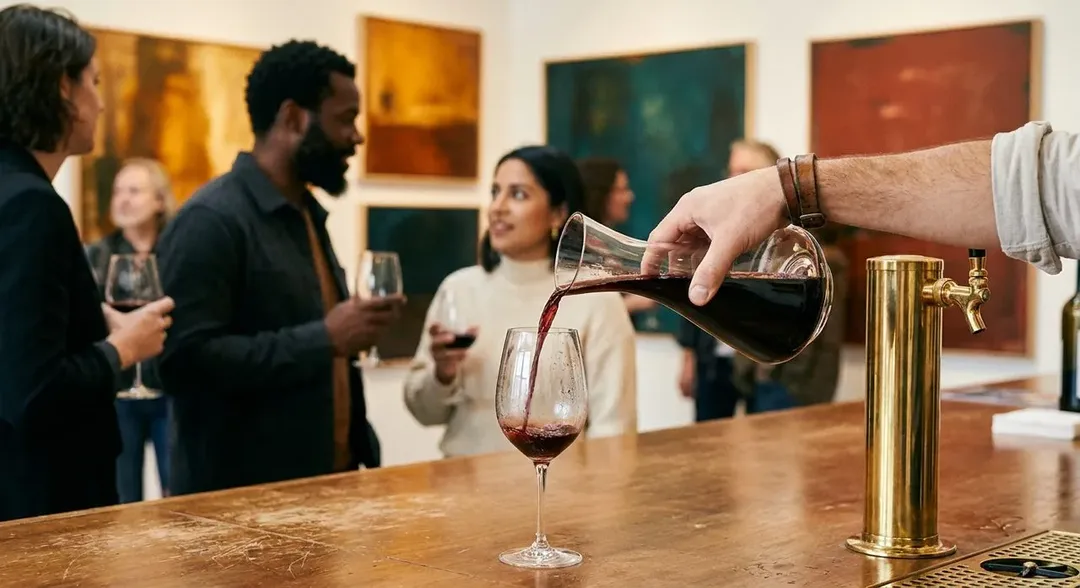
The wine selection at these spaces typically holds several dozen bottles at any time, organized by region, often purchased from importers specializing in low-intervention wines from Central Europe, the Finger Lakes, and similar producers. The selection rotates regularly. You won't always find California wines. The curators tend to be firm about their aesthetic.
Glasses run roughly seven to fifteen dollars, bottles in the thirty-five to eighty range. The best value is usually a house pour—a rotating skin-contact white served by the glass. It might be a Slovenian Rebula one month, a Finger Lakes Riesling the next, something that works with the gallery lighting and the quiet atmosphere.
There's typically no cocktail menu, no beer, no spirits. The wines are served at proper cellar temperature, which means the whites are warmer than you expect and the reds are cooler. You adjust. Most people do.
The unspoken rules
You book through the gallery's website, the same system used for daytime appointments. Evening slots open weekly and fill quickly, sometimes within days if the space has an active social media presence. You can reserve seating for two or join a communal arrangement. Walk-ins are generally turned away unless there's been a cancellation, which is rare.
Arrival time matters. The door unlocks at the stated hour. If you arrive late, you've missed the brief introduction about the current show and the available wines. It's not repeated. Closing time varies by day of the week—some nights run until eleven, others wrap at ten. Private appointments for small groups are sometimes available outside regular hours.
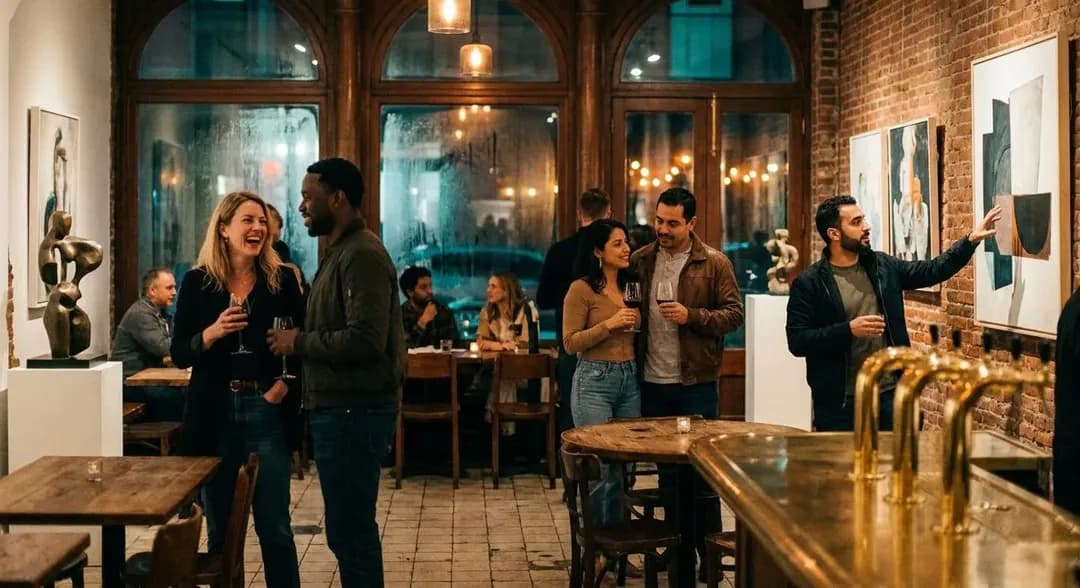
The lighting stays low but functional. You can still see the brushwork. Phone calls are not tolerated. Photography is usually fine, but no flash. Volume is carefully monitored. These spaces hold sound in a particular way; a normal conversation at one end carries clearly to the other. You learn to modulate.
Why it works when it shouldn't
Tribeca has plenty of wine bars. It has galleries throughout the neighborhood. The combination shouldn't feel novel, but it does, probably because the successful versions refuse to compromise either function. The art isn't background. The wine isn't an afterthought. You're equally likely to leave having bought a bottle to take home or having scheduled a studio visit with one of the represented artists.
The spaces themselves tend to be compact—under a thousand square feet—with high ceilings and original floors that creak in spots. The walls are white, the trim is white, the seating is often velvet. There's usually a desk near the entrance for daytime paperwork. At night, the gallerist stands near the wine storage and pours. Regulars are recognized. Previous orders are remembered.
The neighborhood has changed in recent years. Blocks are quieter now than pre-pandemic, fewer finance types, more families. The evening crowd at these hybrid spaces skews older than typical wine bar demographics—late thirties to mid-fifties, people who've done the loud bar thing and prefer this. They come alone sometimes, with a book, and sit under a painting for ninety minutes.
Practical notes
Several Tribeca galleries operate evening wine service on select nights, typically Wednesday through Friday. Reservations are required and should be booked early in the week through the individual gallery's website. Private appointments may be available for small groups outside regular hours.
Glasses typically start around seven dollars, bottles from the mid-thirties. Cash and card are generally accepted. Food service is rare, though some spaces don't mind if you bring something quiet—nothing that requires unwrapping noisy packaging. The Franklin Street subway station (1 train) serves the area. Street parking is difficult; public transit is recommended.
Gallery exhibitions change on rotating schedules, usually every six to eight weeks. Current show information is posted on individual gallery websites and social media. Daytime viewing is typically free and by appointment.
Tags: #TribecaWineBar #NYCArtGallery #NaturalWine #HiddenNYC #TribecaAfterDark #WineAndArt #NYCGalleries #ContemporaryArt #TheOddEdit #NYCNights #DowntownManhattan #SmallBatchWine #NYCInsider
Sources consulted: timeout.com · nyctourism.com
Please drink responsibly. Must be of legal drinking age.
All trademarks are the property of their respective owners.
Ask Karpo for more information.
Keep reading
- Costume Rental Near Me in Williamsburg: Hit and Run Productions Archive
 Costume Rental Near Me in Flatiron: Abracadabra NYC Showroom Floor
 Costume Rental Near Me in NoHo: Albright Fashion Library Archive