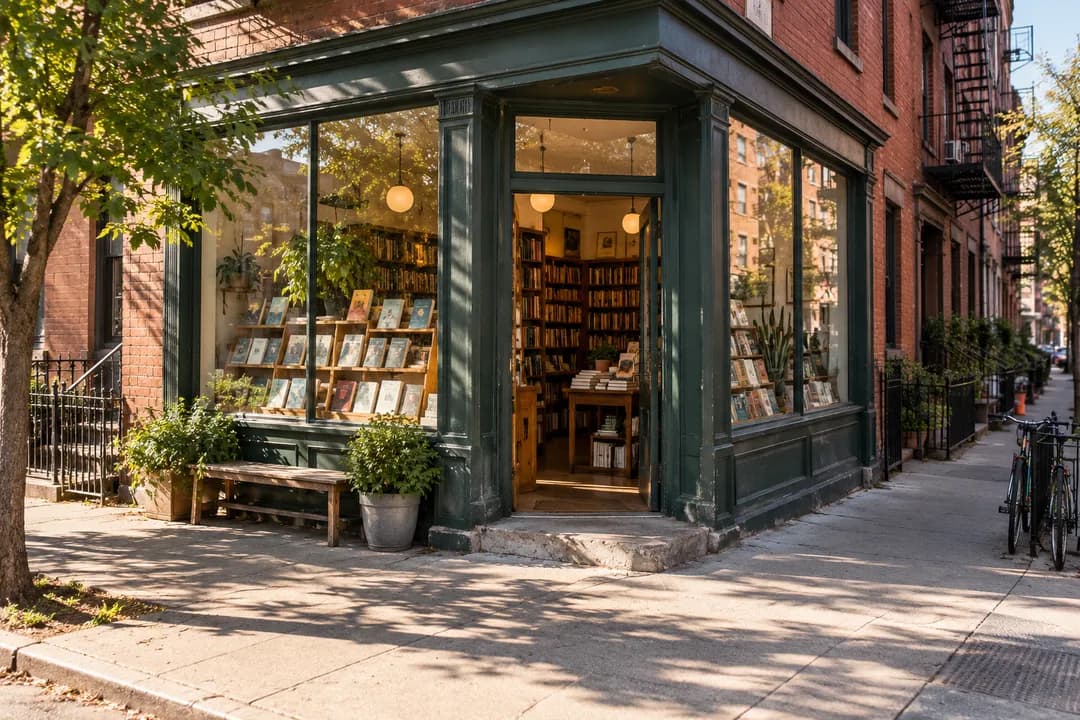
 WORD Bookstore in Greenpoint Remains a Community-Focused Indie Bookstore Near Me
Hidden Gems & Odd Finds
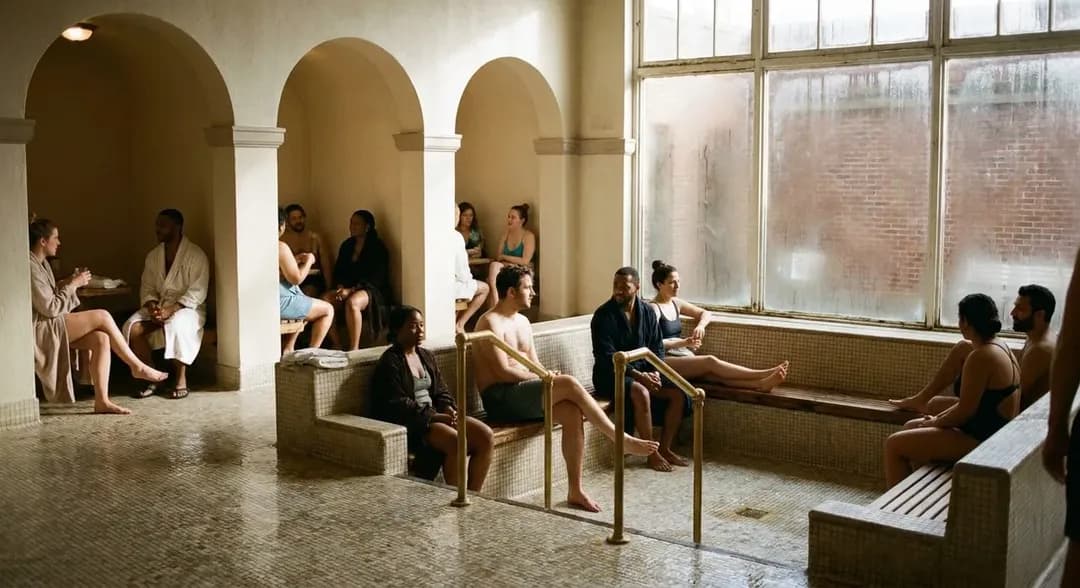
Cocktails in a Former Public Bathhouse on the Lower East Side
Between Allen and Eldridge, a century-old municipal bathhouse trades its plunge pools for martinis. The white tile remains, the steam has been replaced by something smokier, and the alcoves now serve a different kind of cleansing ritual.
The architecture of ritual
You descend seven steps from street level and the temperature drops. The door—original brass hardware, recently re-plated—opens onto what municipal records list as Bathhouse No. 7, commissioned 1904. The white subway tile runs floor to ceiling in the entry corridor, each piece three inches by six, laid in running bond. This is not decorative nostalgia. These tiles witnessed tens of thousands of ablutions before the city shuttered the facility in 1959, and the current owners stripped seventy years of paint to expose them again. The grout lines still bear faint mineral stains from the old steam system. You can see where the attendant's booth once stood; the tile pattern shifts there, marking the threshold between public and operational space.
The main room occupies what was the men's plunge pool, a rectangular basin that once held forty-two thousand gallons. The concrete floor traces its exact footprint—thirty-eight feet by twenty-two—and the bartenders work from a walnut structure positioned where the shallow end began. Architects left the original depth markers embedded in the tile: 4'6", 5'2", 6'0". The deepest point, near the current lounge seating, still slopes perceptibly downward.
The alcove economy
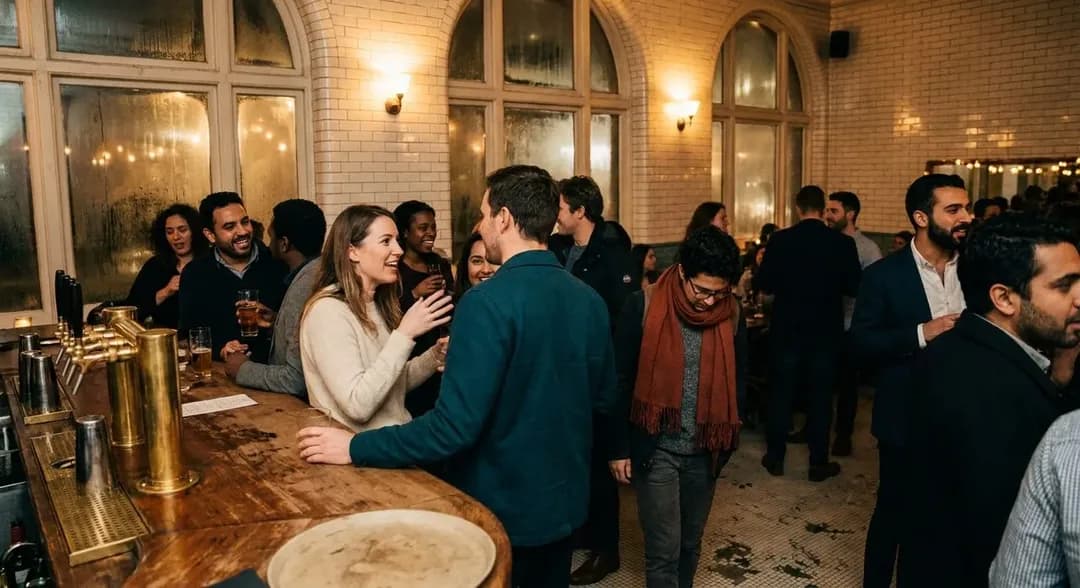
Along the north and south walls, twelve tiled recesses mark the individual shower stations. Each alcove measures seven feet deep, five feet wide, fitted now with velvet banquettes in a shade the designer calls "municipal burgundy." The tile work in these nooks is extraordinary—mint green hexagonal mosaics on the floor, white rectangles climbing to rounded archways. Brass coat hooks remain at shoulder height, original fixtures that once held work clothes and towels.
Alcove Seven, third from the east on the north side, has the best acoustics. The curved ceiling creates a whisper chamber effect; conversations stay contained while the main room's noise dissipates. Regulars know to request it by number. The staff calls these spaces "the confessionals," and you understand why when you settle into one with a drink. The tile absorbs and muffles, creating a pocket of privacy in a room designed for communal exposure. Someone carved initials into the grout in Alcove Nine—"J.R. 1947"—and the management left them visible under the protective sealant.
What they're pouring
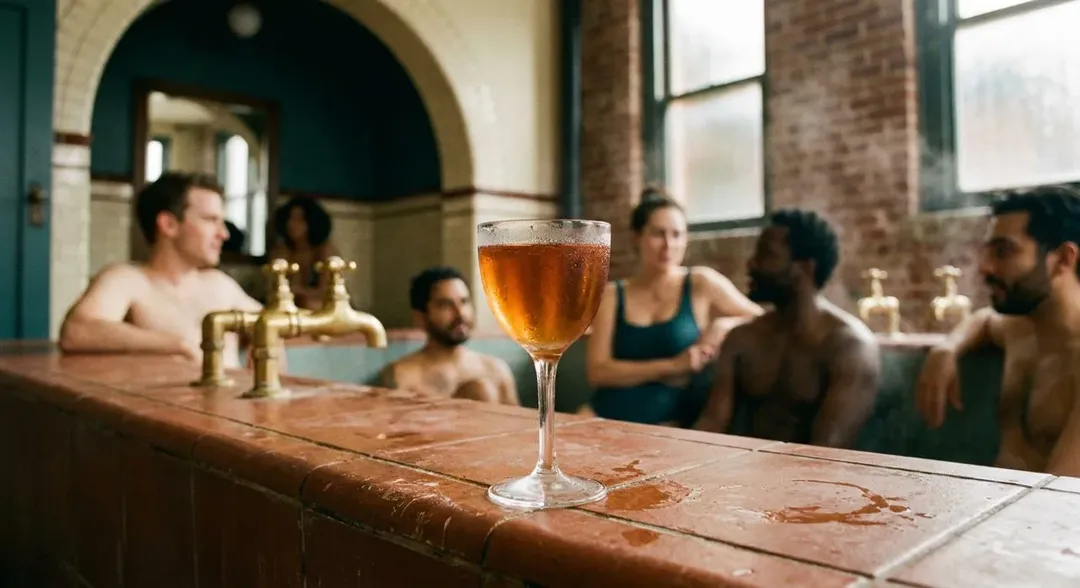
The cocktail menu acknowledges the building's history without becoming a theme park. The "Schvitz" arrives in a coupe glass, a clarified milk punch with rye, chamomile, and lemon that drinks clear as bathwater. The "Attendant's Privilege" combines mezcal, fino sherry, and celery bitters—savory, restorative, the kind of drink that tastes like it might cure something. Bar manager Chen developed the list around the idea of "before and after": drinks that prepare you for something or help you recover from it.
The back bar, built into what was the boiler room access, stocks two hundred bottles. Chen keeps several amari you won't find elsewhere in the city, including a privately bottled Sfumato that a Calabrian producer sends twice yearly. Ask about the "bath menu"—it's not printed, but Chen will build you something based on a brief consultation about your evening's trajectory. He trained under Audrey Saunders and worked at Pegu Club before it closed. His builds are precise, balanced, never showy.
Temperature and light
The original ventilation system, designed to evacuate steam, now handles cigarette smoke in the designated northeast corner. The management obtained a rare variance allowing smoking in this specific zone, arguing historical precedent. It works: the air moves efficiently, and the smell doesn't travel. The temperature throughout stays cool, somewhere around sixty-four degrees. They run the climate control through the old pipe chases, and the system maintains an almost eerie consistency.
Lighting comes from reproduction industrial fixtures—porcelain sockets with cage guards, forty-watt Edison bulbs. The tile reflects and multiplies the light, creating a soft, even glow that makes everyone look slightly better than they do in daylight. At 10 p.m. on Thursdays, they dim everything by half. The tile becomes luminous, opalescent. You see why the original architects chose white.
Who comes
The crowd skews late twenties to early forties, people who appreciate historical preservation and strong drinks in equal measure. You'll see architects studying the tile work, hospitality professionals on their nights off, writers working through relationship mathematics in the alcoves. The door policy is invisible but effective—the hosts recognize who belongs and who's wandered in looking for Instagram content. The latter rarely make it past one drink.
Wednesday nights draw the service industry crowd. Chen runs a rotating guest bartender series, bringing in talent from other cities. These evenings feel like trade conferences, everyone discussing technique and sourcing and the politics of their respective bar programs. The energy shifts, becomes more collegial. If you're not in the industry, Wednesday might not be your night. Friday and Saturday see reservations for the alcoves booked two weeks out.
Practical notes
Located at 128 Allen Street, between Delancey and Rivington. Entrance is the unmarked door with brass hardware, seven steps down. Open Tuesday through Saturday, 6 p.m. to 2 a.m. Closed Sunday and Monday. Cocktails range from $18 to $24. Alcove reservations available via their website for parties of two to four, $150 minimum spend. Walk-ins usually find space at the bar or in the main pool area before 8 p.m. The F train to Delancey-Essex puts you two blocks away. No food service beyond bar snacks—marcona almonds, castelvetrano olives, aged manchego. They'll validate parking at the Delancey Street garage if you spend over $100. Dress code is unstated but observed: no athletic wear, no flip-flops. The tile floor is slippery when wet; wear appropriate footwear.
Tags: #LowerEastSide #NYCBars #CocktailBars #HistoricPreservation #HiddenBarsNYC #SpeakeasyStyle #CraftCocktails #TheOddEdit #ManhattanNightlife #ArchitecturalBars #TileWork #VintageNYC #NYCHistory #CocktailCulture #DesignBars
Sources consulted: Atlas Obscura · The Infatuation · Time Out New York
Please drink responsibly. Must be of legal drinking age.
All trademarks are the property of their respective owners.
Ask Karpo for more information.
Keep reading
- WORD Bookstore in Greenpoint Remains a Community-Focused Indie Bookstore Near Me
 The Corner Bookstore on Madison Avenue Is Carnegie Hill's Indie Bookstore Near Me
 192 Books in Chelsea Brings Art and Fiction to Indie Bookstore Near Me