 Washington Heights Arepa Lunch Spot Picker for a Newcomer
Restaurants
Filipino Restaurant Near Me in Chinatown: Binondo's Chinese-Filipino Table
A Chinatown guide to Binondo, where Filipino comfort food and Chinese-Filipino pantry flavors meet in a compact Lower Manhattan dining room.
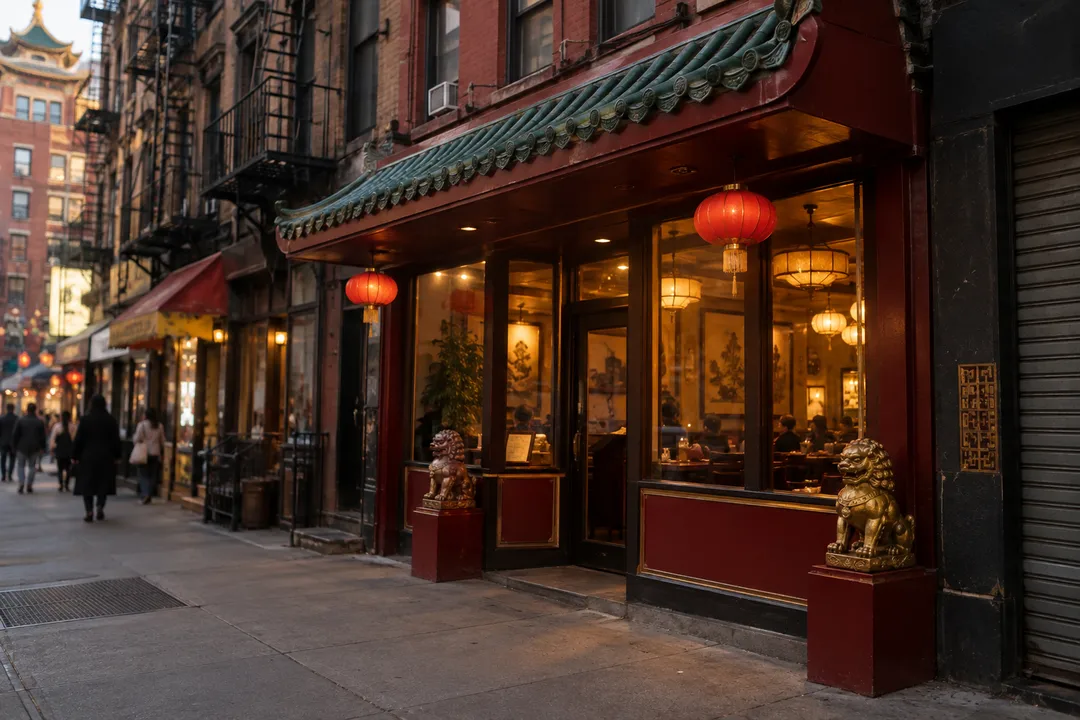
Searching for a Filipino restaurant near me in Manhattan Chinatown often leads to Binondo, a compact dining room where the cooking feels like a conversation between Manila and the old Chinese trading district that gives the restaurant its name. The room is useful for a first taste of Filipino food because the menu moves from familiar fried rice and noodles toward adobo, crispy pork, and tangy vinegar sauces without turning the meal into a lecture. Come hungry, and expect a table built for sharing.
Getting there is simple: Binondo is at 50 East Broadway, close to the Manhattan Bridge approach and a short walk from the East Broadway F stop. The route passes fruit stands, bakeries, and busy storefronts, so leave a few minutes to arrive without rushing. The restaurant is small enough that a two-person table can disappear during dinner, while the open front makes lunch feel more casual. Subway access is more reliable than trying to park nearby.
The restaurant's character comes from its Filipino-Chinese point of view. Garlic, soy, vinegar, toasted aromatics, and a little sweetness recur across the menu, but each dish lands differently. That balance is why Binondo works for mixed groups: one diner can order a comforting noodle dish, another can ask for something pork-forward, and everyone can put rice and bright sawsawan sauces in the middle. It feels like a neighborhood table rather than a formal tasting room.
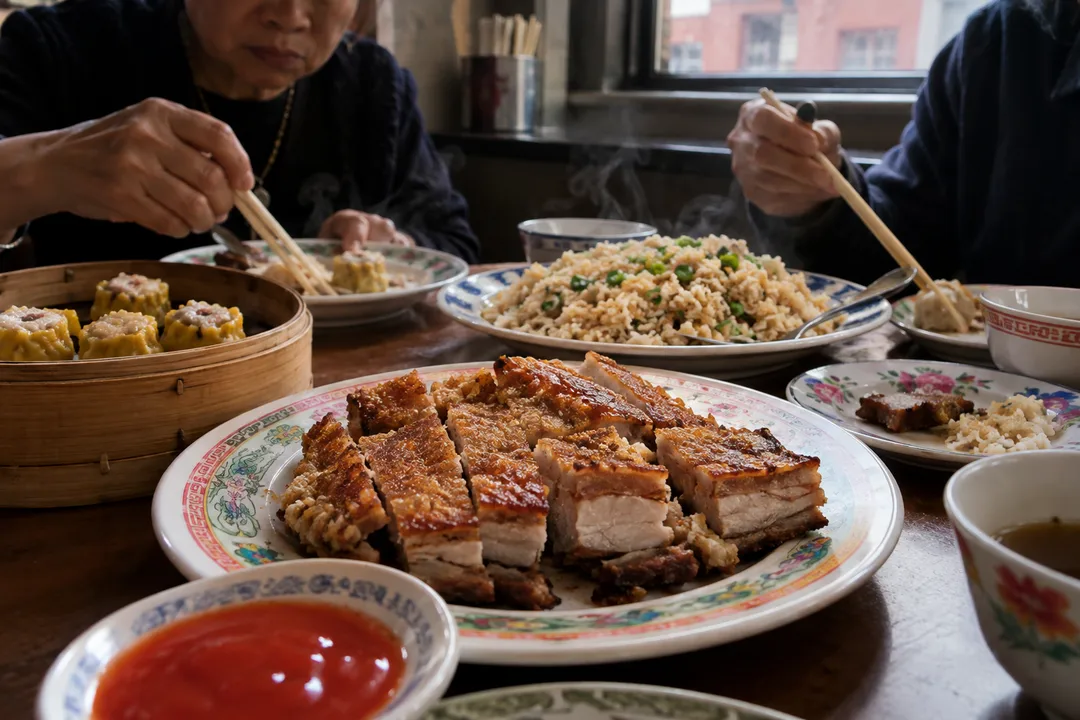
Start with pork siomai if the kitchen has it available, then move to the crispy pork belly, usually around $18. The exterior should have a proper crackle while the meat stays soft enough to pull apart with a fork. A small cup of banana ketchup or spiced vinegar keeps the richness in check. Split the dish instead of ordering one each; the best bites combine pork, rice, and a sharp sauce in the same forkful.
The chicken adobo, generally priced near $19, is the steadier order for someone who wants the Filipino canon. Binondo's version is dark with soy and garlic, but the vinegar keeps it from feeling heavy. Ask for extra rice because the sauce is designed to be absorbed, not left at the bottom of the bowl. A side of atchara, the sweet-sour green papaya pickle, adds crunch and makes the next bite taste newly awake.
For a larger table, look for a seafood or noodle special and ask what is moving fastest that day. Pancit is a good bridge dish, with springy noodles, cabbage, carrots, and pieces of meat or shrimp that make it easy to share. Prices tend to sit around $16 to $22 depending on the protein. The menu can change, so treating the counter staff as your guide is more useful than arriving with a rigid order.
Do not skip a cold drink. Calamansi juice, when available, brings a clean citrus snap to fried food, while a Filipino soda or bottled tea gives the table a sweeter pause. Dessert may include ube or a chilled coconut preparation, usually $8 to $10. If you are new to Filipino flavors, the best rhythm is one savory main, one fried plate, rice, and something tart rather than a table overloaded with rich food.
Binondo's peak is the early dinner window, especially Friday and Saturday between 6:30 and 8:30 p.m. A walk-in pair has the best chance just after opening or after the first rush begins to thin. For four or more, call ahead and be ready to accept a slower seating if the dining room is full. The staff may pace dishes according to table size, so do not judge the meal by the first plate to arrive.
There is no elaborate dress code, but the close seating means bulky coats and large shopping bags are awkward. Keep the first order concise and add another dish once you know how much food is coming. Rice and shared plates are central to the experience, so asking for separate individual courses can make the meal less comfortable. Cash and cards are both practical choices, but confirm the current payment setup at the register.
The room is more about the food and street energy than polished design. Warm light catches metal serving trays, wood tables, and the movement of the open kitchen. At lunch, the room can feel quick and focused; at night, dishes stay on the table longer while Chinatown traffic hums outside. That change of pace gives Binondo a useful double life for a weekday solo meal or a late dinner with friends.
The name points toward Binondo, Manila's historic Chinese-Filipino district, and that reference gives the restaurant its strongest story. Filipino cuisine has always carried regional and family histories across borders, and the menu makes that idea tangible through pantry staples rather than grand declarations. You can taste how soy, vinegar, fried garlic, pork, noodles, and rice create a shared vocabulary between two food traditions.
Make the meal part of a longer Chinatown walk. Before dinner, browse the produce stalls along Mott Street and take the pedestrian route toward Columbus Park. Afterward, head toward the Manhattan Bridge for the changing light over the East River, or stop at a bakery for a second snack. The neighborhood is dense enough that Binondo works best as one stop in an evening instead of a destination requiring a taxi in and out.
Practical notes: the entrance is at street level, but the narrow footprint can make wheelchair turning space limited during a rush. Ask about ingredients if you have shellfish, soy, or gluten concerns, since sauces and shared fryers matter. Portions are easiest to judge for two diners by ordering one main, one vegetable or noodle dish, and rice first. Add dessert only after the savory plates are nearly finished.
Binondo is best for diners who like to order collaboratively and follow the menu toward something unfamiliar. It is less suited to a quiet, highly choreographed date night, though an early weekday table can be calm. For a first visit, choose chicken adobo, crispy pork, pancit, and a citrus drink. That combination shows the restaurant's Chinese-Filipino identity without asking beginners to commit to every specialty at once.
Ask Karpo for more information.
Keep reading
- Washington Heights Arepa Lunch Spot Picker for a Newcomer
 Williamsburg Arepa Lunch Spot Picker for Parents of Toddlers
 Lower East Side Arepa Lunch Spot Picker for Coeliac Friends