 Washington Heights Arepa Lunch Spot Picker for a Newcomer
Restaurants
Midtown Dinner Reservation Finder: Six Seats for Client Talk
A Midtown dinner reservation finder helps frame a six-person client meal around conversation, dietary needs and seating before you choose a booking channel.
Planning a client dinner for six in Midtown begins with a hosting decision: what must the room allow the group to do? A dinner reservation finder can help you move from a broad search to a considered shortlist, but the meal needs a clear brief. You may need everyone to hear a discussion, enough menu flexibility for several diets and an arrival plan that works after separate meetings. In the Karpo APP, explain those requirements together so the recommendations can be assessed against the purpose of the dinner, rather than a generic idea of an impressive restaurant.
Design the conversation around all six guests
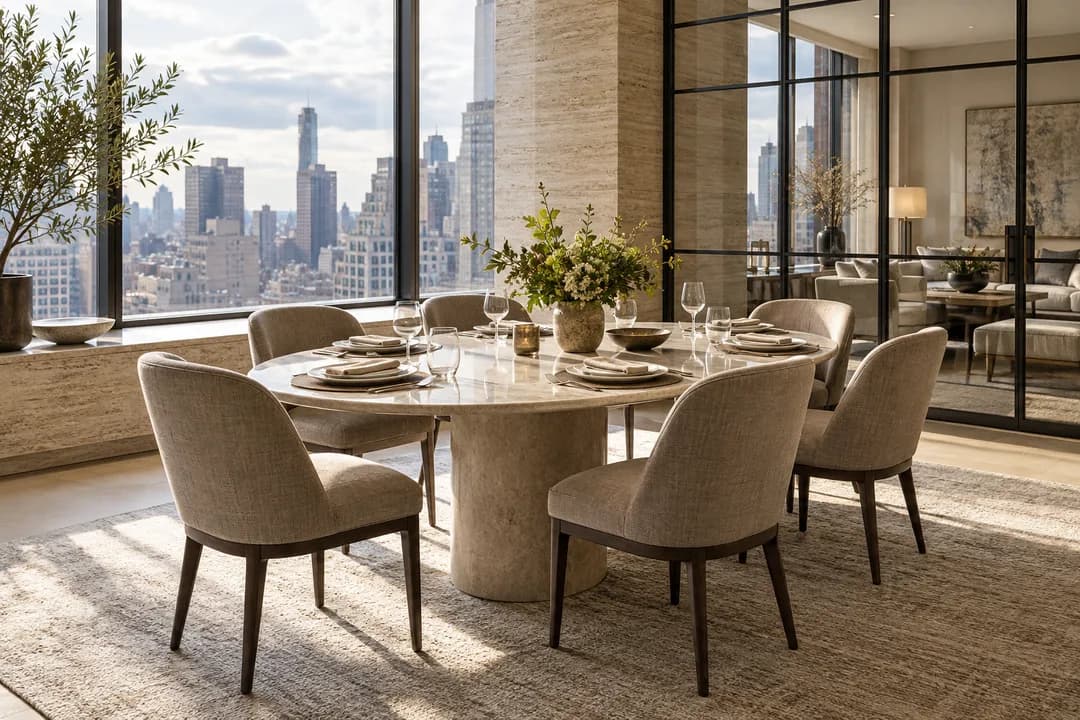
Think about how the evening will sound from the least convenient seat. At a long table, a person at one end may struggle to follow someone at the other. A round or oval arrangement can support a group conversation, while a rectangular table can encourage smaller exchanges. Neither shape is automatically suitable for every business dinner. Tell Karpo whether you expect one shared discussion, informal networking or a short welcome followed by social conversation. That distinction gives seating information a useful role in the comparison.
Separate a desire for low noise from a requirement for confidentiality. A quieter dining room can still place other diners close enough to hear sensitive details. A screened alcove is different from an enclosed private room, and either may have its own booking conditions. If confidential conversation is essential, make that a hard requirement for the venue inquiry. Ask the restaurant directly about the proposed space and how it is separated. A recommendation described as business friendly does not establish privacy for a particular table.
Collect dietary needs without circulating personal details
Before requesting options, ask each guest privately for dietary restrictions that affect the meal. Combine the practical requirements in the search brief without attaching names or explaining medical history. For example, the group may need one vegan main, an alcohol-free drinks choice and a kitchen conversation about a food allergy. Do not compress these into a vague request for healthy options. Specific needs help you distinguish a menu that everyone can navigate from one that merely contains a single dish that looks adaptable.
For serious allergies, a menu comparison is the beginning of the decision. The restaurant needs to address preparation, cross-contact and the exact service offered to your group. A fixed group menu might simplify ordering while limiting individual choice. An a la carte format could suit varied tastes but take longer to coordinate. Ask Karpo to explain that tradeoff using published information where it exists, and then bring unresolved kitchen questions to the venue. Avoid promising guests an accommodation that has only been inferred from a cuisine label.
Set a hosting budget with the whole bill in mind
A six-person meal can move beyond the host's intended budget through ordering decisions that seem small individually. Decide whether the invitation includes starters, dessert, drinks and any additional service charges stated by the restaurant. Use a total ceiling or a clear per-person allowance in the Karpo request, and say how flexible it is. When prices are available, compare the same kind of meal across candidates. A listed main-course price alone tells you little about the cost of a full hosted evening.
Also decide how you want payment to feel at the table. A single host settling the bill calls for different preparation from six people dividing costs. Some venues publish separate group dining arrangements or require a payment method in advance. Those are venue-specific terms, so obtain them through the actual booking channel. Keep card details and billing credentials out of the conversational search brief. The useful planning information is who is hosting and what arrangements they need, rather than the sensitive information used to pay.
Choose a location the guests can actually reach
Midtown is a broad meeting area, so identify where the group will be immediately before dinner. Six guests leaving one office have a different coordination problem from people arriving from several hotels and meetings. Give Karpo a preferred meeting zone and an acceptable amount of travel. Include any mobility requirement as a practical constraint, such as an accessible entrance and suitable dining-level facilities. A short distance on a map does not establish an accessible route through a building or comfortable seating at the proposed table.
Work backward from the latest realistic arrival, then agree on the intended length of dinner. An early reservation can put pressure on a guest whose meeting ends later. A late start can make the meal difficult for someone with an early departure the following day. Ask for a comparison that protects the overlap in everyone's schedule. If arrivals are staggered, find out how the venue handles an incomplete party through its own policy. Do not tell guests that the table can be held indefinitely when that has not been offered.
Request a compact comparison you can defend
A useful prompt might ask Karpo for three Midtown dinner candidates for six colleagues and clients, prioritizing audible conversation, full-size dining chairs and individually workable menus. Add the date, preferred start window, hosting budget and any specific dietary requirements. Ask for a short explanation of the evidence behind the seating and atmosphere descriptions. You are seeking a reasoned set of choices. You are not asking the app to certify that a private room is free or that the restaurant can accept the entire group.
Read the options as a host: which uncertainty would be most disruptive on the night? A marginal cuisine preference may be easy to accommodate, but a room too loud for the intended conversation undermines the invitation. Rank the requirements before choosing. You might put accessibility and dietary feasibility first, conversation second and decorative style third. Where information is missing, keep that gap visible in your own decision notes. An unexplained assumption about the room should not receive the same weight as a clear description published by the venue.
Turn a shortlist into a clear invitation
Take the preferred candidate to the restaurant's reservation or group dining contact. Specify six people, the date and the seating arrangement you are requesting. Read any minimum spend, deposit, cancellation and menu-selection conditions before accepting. A larger-party inquiry may require a different route from an ordinary online table booking. The Karpo APP can support discovery and comparison, while the restaurant or its booking provider establishes the actual arrangement. Keep the accepted details and confirmation together so you can answer the group's practical questions accurately.
Send an invitation that removes uncertainty for the guests: the chosen restaurant, start time, reservation name and any relevant arrival instruction. Tell them whether dinner is hosted and how to send you a dietary update privately. Leave detailed billing and contract terms between the organizer and the venue. If the preferred room cannot be arranged, revise the search around the requirement that failed rather than starting from an unrelated list. That keeps the client dinner focused on the guests, the conversation and the reason you brought six people together.
Ask Karpo for more information.
Keep reading
- Washington Heights Arepa Lunch Spot Picker for a Newcomer
 Williamsburg Arepa Lunch Spot Picker for Parents of Toddlers
 Lower East Side Arepa Lunch Spot Picker for Coeliac Friends