The door that shouldn't open
You walk past it twice before noticing the bronze handle, polished smooth by years of hands that knew where to look. 115 Broadway, entrance on Trinity Place. No awning, no velvet rope, no hostess checking names. Just a door that looks like it leads to a management company's back office. At 6 PM, someone inside releases the lock. You pull, and the weight surprises you—this is Trinity Place Bar & Restaurant, built inside the 1904 vault of a former bank, with original doors manufactured by the Mosler Safe Company. Each door weighs approximately thirty-five tons.
Updated August 2026: hours, prices, reservations, event dates, transit details, and venue policies can change. Use the linked official venue, city, or operator sources in the Sources section as the final reference before you go.
Inside, the air feels different. These aren't decorative walls—this is genuine vault architecture, the kind engineers specified when they worried about forced entry. The ceiling curves slightly, following the barrel-vault design that made these rooms formidable. Your phone signal weakens immediately. The bartender doesn't apologize for this. "People stay longer when they can't check email," he says, setting down a menu that nods to the building's banking past.
What you're actually drinking
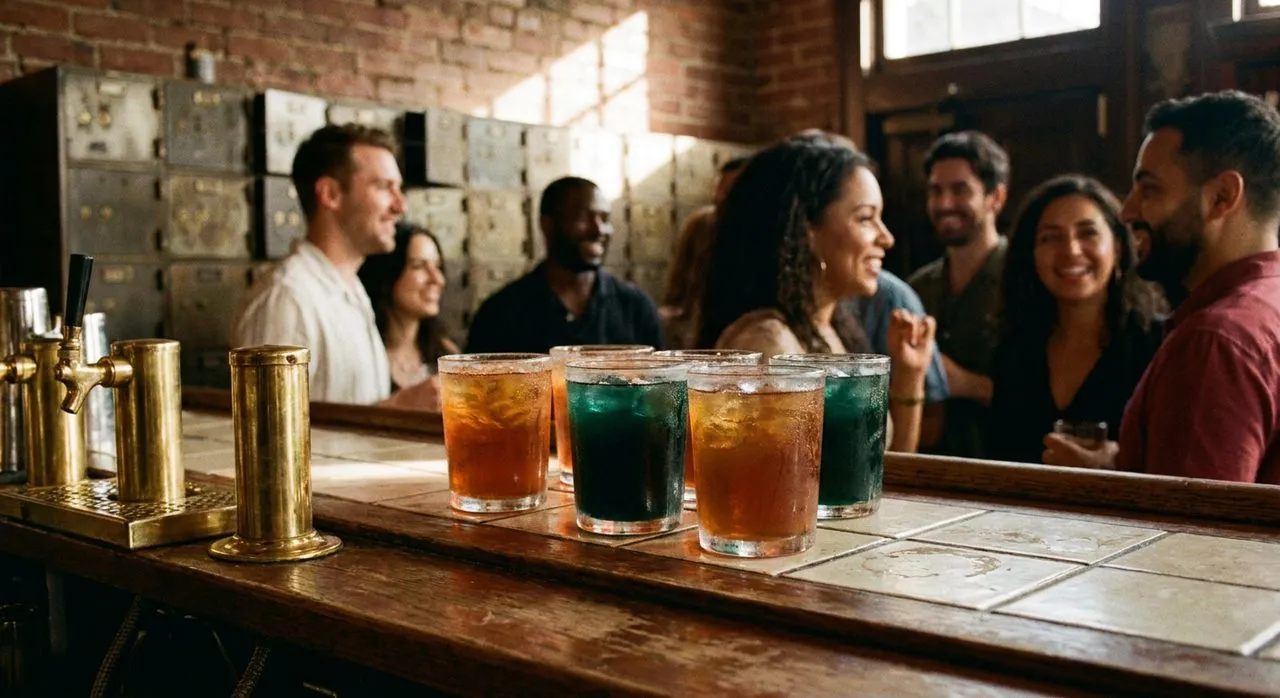
The cocktail list reads like a heist film's prop department got ambitious. Drinks arrive with theatrical flourishes that suit the setting. Their Manhattan is built with quality vermouth and house-prepared cherries. Ask the bartender what's not on the menu—there's usually something special reserved for guests who show curiosity.
The menu changes seasonally, but certain elements stay consistent. They favor classic cocktail architecture: proper dilution, balanced proportions, ingredients that justify their presence. Their old fashioned comes with a single sphere of ice, placed in the glass with care. Some drinks arrive under glass cloches, capturing aromatic smoke—it's elaborate, yes, but when you're drinking in a room that once held substantial assets, theatricality feels appropriate.
The geometry of the space
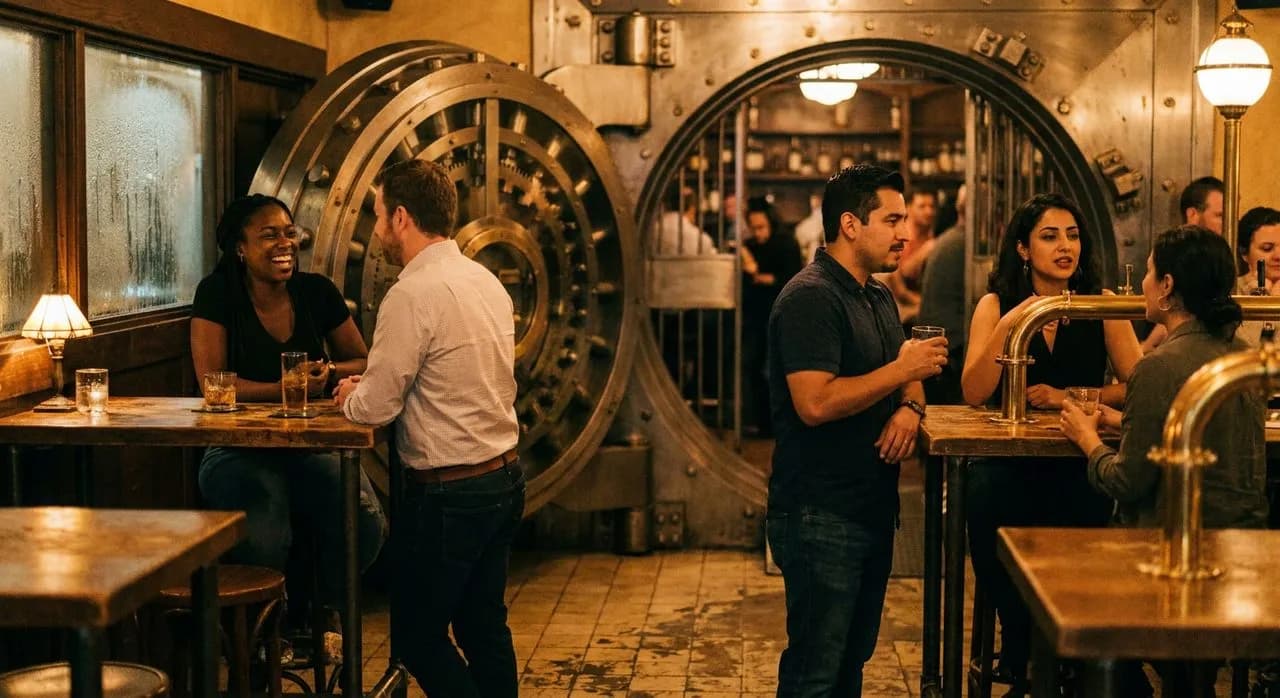
The room holds a comfortable crowd; too many people and it feels like a party you weren't invited to. The original vault doors stand open during service, massive pieces of engineering that still move on their original hinges. You can see the bolt work when you enter—the locking mechanisms that once secured this space, now serving as industrial sculpture.
Former safety deposit boxes line the walls. Most are original fixtures, repurposed as design elements with backlighting that shifts as the evening progresses. The bar uses some boxes for storage—bottles that aren't on the standard menu but appear if you're there on the right night and ask what the staff drinks after their shift. The marble surfaces where depositors once conducted business now hold candles in cut-crystal holders, the kind banks used in their executive offices.
The crowd that knows
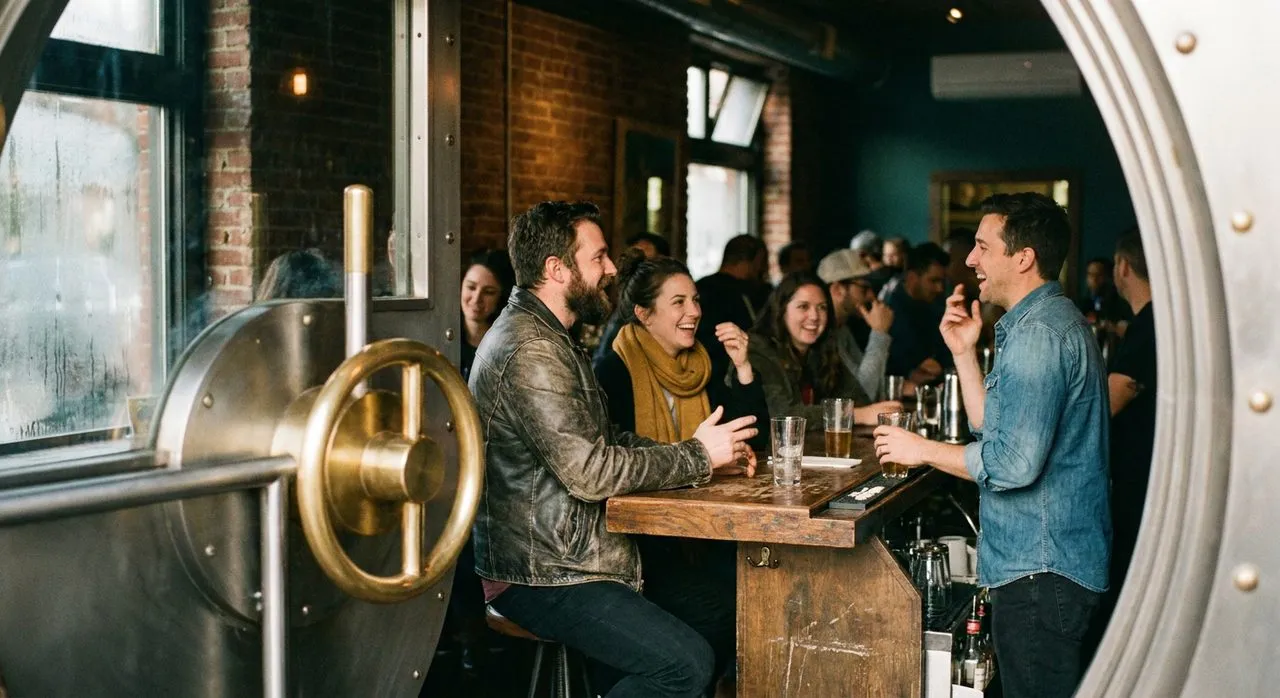
Financial District lawyers arrive early, still in their work clothes, ordering bourbon neat. By mid-evening, the demographic shifts—architects from the Seaport, gallery owners from Tribeca, journalists who've been coming for years and consider this their personal discovery. Weeknight crowds draw people who work in finance and tech, appreciating the irony of drinking in a former banking vault.
You'll notice regulars by their behavior. They don't photograph the vault doors obsessively. They know which cocktails to order before certain hours. They take corner tables where the acoustics create natural privacy zones. The place has been written about, but it maintains a low profile—somehow that restraint became its most effective marketing.
What they don't advertise
The bathroom is accessed through a secondary vault passage, smaller but equally authentic, that leads to what was once a secure viewing area. The original architectural details remain throughout—brass fixtures, period hardware, elements that remind you this space had a serious previous life. On the bar's anniversary each year, they serve special drinks made with historical recipes, presented in vintage serving pieces.
The staff keeps small artifacts from the building's banking era—old keys, architectural drawings, pieces of the vault's history. On slow nights, they might share stories about what bank records reveal about this space. The bar doesn't lean into ghost stories, but they don't discourage them either. Framed blueprints hang near the restrooms, marked up with a draftsman's calculations for structural integrity.
Practical notes
Trinity Place Bar & Restaurant is at 115 Broadway (entrance on Trinity Place), accessible via the Wall Street station (4/5 trains) or Whitehall Street (R/W trains). The bar opened in 2006 inside the 1904 Mosler vault. Hours and current pricing available at their website. Arrive early on weekends to avoid waits. Cash and cards accepted, though signal interference from the vault construction can occasionally affect card readers—bring cash as backup.
Dress code is undefined but observed: smart casual, nothing too casual. The space has limited accessibility due to the historic building's configuration. They occasionally close for private events; check their website or social media before making a special trip. The vault's thick walls provide natural temperature regulation year-round.
Tags: #TrinityPlaceNYC #FinancialDistrictBars #NYCSpeakeasy #CocktailBar #HiddenNYC #VaultBar #NYCNightlife #ManhattanBars #CocktailCulture #NYCInsider #DowntownManhattan #NYCDrinks #KarposFinds
Sources consulted: atlasobscura.com · trinityplacenyc.com
Please drink responsibly. Must be of legal drinking age.
All trademarks are the property of their respective owners.