 Washington Heights Arepa Lunch Spot Picker for a Newcomer
Restaurants
Cantonese Restaurant Near Me in Chinatown: Nom Wah Tea Parlor
A practical Chinatown guide to Nom Wah Tea Parlor, the 1920 Doyers Street landmark for made-to-order Cantonese dim sum, tea, and old-school atmosphere.
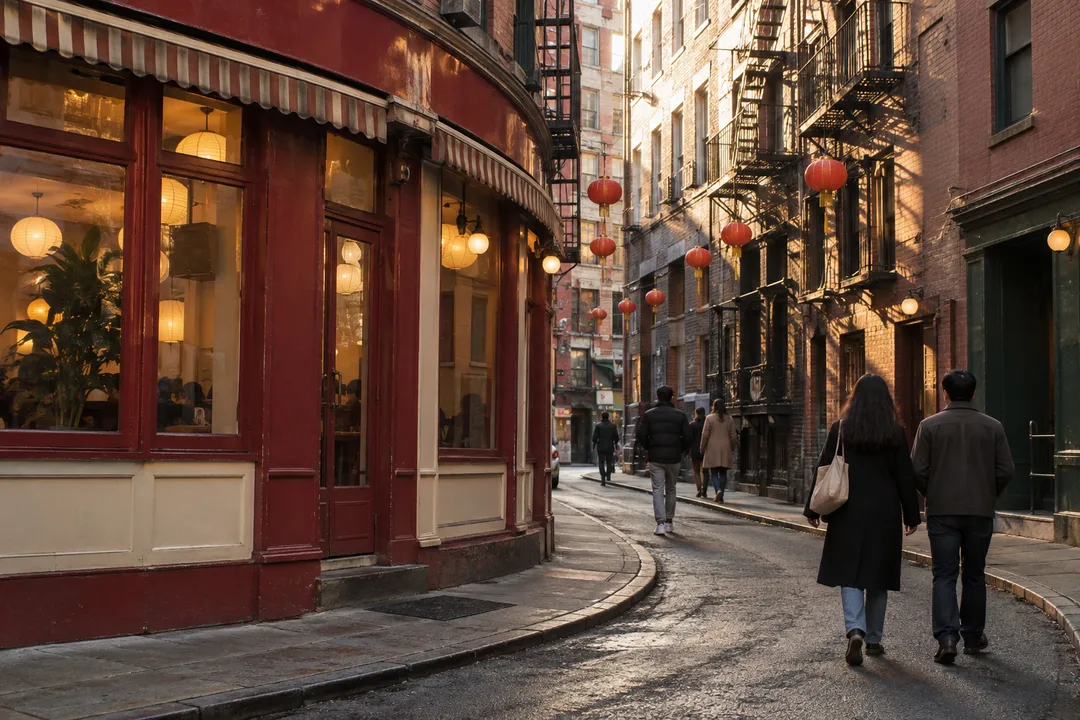
If you type "cantonese restaurant near me" while walking through Manhattan's Chinatown, Nom Wah Tea Parlor gives you a very specific answer: 13 Doyers Street, inside the bent little lane that feels unlike almost anywhere else in New York. The restaurant first opened at this address in 1920, and the room still carries the visual memory of a classic tea parlor, with red booths, round tables, old mirrors, and a pace that rewards looking around before the first steamer lands.
Nom Wah is a useful stop when you want Cantonese dim sum without committing to a long banquet meal. The kitchen cooks to order rather than relying on a parade of carts, so you can choose a short lunch for two or build a broader spread for a group. That distinction shapes the visit. You read the menu, mark what you want, and wait for each plate to arrive hot instead of trying to spot your favorite basket as it rolls past.
The easiest approach is from Canal Street, then east toward Doyers, although the nearby Grand Street, Canal Street, and East Broadway subway stations all put you within a manageable walk. Doyers is narrow and curved, so it is worth using the street number rather than looking for a large modern facade. Once you arrive, the doorway and the old-fashioned interior do most of the work. The restaurant is compact, and the room can feel intimate even when every table is occupied.
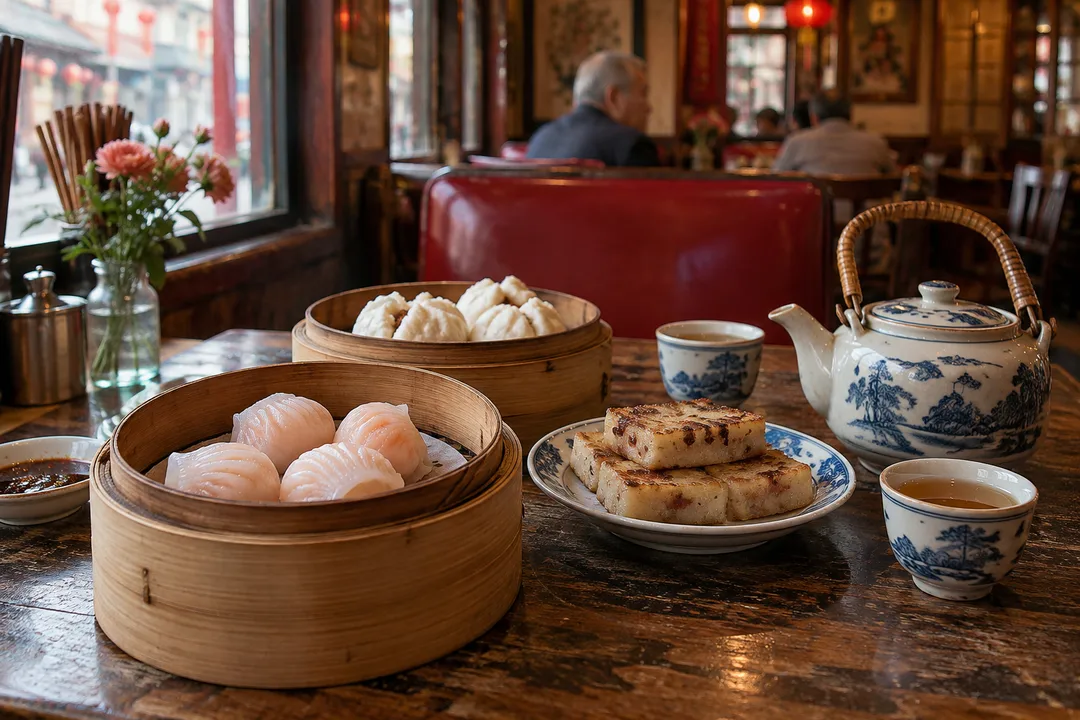
Start with the shrimp dumplings if you want the clearest Cantonese benchmark. The current menu lists a four-piece order at $13, and the translucent wrappers make a good test of the kitchen's balance between tender dough and springy shrimp. The pork-and-shrimp siu mai is another practical first order at $13. It brings a firmer bite and a savory filling, giving the table two different textures before you move into fried or baked dishes.
The turnip cake, listed at $13, is the order for people who like the browned edges of dim sum. It arrives in crisp-sided pieces with a soft interior, making it easy to share without needing a bowl or extra sauce. The roast pork buns are also worth adding when you want something sweet, salty, and bread-forward. Nom Wah's menu has enough familiar choices for a first-time visitor, but the point is to mix one steamed, one pan-fried, and one baked item.
Do not skip the tea simply because the food is the headline. A pot gives the meal a slower rhythm and fits the restaurant's history better than treating the room like a fast counter stop. The tea service also helps if your group is ordering in waves. One person can study the menu while another chooses a pot, then you can add another dish after the first round instead of over-ordering before you know how much room the table has.
The house style is deliberately less formal than a modern tasting counter. Plates come to the table, the furniture is close together, and the room feels connected to the street rather than sealed off from it. That makes Nom Wah a good place for a casual Chinatown lunch, a low-pressure first date, or a visitor who wants a landmark without a dress code. It is less suited to a long, quiet conversation when the dining room is full.
The restaurant's story is part of what makes the stop memorable. Nom Wah began as a bakery and tea parlor in 1920, and later generations kept the Doyers Street address while steering the menu toward dim sum and Cantonese comfort. The result is not a museum display. It is a working restaurant whose old visual language remains useful: the red booths, rounded mirrors, and compact layout make the meal feel anchored in Chinatown's long restaurant history.
For ordering, think in rounds. Two people can begin with shrimp dumplings, siu mai, and turnip cake, then add a bun or noodle dish once those plates are nearly finished. A group of four can order more broadly, but the table is small enough that a giant first order becomes clutter quickly. Keep the order focused on dishes that benefit from being eaten hot, and ask the server to pace later plates if you want time to photograph or share everything.
The quietest strategy is a weekday arrival outside the lunch rush, while weekend visitors should expect the famous street and dining room to attract a mix of regulars and first-time guests. A reservation is useful when available, but a walk-in plan works better if you arrive with a little flexibility. If there is a wait, stay close to the entrance and keep the group together; Doyers Street is narrow, and blocking the doorway makes the queue harder for everyone.
Nom Wah fits neatly into a Chinatown walk. Before the meal, you can pass through Columbus Park and watch the morning tai chi groups, or walk the small lanes around Pell and Mott Streets. Afterward, continue toward Canal Street for bakeries, herbal shops, and the busy produce stalls, then make a short detour to the Chinatown Ice Cream Factory for a second dessert stop. The route works because the restaurant sits inside the neighborhood rather than beside a tourist-only attraction.
Practical details matter here. The address is 13 Doyers Street, New York, NY 10013. The room is compact, so large strollers and oversized bags can make seating awkward. Wear shoes that are comfortable for a few blocks of walking and remember that Doyers Street can be crowded around meal times. A shared-table mindset is useful, especially when the room is busy and the staff is moving quickly between closely placed tables.
The best reason to choose Nom Wah is its combination of specificity and accessibility. You get a real Cantonese dim sum meal, a menu with clear prices, and an address whose history is visible as soon as you turn onto the street. Someone seeking the most theatrical cart service should choose a larger banquet room elsewhere. Someone searching for a Chinatown restaurant with a sense of place, a manageable menu, and a story that reaches back to 1920 will find Nom Wah an easy recommendation.
For a first visit, order the shrimp dumplings at $13, siu mai at $13, turnip cake at $13, and one tea pot, then decide whether to add buns or another savory plate. That combination gives you a useful read on the kitchen without turning lunch into a test of endurance. Come early enough to enjoy the street, leave time for a neighborhood walk, and let the room's old details be part of the meal rather than background decoration.
Ask Karpo for more information.
Keep reading
- Washington Heights Arepa Lunch Spot Picker for a Newcomer
 Williamsburg Arepa Lunch Spot Picker for Parents of Toddlers
 Lower East Side Arepa Lunch Spot Picker for Coeliac Friends