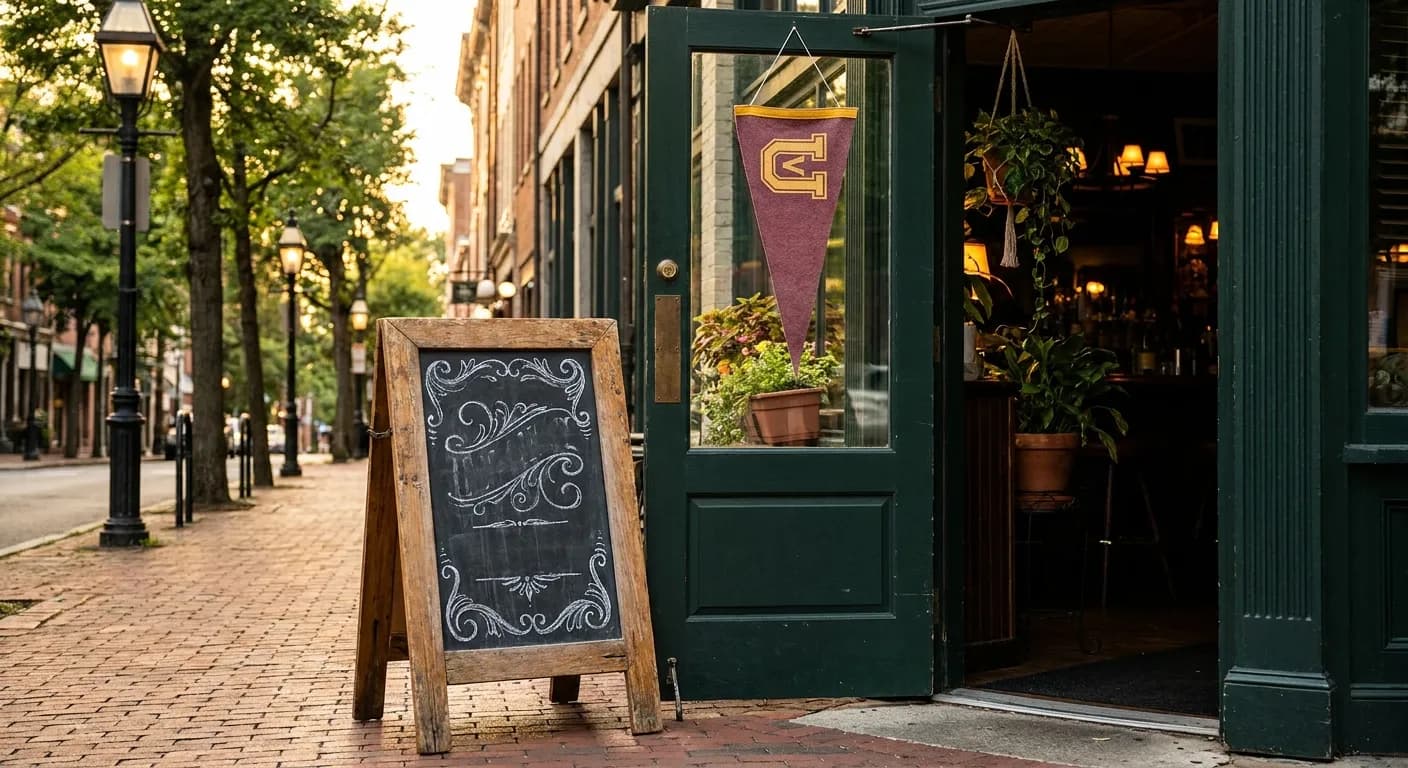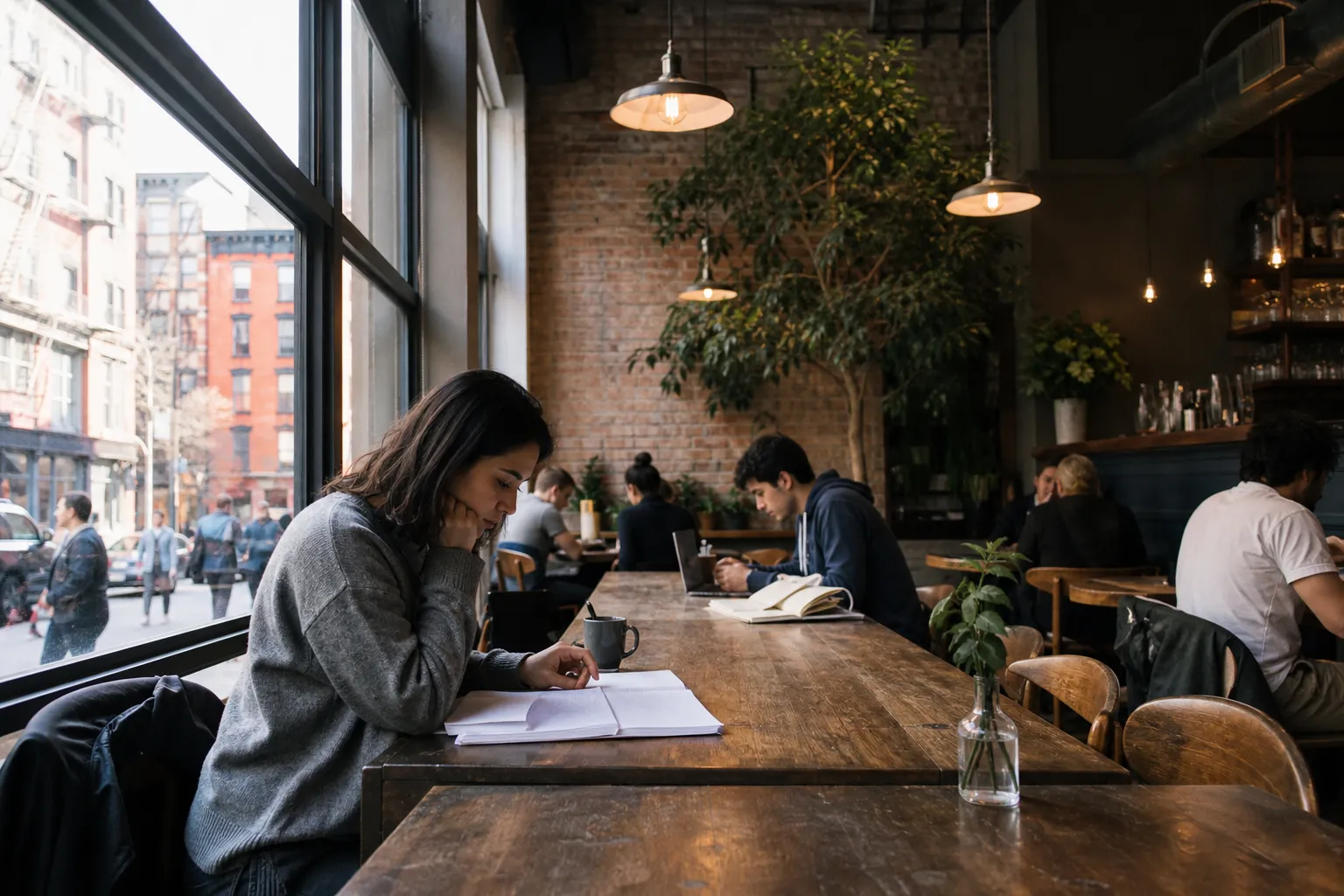
The best cafe for studying in NYC is not always the quietest one. It is the one that matches your goal for the night. If you need two focused hours of reading, you want a different setup than if you need a long stretch of writing, a laptop charge, and a calm place to reset after work. Before you leave, name the job: quick review, deep work, or a lighter catch-up session. That one decision will help you avoid overcommitting to a place that looks ideal online but does not fit your pace.
Plan your next NYC study night with a smarter café backup
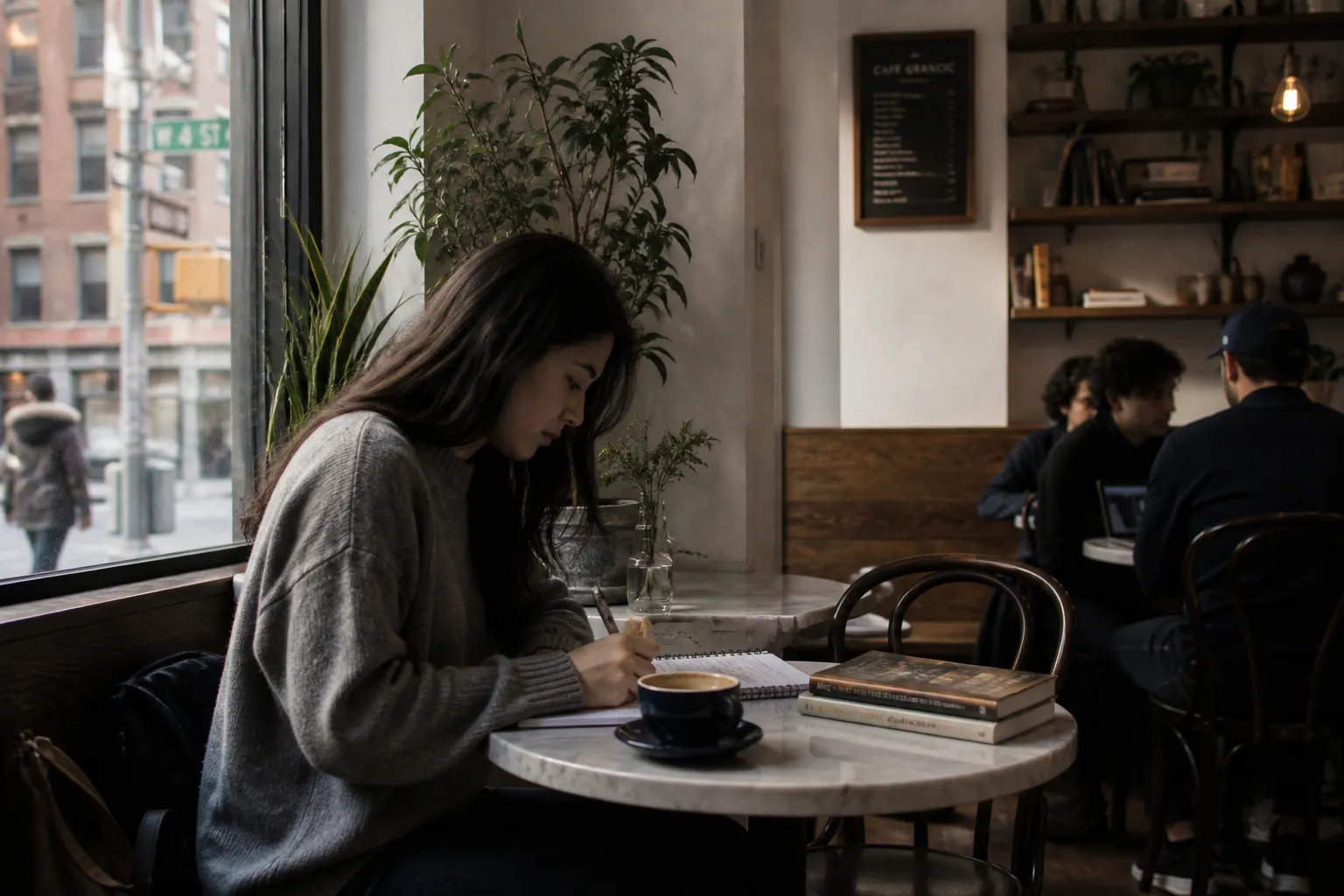
For an easier night, think in layers. First layer: do you need seating, power, and enough room for a laptop? Second layer: do you prefer a room that feels active but not chaotic, or very quiet and low-traffic? Third layer: how long do you realistically want to stay before you get tired or restless? In NYC, a cafe that works for the first hour may feel wrong by the third, so choose with your energy in mind, not just the menu or the reputation.
Check live conditions before you cross town
In NYC, live conditions matter more than a polished photo. Before heading out, look for recent comments, current crowd signals, and any mention of noise, outlet access, Wi-Fi reliability, or limited seating. You are trying to answer a practical question: will this place still feel usable by the time you arrive? A cafe that seems perfect at 4 p.m. may be crowded at 7 p.m. or full of after-work conversations. If the most recent updates are stale, treat that as a warning sign, not a green light.
Also check the transit side of the plan. If your route depends on a specific subway line, figure out how bad a delay would affect your evening. A short walk from a major station can be worth more than a trendier location that adds a transfer. In wet, windy, or very cold weather, a cafe near your arrival station is often the right choice because it reduces the friction that makes studying feel harder before it even starts. Lower friction usually means a better night.
Use neighborhood patterns to narrow the map
Different parts of NYC support studying in different ways. Near universities, business districts, and transit-heavy corridors, cafes can stay busier later and feel more work-friendly, but they can also become noisy when class lets out or after office hours. Residential neighborhoods often feel calmer, but some have fewer late open options and less seating turnover. When you search, look at the block as much as the business. A cafe on a loud avenue with constant foot traffic will feel very different from one tucked on a side street a few blocks away.
Think about the rhythm of the neighborhood at the time you plan to arrive. Early evening in Manhattan can bring commuter energy and dinner traffic. In parts of Brooklyn or Queens, the pace may shift more quickly after the rush hour window, which can be good if you want a softer atmosphere. In all boroughs, the best study setup often sits near a transit hub but not directly on top of the busiest corner. That balance gives you a place that is accessible without being overwhelmed by street noise and constant movement.
Make accessibility and comfort part of the choice
A low-stress study night is easier when the cafe is physically comfortable. Check whether the entrance, restroom access, table spacing, and general layout make sense for you. If you carry a backpack, laptop, charger, and notebook, crowded seating can become annoying very quickly. If you need to leave and re-enter for water, a call, or a quick breath of air, a cramped room can drain your focus. The goal is not luxury; it is reducing the small frictions that break concentration.
Accessibility also includes your body and your timing. If you get tired after a full workday, pick a spot where you can sit without feeling boxed in. If you are sensitive to noise, avoid places with hard surfaces, music that feels prominent, or seating near the door. If weather is poor, choose a cafe with an easy entry path so you are not starting your study session already cold or damp. Small comforts matter more at night, when your patience is lower and your backup energy is limited.
Always build a backup into the plan
A good NYC study plan has a second option before you ever sit down. Your backup cafe should be close enough to reach without wasting the night, ideally on the same subway line, the same cross streets, or a short walk away. Do not make the backup too similar to the first choice if you can help it. If the first place is likely to be loud, make the backup quieter. If the first place is likely to be too small, make the backup more spacious. Clear contrast gives you a real exit strategy, not just another version of the same problem.
The backup should also match your energy level. If you know you are arriving late and may not have much mental bandwidth, keep the second option simple and predictable. The best backup is not the most exciting one; it is the one you can move to without stress, especially if the first cafe has no seats, weak Wi-Fi, or a volume level that climbs after dinner. In NYC, where distances are short on a map but can feel long after a long day, a nearby fallback can save the whole evening.
A simple plan before you go
- Search recent mentions of noise, seating, and outlet access before leaving.
- Pick a cafe near a reliable subway line or an easy bus backup.
- On rainy or cold nights, prioritize a short walk from the station.
- Choose a second nearby cafe in advance so you can switch fast if needed.

Tags: #restaurants #nyc
Sources consulted: Official city information · Google Maps · Karpo local search
All trademarks are the property of their respective owners.