 Washington Heights Arepa Lunch Spot Picker for a Newcomer
Restaurants
Jackson Heights Arepa Lunch Spot Picker for a Taste Debate
This Jackson Heights arepa lunch spot picker sets up a friendly Colombian versus Venezuelan taste test, from sweet corn street arepas to stuffed griddle cakes.
Ask a Colombian and a Venezuelan which country owns the arepa and you will get a long lunch out of it. Camila grew up in Medellín, Andrés in Maracaibo, and they have shared an office in Queens for four years without settling the question. One Saturday they decided to eat their way to an answer in Jackson Heights. This arepa lunch spot picker follows their taste test, which ended in a draw and a plan for next month.
Two Countries, One Corn Cake
The argument is old and good-natured. Both countries have made corn cakes for centuries, long before either had a border, and both treat the arepa as everyday bread. The difference is in the shape and the job. In much of Colombia an arepa sits beside the meal, often thin and plain with butter or a slice of cheese. In Venezuela it is usually thicker and split open to hold the meal itself.
Jackson Heights is the right place to settle it because it holds both traditions within a short walk. The neighbourhood has been home to a large Colombian community for decades, and Venezuelan families arrived in greater numbers more recently. Bakeries, street griddles and small cafes now sit on the same blocks, so you can compare styles without riding the train between rounds.
Round One on the Street
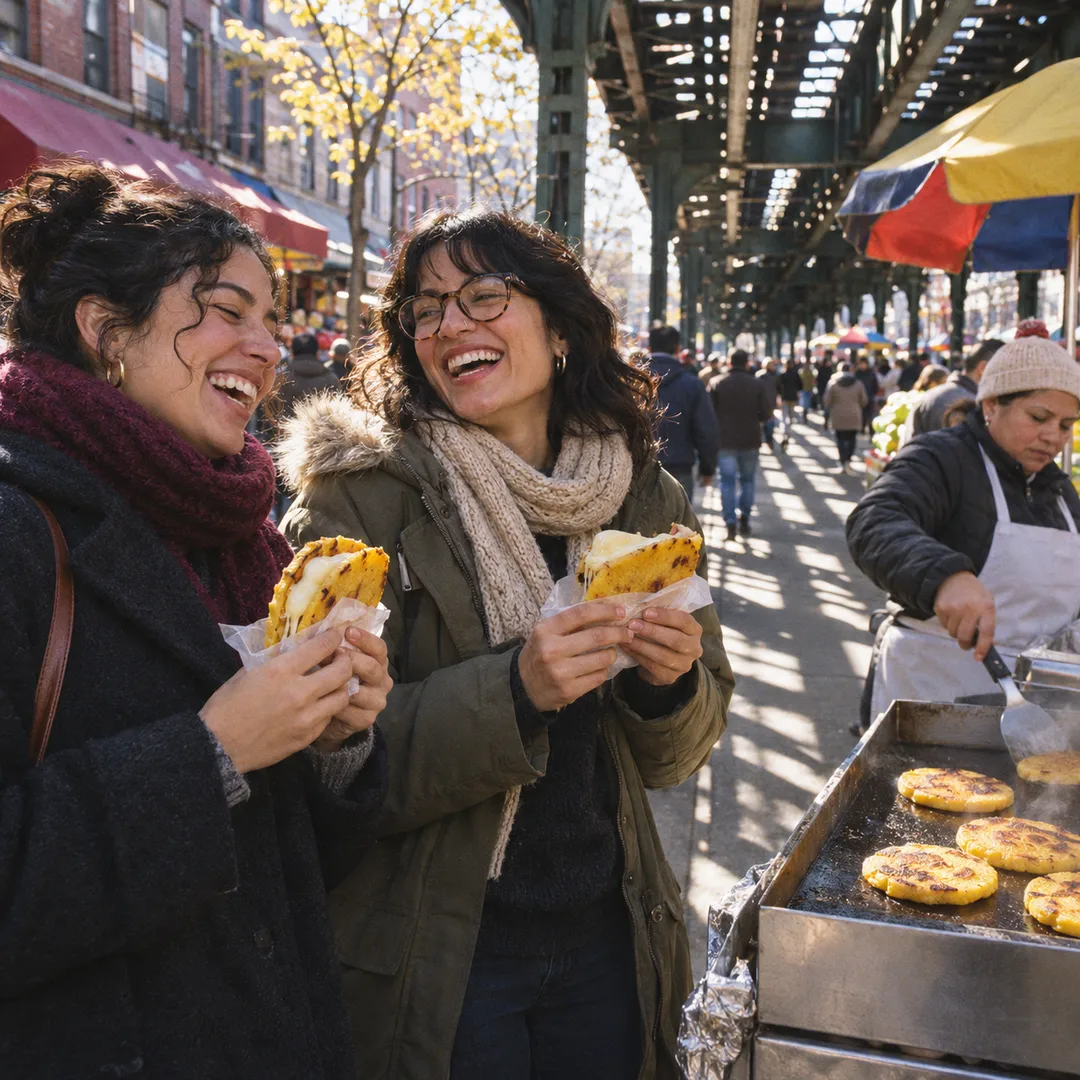
Camila insisted they start under the elevated tracks on Roosevelt Avenue, where vendors cook arepas de choclo on flat griddles. These are made from sweet fresh corn, cooked until the edges catch, then folded over a soft white cheese that melts into a salty string. Andrés admitted they were good and then argued they were closer to a pancake than an arepa.
Street eating here has its own manners. Wait to the side of the griddle instead of crowding it, have your order ready and step away from the subway stairs once you are served. The rumble of the 7 train overhead is part of the meal. Camila's tip: eat the first one standing, while the cheese is still hot, and only carry the second one if you have a napkin in reserve.
Round Two at a Colombian Bakery
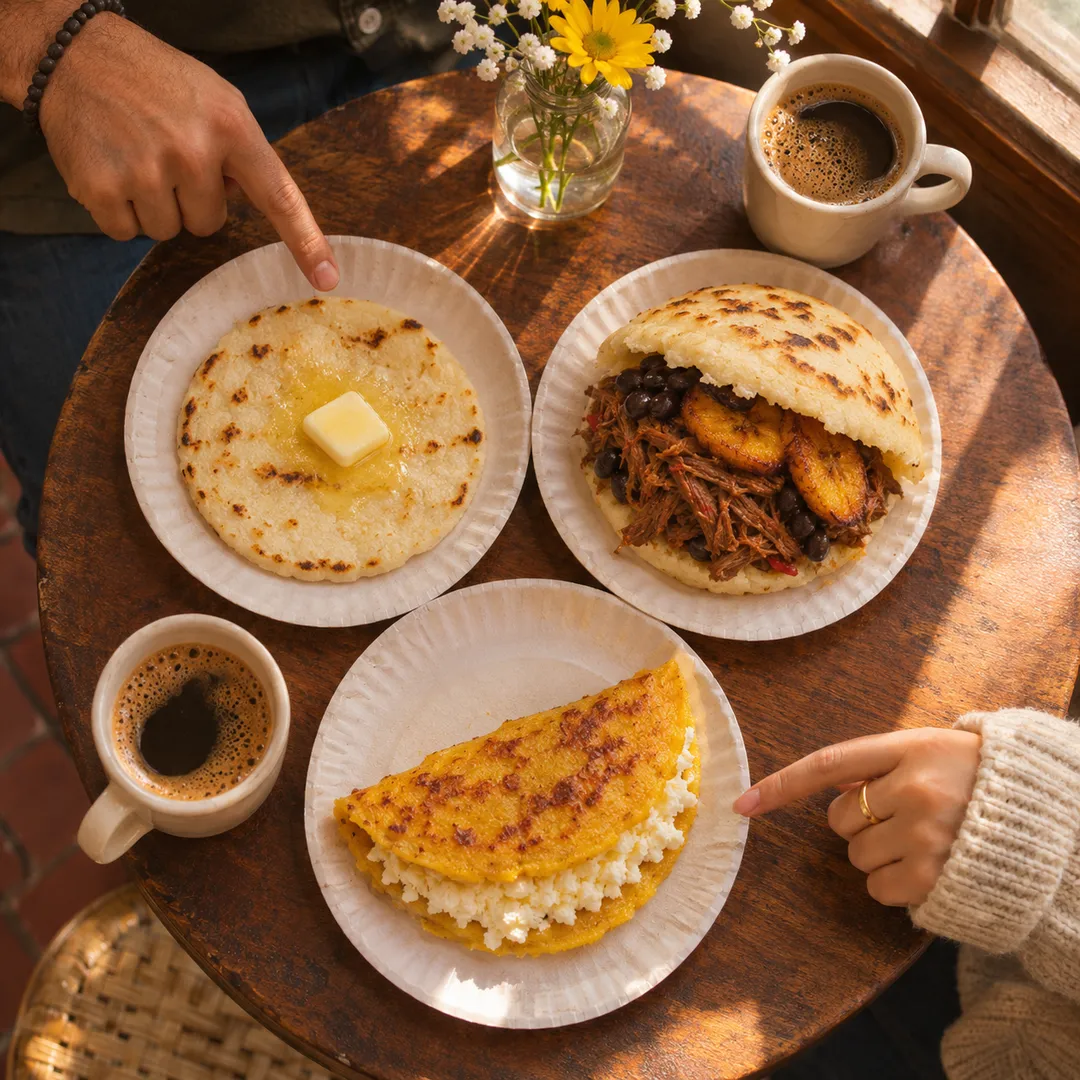
A few blocks on they ducked into a Colombian bakery, the kind with glass cases of pandebono and buñuelos near the door and a steady flow of regulars ordering coffee. Camila ordered an arepa paisa, the thin white corn round of her childhood, with butter and a cup of sweet milky coffee. She said it tasted like breakfast at her grandmother's table.
Andrés called it plain, which was the point. A Colombian arepa paisa is not meant to steal attention from the rest of the plate. In a bakery you can see the whole culture of it, with families sharing a basket of bread, older men reading the paper over a tinto and a counter worker who knows half the customers by name. They split a pandebono, a cheesy round of bread, for good measure.
Round Three at a Venezuelan Kitchen
Then it was Andrés's turn. He picked a small Venezuelan kitchen where the arepas are thick, griddled to a crisp shell and then split while hot. He ordered a pabellón for himself, with shredded beef, black beans, sweet plantain and white cheese, and a reina pepiada for Camila, the creamy chicken and avocado filling that every Venezuelan seems to have an opinion about.
Camila had to admit the stuffed arepa made a complete lunch in one hand. Andrés explained how the cook pressed the dough with a thumb to check it had cooked through. The guasacaca, a green avocado and herb sauce, came in a little cup, and they agreed it went with nearly everything on the table, including the last of the bakery bread they had carried along.
There was one honest note. The Venezuelan kitchen also offered a mixed platter with everything on it, and Andrés told her to skip it on a tasting day. It fills you up before the comparison is done. One stuffed arepa each, shared down the middle, is enough to judge.
Walking Off the Corn
Between rounds they walked the side streets north of Roosevelt Avenue, where the neighbourhood changes mood completely. Jackson Heights was planned as a garden city in the early part of the last century, and many of its apartment blocks wrap around private interior gardens. From the sidewalk you catch glimpses of lawns and trees through iron gates, which makes the area feel calmer than the busy avenue a block away.
Travers Park is a good place to pause on a sunny afternoon, with families on benches and kids running between the play areas. Diversity Plaza, the small pedestrian square near the subway, gives a sense of how many languages share these few blocks. Camila said she had lived nearby for years without noticing how many different breads the neighbourhood baked.
How to Run Your Own Taste Test
Their method works for any group. Pick three stops: a street griddle, a Colombian bakery and a Venezuelan kitchen. Order the most basic item at each, then one signature filling, and split everything. Bring a friend with a different childhood favourite, because the stories are half the fun. Carry water, since corn and cheese make you thirsty fast.
Go on a weekend afternoon when bakeries are full and street vendors are out, but avoid the rush right after church lets out, when lines at popular counters stretch to the door. If a line looks longer than fifteen minutes, try the next place along the block. Jackson Heights rarely makes you walk far for another option, and the Karpo APP can show you nearby arepa counters if you lose your bearings.
Keep notes simple. Camila scored each arepa on three things only: the crust, the filling and whether she wanted a second one. Andrés added a fourth column for how well it travelled in a coat pocket, which says a lot about how he eats lunch on workdays. A scrap of paper and a pen is all you need, and it turns a casual walk into a story you can retell at the office.
Who Won the Argument
Nobody, of course. Camila conceded that the stuffed Venezuelan arepa made a better portable lunch. Andrés conceded that the thin Colombian arepa was the better partner for a slow breakfast, and that the sweet corn street version was hard to stop eating. They agreed the real winner was having both within walking distance of the same subway stop.
Next month they plan to bring their families and add a round of Colombian arepa de huevo, the fried version with an egg sealed inside. If you are new to Jackson Heights, follow their path and form your own opinion. Just do not expect anyone at the table to let you have the final word.
Ask Karpo for more information.
Keep reading
- Washington Heights Arepa Lunch Spot Picker for a Newcomer
 Williamsburg Arepa Lunch Spot Picker for Parents of Toddlers
 Lower East Side Arepa Lunch Spot Picker for Coeliac Friends