 Haaland Has Seven Goals and Norway Runs Entirely Through Him
⚽️2026 FIFA WORLD CUP
African Football Diaspora Spots in Harlem and the Bronx
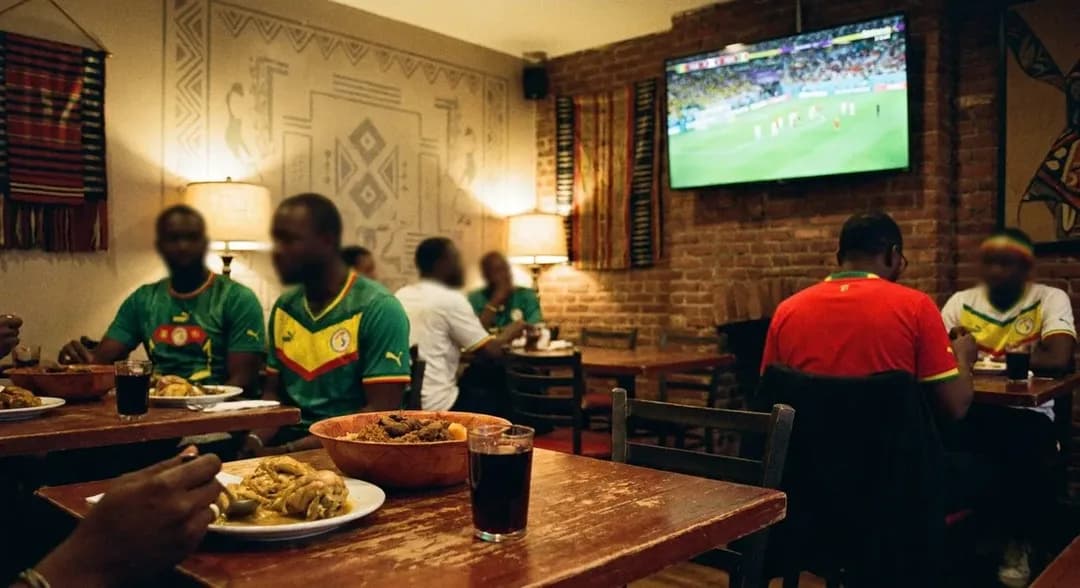
When FIFA World Cup 2026 kicks off, Harlem and the Bronx will transform into match-day theaters for Senegalese, Nigerian, Ghanaian, Moroccan, and Ivorian communities. Here's where to watch, eat, and celebrate.
Late May in upper Manhattan and the Bronx carries a particular hum—storefronts throw their doors wide, sidewalk grills wake up, and the scent of suya and thiéboudienne drifts through open windows. Come June 2026, when the World Cup opens across North American host cities, that hum will swell into a roar. The African diaspora neighborhoods stretching from 116th Street to Fordham Road are preparing for something between a festival and a pilgrimage: weeks of collective viewing, kitchen programs engineered for marathon match days, and spontaneous parades that follow every goal. If you're curious where the real energy will be—not the sanitized fan zones, but the places where a Senegal equalizer can stop traffic—this is your map.
Little Senegal's match-day anchor
West 116th Street between Frederick Douglass Boulevard and Adam Clayton Powell Jr. Boulevard has served as Little Senegal's commercial spine for three decades. By late May, cafés along this stretch will have already mounted flat-screens in every available sightline, angled so that someone waiting for attaya at the bar and someone picking up a platter of yassa poulet can both track the action. One long-running café with vinyl banners and mismatched chairs—becomes the de facto Senegal headquarters whenever Les Lions de la Teranga take the pitch.
Expect standing room only, call-and-response chants that spill onto the sidewalk, and a kitchen churning out plates of mafé and fried plantain from morning kickoffs straight through evening fixtures. The atmosphere is less sports bar than living room writ large: multi-generational, intensely partisan, punctuated by the hiss of the tea kettle and the thwack of dominoes between halves. If Senegal advances deep into the tournament, this block will be impassable in the best possible way.
Nigerian hubs in the Bronx
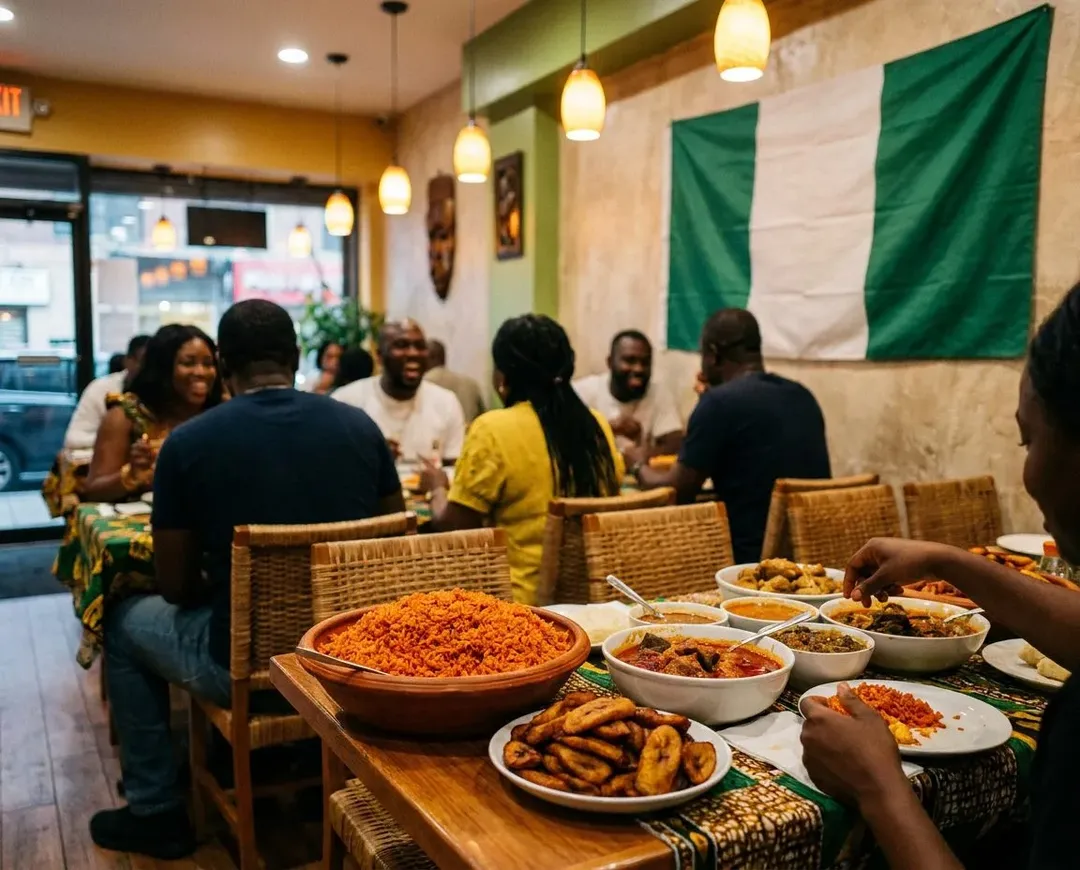
Cross into the Bronx and the density shifts. Nigerian-owned restaurants and lounges cluster around Ogden Avenue and along Jerome Avenue near Fordham Road, many of them doubling as event spaces with projection setups already in place. These spots know how to handle a crowd—weddings, album release parties, and Super Eagles qualifiers have been the rehearsal. Come tournament time, expect jollof rice by the tray, pepper soup simmering in stockpots, and a soundsystem caliber that turns every goal into a block party.
The vibe skews louder and later than Harlem's café culture. Venues here lean into the spectacle: green-and-white bunting, DJ booths, and a fluid boundary between seated diners and dancers. If Nigeria meets a rival—Ghana, Cameroon, even a heavyweight from another continent—the atmosphere edges toward theatrical. Trash talk is an art form. So is the post-match feast, which often outlasts the game itself by hours.
Ghanaian gathering points in Harlem
Ghanaian spots in central and east Harlem tend toward the understated: tidy storefronts with hand-lettered signs, steam tables visible from the street, and televisions that appear only when needed. But understatement shouldn't be mistaken for lack of passion. When the Black Stars play, these spaces transform. Fufu and goat-light soup become the official match-day fuel, and the West African time zone means early kickoffs—8 a.m. games are not a deterrent but an occasion.
The energy is warm, inclusive, teasing. Regulars arrive in replica jerseys from tournaments past, and newcomers are folded in with minimal ceremony. A few spots along Lenox Avenue north of 125th Street have begun advertising their fifa fixture schedules in advance, a nod to the broader audience that's cottoned on to the fact that these rooms offer something no midtown sports bar can replicate: the lived texture of a diasporic football culture, where every match carries decades of context and every goal is both immediate and historical.
Moroccan cafés and the Atlas crowd
Moroccan cafés scattered through Harlem and the lower Bronx occupy a different register entirely—mint tea, low seating, and a contemplative pace that accelerates only when the Atlas Lions take the field. These are spaces built for long afternoons, but World Cup 2026 will test that leisurely architecture. Morocco's surprise run in 2022 galvanized a North African diaspora that spans the five boroughs, and the appetite for a repeat performance is palpable.
Expect late May to bring special match-day menus: tagines served family-style, msemen and honey for pre-game breakfast, and strong coffee to fuel the inevitable overtime sessions. The rooms themselves—often small, tiled, acoustically live—turn into echo chambers of celebration. A goal against a European side, especially, will generate a noise level that seems physically impossible given the square footage. These are the spots where you come early, settle in, and let the afternoon dissolve into evening.
Ivorian spots and the Elephants faithful
Côte d'Ivoire's supporters are fewer in number than Senegal's or Nigeria's, but no less committed. Ivorian-owned restaurants in the Bronx—particularly around the Grand Concourse and in pockets of Mount Eden—will program their June schedules around Les Éléphants' fixtures. The food here is rich, patient, built for communal eating: attiéké with grilled fish, sauce graine, alloco that arrives still crackling from the fryer.
The match-day experience skews intimate. These aren't venues with hundred-seat capacities; they're neighborhood anchors where the owner knows your cousin and your cousin's cousin. But intimacy breeds intensity. Every tackle is adjudicated by committee, every substitution debated in Dioula and French. If you're lucky enough to be there when Côte d'Ivoire wins, the celebration will be total: music, dancing, and a second dinner that materializes as if by conjuring. This is football as ritual, and the ritual is generous.
What to expect on match days
Late May 2026 will find these neighborhoods in dress rehearsal mode—screens tested, suppliers locked in, staff schedules drawn up around the fixture list. By the tournament's opening weekend, the rhythms will be established: early-morning crowds for games kicking off in Mexico or the southern U.S., midday surges for East Coast slots, and evening sessions that blur into street-side debriefs under the honey light of a New York June.
Dress codes are nonexistent, but jersey etiquette matters. Wear your colors with confidence or arrive neutral; halfhearted allegiances will be gently roasted. Bring cash—not every spot has caught up with tap-to-pay, and the ATM nearest the action will be empty by halftime. And bring patience. Service slows when a match is tight. No one minds. The game is the point, the food is the context, and the company is the reward. This is world cup football at its most communal, played out in rooms that smell like stock and spice, where every screen is a portal and every goal rewrites the day.
Practical notes
Little Senegal anchors around West 116th Street (Frederick Douglass Blvd to Adam Clayton Powell Jr. Blvd); take the B/C to 116th Street. Nigerian and Ivorian concentrations run along Jerome Avenue and Ogden Avenue in the Bronx, accessible via the 4 train to Fordham Road or nearby Bronx transit stops. Ghanaian and Moroccan spots scatter through central and east Harlem; the 2/3 to 125th Street is your best starting point. Street parking is scarce on match days; public transit is strongly advised. Most venues open by 8 a.m. for early fixtures and stay open until the final whistle, sometimes later. Call ahead to confirm hours and ask about reservations—some spots take them, many don't. Accessibility varies by building age; many storefronts have steps. Bring cash, bring an appetite, and bring an open mind.
Tags: #AfricanDiaspora #Harlem #TheBronx #WorldCup2026 #LittleSenegal #NigerianFood #GhanaianCuisine #MoroccanCafe #IvorianKitchen #UpperManhattan #FIFAWorldCup #NYCFood #SoccerCulture #DiasporaLife #June2026
Please drink responsibly. Must be of legal drinking age.
Sources consulted: 2026 FIFA World Cup · Harlem, New York · Visit The Bronx · Time Out New York · MTA Transit Information
All trademarks are the property of their respective owners.
Ask Karpo for more information.
Keep reading
- Haaland Has Seven Goals and Norway Runs Entirely Through Him
 World Cup Trophy Ceremony Timing Medals and Postmatch Celebrations
 Olise and France's Attack: The Semifinal Tactical Question