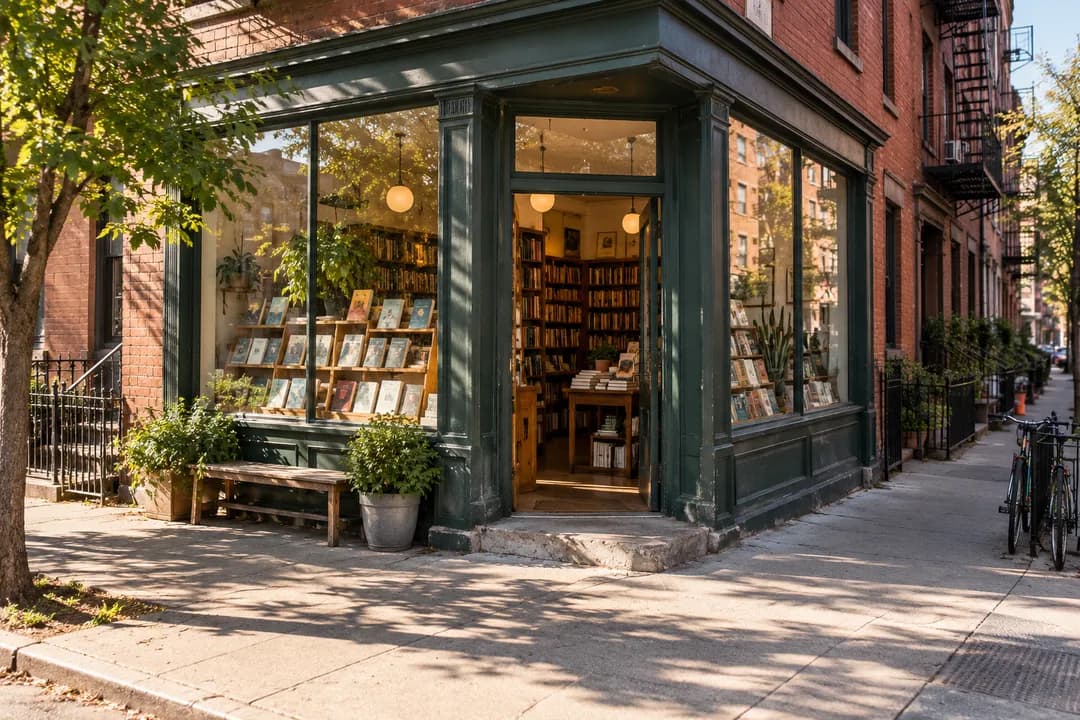
 WORD Bookstore in Greenpoint Remains a Community-Focused Indie Bookstore Near Me
Hidden Gems & Odd Finds
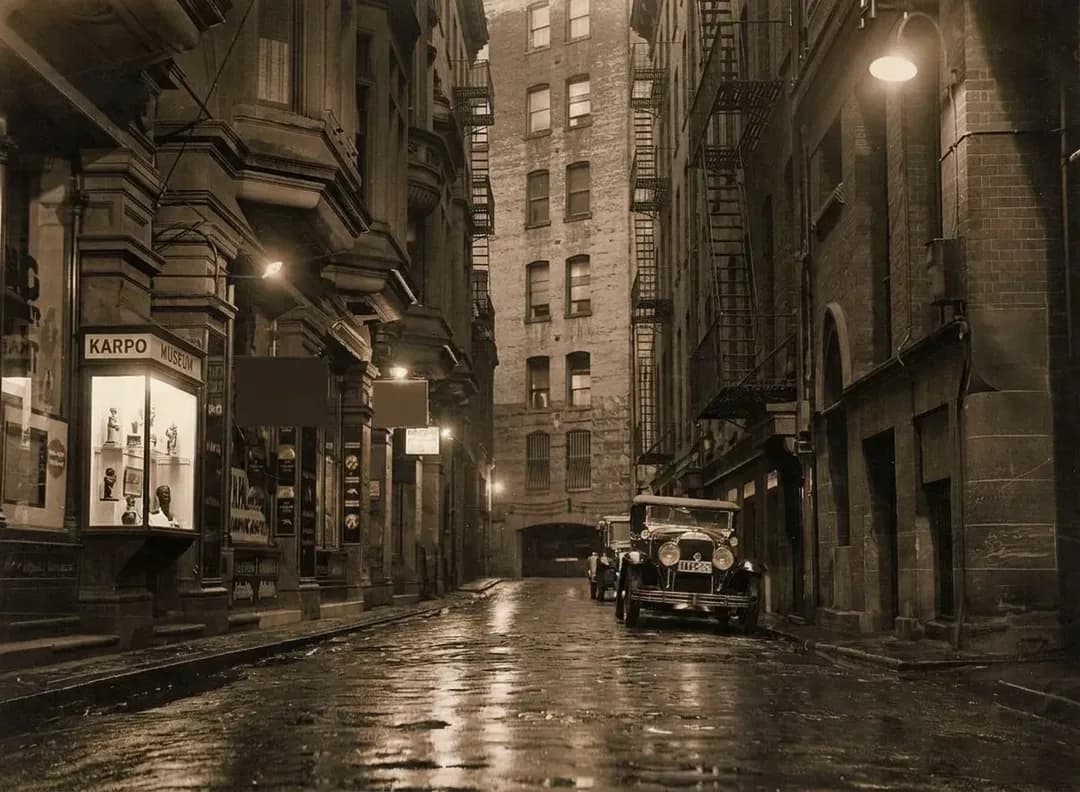
mmuseumm's freight elevator museum when cortlandt alley empties mid-afternoon
Tribeca's 60-square-foot museum occupies a former freight elevator shaft on a service alley, curating hyper-specific collections of modern artifacts. Mid-afternoon offers solitary viewing when the alley empties between tourist waves.
Most museums announce themselves with banners and limestone steps. mmuseumm whispers from a service alley in Tribeca, tucked into a converted freight elevator shaft barely wider than an apartment closet. The 60-square-foot space has no lobby, no gift shop, no café where you can decompress after confronting the human condition. Instead, it offers something increasingly rare in a city that monetizes every square inch: a free, intimate encounter with the oddly specific detritus of contemporary life. Knockoff Nikes from developing nations. Counterfeit bills seized at borders. Objects that major institutions overlook but that sketch the contours of how we actually live now. The museum functions as a cabinet of curiosities for the global age, where the distinctions between authentic and fake, legal and contraband, reveal more than any single category alone.
The geometry of attention
The elevator door itself serves as the viewing window, with visitors observing exhibitions from Cortlandt Alley rather than stepping inside. This architectural constraint becomes curatorial philosophy. You stand on cobblestones worn smooth by delivery trucks, peering through glass at carefully labeled specimens mounted on white walls. The space fits two viewers comfortably, maybe three if everyone exhales and no one carries a tote bag. Any more and you're negotiating personal space with strangers while trying to read wall text in eight-point type. The glass creates a fourth wall effect, turning viewers into observers of a carefully staged scene where every object placement carries meaning.
Which is why timing matters. The mid-afternoon window—roughly a rotating public schedule that should be verified against the museum’s current hours—offers the alley at its most accommodating. Morning cultural tourists have migrated toward the Whitney or lunch reservations. Evening gallery crawlers haven't yet discovered this block. You get the freight elevator to yourself, or near enough, with time to linger over the specimen labels without someone's shoulder in your sightline. The quality of light shifts during these hours too, as the sun moves past the taller buildings to the west, casting the alley into a softer, indirect glow that reduces glare on the viewing glass.

What gets collected
New thematic exhibitions rotate approximately three times per year, with changeover periods arriving in early spring and late fall when the curatorial team refreshes the vitrine. Past shows have examined objects with unexpected depth: toothpaste tubes from nations under embargo, revealing which Western brands get knocked off and which cultural markets they penetrate. Shards of drones recovered from conflict zones. A taxonomy of fake Supreme merchandise organized by country of manufacture. The curation skews anthropological, favoring objects that tell systemic stories over one-off curiosities. Each exhibition builds a narrative not through chronology but through material culture, asking what our castoffs and knockoffs say about desire, restriction, and movement across borders.
The wall text rewards close reading. Labels cite provenance with archival precision, tracking an object's journey from factory floor to customs seizure to this freight elevator in lower Manhattan. There's no didactic moralizing about globalization or authenticity, just the presenting of evidence. The intelligence lies in the juxtaposition, in what the arrangement suggests about supply chains, aspiration, and the porousness of borders. Some labels include photographs documenting the object's original context—a marketplace stall, a customs inspection table, a factory floor—adding layers of documentation that transform simple artifacts into anthropological evidence.
The alley as threshold
Cortlandt Alley runs one narrow block between Franklin and Canal, a service corridor that's stood in for gritty New York in countless film shoots. The actual texture in late 2026 is more complicated: yes, dumpsters and fire escapes and that particular petroleum smell of urban loading zones, but also the tidiness that comes when a neighborhood tips definitively upscale. The graffiti looks curated. The loading dock for a Michelin-adjacent restaurant shares the block with mmuseumm, and occasionally you catch the scent of duck fat and thyme cutting through the diesel.
This in-between quality suits the museum's project. It occupies liminal space literally—an alley, an elevator shaft—and thematically, collecting objects caught between categories. Fakes that function as real. Contraband that circulates anyway. Standing on those cobblestones, looking into the illuminated box, you're neither fully inside nor outside, which is exactly the point.

The sensory register of small spaces
The experience of viewing mmuseumm engages senses beyond the visual in ways that larger institutions rarely permit. The alley carries its own acoustic signature: the distant rumble of Canal Street traffic, the metallic clang of a restaurant's kitchen door, footsteps echoing off brick walls in a way that announces approaching visitors long before they arrive. On humid afternoons, the air holds a specific density, a combination of old stone, standing water in unseen drains, and whatever the surrounding restaurants are preparing for dinner service. The temperature in the alley runs several degrees cooler than the surrounding streets, a microclimate created by the narrow passage and persistent shade.
Inside the illuminated shaft, the objects sit in climate-controlled stillness, a stark contrast to the alley's ambient textures. The lighting is museum-quality—carefully positioned to eliminate shadows and highlight detail without bleaching color. This juxtaposition—standing in the organic messiness of an active alley while looking into a pristine, controlled exhibition space—reinforces the museum's conceptual framework. You're always aware of both environments simultaneously, the rough and the refined, the flow of city life and the suspended moment of curation. The elevator shaft becomes a camera obscura of sorts, a device for seeing clearly by limiting the field of view.
Seasonal rhythms
The museum operates on a seasonal schedule, check the museum’s current posted hours before stating any seasonal schedule that shift slightly as daylight lengthens and contracts. This isn't a year-round proposition. the museum’s hours and seasonal status should be verified rather than stated as closed in winter, a practicality born of heating an uninsulated elevator shaft and the fact that lingering in a Tribeca alley loses charm below forty degrees. The seasonal rhythm also protects the intimacy. By limiting access, the project resists the kind of viral tourism that would queue twenty people deep in an alley built for solitude.
If you're assembling a city guide to uncommercial cultural experiences, this seasonal constraint actually clarifies the visit. You go when it's open, which means warmer months, which means the alley is tolerable and the light through the freight elevator glass reads clearly. The limitation becomes part of the experience, a reminder that not everything scales or optimizes or stays open until midnight for your convenience.
What to pair it with
The visit itself consumes maybe twenty minutes if you read every label, less if you're skimming. That brevity is intentional but leaves the question of what surrounds it. Tribeca offers the expected landscape of expense: tasting menus that require reservations booked weeks out, boutiques selling Japanese denim, the quiet hum of wealth at rest. But the neighborhood also harbors pockets of earlier iterations—Washington Market Park for benches and daylight, the stretch of West Broadway where you can still find a decent coffee without performance theater.
The real move is treating mmuseumm as punctuation rather than destination. A small, sharp encounter threaded into an afternoon of walking, the kind of free thing to do that resets your attention before you drift toward dinner or the next errand. Let the alley stay an alley. Let the museum stay small. The constraint is the gift.
Practical notes
mmuseumm occupies 4 Cortlandt Alley, between Franklin and Canal streets in Tribeca. The nearest subway is Franklin Street on the 1 train; from there it's a two-minute walk east. Street parking is metered and scarce; a municipal lot sits two blocks north on Varick. The museum typically opens Thursday through Sunday, afternoon hours only, during warmer months—verify the current schedule and exhibition online before visiting, as changeover periods close the space temporarily. The viewing is from the alley; there's no interior access. Accessibility is limited by cobblestones and the standing-only format. Bring patience for reading small type and tolerance for urban alley ambiance. No admission fee.
Tags: #mmuseumm #TribecaMuseum #CortlandtAlley #TheOddEdit #NYCCulture #FreethingstodoNYC #ContemporaryArtifacts #SmallMuseums #MicroMuseum #UrbanCuration #OffbeatNYC #LowerManhattan #CulturalTourism #HiddenNYC #Fall2026
Sources consulted: Mmuseumm - Wikipedia · Mmuseumm Official Site · Tribeca - Wikipedia · New York City - The New York Times
All trademarks are the property of their respective owners.
Ask Karpo for more information.
Keep reading
- WORD Bookstore in Greenpoint Remains a Community-Focused Indie Bookstore Near Me
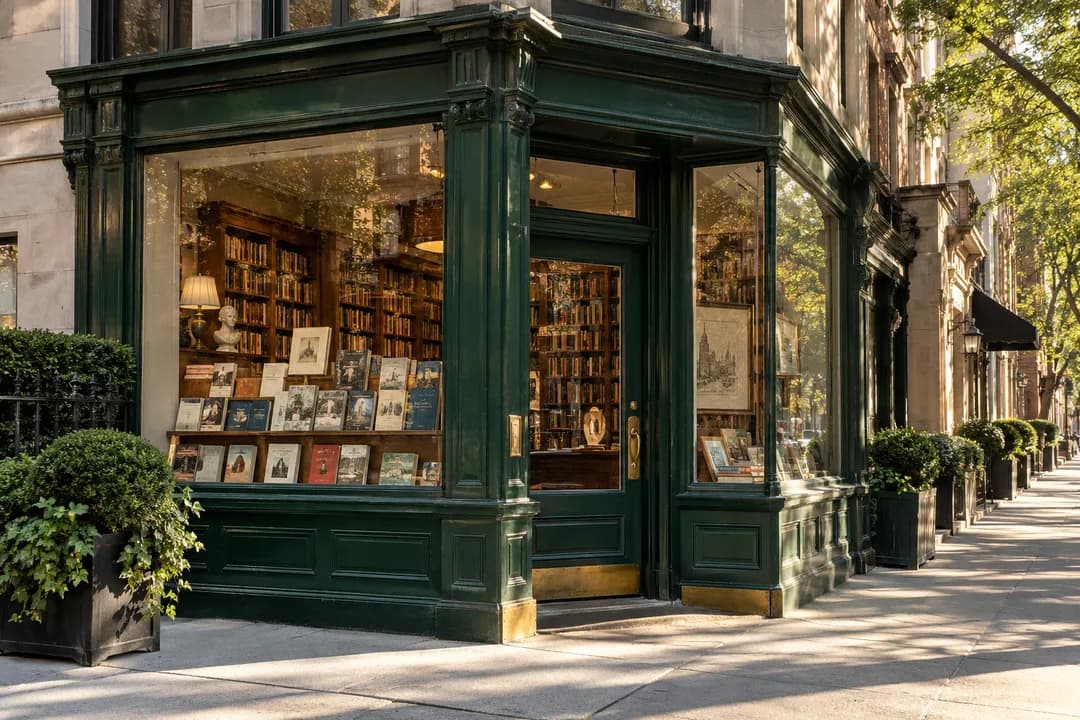 The Corner Bookstore on Madison Avenue Is Carnegie Hill's Indie Bookstore Near Me
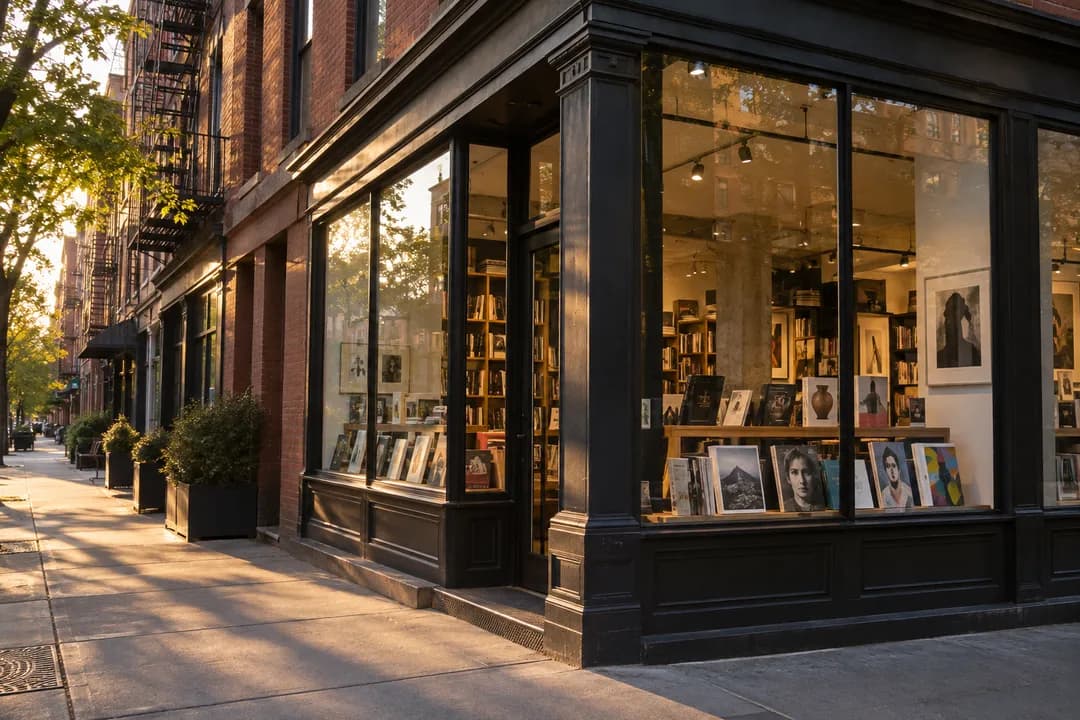 192 Books in Chelsea Brings Art and Fiction to Indie Bookstore Near Me