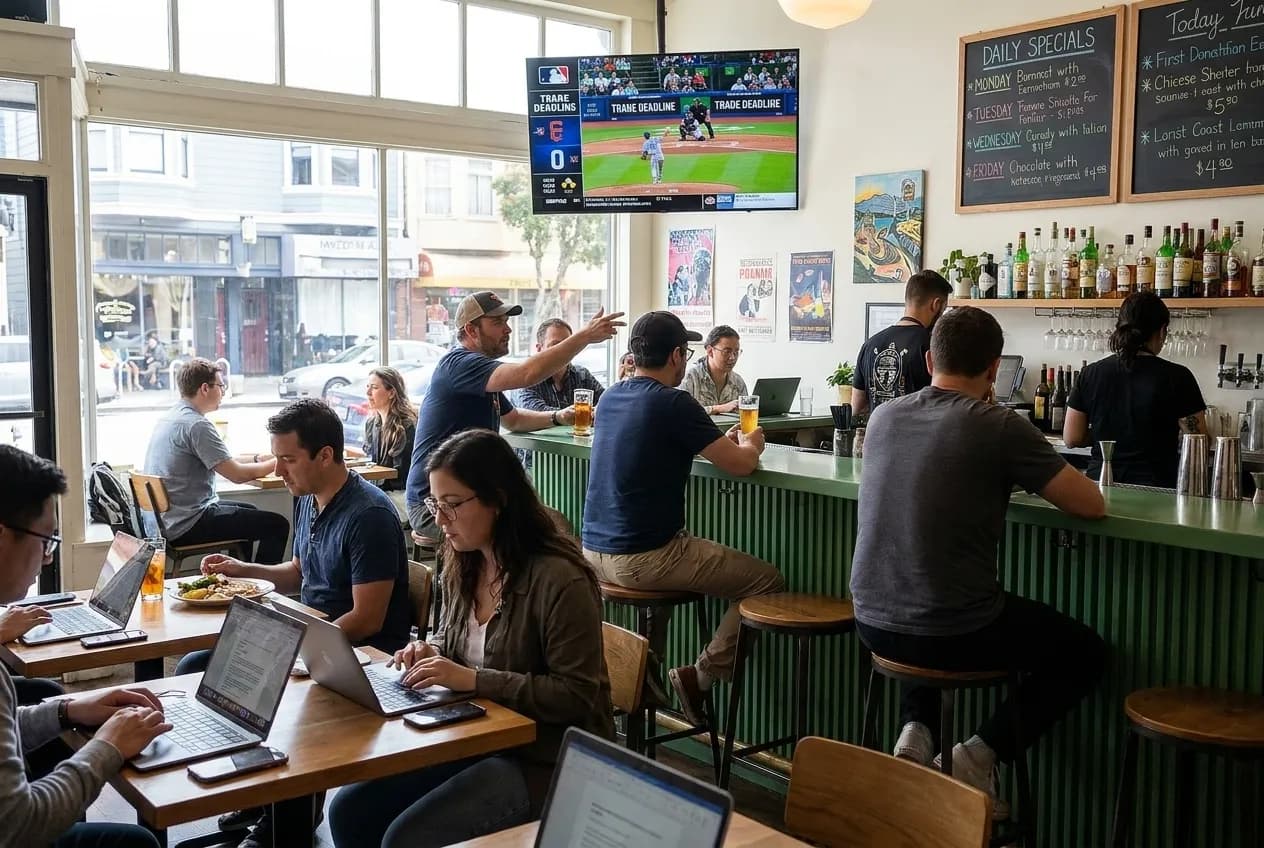
When the mlb baseball trade deadline arrives, remote workers face a familiar dilemma: how to follow breaking roster moves without abandoning work responsibilities entirely. San Francisco's neighborhood bar landscape offers a solution for solo laptop workers willing to navigate the tradeoffs between productivity and baseball fandom during weekday afternoon hours. The challenge lies not in finding bars with televisions, but in identifying venues that welcome extended laptop sessions between noon and 5pm, provide reliable WiFi without password rotation, serve food substantial enough to justify occupying a table, and keep trade deadline coverage audible without sports bar chaos. This guide addresses the verification steps and neighborhood choices that determine whether you'll successfully balance spreadsheet work with transaction alerts, or find yourself asked to vacate a prime corner spot during the 4pm rush.
Text Karpo your starting point, timing, group size, and priorities for a San Francisco plan tailored to this exact situation, with one realistic backup before you leave.

Why Mission and Hayes Valley Anchor This Route
These two neighborhoods offer the highest concentration of bars that historically tolerate daytime laptop use while maintaining multiple screens tuned to baseball coverage. The Mission's Valencia corridor and Hayes Valley's central blocks both feature venues with large front windows providing natural light—critical for reducing eye strain when alternating between laptop screens and distant televisions. Proximity matters because trade deadline developments create natural transition points: when a major deal breaks around 2pm, you can pack up, walk eight minutes to a new venue, and settle in with fresh perspective and a different vantage point on the TV layout.
The practical advantage centers on density and transit connections. SFMTA Muni lines serve both neighborhoods with frequent weekday service, allowing you to start in one area and relocate if your first choice proves too crowded or inhospitable to work setups. Neither neighborhood guarantees laptop-friendly policies—individual bar managers make daily decisions about table use during lunch and afternoon periods—but the cluster of options means a rejected venue doesn't strand you far from alternatives. Verify current laptop policies by calling ahead or checking recent customer reviews mentioning work setups, since tolerance levels shift with ownership changes and seasonal tourist patterns.
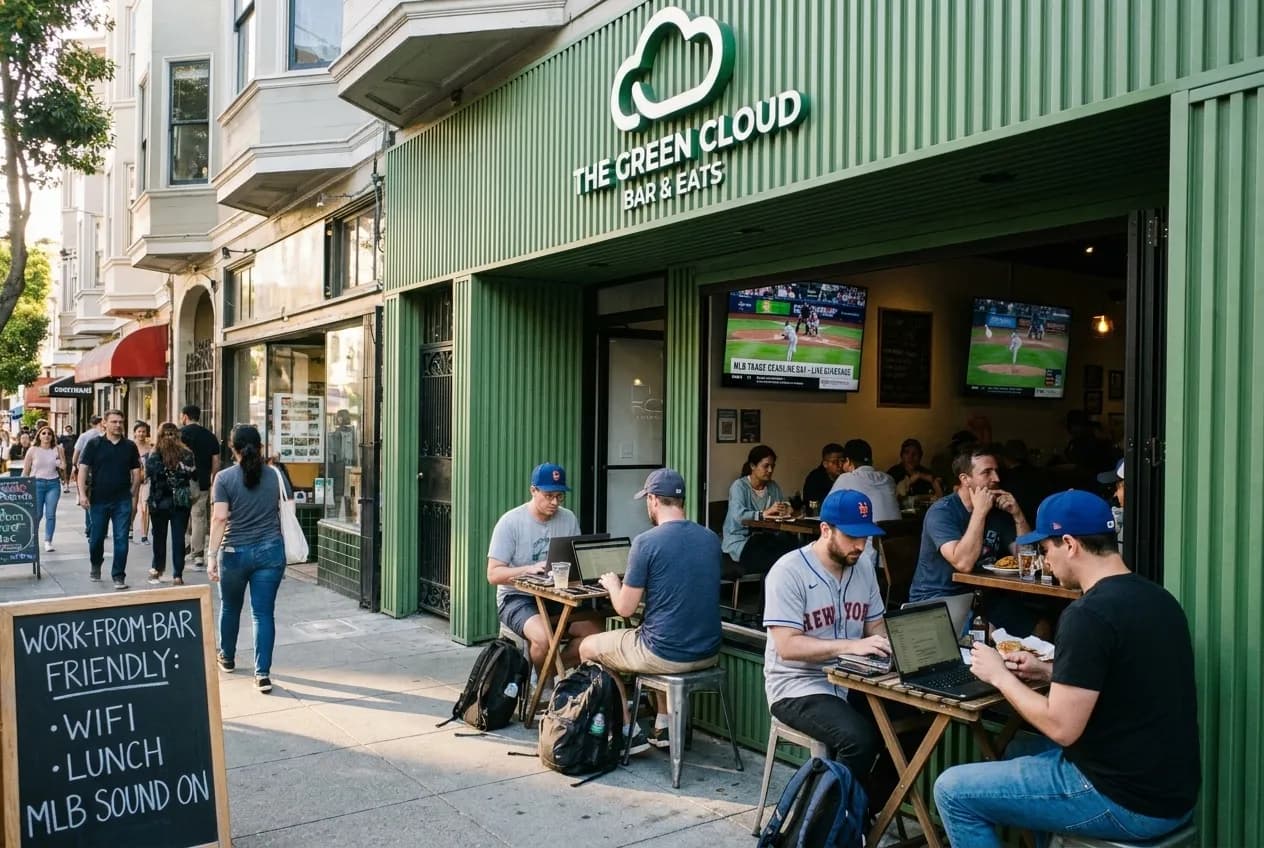
The Laptop Worker Welcome Calculation
Not every bar with WiFi and TVs will accommodate a four-hour laptop session, even with steady food and drink orders. The welcome calculation depends on factors you should assess before settling in: table-to-patron ratios during early afternoon hours, whether the venue serves a full lunch menu or only snacks, if the bartender makes eye contact and nods when you unpack a laptop, and whether other customers already have devices open. Bars that fill completely by 3pm on weekdays will likely discourage extended work sessions regardless of your order frequency, while venues with empty tables until happy hour often appreciate the steady occupancy.
The repeat-order expectation varies significantly across SF bars. Some venues expect a new drink every 60-90 minutes; others remain comfortable with a single beer nursed across two hours if you've ordered food. Observe the pace of other solo customers and match it, or ask the bartender directly about their preference when you arrive—framing it as "I'm working remotely and following the trade deadline, planning to be here a few hours" signals your intention and invites guidance. Avoid venues advertising themselves primarily as sports bars, since their business model depends on high-turnover group viewership rather than solo workers occupying tables during televised events.
TV Audio and Screen Positioning Tradeoffs
Most San Francisco bars keep television audio muted or very low during daytime hours, relying on closed captions for sports coverage. This creates a specific challenge for trade deadline following: you'll catch breaking news tickers and on-screen graphics, but miss reporter commentary and analysis unless you're positioned close enough to read captions clearly. Scout your seat choice carefully—corner tables near screens work well, but high-top bar seats directly below wall-mounted TVs force awkward neck angles when looking up from laptop work. The ideal position places you 12-15 feet from a screen at roughly eye level when seated, allowing quick glances without sustained neck strain.
Some venues will increase audio volume if you request it, particularly during major breaking news moments, but don't expect sustained volume throughout your session. The compromise approach: use your phone for MLB trade deadline news alerts and Twitter updates, glancing at the TV only when notifications suggest significant developments. This reduces your dependence on audio while maintaining the ambient baseball atmosphere that distinguishes bar work from coffee shop isolation. If TV positioning proves poor at your first stop, that's your signal to relocate during a natural break rather than spending three hours craning your neck.
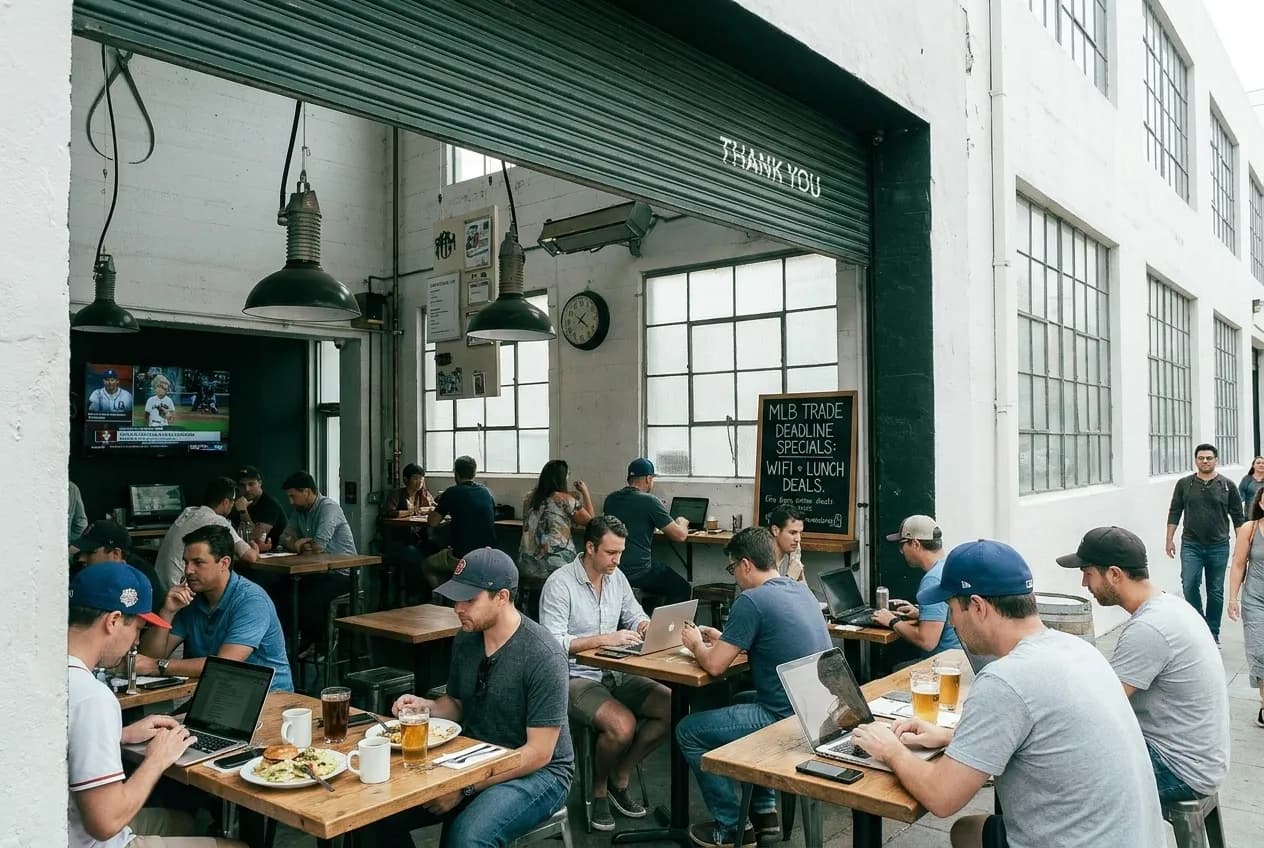
Lunch Menu Logistics and Afternoon Food Gaps
The 12pm-5pm window spans two distinct food service periods in most SF bars: lunch menus typically end between 2pm and 3pm, followed by a gap until happy hour or dinner service begins. This gap matters enormously for laptop workers, since ordering food justifies table occupancy far more effectively than drinks alone. When planning your route, verify whether your target venues serve food continuously through afternoon hours or require you to order lunch before the kitchen transitions. Some bars offer limited "all-day" menus with sandwiches or appetizers available throughout your planned window, while others go entirely food-free between 3pm and 5pm.
The strategic approach involves timing your arrival to coincide with lunch service, ordering a substantial meal that signals you're a serious customer rather than someone nursing a single drink, then supplementing with a second food order if you plan to stay past 3pm. Bars with full lunch menus generally show more tolerance for extended laptop sessions than venues serving only bar snacks, since your food order generates revenue comparable to multiple drink orders. Budget accordingly—a four-hour session with two food orders and three drinks will likely cost $50-70 before tip, but that investment buys you a workspace with baseball coverage and the productive distraction balance you're seeking.
Who This Route Fits and Who Should Skip It
This work-from-bar approach suits remote workers with genuine flexibility in their afternoon schedules, moderate alcohol tolerance, and work tasks that accommodate interruption and distraction. If your job requires video calls, sustained concentration, or confidential screen content, bars remain inappropriate regardless of laptop policies. The ideal candidate handles email management, routine administrative tasks, creative work that benefits from environmental stimulation, or project planning that doesn't demand absolute focus. You should also possess enough baseball knowledge to process trade deadline developments quickly without falling into 20-minute research rabbit holes that destroy productivity.
Skip this route if you need guaranteed seating, absolute WiFi reliability, or quiet environments for concentration. Bar WiFi networks experience slowdowns during busy periods, and even laptop-friendly venues may fill unexpectedly, forcing you to relocate or abandon the plan entirely. The moderate work-life balance difficulty rating reflects these uncertainties—you're trading the predictability of home or office work for the atmosphere and baseball access of bar environments, accepting that some afternoons will deliver the perfect productive distraction balance while others will prove frustrating. Solo workers comfortable with that variability and willing to relocate when conditions deteriorate will find this approach rewarding during the annual trade deadline drama.
Tags: #remotework #sportsbars #MissionDistrict #HayesValley #worklifebalance #MLBtradedeadline #laptopfriendlybars #daytimeactivities #neighborhoodguides #soloactivities
Sources consulted: Source 1: sf.gov · Source 3: sfmta.com · Source 4: sfpl.org
All trademarks are the property of their respective owners.
Ask Karpo first
Ask Karpo to turn this San Francisco idea into a current plan for your date, budget, companion, transit preference, and energy level. Karpo can narrow the route and flag what to verify before you go.


