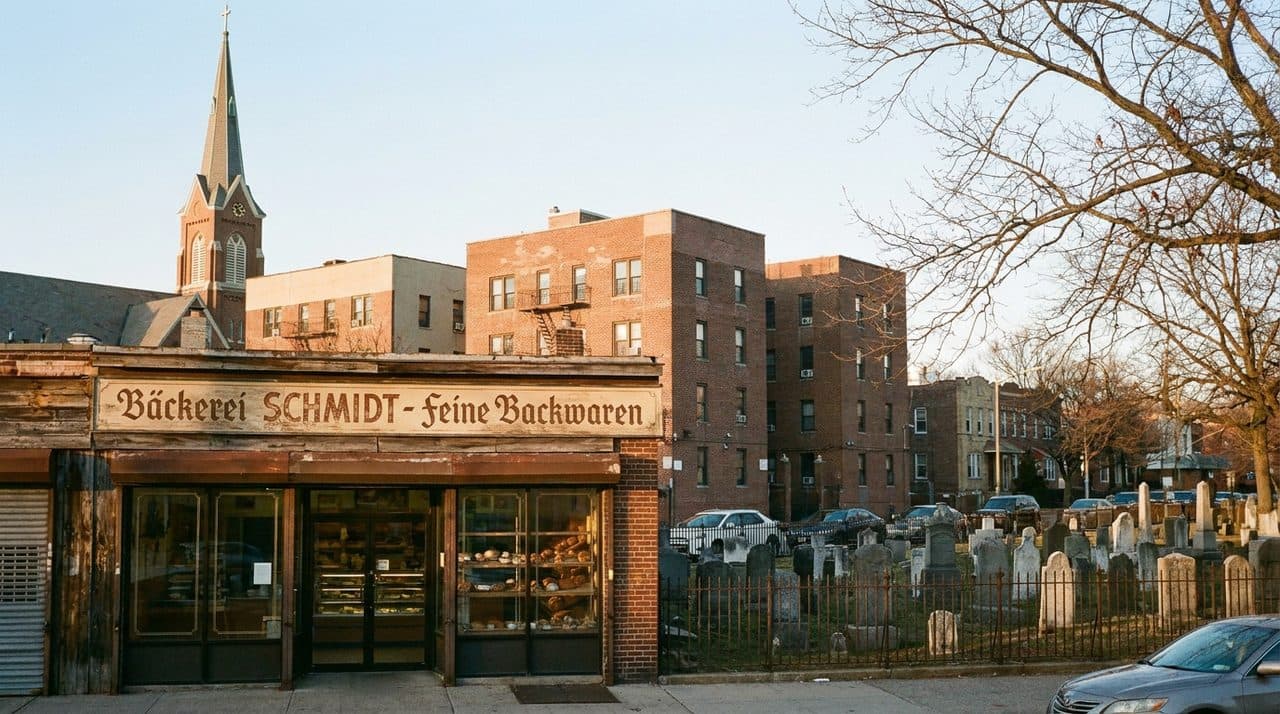
The German footprint in Middle Village doesn't announce itself with fanfare—it's written into the street grid through Lutheran steeples that pierce the skyline, bakery windows stacked with marzipan loaves, and the sprawling necropolis of Lutheran All Faiths Cemetery that forces Metropolitan Avenue into awkward detours. The neighborhood sits in central Queens, bordered by cemeteries on multiple sides, and its German-American character persists not as theme-park nostalgia but as lived infrastructure.
Where the Cemetery Interrupts the Grid
Lutheran All Faiths Cemetery claims enough acreage to bend the street pattern around its perimeter. Metropolitan Avenue makes a hard jog where headstones begin, and side streets dead-end into wrought-iron gates. The cemetery dates to the mid-1800s, when German Lutheran congregations needed burial ground outside Manhattan's crowded churchyards. Walking the interior roads reveals family plots with German inscriptions still legible under century-old oaks, the stone angels weathered but upright. On weekends, families arrive with potted geraniums and hand clippers, maintaining graves in a ritual that feels imported from another era. The scale of the place—rows disappearing toward the horizon—makes it clear this was never meant as a neighborhood amenity but as a permanent claim on the landscape.
Gottscheer Hall and the Dialect That Survived
Gottscheer Hall on Woodhaven Boulevard serves as clubhouse for descendants of a specific German-speaking enclave once located in what's now Slovenia. The building looks modest from the street—brick facade, small parking lot—but inside, the banquet hall hosts dances where polka bands play sets in a dialect most linguists consider extinct. The crowd skews older, though younger members show up for the Christmas market and the occasional wedding reception. The bar pours Warsteiner and Spaten on tap, and the kitchen turns out schnitzel plates that regulars eat standing at high-tops near the dance floor. The hall operates as a private club, but events open to the public a few times a year, and those nights reveal a living archive of Central European village culture that somehow took root in Queens and refused to disappear.
Bakeries That Never Switched to Cupcakes
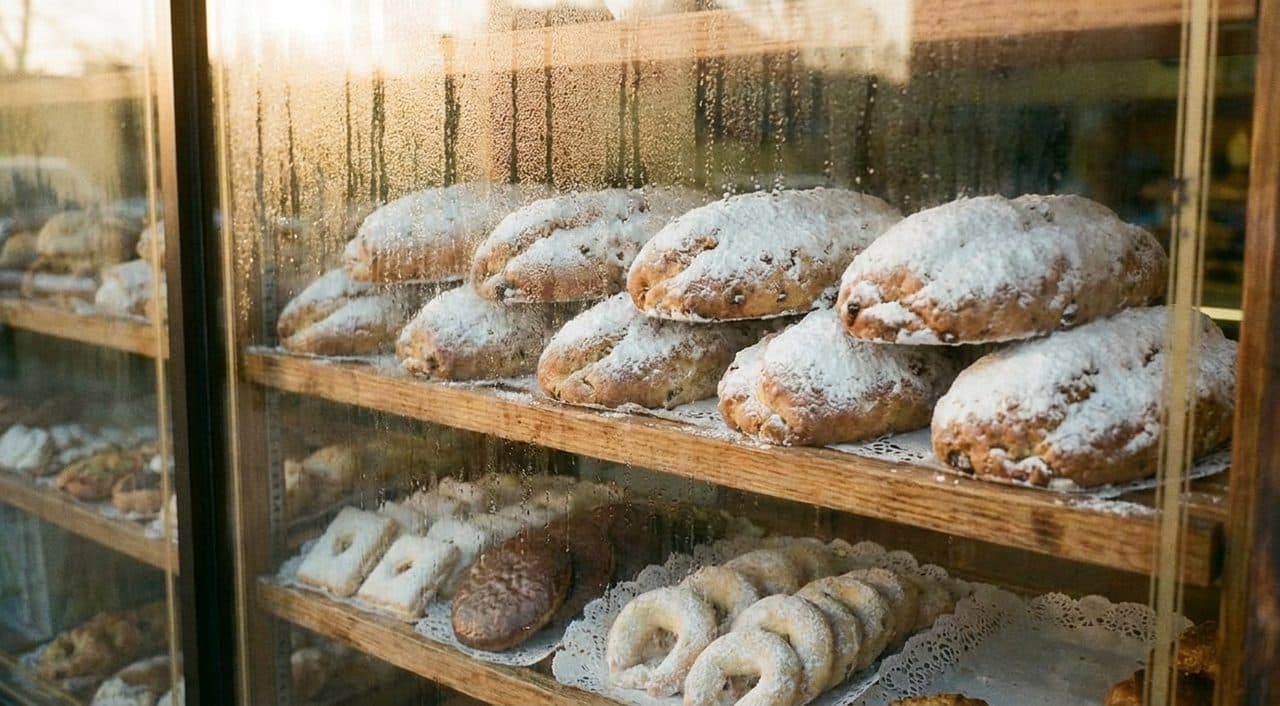
Rudy's Pastry Shop on Metropolitan Avenue keeps its display cases filled with the same repertoire it's cycled through for decades—stollen during Advent, bee sting cake year-round, Black Forest tortes with kirsch-soaked layers. The shop opens early, and by mid-morning the line extends toward the door as regulars collect their standing orders. The bakers work visible behind a half-wall, piping buttercream rosettes and brushing egg wash onto braided loaves. Nothing here concedes to food-trend churn. The cookies come in tins, not Instagram-ready packaging, and the stollen arrives wrapped in wax paper and string. A few doors down, other bakeries maintain similar discipline—dense rye breads, marzipan pigs at New Year's, pretzels with coarse salt that locals buy by the half-dozen for Sunday breakfast.
Lutheran Steeples as Neighborhood Landmarks
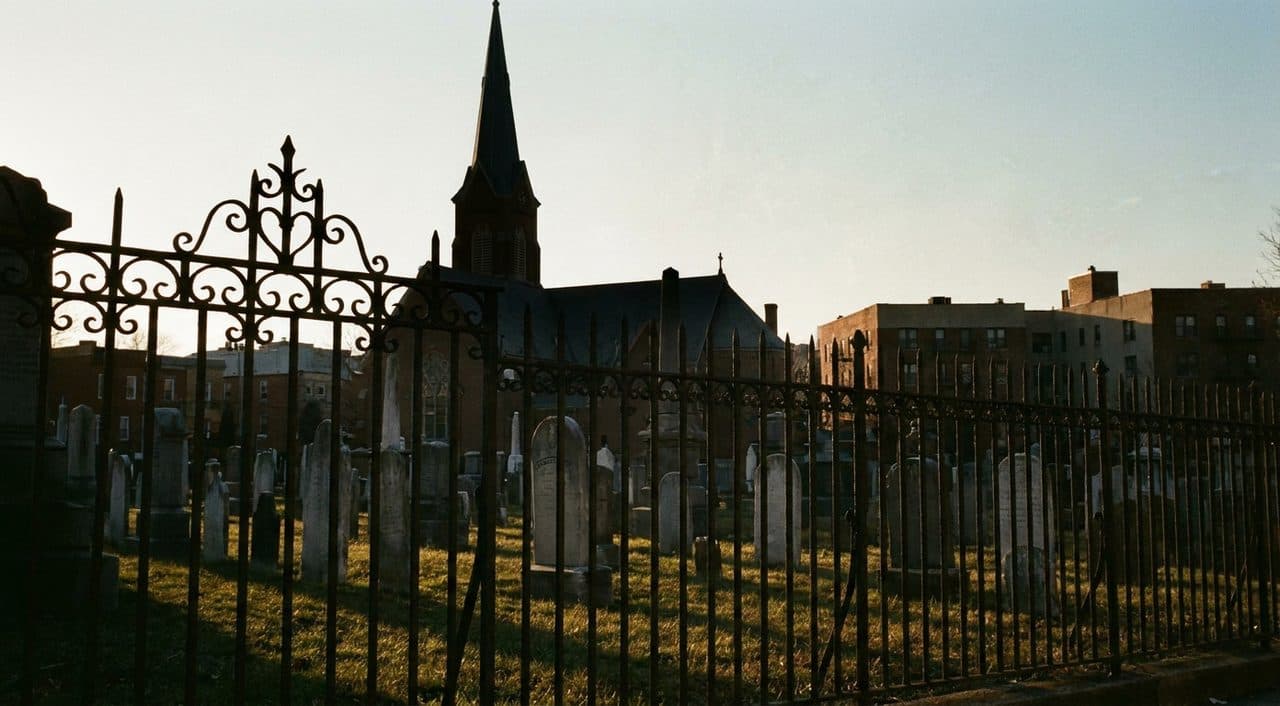
Three major Lutheran churches anchor different sections of Middle Village, their steeples functioning as wayfinding markers across the low-rise residential blocks. St. John's Evangelical Lutheran rises near the cemetery border, its red brick and white trim visible from blocks away. The congregations still conduct services in English now, but the architecture—steep-pitched roofs, pointed-arch windows, heavy timber interiors—carries forward the aesthetic preferences of 19th-century German Protestants who wanted their houses of worship to feel substantial and rooted. The church calendars still list Reformation Day observances and Advent vespers, events that draw crowds beyond the regular Sunday attendance. The fellowship halls host fish fries during Lent and summer picnics where the menu leans toward bratwurst and potato salad, and the gatherings feel less like outreach events than family reunions open to anyone who knows the drill.
The Diners That Serve Both Menus
A handful of diners along Metropolitan Avenue operate with dual identities—standard Greek-owned diner fare on one side of the menu, German specialties on the other. The waitstaff navigates orders for sauerbraten and eggs Benedict with equal fluency, and the kitchen manages to turn out both competently. These spots fill up after church on Sundays, the booths occupied by families who've been coming for years and know which dishes the kitchen handles best. The German side of the menu doesn't change much—rouladen, spätzle, red cabbage braised with apples—and the portions arrive on oval platters that require extra table space. The atmosphere stays low-key, fluorescent-lit, the kind of place where regulars read the paper over refills and the staff remembers who takes their coffee light.
The Quiet Streets Where German Gets Spoken
Walking the residential blocks between the cemeteries and the commercial strips, it's still possible to overhear German spoken on front stoops and in driveways. The rowhouses and single-family homes show their age—aluminum siding, chain-link fences, gardens planted with practical vegetables rather than ornamental blooms. The demographic has diversified, but pockets remain where older residents who grew up speaking German at home still use it with neighbors of the same generation. The local library branch stocks a small German-language section, and the bulletin boards at the churches advertise German conversation groups that meet monthly. It's not a museum piece—the language functions as a living thread connecting the neighborhood to its origins, even as the surrounding borough shifts around it.
Practical Notes
Middle Village sits in central Queens, accessible via the M train to Metropolitan Avenue or the Q55 and Q38 buses along Metropolitan and Woodhaven Boulevard. Street parking proves easier here than in most of Queens, though Sunday mornings near the churches require patience. Rudy's Pastry Shop and similar bakeries open early morning and close by early evening most days, with reduced hours Sundays. Gottscheer Hall events require checking their calendar in advance, as public access varies. The cemeteries maintain daylight visiting hours year-round. The neighborhood rewards slow exploration on foot—the scale is walkable, and the details emerge gradually rather than announcing themselves.
Tags: #MiddleVillage #QueensNeighborhoods #GermanAmerican #LutheranHeritage #TheLongWayHome #QueensHistory #MetropolitanAvenue #HiddenQueens #CemeteryWalks #OldWorldBakeries #GottscheerHall #NeighborhoodChronicles #CulturalHoldouts #NewYorkCity #AuthenticQueens
Sources consulted: timeout.com · atlasobscura.com · nycgo.com
All trademarks are the property of their respective owners.
Ask Karpo first
Want to know which bakery has the most authentic selection or how to navigate the cemetery-interrupted streets?
Ask Karpo for the German holdout walking route and the bakery opening times before you head out.