 Haaland Has Seven Goals and Norway Runs Entirely Through Him
⚽️2026 FIFA WORLD CUP
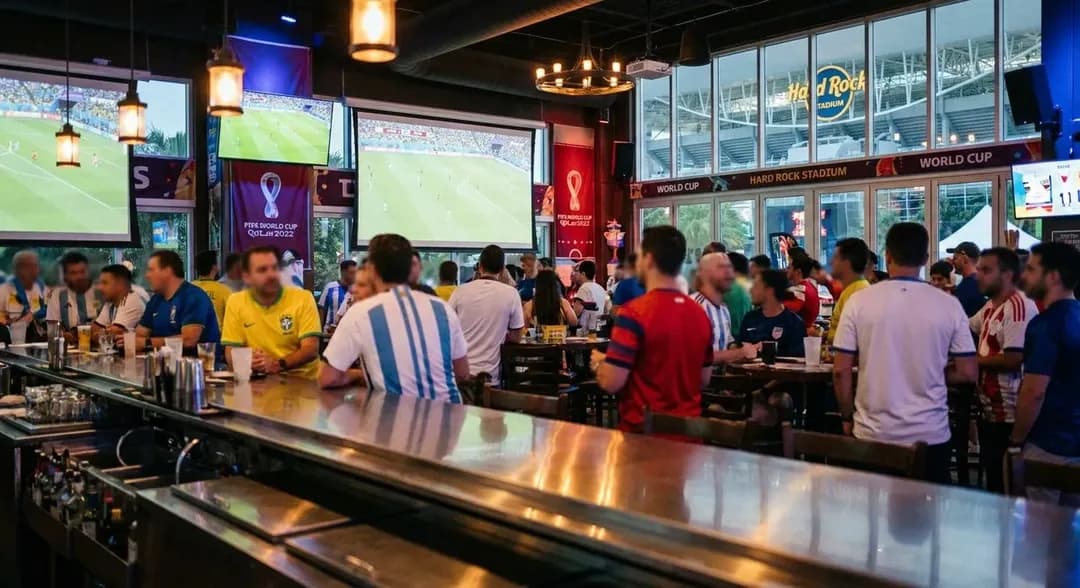
Miami World Cup 2026 Host-City Viewing Bars Near Hard Rock
Hard Rock Stadium hosts seven FIFA World Cup 2026 matches this late May and June. A neighborhood-by-neighborhood guide to catching the action—from Miami Gardens sports bars to Brickell's international crowd, Wynwood's newer haunts, and a Little Havana institution.
Miami will pulse with a particular electricity come late May 2026. Hard Rock Stadium in Miami Gardens takes on seven FIFA World Cup matches, and the city's sizable Latin American diaspora will turn every kickoff into a street-level event. Flags will drape from balconies in Doral and Kendall; Colombian yellow, Argentine sky-blue, Brazilian green will flood Brickell sidewalks between the opening whistle and final time. If you're planning to catch matches—either at the stadium or in the scrum of a good viewing bar—you'll want to know where the crowds gather, which neighborhoods lean into which national allegiances, and where the sound system won't cut out when the game goes to penalties.
The Hard Rock Stadium perimeter
Miami Gardens isn't a pedestrian neighborhood, and Hard Rock Stadium sits in a sea of asphalt off the Turnpike. The stadium itself will be electric on match days—capacity just under sixty-five thousand, retractable canopy overhead, and a fan plaza designed to funnel crowds through merchandise tents and food stalls. But before and after kickoff, most visitors will scatter north and south along NW 199th Street or retreat to Aventura and North Miami Beach, where sports bars with wall-mounted screens and air conditioning offer refuge from late-May humidity that routinely tops eighty-five degrees by noon.
A cluster of establishments along the NW 199th Street corridor and near the Aventura Mall typically draw the pre-match crowd—places with ample parking, wings-and-nachos menus, and enough televisions that you can track multiple matches simultaneously. The vibe skews loud, communal, and unabashedly partisan. Expect drums, smoke machines after goals, and strangers embracing when a penalty is converted. If you prefer your football without the crush, arrive two hours early or resign yourself to standing room.
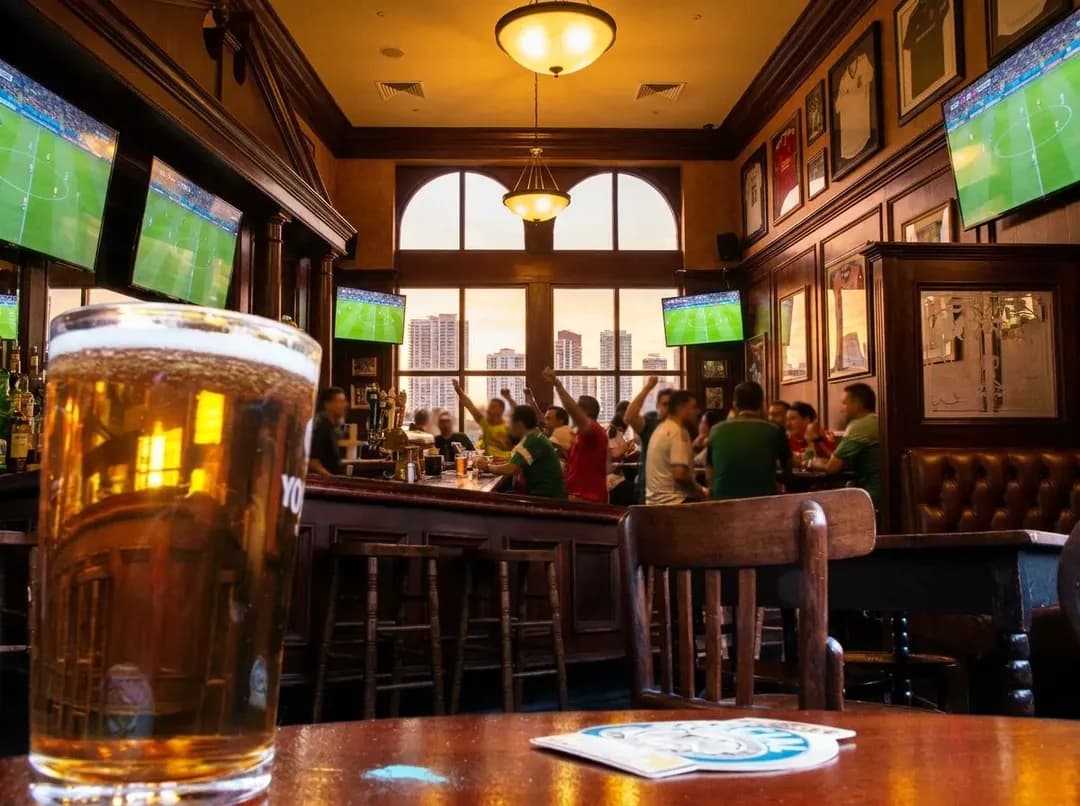
Brickell's international contingent
Brickell has become Miami's de facto financial district, which means it also hosts a rotating cast of expatriates—bankers from São Paulo, traders from Buenos Aires, consultants from Bogotá. The neighborhood's viewing bars reflect that cosmopolitanism: sleek interiors, Argentine Malbec on tap, and bartenders fluent in three languages. During major tournaments, the high-rises empty onto Brickell Avenue, and the outdoor terraces along South Miami Avenue fill with groups nursing cervezas and plotting watch parties that stretch across multiple venues.
Late May in Brickell means afternoon thunderstorms that roll in around four and clear by six, leaving the pavement slick and the air thick with ozone. The covered patios become prime real estate. Look for spots with retractable awnings, ceiling fans that actually move air, and menus that nod to South American match-day traditions—empanadas, choripán, caipirinhas made with real cachaça. The crowd here is older, better dressed, and more likely to discuss formations than to launch into a chant, but the enthusiasm is no less genuine.
Wynwood's newer wave
Wynwood has spent the past decade shedding its warehouse past for a future of street art, craft breweries, and venues that open with fanfare and sometimes shutter within a year. By 2026, the neighborhood will have cycled through another generation of bars, but the essential character holds: concrete floors, exposed ductwork, murals that sprawl across entire building facades, and sound systems tuned for bass. The World Cup will bring a younger, more eclectic crowd here—art students, service-industry veterans on their night off, tourists who wandered over from the Pérez Art Museum and decided to stay.
Wynwood's viewing bars tend to occupy former loading bays or repurposed garages, with garage doors that roll up to erase the boundary between inside and out. In late May the heat is manageable until mid-afternoon, so morning and early-evening matches play best here. Expect local IPAs, minimal food options beyond food trucks parked on NW 2nd Avenue, and a democratic approach to channel selection—whoever yells loudest gets the big screen. The atmosphere is loose, participatory, and occasionally chaotic in the best way. Bring cash for the trucks and patience for the Lines at the single-stall bathrooms.
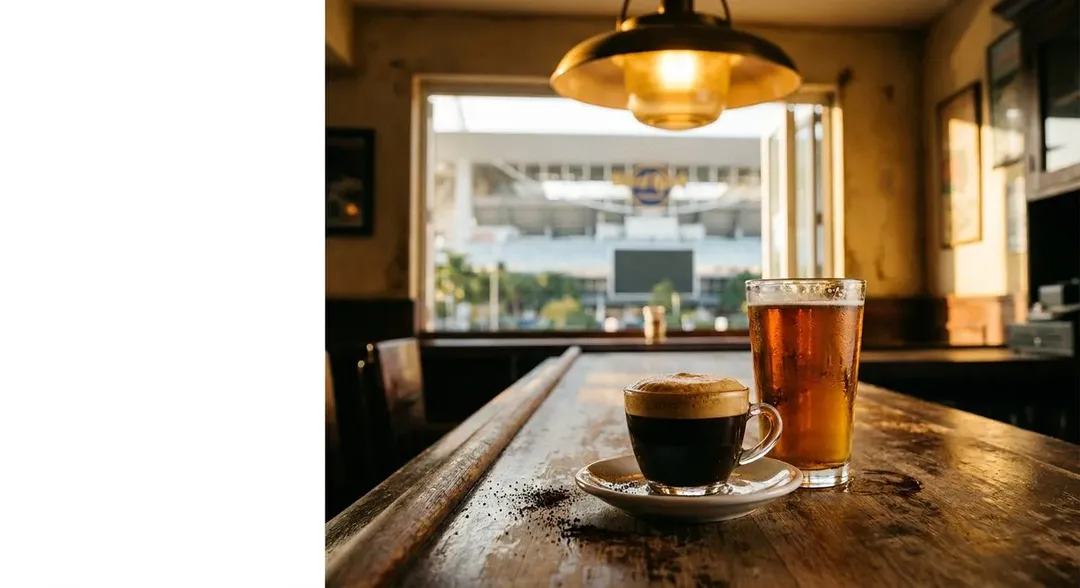
Little Havana's four-decade institution
There's a café on Calle Ocho—SW 8th Street—that has been hosting South American football matches since the 1980s, back when CONMEBOL qualifiers meant grainy satellite feeds and a clientele of homesick Colombians and Uruguayans nursing cortaditos at Formica tables. The owner, now in his seventies, still props open the door on match days, sets a small television on the counter, and lets the regulars commandeer the back room. By the time the World Cup arrives in 2026, this spot will have seen four decades of tournaments, and the walls bear the evidence: faded pennants, signed jerseys in frames, a newspaper clipping from 1994 yellowed behind plexiglass.
The café doesn't advertise, doesn't take reservations, and doesn't bother with cocktails. You drink Cuban coffee—hot, sweet, served in thimble-sized cups—or you drink Materva from the cooler. The pastries are made in-house, the crowd is multigenerational, and the commentary comes in rapid-fire Spanish punctuated by groans and applause. It's the anti-Brickell: linoleum instead of polished concrete, folding chairs instead of banquettes, and a sincerity that newer venues spend a lot of money trying to fake. For visitors, it's a reminder that Miami's football culture didn't arrive with the World Cup—it's been here all along, waiting for the rest of the world to catch up.
Match-day strategy
Late May in Miami means you plan around the weather. Afternoon kickoffs will coincide with the hottest part of the day, when the sun turns the asphalt into a griddle and even the shade offers minimal relief. Indoor venues with serious air conditioning become non-negotiable. Evening matches are kinder—temperatures drop into the high seventies, the breeze picks up off Biscayne Bay, and rooftop bars become viable again. If you're heading to Hard Rock Stadium itself, pack sunscreen, a hat, and lower expectations for swift parking-lot exits. The Turnpike will be a parking lot for an hour after the final whistle.
For neighborhood viewing, arrive early or resign yourself to standing. The biggest matches—anything involving Brazil, Argentina, Mexico—will pack venues to capacity, and door policies become unpredictable. Some bars will implement cover charges; others will operate on a first-come basis until the fire marshal intervenes. If you're traveling in a group, scout your location the day before, confirm they'll be showing the match, and have a backup plan. Miami's football fans are passionate, welcoming, and numerous enough that even a modest venue can hit capacity within fifteen minutes of kickoff.
Practical notes
Hard Rock Stadium sits at 347 Don Shula Drive, Miami Gardens (correct), accessible via Florida's Turnpike or I-95 to the Turnpike. Parking at the stadium can be expensive on match days; ride-shares will surge. The nearest Metrorail line doesn't extend to Miami Gardens, so plan on driving or arranging transportation. For Brickell, the Metrorail Brickell Station puts you within walking distance of some venues along Brickell Avenue and South Miami Avenue. Wynwood clusters around NW 2nd Avenue between 23rd and 29th Streets; street parking is scarce but possible. Little Havana anchors along Calle Ocho between 12th and 17th Avenues—look for metered street spots. Verify hours directly with any venue, especially for early-morning matches that might require special opening times. Most viewing bars are ground-level accessible, though older Little Havana spots may have narrow doorways. Bring a portable battery pack for your phone; service gets spotty when crowds concentrate.
Tags: #MiamiWorldCup #WorldCup2026 #HardRockStadium #MiamiGardens #Brickell #Wynwood #LittleHavana #FIFA2026 #MiamiFootball #SoccerMiami #MiamiSports #CalleOcho #MiamiNightlife #WorldCupViewing #VisitMiami
Please drink responsibly. Must be of legal drinking age.
Sources consulted: 2026 FIFA World Cup · Hard Rock Stadium · FIFA World Cup 2026 · Miami-Dade County · Time Out Miami
All trademarks are the property of their respective owners.
Ask Karpo for more information.
Keep reading
- Haaland Has Seven Goals and Norway Runs Entirely Through Him
 World Cup Trophy Ceremony Timing Medals and Postmatch Celebrations
 Olise and France's Attack: The Semifinal Tactical Question