 Brickell Tailor Alteration Shop Finder: First Work Suit Fit
Neighborhood Guides

Miami Transit Station Pitstop Finder: College North Snack
Plan a College North snack pause in Miami around the next class or appointment, a manageable backpack, and the refreshment need you want to prioritize.
A refreshment pause near College North works better when it starts with the next class, shift, or appointment. You may want water, a small snack, or a few quiet minutes before moving on. Put those needs in order before opening the Karpo APP. Use College North Metromover as the geographic anchor and explain the place you are heading afterward. The useful result is a small plan that fits your day, with room to continue directly if a purchase would make the next commitment harder.
Work backward from the next door
Name the building or intersection that ends the pause. A student heading to a classroom has a different route from a commuter continuing to another station. If the final entrance is the important detail, include it in the request. “Near campus” can describe a broad area, while a particular approach gives the conversation something practical to work around. Do not assume that a place near the station also lies along your last stretch of walking.
College North is a station on the official Miami-Dade Metromover map. That supports using the name as a starting reference. It does not establish a snack kiosk, an available restroom, or indoor public seating beneath the guideway. Keep those as distinct things you want to find. When a facility is essential, let it determine the plan rather than adding it as an afterthought to a food recommendation.
Pick the refreshment with the next hour in mind
Think about what you need during the next part of the day. A sealed snack may be easier to carry into a work bag than an open pastry. A drink that needs both attention and a free hand may be awkward if you are carrying books or a project. Describe what you can store until the next suitable place to eat. A portable purchase can be useful even when there is no time to consume it during the pause itself.
Budget matters too, but it helps to express it as your own ceiling rather than expecting a general promise about prices. State the maximum you are willing to spend and whether you would prefer bringing something from home over stretching it. Without a sourced menu, there is no reason to attach an invented price to a suggested snack. The request can still compare the kind of stop you want and the amount of effort you want to spend.
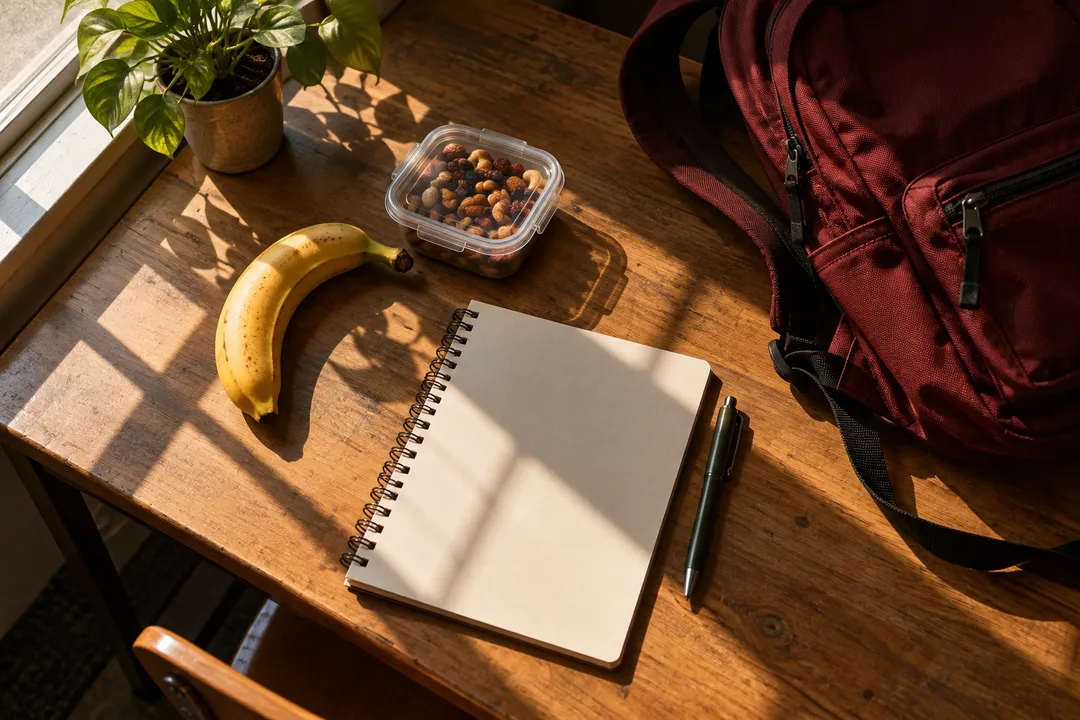
AI-generated people-mover streetscape and student-snack illustrations; no kiosk, campus facility, classroom, or available refreshment is documented.
Make a student-sized brief
Try: “I am near College North Metromover and heading to my next class. Help me think through a small refreshment stop along that walk. My priority is water and something I can keep in a backpack. I want one straightforward option and a no-purchase alternative. Keep the route compact, and treat my class arrival as the fixed point.” Add the actual class building, dietary needs, and a personal allowance for the entire pause.
If you choose ten minutes, specify whether that includes reaching the classroom. A ten-minute purchase followed by an additional walk is different from a ten-minute total detour. Decide what margin you want for getting inside and settling your things. These are allocations you control. They are not predictions of a line at a counter or a guarantee that the next vehicle and the classroom entrance will align with the example.
Let the group order stay small
A short break can become complicated when several classmates want different things. One person wants coffee, another needs lunch, and a third only wants to sit. Agree on the shared purpose before searching. If there is no shared purpose, separate the plans and choose a clear reunion point. The decision becomes easier when nobody expects a brief snack stop to solve an entire afternoon of errands.
For a shared purchase, collect the essential requirements before one person orders. This reduces the need for a second trip to the counter or a new search after the group has moved on. Food restrictions still belong with the actual order, and a conversational suggestion does not establish the ingredients of an item on display. If the offer does not work, the group can carry the snack idea forward to a later break instead of improvising under time pressure.
Keep a simple pause from becoming a study session
If you find a suitable place to stop, decide how much setup the pause needs. Taking out a laptop, finding a socket, and unpacking notebooks creates a different activity from drinking water and eating a small snack. A brief refreshment break can be completed with your belongings mostly packed. This makes it easier to leave when the time you chose arrives, without turning the final minute into a hurried repacking exercise.
A wish for indoor seating should be stated separately from a wish for power or internet access. Neither follows automatically from the word “cafe.” Ask for those requirements only when they are necessary, and keep a simpler plan for the situation in which the visible space does not fit. The article's illustration is a planning image rather than documentation of a room, a desk, or facilities near College North.
Use a stopping rule that fits the commitment
Choose a point at which the refreshment search ends. It might be passing the turn toward the class building, or finding the first candidate too busy for your remaining allowance. Once that happens, continue to the destination with the food decision settled for now. A new search in the opposite direction can cost more attention than the snack was meant to restore.
If your destination changes, update the conversation with that new endpoint. A canceled class and a later work shift produce a different plan from the original campus walk. Keep the details that still matter, such as the backpack and the budget, and remove constraints that no longer apply. The recommendation should follow the revised day instead of keeping you anchored to a station you have already left.
Leave with the next action clear
Before continuing, secure the container, put payment away, and keep any loose packaging out of the path. Decide where the snack will actually be eaten and leave the transit operator's travel rules with the ride. A useful refreshment plan does not require eating while boarding or treating a station platform as a dining space. It is enough to have something manageable for the next appropriate break.
Open the Karpo APP with College North, your next door, carrying preferences, and a self-selected time limit ready to describe. Ask for a small recommendation you can refine, with a way to continue without buying. You remain responsible for the actual purchase and the journey. The payoff is a clearer transition into the next hour: the urgent need identified, the bag manageable, and the class or appointment still setting the direction.
Ask Karpo for more information.
Keep reading
- Brickell Tailor Alteration Shop Finder: First Work Suit Fit
 Coconut Grove Tailor Alteration Shop Finder: Heat-Proof Fits
 Little Havana Tailor Alteration Shop Finder: Guayabera Fits