 Brickell Tailor Alteration Shop Finder: First Work Suit Fit
Neighborhood Guides
Miami Transit Station Pitstop Finder: Palmetto Food Plan
Plan food around a Palmetto Metrorail commute in Miami by comparing an approach-side purchase with a destination stop and keeping extra movement modest.
A food stop near Palmetto calls for a different question from a cafe search in a compact downtown block. Begin with the route you are actually taking to the station or away from it. In the Karpo APP, describe that approach, your onward destination, and what counts as a manageable purchase. “Adjacent” should be a boundary you explain, not a promise about a counter beside the platform. A plan that keeps food near your destination may suit the commute better than an extra terminal detour.
Give Palmetto a precise role
Miami-Dade identifies Palmetto as the northern end of the Metrorail Green Line. That is the transit anchor for this request. Doral may be part of your wider journey, but a Doral destination does not make every Palmetto-area option a convenient stop. Include the part of the trip between the destination and the station instead of collapsing the entire western commute into one place name.
Describe whether you arrive by bus, a personal vehicle, a lift from someone else, or on foot. The recommendation changes with that detail. A shop encountered before you reach the station may be convenient for one traveler and irrelevant to another who is already waiting to board. State whether the food needs to be purchased before transit or after leaving it. That single choice often removes most of the unnecessary searching.
Measure inconvenience in actions
Distance alone misses much of the effort in a food pickup. A purchase can require leaving a parking area, crossing a large road, entering a shopping center, finding the counter, and reversing those steps. Describe the actions you want to avoid. If your preference is no additional parking, make it explicit. If you are walking, use a street or intersection to explain your starting position instead of assuming a vehicle entrance provides a pedestrian route.
You can ask Karpo to discuss the tradeoff between a purchase on the approach and one after arrival. Do not ask it to treat a road crossing as suitable merely because the map distance is short. A recommendation is not a safety assessment or a guarantee of a continuous sidewalk. If the actual approach does not suit your needs, keep the food decision at the part of the journey where the movement is already familiar to you.

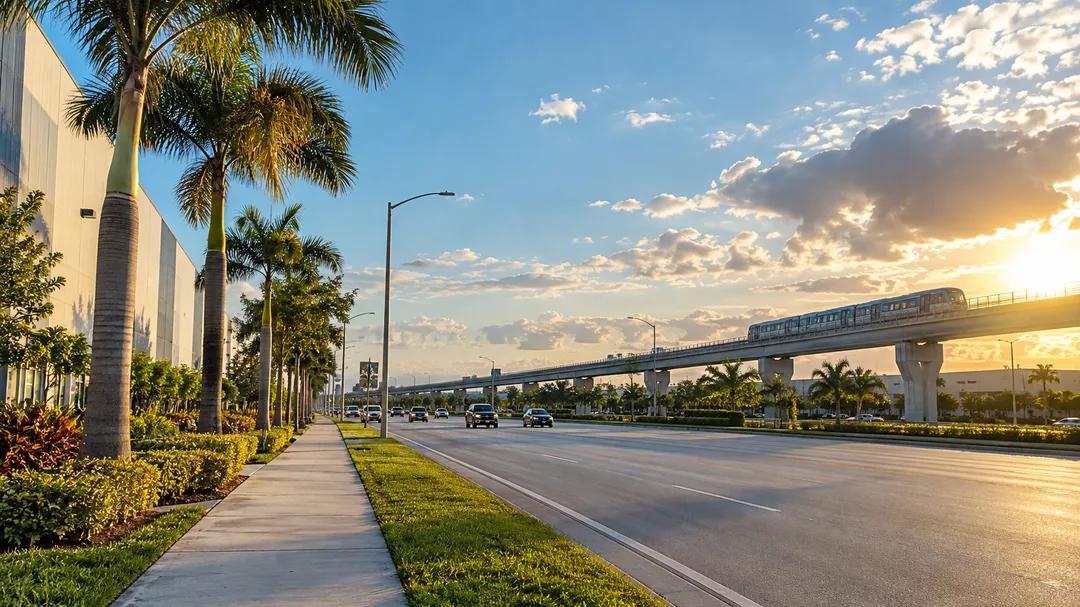
AI-generated suburban transit and home-packed-lunch illustrations; no vendor, road crossing, station access route, or present food stock is documented.
Choose the meal before choosing the stop
For a longer commute, portability can be more valuable than an elaborate order. Think about what remains easy to carry and eat after the train portion is finished. A compact wrapped item or a closed container may work better than a drink tray and several open dishes. Include whether you have a bag with enough space, and whether the food needs to remain separate from work equipment or clothing.
An insulated lunch bag may also change the decision. If you already have one, bringing food from home can remove the purchase entirely. That is a valid option to compare with buying on the approach or near the final destination. Ask for the plan that creates fewer separate tasks, and describe any dietary restrictions that narrow the meal. Do not turn the conversation into an assumption that a particular prepared item is waiting at a terminal shop.
Use the commute as the search boundary
A practical prompt could be: “My commute includes Palmetto Metrorail and a destination in the Doral area. I want a simple takeaway meal without adding a separate parking stop. Compare buying along my existing approach with buying after the rail journey. I can carry one small bag, and I would rather skip the purchase than cross an unfamiliar road just for food.” Add the actual approach and the direction of travel.
If you are already at the station, tell Karpo that too. Remove suggestions requiring a return to a place you have already passed. If a response expands the search across several neighborhoods, bring it back to the route you supplied. The useful question is which purchase belongs in the commute, rather than which restaurant sounds most appealing in the wider area. A small comparison leaves the decision easier to act on.
Protect the person doing the pickup
A food errand sometimes becomes a task for whoever is dropping you off. Agree on the arrangement before leaving home. Asking that person to wait while you search can make a simple ride more complicated for both of you. A purchase made before the pickup, or food bought after your final stop, may be easier than adding a new errand to the handoff at the station.
If several people are traveling together, keep their food requirements in one request. Separate orders at different places create additional movement and a second meeting problem. Decide whether everyone needs food now, or whether one person can carry a shared bag until the destination. Personal allergies and other essential requirements still take priority. A convenient-looking suggestion is not useful if it leaves the group unable to use the food.
Decide when the purchase stops making sense
Set a personal limit for the extra effort you are willing to add. You might decline any option that requires another parking maneuver, or stop considering food once you are inside the station. These rules are choices, not measurements supplied by a product. They let you finish the decision when the real situation differs from the route you imagined earlier.
Avoid using the final minutes before a chosen train as the start of a fresh search. If the purchase is optional, put it after the ride. If food is essential before travel, make that a deliberate earlier part of the itinerary. Operator information is the place for the actual service and boarding decision. A conversational food plan does not monitor a departure, hold a vehicle, or turn an unfinished order into an available meal.
Make the next commute easier to describe
After the journey, note which part of the trip had the least friction for carrying food. Perhaps it was the approach before parking, or the last block near the destination. Keep that observation for the next request. It is more useful than saving a large list of places that require different entrances and detours. Your own experience gives the next conversation a clearer starting point.
Use the Karpo APP with the real approach, the onward area, your carrying limit, and the extra actions you want to avoid. Ask for one route-aligned possibility and one alternative that postpones the purchase. Ordering and payment remain separate, and a suggestion does not create stock or a reservation. The goal is a commute with one less decision hanging over it, even when the simplest food stop happens nowhere near the platform.
Ask Karpo for more information.
Keep reading
- Brickell Tailor Alteration Shop Finder: First Work Suit Fit
 Coconut Grove Tailor Alteration Shop Finder: Heat-Proof Fits
 Little Havana Tailor Alteration Shop Finder: Guayabera Fits