 Brickell Tailor Alteration Shop Finder: First Work Suit Fit
Neighborhood Guides

Miami Transit Pitstop Planner: Five-Minute Night Route Guide
Plan an evening downtown Miami connection with a transit pitstop planner that honors a five-minute cutoff, handles low light, and keeps the next move simple.
An evening connection changes how a short detour feels: lighting, fatigue, bags, and unfamiliar entrances matter as much as distance. A transit pitstop planner can help you decide whether a pause belongs in the trip at all. In Karpo APP, state your current side, direction, leave-by time, comfort with walking after dark, and whether the purchase is optional. Ask for a ranked plan plus a continuation option. The app does not monitor arrivals, lighting, queues, open counters, or successful bookings.
Set a dusk-friendly starting point
Begin with the exact place you can safely stand, not a broad downtown landmark. Say whether you are beside the curb, inside a station, under cover, or carrying something that needs two hands. Ask the planner to label the route as lit, exposed, crossing-dependent, or uncertain according to your own description. This makes the evening constraint explicit. A recommendation that is fine at noon may be wrong when you are tired and trying to keep the next platform in view.
A five-minute rule works only when it includes the return. Give the planner a leave-by time and say that the pause is abandoned if the first movement takes longer than your cutoff. Reserve a small orientation cushion instead of spending every minute on a purchase. The tool can compare a quick pickup, a brief sit, or no stop, but it cannot know whether a bus or door will cooperate. Keep the deadline yours, not the app's promise.
Use a strict evening cutoff
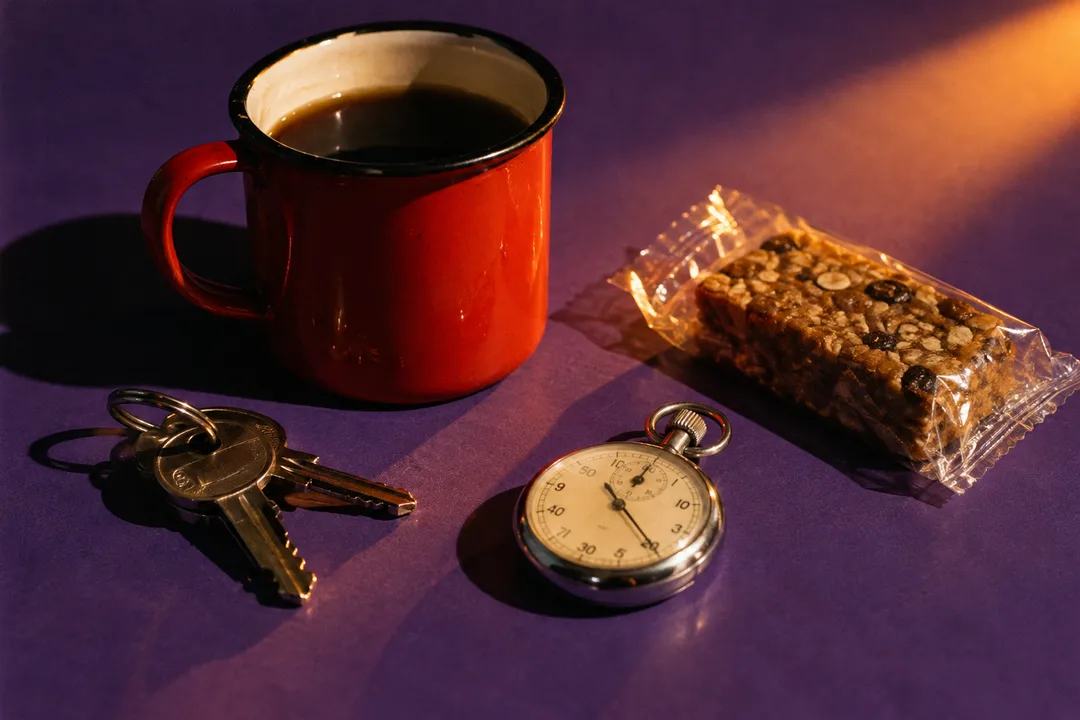
Choose a low-handling mission after dark. A sealed drink, wrapped snack, or short seated reset is easier than a meal requiring utensils, a table, and several decisions. Tell Karpo APP if one hand must remain free for a bag or railing. If you are with someone who needs a slower pace, add that too. These details let the planner rank for actual movement rather than for an imaginary solo traveler with unlimited attention.
Ask for a fallback that stays near the route and does not rely on a purchase. A lit waiting area, clear sightline, or place to regroup may be the right answer when a queue appears. Have the planner show the fallback beside the preferred option and explain the extra movement. This gives you a clean choice when the evening feels less comfortable than expected. You can preserve the snack goal for the next stop without forcing a dark detour.
Choose a low-handling pause
Keep the next platform visible in the language of the request. Tell the app whether you need to end near a specific direction of travel, avoid re-crossing, or keep the route within one corridor. Ask for the final handoff to be a single sentence. The full reasoning can discuss tradeoffs, but the action line should tell you where to resume and when to stop. A simple finish is worth more than another attractive option.
Comfort and certainty are separate. You can prefer shade, lighting, fewer turns, or a familiar approach while admitting that the app cannot inspect the scene. Ask it to list the assumption behind each suggestion and to downgrade anything that depends on an uncertain entrance. This honesty is useful downtown, where a building can have several doors and a short map line can hide a lobby or crossing. Your own observation remains the final filter.
Ask for a lit fallback
For companions, choose one signal that ends the pause. It might be a spoken time, a shared landmark, or the moment one person starts toward the platform. Tell the planner whether the group moves together or whether one adult can scout. A single rule avoids an evening argument about waiting. The output should support coordination, not imply that Karpo APP can locate a missing person or track the street in real time.
When you are tired, ask for a plan with fewer decisions. Limit the candidates to two, require the same return direction, and make the purchase optional. If the answer still feels complicated, ask for a continuation plan only. This is a useful test of quality: the right transit pitstop planner should simplify the next action rather than add a new research project at the curb.
Keep the next platform visible
If rain or wet pavement changes the walk, state the condition and ask for a covered alternative, but do not ask the app to predict weather or guarantee traction. You can reject an exposed route when you arrive and use the fallback. The planner's role is to make the tradeoff visible before movement begins. That keeps your decision reversible and prevents a small evening snack from becoming a longer, less comfortable walk.
Use a two-step follow-up when the first answer misses. Keep the five-minute cutoff and remove the purchase; then keep the purchase and require a same-side approach. Comparing those versions shows whether movement or appetite is driving the tension. It also gives you a reusable prompt for another downtown connection. One controlled change teaches more than a fresh list produced without a stated reason.
Separate comfort from certainty
Ask for a final handoff that fits on one screen: start position, route condition, pause mission, abandon point, and resume direction. Avoid long promises about what will be open or fastest. The result should be usable while you are standing, carrying a bag, or helping someone else. Save the long explanation for later; the immediate instruction needs to stay legible under low attention.
A no-purchase evening is still a successful plan when it protects the connection. Tell Karpo APP to carry your original goal forward and suggest what to request after arrival: a seated meal, a better-lit pause, or more time. This prevents sunk-cost thinking and gives you a constructive next step. You are not asking the tool to rescue a missed connection; you are using it to avoid creating one.
Give companions one signal
Afterward, note the evening constraint that mattered. Maybe the lit route was worth the extra block, or keeping one hand free mattered more than the menu. Feed that observation into a later request with a different departure and deadline. Over time, your transit pitstop planner use becomes a small personal playbook for low-light transfers: fewer decisions, clear cutoffs, and an exit you can take without apology.
Before stepping away from the platform, summarize the plan in four beats: start point, pause mission, five-minute cutoff, resume direction. If the summary sounds complicated, choose continuation and save the preference for another evening. That small discipline keeps the connection calm and gives your future prompts a concrete shape instead of a vague memory of what went wrong.
Ask Karpo for more information.
Keep reading
- Brickell Tailor Alteration Shop Finder: First Work Suit Fit
 Coconut Grove Tailor Alteration Shop Finder: Heat-Proof Fits
 Little Havana Tailor Alteration Shop Finder: Guayabera Fits