 Brickell Tailor Alteration Shop Finder: First Work Suit Fit
Neighborhood Guides

Coral Gables Transit Pitstop Planner: Family Pause Guide
Plan a Coral Gables family transfer with a transit pitstop planner that reduces crossings, explains stroller tradeoffs, and keeps the group together.
Family transfers become difficult when the adults are calculating direction while a child, stroller, or tired grandparent is trying to keep pace. A transit pitstop planner helps by turning those needs into explicit route rules. In Karpo APP, state the current side, travel direction, leave-by time, group size, stroller or luggage situation, and whether the pause can be noncommercial. Ask for a ranked plan with crossings and uncertain access called out. The app does not promise live service, open venues, or accessible infrastructure.
Name who needs the easiest path
Start by naming the person who sets the walking speed. A toddler, wheelchair user, or adult carrying a sleeping child changes the route more than a few extra steps on a map. Ask the planner to avoid stairs and repeated crossings, and to explain when an elevator or curb cut is only an assumption. This gives the group a shared reason for the recommendation. It also prevents the fastest walker from quietly choosing a route everyone else cannot use.
Crossings deserve a budget of their own. Tell Karpo APP whether the group can cross once, must remain on one side, or needs a calm place to wait before crossing. Add the stroller width, bags, and any hand-holding rule. A candidate that looks close but requires two complicated crossings may be worse than a slightly farther same-side pause. The planner can compare those tradeoffs; it cannot see a signal cycle or guarantee a clear curb when you arrive.
Treat crossings as a real cost
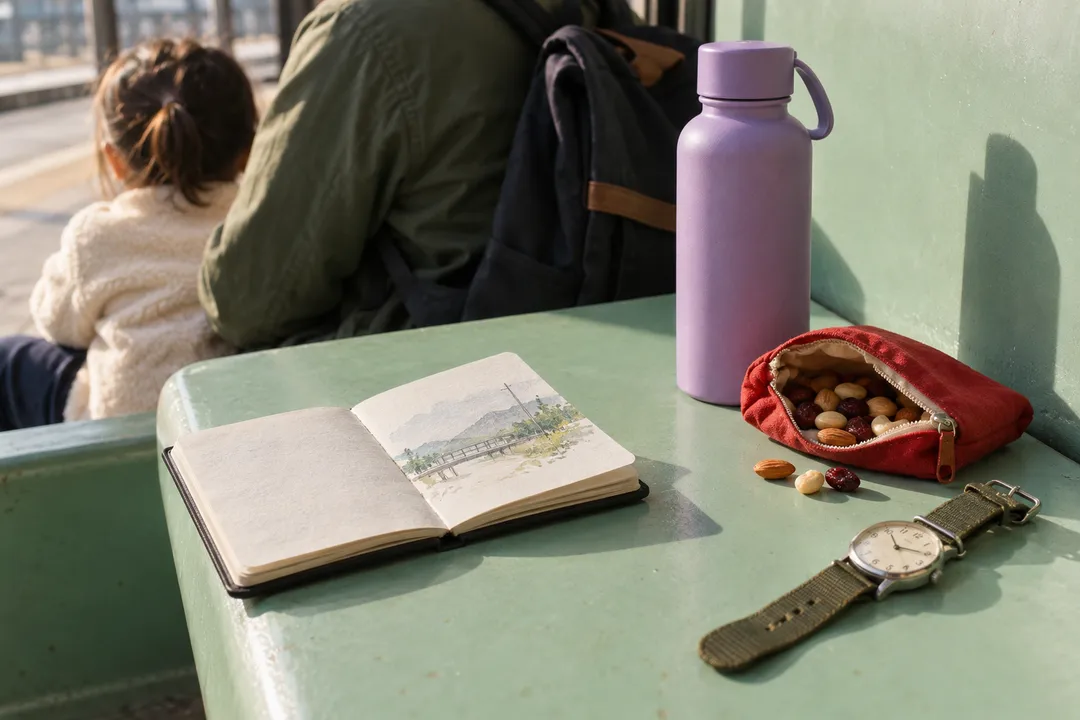
Make the child's need concrete. Ask for a stop where a snack can be carried, a brief sit-down is possible, or a restroom break can happen without derailing the transfer. If the child needs a full meal, say that before the planner ranks options. If the goal is simply to reset, ask for a non-purchase pause. A narrow mission keeps the group from debating every nearby possibility while the departure clock continues.
Use one shared deadline and one internal checkpoint. The deadline is when everyone must be back in the boarding corridor; the checkpoint is when you abandon the pause if the route is confusing. Tell the planner to show both. Children often need a slower final minute than adults expect, and regrouping takes time. A plan that protects the final checkpoint is more useful than one that looks efficient only for a single adult walking alone.
Build a child-sized pause
Ask for two access versions: the simplest route for the whole family and a scout route for one adult. The scout can check whether a door, lift, or quiet corner exists while the group waits in a defined place. If the scout returns with a better option, the group can move together; if not, nobody has been dragged into a complicated detour. The app is helping coordinate choices, not directing people or verifying equipment in real time.
Describe the meeting point physically. A particular bench, canopy edge, wide sidewalk, or platform marker is easier for a child to recognize than a shop name. Ask for the approach and the return direction in plain language. If someone needs to stop, the rest of the group should know whether to wait or continue to the fallback. This small agreement prevents the common family problem where a short snack mission becomes a scattered search.
Give the group one deadline
Family comfort includes weather, noise, and hand capacity. Say if you are avoiding direct sun, a slick surface, loud traffic, or any route where both adults need their hands free. Treat those as preferences with a clear priority order. Karpo APP can compare a shaded pause against a shorter exposed one, but it cannot promise the weather or crowd will hold. When the real scene disagrees, the written priority list helps you adapt quickly.
Put a no-purchase plan beside the food plan. It might be water, a place to settle the stroller, or a short orientation break. If a queue grows, the family can take that option without turning the choice into an argument. Ask the app to preserve the same return deadline across both versions. This creates a safe exit from the food mission and lets the adults model a useful travel habit: comfort and timing come before novelty.
Ask for two access versions
Avoid language that implies the planner can confirm accessibility. Ask it to identify an elevator-dependent route or an uncertain curb, then treat those labels as reasons to investigate or reject. A trustworthy answer separates what follows from your stated constraints from what would require on-site observation. That distinction matters in Coral Gables, where a calm-looking block can still contain a crossing or entrance that is awkward with a stroller.
If the output is too long, request a family handoff with three lines: where the group starts, what each adult does, and when the pause ends. Keep a detailed explanation available for the person planning, but make the child-facing instruction simple. You can revise one line without rewriting the entire request. This is a practical way to keep a moving family aligned when attention is split among bags, snacks, and directions.
Make the meeting point physical
After the ride, record the movement lesson rather than a blanket review. Maybe the same-side route was worth more than a wider menu, or a five-minute regrouping cushion prevented a meltdown. Feed that observation into your next prompt with a new departure point. The planner becomes more useful when your notes describe constraints and outcomes, not permanent claims about any business or sidewalk.
If the group cannot meet the access rule, continue. Ask Karpo APP for a later family pause that preserves the same snack or rest goal after arrival. That decision is not giving up; it is protecting the child and the transfer at the same time. A transit pitstop planner earns trust when it makes the safe no-detour choice easy to see before everyone is already halfway across the street.
Protect the fallback
For a final check, ask the app to challenge its own recommendation. What assumption would make the plan fail? Which step is hardest with a stroller? Where can the group wait without blocking others? The answers give you a short risk list to discuss before moving. That habit keeps family planning concrete, reversible, and respectful of the people sharing the route.
Have one adult say the family plan aloud before the group leaves: start together, pause for the named reason, turn back at the checkpoint, and reunite at the physical marker. If anyone cannot repeat it, choose the simpler fallback. This spoken test catches confusion earlier than a map screen does and keeps a small Coral Gables pause from becoming a stressful detour.
Ask Karpo for more information.
Keep reading
- Brickell Tailor Alteration Shop Finder: First Work Suit Fit
 Coconut Grove Tailor Alteration Shop Finder: Heat-Proof Fits
 Little Havana Tailor Alteration Shop Finder: Guayabera Fits