 Brickell Tailor Alteration Shop Finder: First Work Suit Fit
Neighborhood Guides
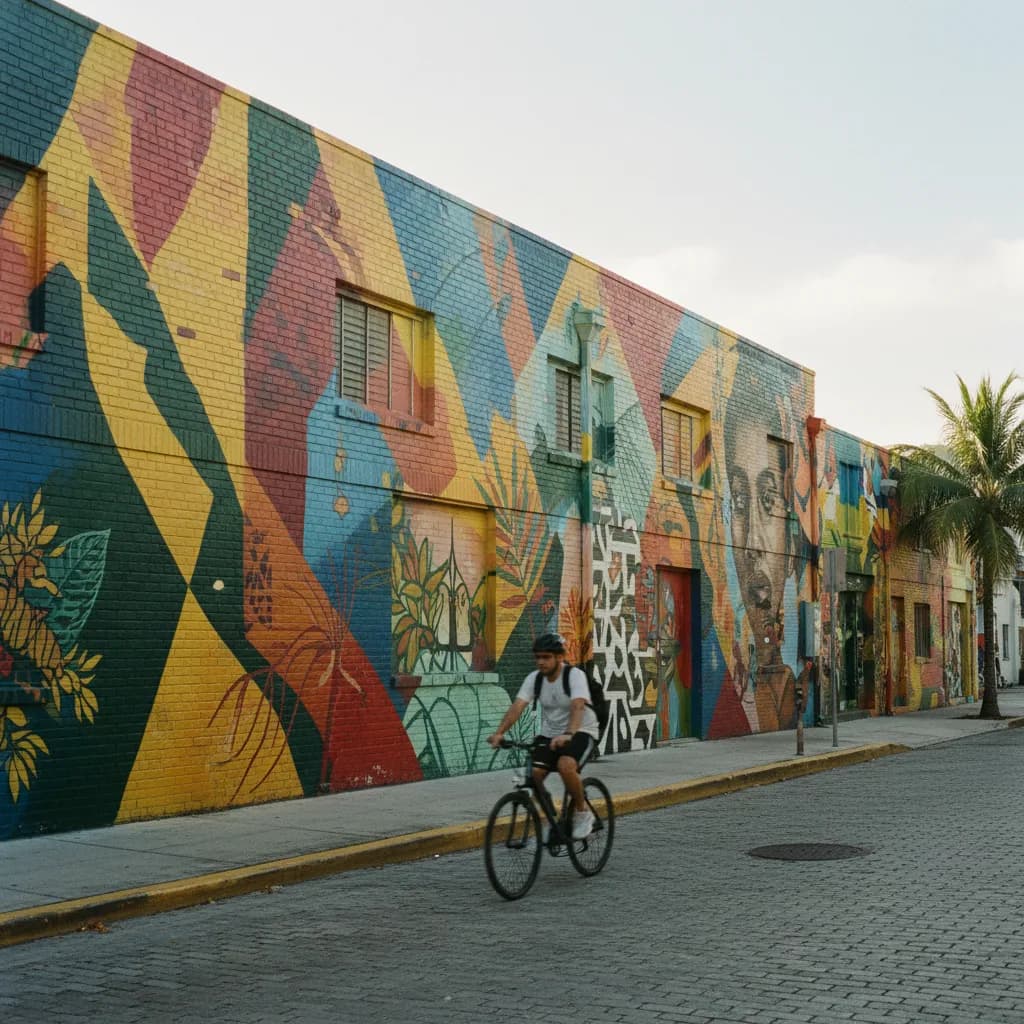
Wynwood Neighborhood Historical Walking Tour: Barrio Roots
Trace Wynwood from 1917 rail-side lots to Little San Juan and the 2009 mural boom on a free walk past warehouses, Roberto Clemente Park and quiet blocks.
Most visitors meet Wynwood as a wall of color, but the paint sits on top of a much older story. Around 1917 developers laid out house lots and industrial parcels next to the Florida East Coast Railway, and for most of the twentieth century the area was a place where Miami worked rather than played. This neighborhood historical walking tour reads Wynwood as three chapters: the rail and factory district, the Puerto Rican barrio that locals called Little San Juan, and the art economy that arrived after 2000. The loop is free, flat and about two and a half miles.
Why Wynwood Looks Like a Warehouse District
Begin on the eastern edge of the neighborhood, where the railway corridor separates Wynwood from Midtown. The tracks explain the street grid. Freight sidings once fed low, wide buildings with loading docks, roll-up doors and almost no windows, and that is exactly the building type you will see on block after block. Warehouses suited textile cutting, wholesale storage and small manufacturing, and by the second half of the century the area had a reputation as part of Miami's garment trade.
As you walk west on the numbered streets, look at the roofs rather than the walls. Sawtooth skylights, steel trusses and parapets with faded company lettering are the clues to original use. Many façades have been repainted dozens of times, yet the proportions are unchanged: tall single storeys, deep floor plates, and sidewalks that were never meant for crowds. That mismatch between industrial bones and pedestrian traffic is the essence of the neighborhood today.
Little San Juan and the Residential Blocks
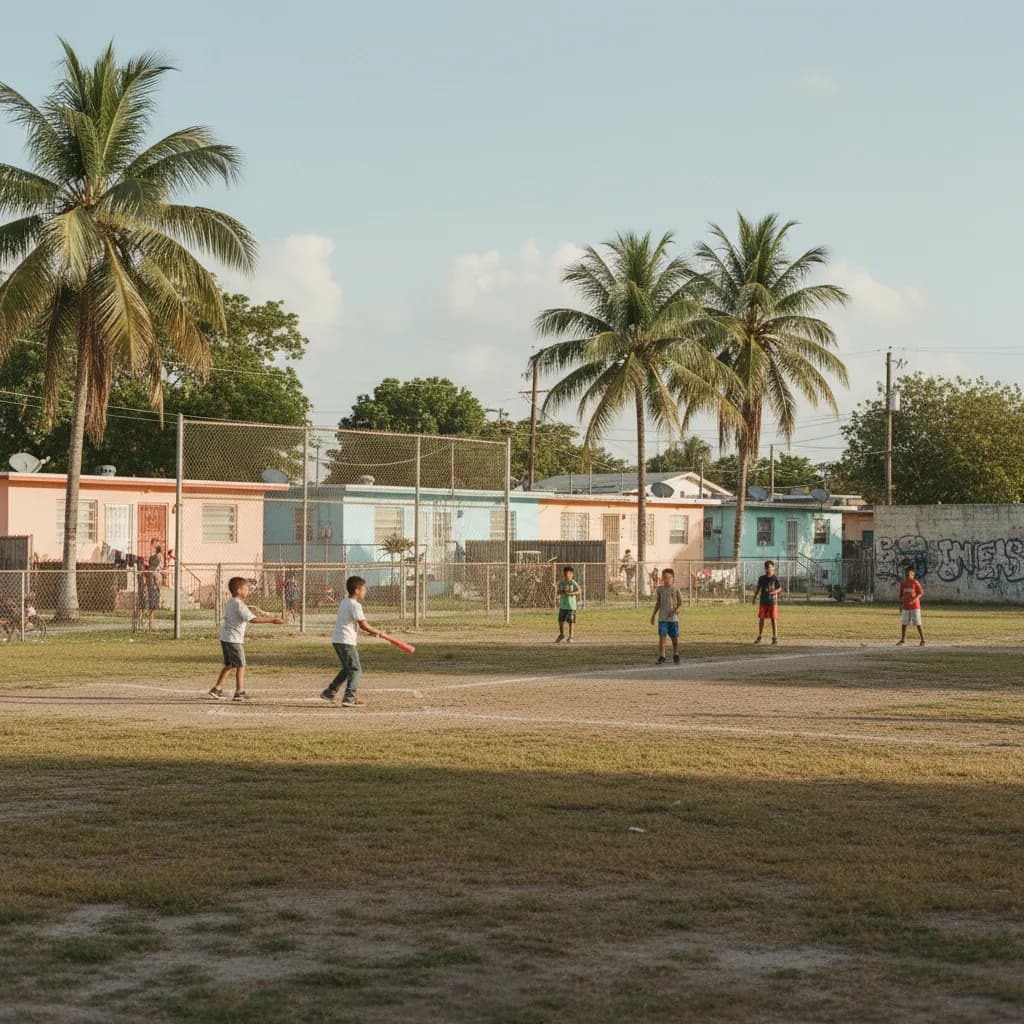
Head north and west, past the busiest mural corridor, into the residential streets around Roberto Clemente Park. From the 1950s onward, families arriving from Puerto Rico settled here in large numbers, drawn by factory jobs and modest rents, and the area became known as Little San Juan or simply El Barrio. The park itself is named for the Puerto Rican baseball star who died in 1972 while flying relief supplies to earthquake victims in Nicaragua.
This section feels completely different from the gallery strip. You will see one-storey concrete-block houses with jalousie windows, chain-link fences, small front yards with mango and avocado trees, and a ball field where neighborhood kids still play. These are private homes, so keep cameras pointed at the street and the park rather than into yards. The point of walking here is to see the community that existed before the art district brand, and that in many cases still lives nearby.
Pause in the park and notice how close everything is. A factory worker in the 1960s could walk from a house on these blocks to a cutting floor a few streets away, buy groceries at a corner bodega and catch a ball game on the weekend without leaving the neighborhood. When the garment jobs moved offshore in the 1980s and 1990s, that walkable economy unraveled, and many buildings sat empty for years.
Empty Warehouses, Collectors and the First Studios
Walk back south toward the center of the district. The vacancy of the 1990s is the hinge of the whole story. Cheap, enormous spaces attracted private collectors and artists who needed room for large work. The Rubell family opened a collection in a former warehouse here in the 1990s before moving to a larger site in neighboring Allapattah in 2019, and the Margulies Collection still occupies a converted warehouse in the district.
Those early tenants changed how outsiders saw the area. When Art Basel Miami Beach began in 2002, satellite fairs and pop-up shows spilled across the causeways into Wynwood, and every December brought new visitors who had never been west of Biscayne Boulevard. Look for buildings where gallery entrances have been cut into old loading bays, and for steel doors that now hold artwork instead of freight.
Tony Goldman and the 2009 Mural Turn
Continue to the cluster of painted walls along Northwest Second Avenue. In 2009 developer Tony Goldman, who had already helped revive South Beach and SoHo in New York, opened Wynwood Walls, a courtyard of commissioned murals on property his company had assembled. The idea was to use public art to draw foot traffic to a district that still felt empty after dark. It worked faster than almost anyone expected.
The walls you see now are repainted on a rotating basis, so any mural you photograph today may be gone next season. That impermanence is part of the history. The district's identity is no longer a single building or monument but a cycle of painting, covering and repainting. Entry to the Wynwood Walls courtyard itself requires a general admission ticket, so check the official Wynwood Walls website before your visit, because entry arrangements and opening times change.
Step off Second Avenue onto any side street and you will find painted loading docks, utility boxes and fences that are just as interesting as the headline walls and far less crowded. Read the corners of the murals for artist signatures and years, a simple way to date each layer of the district's transformation.
What Changed, and What Didn't
On the walk back east, look up at the newer mid-rise buildings with ground-floor shops and apartments above. Zoning changes in the 2010s allowed denser residential construction, which has brought new residents but also higher rents and the loss of some original warehouses. Longtime community groups have pushed for affordable housing and recognition of the Puerto Rican history, and you may notice flags, murals of Clemente and community notices on the residential edge.
It is honest to say that the neighborhood you are walking through is still being argued over. Some residents see the art district as a rescue of abandoned buildings, while others see displacement. A good historical walk leaves room for both views and does not treat the murals as the only story worth telling.
Planning the Loop and a Shorter Version
Morning is the best time for this route. Light is softer on the walls, sidewalks are quieter, and the residential blocks are cooler before midday heat. Wear a hat, carry water, and expect little shade on the industrial streets. Bike lanes and scooters share some corridors, so stay alert at intersections. The Metromover does not reach Wynwood, but several Metrobus routes run along the main avenues, and the Brightline and Tri-Rail stations downtown are a short ride away.
For a ninety-minute version, start at the railway edge, walk the mural spine on Second Avenue and finish at Roberto Clemente Park. For a fuller morning, add the side streets and a coffee stop. Ask Karpo APP to set the order of these stops around your start time and walking pace, and it will suggest a sequence. Every stop on this route is a public street, sidewalk or park that you can see from the public way.
Ask Karpo for more information.
Keep reading
- Brickell Tailor Alteration Shop Finder: First Work Suit Fit
 Coconut Grove Tailor Alteration Shop Finder: Heat-Proof Fits
 Little Havana Tailor Alteration Shop Finder: Guayabera Fits