 Brickell Tailor Alteration Shop Finder: First Work Suit Fit
Neighborhood Guides
Little Havana Neighborhood Historical Walking Tour in Miami
Walk Little Havana from Cuban Memorial Boulevard to Domino Park, the Tower Theater and Shenandoah bungalows, with notes on exile history and the best hours.
Most visitors meet Little Havana as a few lively blocks of cigar shops and cafecito windows, but the neighborhood carries a layered history that is easy to read on foot. Before it was Cuban it was Riverside and Shenandoah, a 1920s streetcar suburb, and Calle Ocho itself began as part of a highway across the Everglades. This neighborhood historical walking tour covers about two miles of public streets and parks, with stops that explain how exile, memory and music reshaped an ordinary grid.
The Road Before the Neighborhood
Start by understanding the street name. Calle Ocho is simply Southwest 8th Street, and the stretch through this neighborhood forms the eastern end of the Tamiami Trail, the road completed in 1928 to link Tampa and Miami across the Everglades. That is why the avenue is wide and straight, with deep lots on either side. It was built for traffic heading west, not for strolling.
In the 1920s and 1930s the blocks north and south of the road were filled with modest stucco houses and small apartment buildings for white Southern and Jewish families, many of them commuters to downtown. Keep that in mind as you walk. The architecture you see came first, and the Cuban community adapted it rather than building from scratch.
Cuban Memorial Boulevard
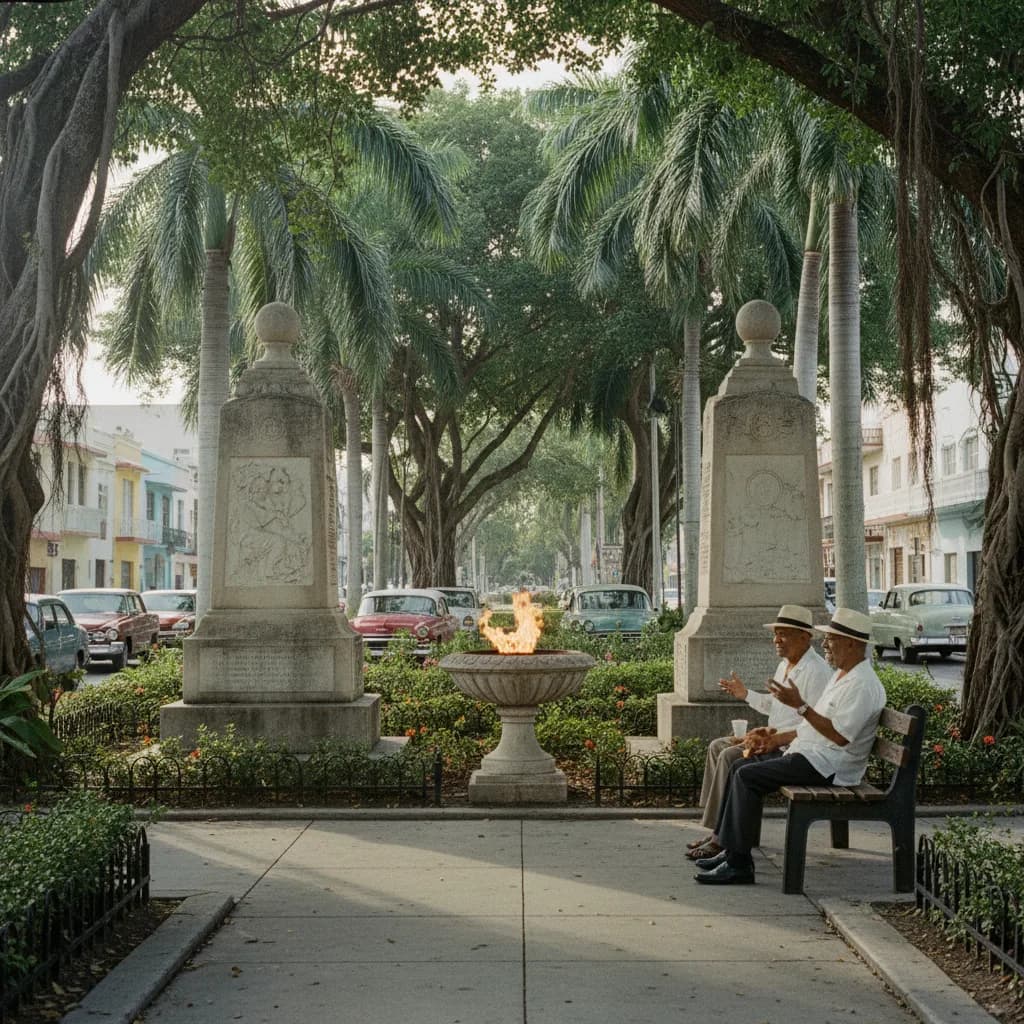
Begin at Cuban Memorial Boulevard, the shaded median of Southwest 13th Avenue just south of Calle Ocho. Over several decades exile organizations placed a series of monuments here. The most visited is the Brigade 2506 memorial, with its eternal flame honoring the men who died in the failed Bay of Pigs invasion of 1961. Nearby stand a monument to the poet and independence leader José Martí, a relief map of Cuba and a large ceiba tree that many people treat as sacred.
Walk the length of the median slowly and read the plaques. Older residents often sit on the benches here, and the mood is closer to a park of remembrance than a tourist stop. Photograph the monuments, but be considerate of anyone paying their respects, especially near the flame.
Before you move on, notice the small walk-up coffee windows that line Calle Ocho and the side streets. Locals call them ventanitas, and they are a social institution as much as a place to buy coffee. Standing at one for a minute and watching who comes and goes tells you more about how the neighborhood works than any plaque. Short conversations, quick greetings and arguments about baseball all happen in the space of a tiny cup.
Domino Park and the Daily Ritual
Head west on Calle Ocho to Máximo Gómez Park, known to everyone as Domino Park. Named for a general of the Cuban wars of independence, the small corner park opened in the 1970s and quickly became the place where retired men gathered to play dominoes and argue about politics. Watch from the railing and listen to the clack of the tiles. The game here is serious, so resist the urge to interrupt a hand.
The mural wall behind the park depicts leaders from across the Americas, a reminder that the neighborhood has always been a meeting point for more than one nationality. Today you will hear Nicaraguan, Honduran and Venezuelan accents alongside Cuban ones, which reflects later waves of arrivals from the 1980s onward.
The Tower Theater and the Walk of Fame
Directly across the street rises the Tower Theater, opened in 1926 and one of the oldest surviving cinemas in Miami. After 1959 it became an important place for new arrivals, screening American films with Spanish subtitles so that exiles could follow the stories while they learned English. Miami Dade College now runs it as a cultural venue, so check its listings if you want to step inside.
As you walk the next few blocks, look down. Pink stars set into the sidewalk form the Calle Ocho Walk of Fame, honoring Latin performers such as Celia Cruz and Gloria Estefan. Note the names and ask yourself how many of them first built their careers in Miami rather than in Havana or Mexico City.
Along this stretch, look up at the second floors of the commercial buildings. Many still have their original parapets, decorative tiles and steel casement windows from the 1930s and 1940s, hidden above newer signs and awnings. Those upper stories are the most honest record of what the avenue looked like before the exile years.
Shenandoah's Quiet Bungalow Streets
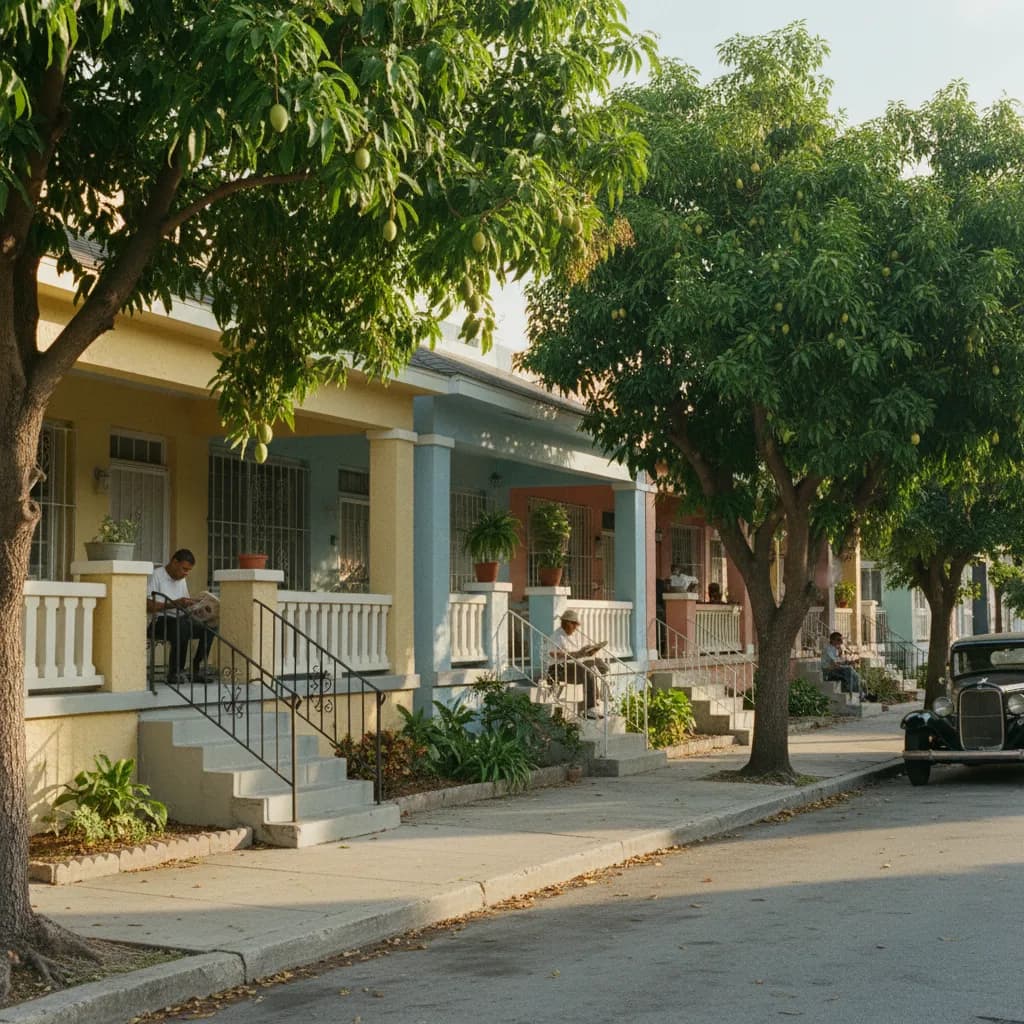
Leave the main road and wander south into Shenandoah. Here the pace drops and the 1920s plan comes through clearly. Look for small Mission and Mediterranean Revival bungalows with barrel tile roofs, arched front porches and mango or avocado trees in the yard. Many have been painted in bright Caribbean colors and fitted with iron grilles, a visible layer of exile taste laid over the original suburban design.
This is a residential district, so keep voices low and photograph from the sidewalk only. In 2015 the National Trust for Historic Preservation placed Little Havana on its list of most endangered historic places because of pressure from new development. Walking these streets explains why preservationists care. The value lies not in single landmarks but in the whole fabric of low houses, porches and shade.
Woodlawn Park and the Westward Spread
For a longer walk, continue west along Calle Ocho to Woodlawn Park Cemetery, founded in the early twentieth century. Several former Cuban presidents, including Gerardo Machado and Carlos Prío, are buried here, which gives the site a strange political weight. It is an active cemetery, so visit respectfully and check the gates are open before you go. The long walk out also shows how the Cuban community spread west over time.
Getting the Timing Right
Morning is best. Domino Park is busiest from mid-morning, the memorials are shaded early, and the sidewalks are still cool. Avoid the second half of the afternoon in summer, when heat bounces off the wide road. The neighborhood is also packed during the annual Calle Ocho festival in March, which is fun but not ideal for reading plaques. For a ninety-minute version, do the memorial boulevard, Domino Park, the Tower Theater and one block of bungalows. Open Karpo APP to put these stops in order from where you start and save the longer cemetery leg for another day.
Ask Karpo for more information.
Keep reading
- Brickell Tailor Alteration Shop Finder: First Work Suit Fit
 Coconut Grove Tailor Alteration Shop Finder: Heat-Proof Fits
 Little Havana Tailor Alteration Shop Finder: Guayabera Fits