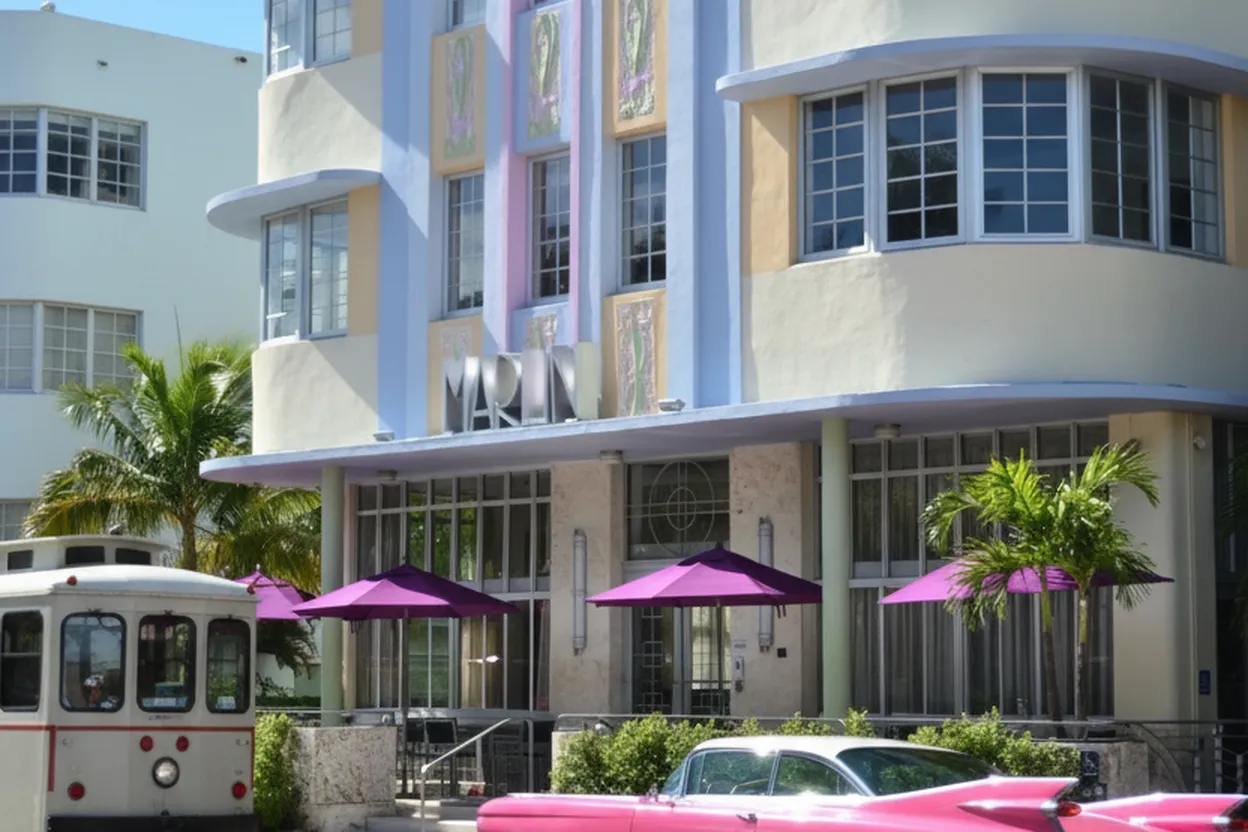
Miami’s Art Deco District is having a useful 2026 moment: not because it needs another celebrity gloss, but because a sunny daytime walk here still gives visitors a compact way to read Miami Beach block by block. The emmy rossum search trend fits the mood for style-led sightseeing, yet the practical anchor is the Art Deco Welcome Center at 1001 Ocean Drive, run by the Miami Design Preservation League. Start there, then treat Ocean Drive, Collins Avenue, Washington Avenue, and Lummus Park as a flexible loop. The best version is curious, paced, and verified the morning you go.
Want the route without juggling tabs? Text Karpo for a Miami Art Deco walk with shade stops, trolley backup, and day-of checks around Ocean Drive.
Art Deco Welcome Center at 1001 Ocean Drive
Begin at the Art Deco Welcome Center because it gives the walk a verified address, a human checkpoint, and a preservation lens before the photos start. Miami Design Preservation League lists daily hours of 9 a.m. to 5 p.m., with holiday closures, and identifies the center at 1001 Ocean Drive. Confirm hours before leaving, especially around holidays or storms, because this route works best when the center is open as your first decision point.
Inside or at the desk, ask what is current that day: tour availability, museum access, construction near Ocean Drive, and any street closures affecting Lummus Park. Do not assume every publicized tour time, exhibit, or nearby business listing is unchanged. If your group includes someone who needs seating, restrooms, or a lower-exertion route, make that question explicit at the Welcome Center before committing to a full loop.
Ocean Drive Facades from 10th Street to 14th Street
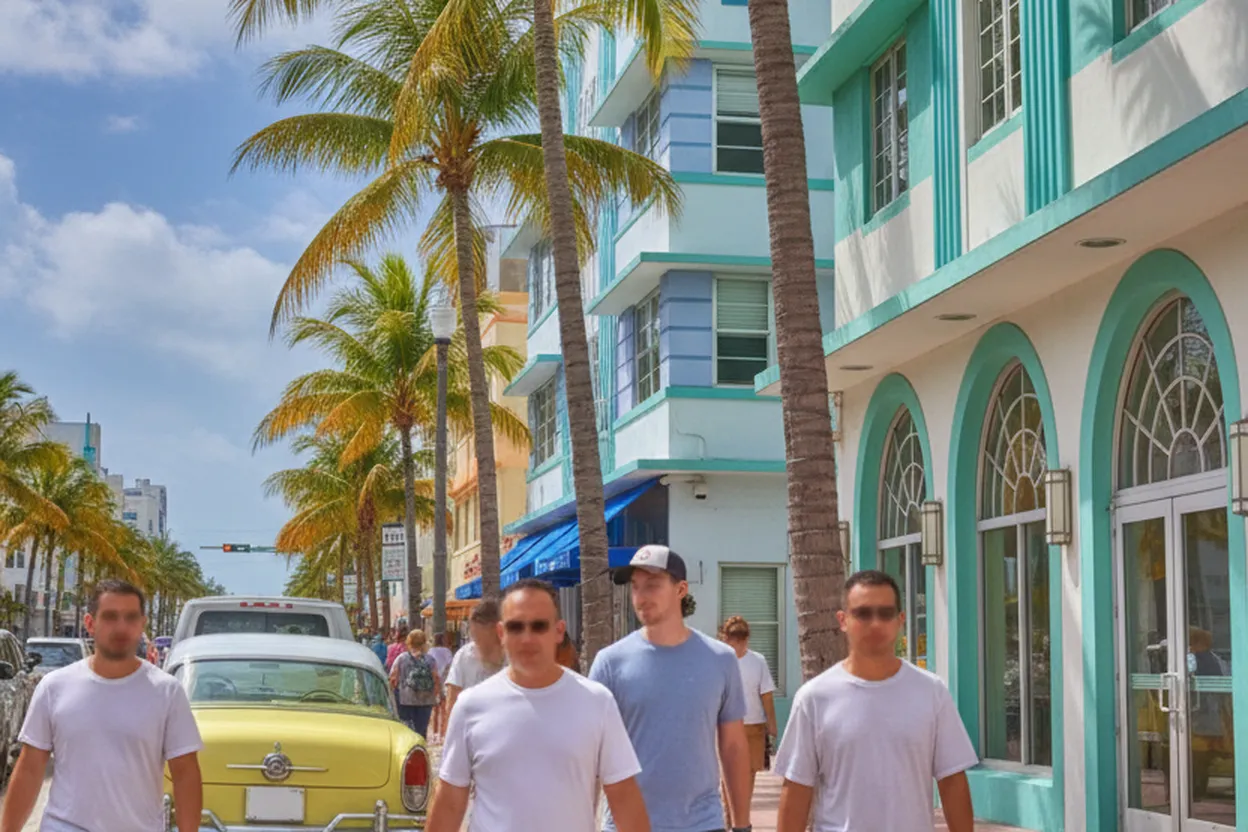
Ocean Drive is the visual spine, but the smarter walk is slower than the postcards suggest. Move north from the Welcome Center and compare eyebrows, porthole windows, vertical fins, terrazzo entries, and pastel restoration choices. City of Miami Beach materials describe Art Deco here through geometric forms and sculptural details, while its wider architecture guide places the style beside Mediterranean Revival and MiMo, which helps visitors notice transitions instead of treating every facade as identical.
The tradeoff is exposure. On a sunny Miami day, Ocean Drive can be bright, crowded, and distracting, with restaurant traffic and curbside activity competing for attention. Keep the first segment short if anyone is heat-sensitive, and photograph from public sidewalks without blocking entrances. If a facade is under work or hidden by vehicles, skip it rather than forcing the shot; the district has enough intact detail to reward patience.
Lummus Park Shade Beside the Barbara Capitman Story
Use Lummus Park as the breathing lane beside Ocean Drive, not merely as a beach shortcut. The City of Miami Beach credits Barbara Capitman and the Miami Design Preservation League’s 1970s preservation push with helping protect the district, and notes a Capitman bust near Ocean Drive in Lummus Park. That context matters: the pastel hotels are not just scenery, but surviving buildings shaped by civic argument, advocacy, and regulation.
For companions who want celebrity culture more than preservation history, this is where the angle can land without becoming invasive. Talk about why performers, designers, and photographers are drawn to the district’s theatrical geometry, then keep the focus on public architecture. Avoid chasing private guests, hotel interiors, or rumored affiliations. If crowds are heavy along Ocean Drive, Lummus Park gives the group a parallel path with shade, benches, and an easy turn-back option.
Collins Avenue Hotel Line as the Quieter Comparison
After the Ocean Drive pass, cut west to Collins Avenue for a calmer comparison of hotel fronts, lobbies visible from public thresholds, and less beachside glare. The district’s appeal is partly density: Miami Beach says its historic districts include thousands of buildings across areas such as Ocean Drive, Española Way, and Flamingo Park. That does not mean every building is Art Deco, so let Collins become the place where your group practices spotting differences.
The failure mode on Collins is overextending. Blocks feel short on a map, but sun, crosswalk waits, and photo stops add up. Set a turnaround point before you start, such as 14th or 15th Street, and keep interiors optional unless a venue clearly invites public entry. If someone in the group uses a mobility aid, prioritize curb cuts, shade, and fewer street crossings over completing a perfect architectural checklist.
Washington Avenue South Beach Trolley Backup
Washington Avenue is the practical escape hatch because the City of Miami Beach’s South Beach Trolley runs through the area on Loop A and Loop B. The city lists service seven days a week from 8 a.m. to 11 p.m., about every 20 minutes, with low-floor vehicles for easier boarding. Use it if heat, time, footwear, or group energy turns the walking route from moderate to draining.
Build the trolley into the plan before anyone needs it. The official stop list includes Washington Avenue stops near 15th, 13th, 12th, 9th, 7th, and 5th Streets, although some stops can be marked inactive with alternatives. Check the city page or tracker before relying on a specific corner. If service is delayed, the backup is simple: pause in shade, shorten the loop, or return toward the Welcome Center.
Española Way Detour for Architecture Fatigue
Española Way is the optional detour when your group wants a change in scale after Ocean Drive and Collins. City materials place Española Way within Miami Beach’s broader historic district geography, and the street gives visitors a different visual rhythm than the streamlined hotel row. It is useful for friends or partners who enjoy wandering, conversation, and food breaks more than a strict building-by-building study.
The detour costs time and can dilute the Art Deco focus, so use it deliberately. If the goal is a concise architecture walk, save Española Way for a second outing or a meal after the route. If the group is fading, it can be the reset that keeps the day pleasant. Verify restaurant hours directly before making it a promised stop, because dining details change faster than the architecture.
Day-Of Check at MDPL and Miami Beach Pages
Before leaving, do one final verification action: check Miami Design Preservation League for Welcome Center hours and tour status, then check the City of Miami Beach trolley page for service notes. If you are driving, verify parking separately through current city parking resources rather than assuming availability near Ocean Drive. For weather, use a live forecast and treat heat advisories or lightning risk as reasons to shorten or postpone.
The best audience for this route is a visitor or local who wants Miami Beach style without turning the day into a scavenger hunt. It fits partners, friends, design fans, and celebrity-culture searchers who can enjoy the Emmy Rossum-adjacent inspiration while respecting public space. If any key detail cannot be confirmed on Wednesday, July 29, 2026, make that uncertainty the decision: choose the shorter loop and verify in person at the Welcome Center.
Tags: #Miami #MiamiBeach #SouthBeach #ArtDeco #OceanDrive #ArtDecoWelcomeCenter #MDPL #LummusPark #CollinsAvenue #WashingtonAvenue #NeighborhoodGuide #AskKarpo #BeforeYouGo #Karpo
Sources consulted: Source 1: mdpl.org · Source 2: miamibeachfl.gov · Source 3: miamibeachfl.gov · Source 4: miamiandbeaches.com · Source 5: miamibeachfl.gov · Source 6: miamibeachfl.gov
All trademarks are the property of their respective owners.
Ask Karpo first
Tell Karpo your date, group size, budget, and starting point. We’ll check current access, timing, transit, and the cleanest Miami plan for Art Deco Welcome Center before you head out.