 Brickell Tailor Alteration Shop Finder: First Work Suit Fit
Neighborhood Guides
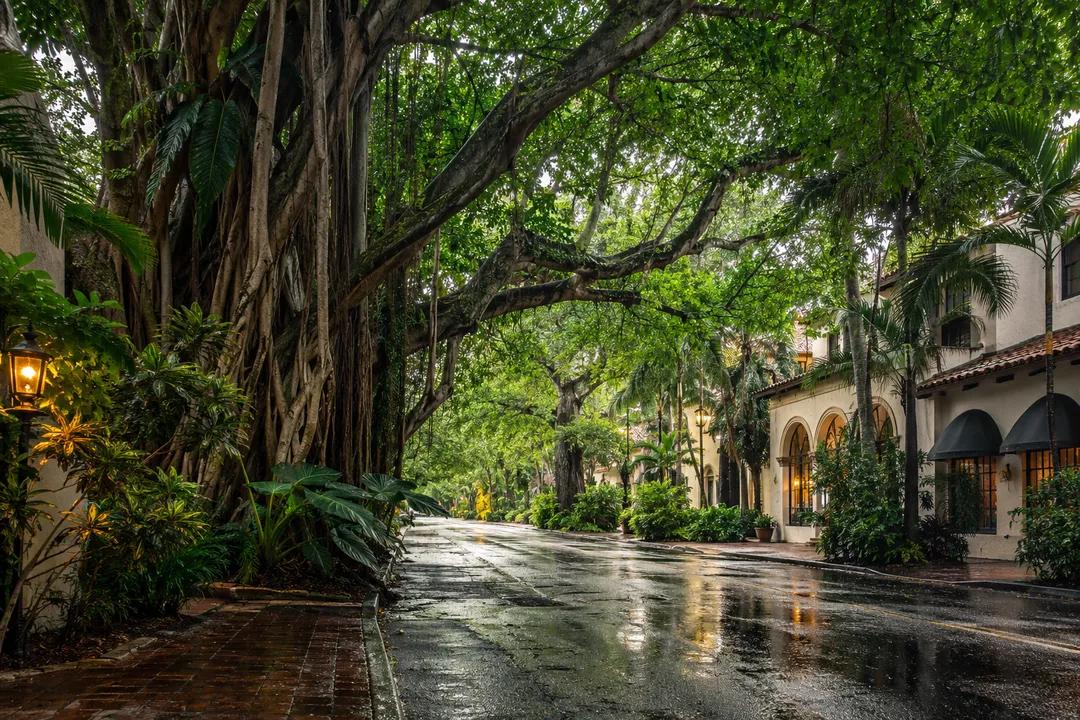
Miami Neighborhood Audio Walk: Free Coconut Grove Loop
Take this self-guided Coconut Grove neighborhood audio walk to explore leafy banyan tree canopies, historic coral cottages, and tranquil Biscayne bay views.
Beginning your Coconut Grove neighborhood audio walk at the corner of McFarlane Road and Grand Avenue places you in the oldest continuously inhabited modern settlement in South Florida. Founded in 1873 long before the incorporation of the City of Miami in 1896, this waterfront enclave preserves a distinct, village-like character defined by winding narrow roadways, massive weeping banyan trees, and rustic oolitic limestone architecture. As you step away from the lively cafes and slip on your headphones, the ambient roar of coastal traffic gives way to rustling tropical foliage and maritime breezes drifting off the sparkling waters of Biscayne Bay.

Pioneer Roots at Peacock Park and Bay View Shorelines
Your walking route leads south toward Peacock Park, located at 2820 McFarlane Rd, which commemorates English immigrants Charles and Isabella Peacock. In 1882, the Peacocks established the Bay View House, later renamed the Peacock Inn, which became the cultural, political, and social hub for early naturalists, writers, and maritime adventurers visiting the Florida frontier. Strolling along the grassy coastal lawns toward the bay shoreline, your audio narrative recounts how this pioneer boarding house hosted legendary landscape preservationists and botanists who documented South Florida's unique flora and fauna.
Today, Peacock Park serves as a vibrant community green space where local residents gather for open-air yoga, community sports, and quiet afternoon contemplation. Looking out toward the Dinner Key mooring field, you can see white sailboat masts gently swaying against the horizon. Take a moment to pause beneath the sprawling gumbo limbo and mahogany trees, letting the historic audio descriptions bring nineteenth-century shoreline gatherings vividly into focus before you head inland toward the historic Main Highway corridor.
Historic Pioneer Architecture Along Main Highway
Turning southwest onto Main Highway brings you directly to the entrance of The Barnacle Historic State Park at 3485 Main Hwy. Constructed in 1891 by pioneer yacht designer and photographer Commodore Ralph Middleton Munroe, The Barnacle is the oldest home in Miami-Dade County still standing on its original foundation. Munroe ingeniously designed the house to withstand severe Atlantic hurricanes by incorporating shipwright framing techniques, high-pitched hip roofs, and a central octagonal skylight that drew cooling sea drafts through the living quarters.
The surrounding five-acre estate preserves one of the last remaining remnants of the ancient Miami Rock Ridge tropical hardwood hammock. As your audio guide explains the maritime engineering behind Munroe's famous shallow-draft sharpie ketches, notice the profound temperature drop beneath the dense, jungle-like tree canopy. Walking along the crushed coral path, you pass native pigeon plum, wild tamarind, and silver palm trees that once blanketed the entire southeastern Florida ridge before twentieth-century suburban development took hold.
Bahamian Pioneer Heritage Along Historic Charles Avenue
Leaving Main Highway and proceeding northwest onto Charles Avenue leads you into the heart of the historic Bahamian settlement known originally as Evangelist Street. During the late 1880s, skilled Bahamian laborers, carpenters, and domestic workers arrived to construct local infrastructure, bringing with them invaluable knowledge of subtropical agriculture and Caribbean wooden architecture. Walking past the Mariah Brown House at 3298 Charles Ave, erected in 1890, you encounter one of the very first homes built by an African American resident in South Florida.
Further along the block stands the impressive E.W.F. Stirrup House at 3242 Charles Ave, built in 1897 by Ebenezer Woodbury Franklin Stirrup, a Bahamian immigrant who became one of Miami's most prosperous real estate pioneers. Constructed from dense, termite-resistant Dade County slash pine and native oolitic coral rock, these historic wooden cottages feature broad covered front porches, raised foundations for ground-level airflow, and steep roofs designed to shed heavy summer downpours. The audio narration shares oral histories of community resilience, mutual aid societies, and historic churches that sustained generations of Grove pioneers.
Coral Rock Sanctuaries and Bohemian Cultural Sanctuaries
Your audio loop guides you southward along Devon Road toward Plymouth Congregational Church, located at 3400 Devon Rd. Built in 1917 by a single local stonemason named Felix Reboredo, this striking architectural sanctuary was constructed from roughly dressed native coral rock to resemble a Spanish mission church. Its hand-carved four-hundred-year-old walnut door, salvaged from an ancient monastery in the Pyrenees mountains of northern Spain, stands as an exquisite example of Mediterranean craftsmanship set within a tropical garden.
Continuing your loop back toward McFarlane Road brings you past the Coconut Grove Library at 2875 McFarlane Rd, originally founded in 1895 by the pioneer Pine Needles Club. This quiet stone building houses historic archives, photographs, and manuscripts detailing the village's golden bohemian era during the 1960s and 1970s, when artists, poets, folk musicians, and playwrights flocked to the Grove. Pausing under the massive banyan tree outside the library, you can admire how aerial roots have fused into organic wooden colonnades across the footpath.
Pacing Your Walk and Savoring Village Atmosphere
Coconut Grove is best explored at an unhurried, contemplative pace between 8:30 am and 11:00 am, when the morning sunlight filters softly through the banyan branches and pedestrian sidewalks remain pleasantly quiet. The entire circular route covers approximately two miles of flat walking paths and paved residential sidewalks. Because South Florida humidity rises noticeably by midday, carrying a refillable water bottle and wearing lightweight, breathable linen clothing will ensure maximum walking comfort.
If you desire a refreshing pause during your audio walk, the leafy pedestrian corridors along Commodore Plaza and Fuller Street offer open-air sidewalk bistros and juice bars shaded by striped canvas awnings. Sit outside with an iced cold-brew coffee or tropical fruit smoothie while listening to the audio commentary describe the historic transformations of nearby CocoWalk at 3015 Grand Ave, which has evolved from a 1990s festival marketplace into a modern pedestrian plaza surrounded by native landscaping.
Transit Connections and Route Accessibility Guidance
Reaching Coconut Grove is convenient via public transit by riding the Miami Metrorail to the Coconut Grove Station at 2780 SW 27th Ave. From the train platform, board the complimentary Coconut Grove Trolley, which operates frequent loops directly down Southwest 27th Avenue and delivers visitors to the Grand Avenue commercial corridor within ten minutes. Alternatively, cyclists can connect from Downtown Miami via the Commodore Trail, a paved multi-use pathway that parallels South Bayshore Drive beneath lush royal poinciana trees.
Karpo APP provides self-guided walking route outlines and curated architectural landmark references, making it easy to plan your self-paced exploration of historic homes and garden lanes. Please wear comfortable, flat-soled walking shoes, as mature banyan tree roots occasionally lift historic brick pavers along Charles Avenue. Enjoy this immersive self-guided stroll through one of South Florida's most cherished architectural and cultural sanctuaries.
Ask Karpo for more information.
Keep reading
- Brickell Tailor Alteration Shop Finder: First Work Suit Fit
 Coconut Grove Tailor Alteration Shop Finder: Heat-Proof Fits
 Little Havana Tailor Alteration Shop Finder: Guayabera Fits