 Brickell Tailor Alteration Shop Finder: First Work Suit Fit
Neighborhood Guides
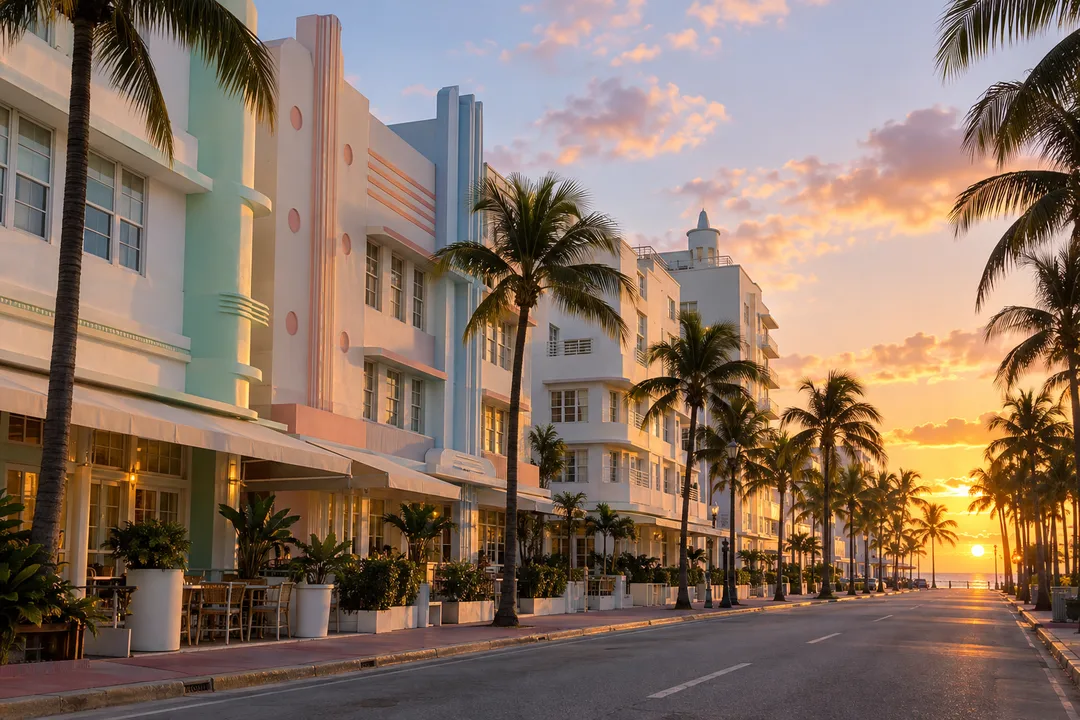
Miami Neighborhood Audio Walk: Free Ocean Drive Deco Route
Listen to this self-guided South Beach neighborhood audio walk to explore iconic 1930s Streamline Moderne hotels, neon spires, and Ocean Drive architecture.
Embarking on an Ocean Drive neighborhood audio walk through Miami Beach's world-famous Art Deco Historic District surrounds you with the greatest assembly of 1930s resort architecture on the planet. Flanked by swaying coconut palms and the turquoise Atlantic Ocean on one side, and a dazzling procession of pastel Streamline Moderne hotels on the other, this iconic promenade represents the triumph of visionary historic preservation. By putting in your earbuds and walking this oceanfront boulevard, you uncover how architects transformed Depression-era beach cottages into glamorous tropical palaces featuring nautical porthole windows, cantilevered eyebrows, and glowing neon spires. This self-guided audio route guides you past celebrated landmarks, through tranquil park paths, and into the vibrant cultural history of South Beach where seaside glamour meets architectural innovation.

The Birth of Tropical Art Deco on Ocean Drive
The architectural journey begins at the Art Deco Welcome Center at 1001 Ocean Dr, headquarters of the Miami Design Preservation League. Founded in 1976 by passionate preservationist Barbara Capitman and fellow activists, the league fought relentless battles against commercial developers to rescue over eight hundred historic buildings from the wrecking ball. In 1979, their heroic grassroots efforts culminated in the designation of the Miami Beach Architectural Historic District, the nation's first twentieth-century urban historic district listed on the National Register of Historic Places.
Standing outside the center, your audio guide introduces the defining characteristics of Tropical Art Deco: symmetry, stepped vertical relief, decorative bas-relief friezes depicting tropical flora, and smooth stucco surfaces painted in cheerful pastel palettes. Here, ocean breezes mingle with the architectural narrative, setting the stage for an extraordinary walk northward along Ocean Drive where hotel porches face the open ocean horizon.
Iconic Streamline Moderne Masterpieces
Walking past 9th Street brings you to The Breakwater Hotel at 940 Ocean Dr, constructed in 1936 under the direction of architect Anton Skislewicz. This striking Streamline Moderne icon is celebrated for its towering central vertical spire that soars above the roofline, functioning as an architectural beacon that casts brilliant blue and yellow neon reflections onto the sidewalk below. Its sleek aerodynamic lines and stepped parapets evoke the speed and glamour of contemporary ocean liners and luxury aviation.
Further north at 1250 Ocean Dr stands The Carlyle Hotel, designed in 1939 by architects Kiehnel & Elliott. With its horizontally grooved belt courses, rounded corners, and vertical center accent bands, The Carlyle epitomizes the late Streamline phase of the Art Deco movement. Looking closely at the upper facade reveals how architects grouped three distinct horizontal window bays together to accentuate width and create a streamlined, ocean-facing silhouette that echoes maritime travel.
Nautical Motifs and Tropical Porches
Strolling southward past 7th Street introduces the Colony Hotel at 736 Ocean Dr, built in 1935 by master architect Henry Hohauser. The Colony represents one of the most photographed Art Deco buildings in the world, renowned for its glowing blue neon marquee, inverted-T vertical pylon, and welcoming open-air veranda. Porches were integral to 1930s hotel design, encouraging guests to relax in wicker rocking chairs and enjoy evening ocean trade winds before modern air conditioning was invented. Notice how the terrazzo floor in the entry porch incorporates geometric sunburst patterns that guide pedestrians effortlessly from the street into the lobby.
Nearby landmarks like The Clevelander at 1020 Ocean Dr, built in 1938 by Albert Anis, and the Park Central Hotel at 640 Ocean Dr, another 1937 Hohauser creation, showcase distinctive cantilevered concrete 'eyebrows' projecting above windows. These horizontal sunshades shaded glass panes from intense South Florida sunlight before the era of air conditioning, illustrating how functional climate adaptation gave birth to enduring aesthetic elegance. Bas-relief wall friezes depict stylized flamingos, leaping marlins, and blooming lotus blossoms, celebrating Florida's lush subtropical ecosystem.
Lummus Park Promenade and Atlantic Ocean Breeze
To appreciate the full composition of Ocean Drive's hotel row, cross to the beach side of the street and follow the broad paved promenade winding through Lummus Park. Stretching between 5th and 15th Streets, this beloved public park features grassy lawns, sea grape trees, and sand dunes that separate the urban boulevard from the Atlantic surf. Walking along the park path provides unobstructed sightlines to view entire blocks of historic facades simultaneously.
From this vantage point, notice how early architects capped hotel heights at three stories to comply with building codes and maintain a human-scaled beachfront village feel. Listening to the audio track while ocean waves break in the background creates an immersive multisensory connection to Miami Beach's golden resort era, blending architectural commentary with coastal ambient sounds.
Sunlight, Neon, and Best Walking Hours
The timing of your Ocean Drive walk completely transforms the experience. For architectural purists and photographers, early morning between 7:30 am and 9:30 am is unmatched. Soft sunrise light illuminates east-facing pastel facades, while empty sidewalks allow you to observe delicate terrazzo lobby medallions and wrought-iron railings in serene tranquility before cafe crowds awaken.
Conversely, walking between 6:30 pm and 8:00 pm reveals the magical transition to twilight, when hundreds of historic neon tubes flicker to life in luminous shades of cobalt blue, coral pink, and amber gold. If sidewalk cafe seating crowds the hotel entrances during evening hours, simply remain on the park promenade side where walking space remains generous and neon reflections glow across the roadway.
Public Transit and Practical Guidance
Navigating to South Beach is seamless with local transit options. The free Miami Beach Trolley (South Beach Loop) circles continuously along Washington Avenue and Ocean Drive, stopping at convenient intervals near 5th, 10th, and 15th Streets. In addition, Miami-Dade Transit Metrobus Route 100 provides direct transit across the MacArthur Causeway from Downtown Miami. For motorists, municipal parking garages are located nearby at 7th Street and Collins Avenue and 13th Street and Collins Avenue.
The walking circuit encompasses roughly one mile of flat, accessible paved pathways along Ocean Drive and Lummus Park. Lightweight resort attire, sunglasses, and comfortable walking shoes are suggested for optimal comfort. The Karpo APP provides self-guided route navigation, architectural milestone notes, and local walking tips to make your Ocean Drive architectural exploration informative and enjoyable.
Ask Karpo for more information.
Keep reading
- Brickell Tailor Alteration Shop Finder: First Work Suit Fit
 Coconut Grove Tailor Alteration Shop Finder: Heat-Proof Fits
 Little Havana Tailor Alteration Shop Finder: Guayabera Fits