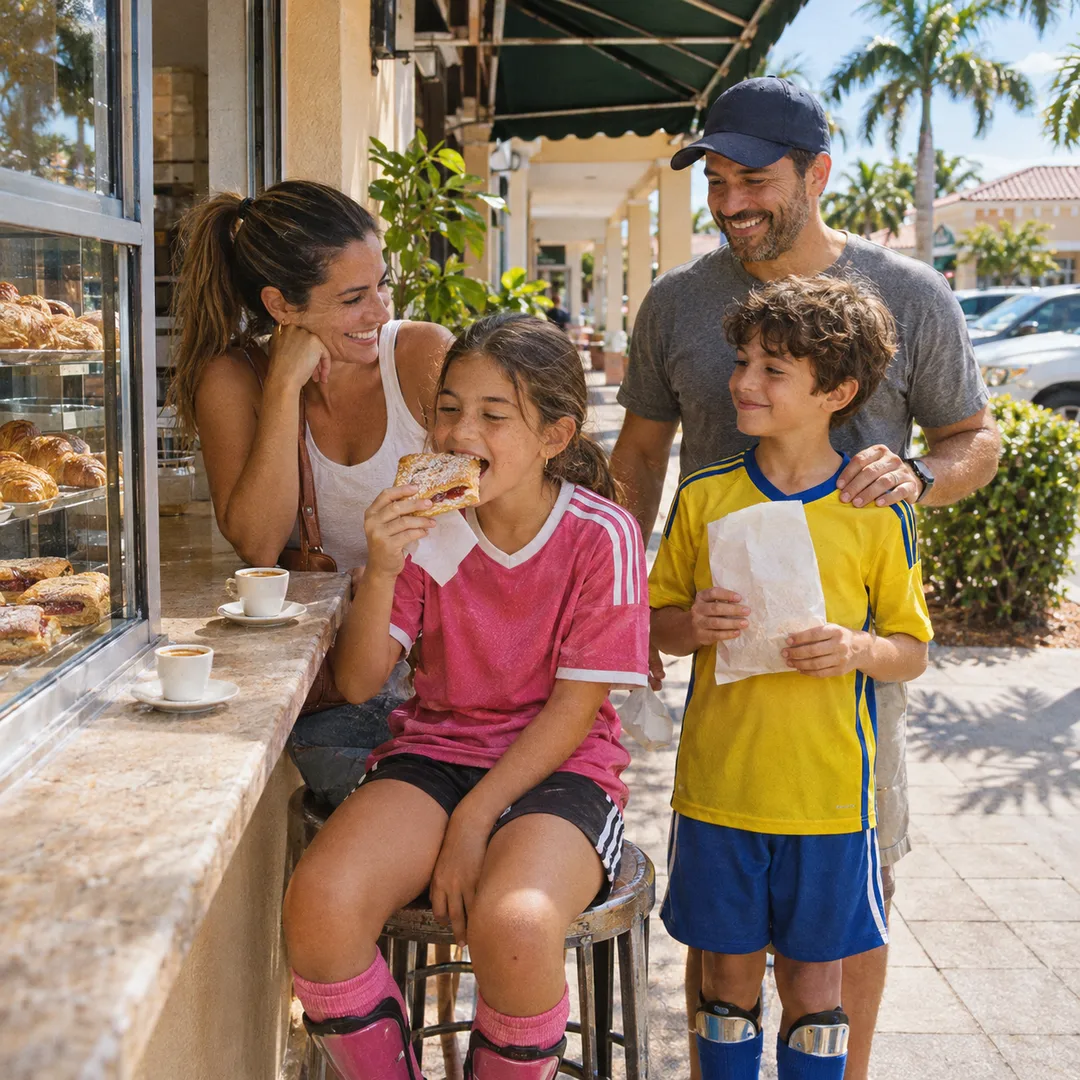
 Kendall Pastelito Window Crawl to Pick a Birthday Party Box
Coffee & Dessert

Miami Japanese Creperie: 3 Decisions for Market Evenings
Plan a Japanese creperie at a Miami evening market by comparing handheld formats, crowd tolerance and the next stop on your route today with friends.
An evening market can mean a quick sweet bite, a shared stroll or a full circuit of stalls. Tell Karpo which one you want before asking for a Japanese crepe. Add the Miami neighborhood, your arrival window and whether the dessert should be a destination or one stop among many. That context lets the app keep the recommendation practical instead of returning a generic list of colorful sweets.
Define the market moment you want
Flavor is only one part of a market order. State whether you want fruit, cream, tea, bean or a savory filling to lead, and whether you expect to eat while walking or at a pause. Ask for the complete documented combination. Do not infer a portable wrapper, a tray or a special market menu from a photograph.
Crowd tolerance should be explicit. If you dislike standing in a dense queue, ask for a stop with a more relaxed sequence or a later eating window. Karpo can organize alternatives, but it cannot monitor the line. A clear boundary keeps the market fun when one stall is busier than expected.
Keep hands and timing under control
Market routes are already full of bags, samples and changing directions. If you plan to carry the crepe, include that constraint and ask for a format that fits the walk. If you want to sit, name that as a requirement rather than hoping a table appears. The recommendation should connect the documented service format to the way you will actually use it.
Choose a meeting point before the order. Friends can split up to browse, but everyone should know where and when to reunite. Do not assume the merchant will hold food or combine separate transactions. Karpo can help you phrase the plan and compare a later stop if the group is not together.
Weather and crowd flow change quickly in Miami. Make the route adaptable: dessert before the busiest section, after the rain, or at the end when bags are lighter. Keep the next fixed activity visible. A market crepe should support the evening rather than force the group to abandon its route.

Order for the pace you chose
Read the menu description from wrapper to finishing element. A simple fruit combination may be easier to eat while walking; a richer, saucier item may deserve a seated pause. Choose one complete documented option and resist stacking extras that make the cone harder to manage. The goal is a satisfying bite, not a maximal list of toppings.
Before joining a line, decide how long you can wait. If the market has another stop you care about, keep it as the backup rather than assuming the queue will shrink. Karpo can help shift dessert to a later point or compare another documented format, but it cannot promise a faster service window.
If you are sharing, order in a way that matches the food’s shape. Two individual cones may be cleaner than one item passed through a crowd. If the menu explicitly supports a plated format, that may suit a slow conversation. Keep those choices in the request so the recommendation reflects the real evening.
Three decisions for a market circuit
For example: “We will be at an evening market in Miami and want a Japanese creperie idea if there is a documented option that fits our route. We want one handheld dessert each, prefer different fillings and do not want food to prevent browsing.” This message leaves room for the answer to redirect the plan. It does not assert that a named market contains a particular stall.
The first market decision is when to eat. Some people enjoy dessert as the starting point, while others want to see the stalls before choosing. Explain whether the crepe is a commitment or an option. That distinction keeps a suggestion from dominating the whole evening. If you prefer to browse first, ask Karpo to place the food decision after a short circuit instead of sending you directly to a counter.
The second decision is how much you can comfortably carry. Count the bags, umbrella or other items that will already occupy your hands. If a cone would be awkward, choose a proper eating pause before purchasing anything. A market is not automatically an easy place to carry dessert just because it involves walking. The serving format and your actual load need to agree.
The third decision is how the group will regroup. Give friends a meeting point and a shared idea of when the next move happens. If someone wants to browse longer, agree whether they will join before or after food. Karpo can help express the sequence, but nobody should rely on an app suggestion as proof that a stall will hold an order until the group arrives.
A handheld order still deserves a complete flavor comparison. Look beyond the headline fruit or sauce to the whole filling, including the wrapper and listed finishing elements. Two cones with a familiar ingredient can offer different experiences. Choose one that already suits you instead of collecting hypothetical substitutions. If you want an extra, let the merchant’s stated options define what can be added.
Keep the decision reversible until you enter the transaction. Browsing another part of the market, returning later or changing dessert format can all be sensible. Once you order, follow the business’s pickup instructions and acceptance messages. The planning tool helps with discovery and sequence; the merchant handles the purchase. Separating those steps keeps the evening flexible without confusing a suggestion with a confirmed order.
If music, performance or a timed activity is part of the market visit, put that commitment above the snack in the brief. You can finish food first or move it afterward, depending on what matters most. Avoid solving a conflict by assuming unusually fast service. A realistic schedule uses choices you control, including the choice to leave dessert for another evening.
Your final plan should fit in a few lines: when to decide, what format to seek, where the group meets and what happens if the first choice is busy. That is enough structure for a market. The rest can remain spontaneous. A crepe works as part of the evening when it leaves attention for the people, stalls and discoveries that brought you there.
Practical notes for a market crepe
Use a market brief with neighborhood, arrival window, crowd tolerance, flavor lead and carrying plan. Ask Karpo to separate documented menu facts from route suggestions. Then use the merchant’s current ordering process and keep the fallback visible.
If the first line is too long, move the dessert to the end of the circuit or switch to another documented option. If rain changes the market, revise the setting constraint. Do not fill the gap with guessed opening times, prices or stock.
The images are newly generated imaginary Miami night-market crepe scenes, with string lights and handheld food but no readable signs or real storefront. They illustrate the planning problem, not a specific merchant. A clear route and a manageable format let the dessert travel with the evening.
Ask Karpo for more information.
Keep reading
- Kendall Pastelito Window Crawl to Pick a Birthday Party Box
 Coral Gables Croqueta Bakery Picker for a Home Cook
 Doral Pastelito Window Crawl for a Cuban and Venezuelan Duel