 Brickell Tailor Alteration Shop Finder: First Work Suit Fit
Neighborhood Guides

Miami Historic Walking Route: Read Deco Beyond Pastels
A South Beach historic walking route compares outlines, shadows and window groups, giving you a facade reading method beyond pastel hotel photographs.
A South Beach historic walking route becomes more revealing when you compare building shapes before comparing paint colors. Choose a small section of Ocean Drive or the Collins and Washington area, and give yourself one question: how does each exterior organize a person’s attention? This is a self-directed architecture exercise from public sidewalks. Its result is a pair of annotated facade sketches, not a complete inventory of landmark hotels. You can finish with two buildings studied closely rather than a long list of names you barely remember.
Begin with a silhouette, then add the label
Miami Design Preservation League’s design introduction distinguishes Art Deco, Mediterranean Revival and Miami Modern among the district’s architectural styles. That distinction matters before you start. A pastel wall does not identify a period, and a restored frontage can include later work. Use the preservation organization’s descriptions as background reading, with the name of the individual building attached to any specific attribution. The exercise below asks you to observe forms. It does not turn a visual resemblance into proof of an architect, construction date or original material.
Choose a frontage that you can see from a clear stretch of pavement. In a notebook, draw its outer edge with one continuous line. Leave windows, ornament and lettering out for the moment. Is the top stepped, flat, curved or interrupted by a central feature? Where does the entrance sit relative to that outline? Your drawing can be clumsy. A rough shape is useful because it makes you decide which parts actually determine the composition, instead of letting an attractive color scheme do all the work.
Now find a second frontage nearby with a noticeably different outline. Repeat the drawing at roughly the same size on the page. Compare the two without awarding a winner. One may concentrate attention at the middle, while the other moves the eye around a corner. If neither distinction feels clear, change the pair rather than inventing an explanation. Looking carefully includes recognizing that a particular example does not answer your question. The route should serve the comparison, so two neighboring examples can be enough.
Use shade to understand depth
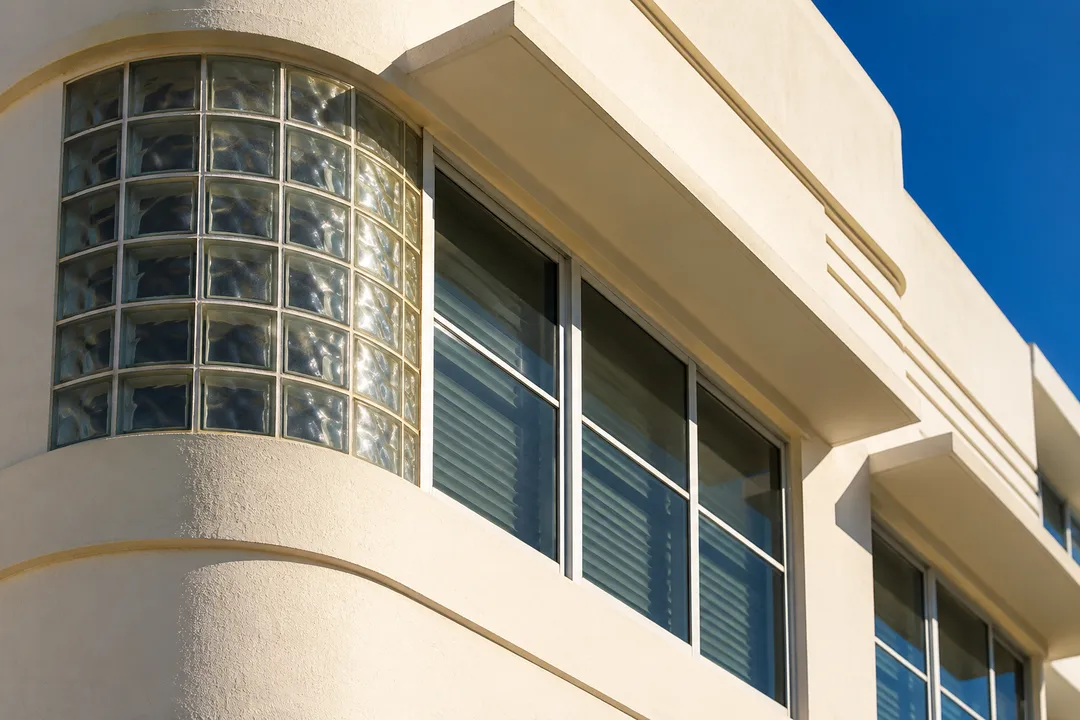
For the next pass, add the parts that project from each wall. A ledge above a window can appear as a thin stripe from one angle and a substantial shelf from another. Record the shape of its shadow as well as the shape of the object. Keep the description literal: a horizontal projection above an opening is something you can see. An assertion about its original designer’s intention needs a source. This small separation keeps the walk interesting without making every observation sound like a researched historical conclusion.
Try standing farther along the same public sidewalk to see how the projection relates to a corner. Do not lean over a hotel terrace or enter a driveway for a cleaner view. If a parked vehicle or awning hides the feature, record that limitation and choose another exterior. A blocked view is a normal condition of studying a working street. Removing cars or street furniture in your imagination may produce a prettier picture, but it also removes information about how the building meets the city today.
The generated photographic illustrations accompanying this article suggest the kinds of curves, projections and shadows involved. They portray imagined contemporary architectural details rather than identified landmarks. They are not archival photographs, a record of a specific property’s condition, or evidence that any element survives unchanged. Use your own observations for the comparison sheet. If you later share a photograph, distinguish the building you actually saw from these illustrative images and from any historical picture supplied by a preservation archive.
Make the windows do some work
On your third look, count the window groups rather than every pane. Mark where openings line up, where they bunch together and where a solid area interrupts them. Then ask how that rhythm relates to your silhouette drawing. Does the middle section feel taller because its openings line up vertically? Does a corner seem to turn more gently because the openings continue around it? These are questions to test against the view, not universal rules that every building must obey.
A companion can make this more useful by looking independently before discussing it. Give each person one page and the same pair of exteriors. Compare what each drawing leaves out. A photographer may notice repeated light and dark rectangles, while someone who sketches may emphasize the mass of the wall. Neither has to adopt the other’s method. The conversation is strongest when each person can point to a feature supporting an interpretation. Avoid describing an entire style from a detail you noticed on only one building.
Keep colorful paint for the last layer. Add a small note showing where color emphasizes an edge, separates an upper story or makes a recessed area harder to read. Then imagine the same photograph in grayscale. Which relationships would remain legible? This does not make color unimportant. It helps you see whether color is reinforcing a form or supplying most of the impression. The finished page should explain something that a single postcard view would leave unresolved.
Choose a compact comparison instead of a hotel hunt
Build the outing around one pair of facades and one pause to compare your notes. Ocean Drive and the Collins and Washington area are alternatives for choosing that pair, not an instruction to traverse every corridor in one session. Pick your actual start and finish on a street map after selecting the examples. Cross at designated crossings, and leave enough pavement for people using wheelchairs, carrying luggage or simply going about their day. There is no need to stand directly opposite an entrance to understand its composition.
Skip a lobby detour when your aim is exterior design. It adds an access decision without helping the silhouette exercise, and a hotel lobby is not automatically a public exhibition. If you want interpretation by a guide, choose an independently arranged preservation tour as a different outing. The two formats produce different results: a self-directed comparison gives you a question and a record of looking, while a guided visit can supply attribution and context that a facade alone cannot establish.
Practical Notes for a useful drawing page
Carry water, a pencil and a page that can be used while standing. For bright conditions, prioritize a comfortable place to pause over a symmetrical photograph. During rain, put the sketching exercise aside rather than treating a private canopy as guaranteed shelter. A shorter session with one complete comparison is preferable to an unfinished sequence scattered across several streets. Record the names of your chosen examples only after matching them to a reliable building description, so a neighboring property does not inherit the wrong history.
Karpo APP can be a starting point for discovering city ideas around an architecture outing. Ask for a South Beach exterior walk focused on shapes and a separate idea for afterward. Make the comparison sheet yourself, keep directions in your map, and use MDPL’s design material for architectural context. Your final next step is specific: retain one observation that the drawings support, and one question requiring further research. That gives the walk a useful endpoint without claiming that an app has identified, dated or authenticated the facade for you.
Architectural background: Miami Design Preservation League’s design introduction, https://mdpl.org/miami-design-styles/ . Its distinctions between Art Deco, Mediterranean Revival and Miami Modern supply context for the exercise, while individual buildings still need their own attribution.
Ask Karpo for more information.
Keep reading
- Brickell Tailor Alteration Shop Finder: First Work Suit Fit
 Coconut Grove Tailor Alteration Shop Finder: Heat-Proof Fits
 Little Havana Tailor Alteration Shop Finder: Guayabera Fits