 Brickell Tailor Alteration Shop Finder: First Work Suit Fit
Neighborhood Guides
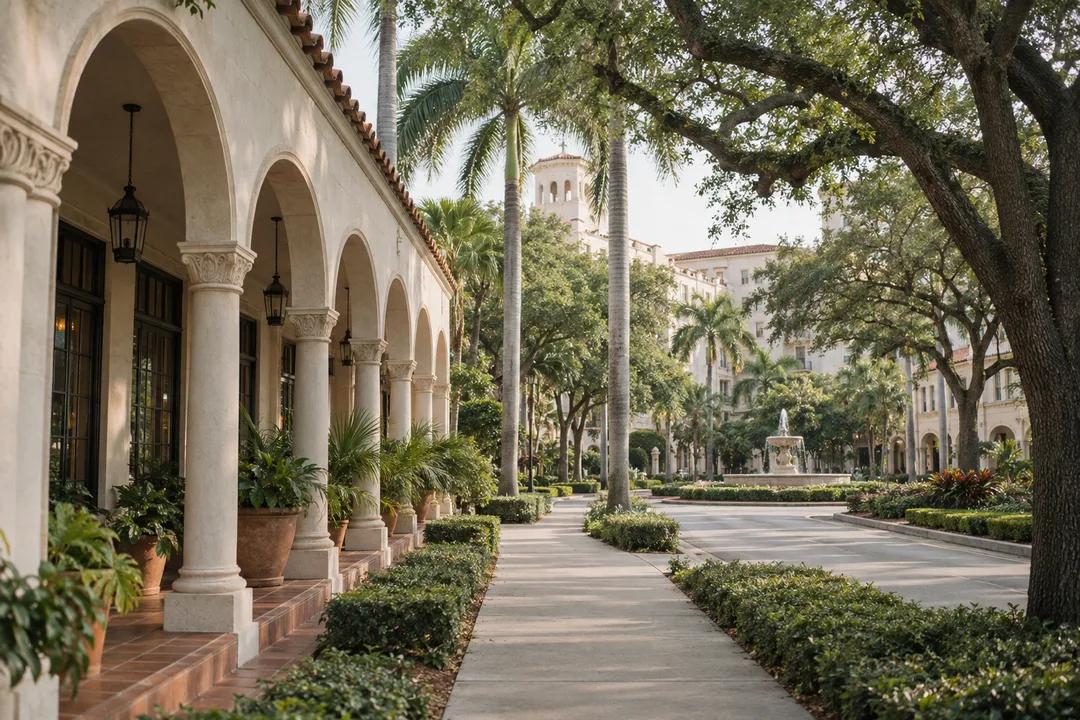
Coral Gables Historic Neighborhood Loop: Easy Walk
Build a Coral Gables historic neighborhood loop around arcades, palms, and calm side streets, with pace and pause choices that fit your group.
A Coral Gables historic neighborhood loop is easiest to enjoy when the route follows visual rhythm instead of a rigid list of attractions. Think arcades, palms, stucco walls, tiled details, and the moments when a broad avenue gives way to a calm side street. Tell Karpo APP whether the group wants architecture, photography, an easy social stroll, or a route that ends near another plan. Set a duration and walking pace first. The tool can then shape a loop with one clear anchor, two optional branches, and a return leg that keeps the group oriented. That structure protects the walk from becoming a hot, confusing search for the next pin.
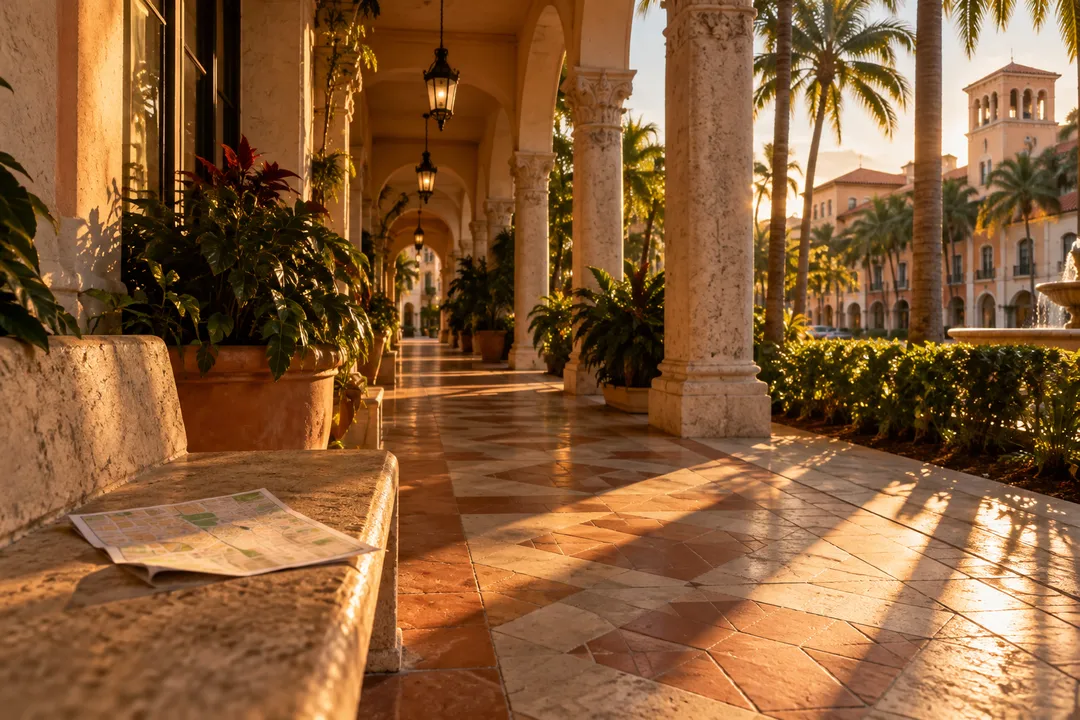
Start With a Mediterranean Rhythm
Begin where the neighborhood's Mediterranean vocabulary feels continuous. A short opening through arcaded or tree-lined blocks gives everyone a shared visual reference before the route widens. Ask for low-traffic crossings when conversation matters, and reserve the busiest corridor for a deliberate midpoint rather than an accidental detour. The best loop has contrast without whiplash: pale walls against green canopy, patterned paving after plain asphalt, a shaded arcade after open sun. Three transitions are enough to make the walk memorable. More than that can blur together, especially for visitors who are reading façades and checking directions at the same time.
Use Architecture as Your Route Compass
Coral Gables rewards attention to proportions. A doorway, courtyard, or tile band can explain the design language more clearly than a long historical caption. Build one slow observation segment into the route and ask the app to keep it free of time pressure. If someone in the group wants context, let them add a history-focused note; if others prefer movement, give them a nearby parallel option. This keeps the walk from turning into a lecture. Use the neighborhood's built form as a compass: repeated arcades can confirm you are still on the intended spine, while a sudden change in scale is a useful moment to check the next turn.
Choose a Comfortable Heat Strategy
Miami heat makes timing part of route design. A morning loop can spend its first half in open civic spaces before moving into shaded residential blocks. A late-day loop can do the reverse, saving the broadest architectural views for softer light. Ask for a ten-minute reset at a midpoint and keep a compact version ready. If the group includes a slower walker, do not hide the adjustment; show the shorter branch and its trade-off. The goal is a shared pace, not a heroic distance. A planner that exposes the decision helps everyone agree before fatigue turns into quiet resentment.
Balance Main Streets With Quiet Blocks
For a mixed group, alternate visual concentration with easy walking. After a façade-heavy segment, give everyone a straight, shaded stretch where conversation can take over. After a quiet lane, add one public-facing space that makes the district feel connected to the wider city. Keep the route legible by limiting backtracking and using obvious corners as regroup points. If anyone wants photographs, schedule one stop rather than letting every interesting doorway become an unplanned halt. That simple rule keeps the loop moving while still respecting the reason people came: to notice how Coral Gables stages everyday life through architecture, landscape, and shade.
Plan a Flexible Pause Pattern
A flexible pause pattern is better than a single promised stop. Ask the app for one planned rest, one optional refreshment break, and an end point with a clear onward choice. If the weather changes, remove the optional branch first. If the group is energized, add a short extension along a calmer block rather than a distant landmark that forces a new transit decision. This makes the route resilient. You are planning an experience with people, not drawing a perfect line on a map. A route that can bend is more useful than one that looks impressive but collapses when the first person needs shade.
Keep the Walk Social and Legible
The final leg should answer what happens after the loop. Some groups want a quiet exit; others want to continue toward dinner, a gallery, or a transit connection. Set that preference before you start so the return does not become a debate at the hottest point of the walk. Ask for a finish with easy regrouping and minimal crossing complexity. If a street feels busier than expected, use the app's alternate branch and preserve the same arrival area. This keeps the neighborhood loop coherent while giving the group control over how the evening develops.
Finish Near Your Next Decision
Practical Notes: prompt “Coral Gables loop, Mediterranean architecture, shaded options, gentle pace, one planned pause.” Choose a compact or extended duration before adding landmarks. Keep optional branches visible, plan a regroup corner, and leave room for one unscheduled observation. If the heat rises, shorten the open-air section rather than abandoning the entire route. If the group wants more history, add a context note; if it wants more conversation, ask for quieter streets. Karpo APP helps compare those versions so the route reflects the group's actual energy. Start with one shared objective and let the sequence of streets supply the detail. A final check should compare effort with reward. If a branch adds twenty minutes but only repeats a façade pattern already seen, drop it. If a shorter turn introduces a new arcade, courtyard edge, or shaded public corner, keep it. Ask for the route in two versions and read the trade-off aloud before the group starts. That conversation is part of the experience because it makes expectations explicit. Coral Gables can support a relaxed pace when the plan is clear about where attention goes. Use one shared route in Karpo APP, mark the optional branch, and agree on the finish condition. The group will then move through the district as a unit, with enough flexibility for curiosity but enough structure to avoid wandering. The best memory may be a small tile pattern or a quiet conversation beneath palms, not the longest distance recorded. One more useful setting is an early-stop rule. Decide that the group will end the loop if the heat, traffic, or attention level passes a clear threshold. This keeps a pleasant outing from becoming a test of endurance. Save the rule beside the route so everyone knows it is part of the plan. You can also ask for a version that ends near a shaded public space and another that ends near a more active corridor. Comparing them reveals the real trade-off: quiet recovery or continued stimulation. Coral Gables is generous with visual material, but the route should leave people curious rather than exhausted. Let the final ten minutes be deliberately simple, with no new landmark to decode and no complicated crossing to negotiate. Give the loop a final one-line brief before departure: architecture first, shade first, or conversation first. That brief helps the group decide what to skip when time changes. Keep a compact route with the strongest visual anchor, and an extended route that adds only one new layer. If the group wants a pause, show where it fits rather than improvising in the middle of a crossing. Karpo APP keeps both versions together so the choice stays shared. Coral Gables becomes easier to read when the route has an editorial point of view, even if the pace remains unhurried.
Ask Karpo for more information.
Keep reading
- Brickell Tailor Alteration Shop Finder: First Work Suit Fit
 Coconut Grove Tailor Alteration Shop Finder: Heat-Proof Fits
 Little Havana Tailor Alteration Shop Finder: Guayabera Fits